


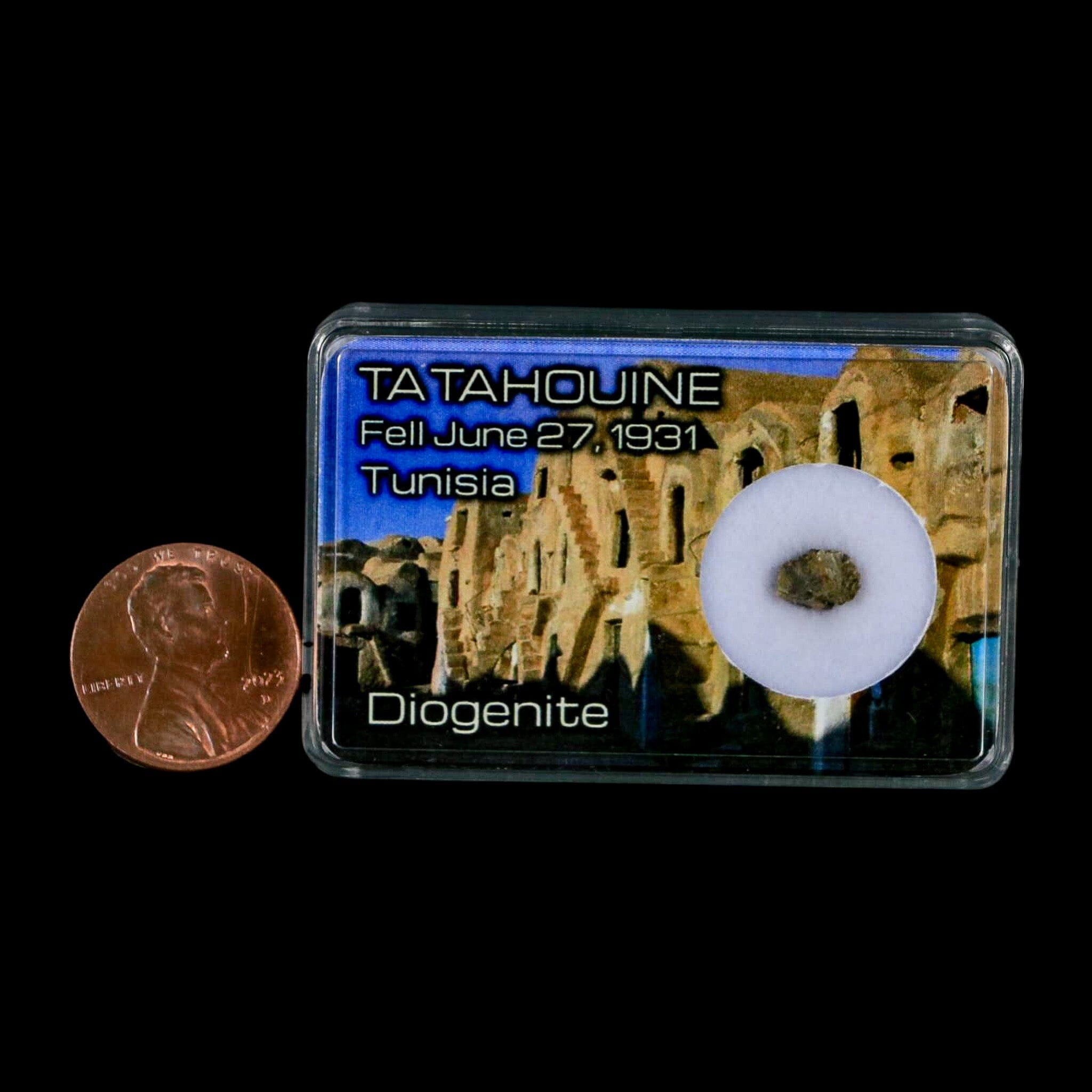


Description
Location: Tunisia
Weight: 0.4 Ounces (Display)
Dimensions: 2.3 Inches Long, 1.5 Inches Wide, 0.6 Inches Thick (Display)
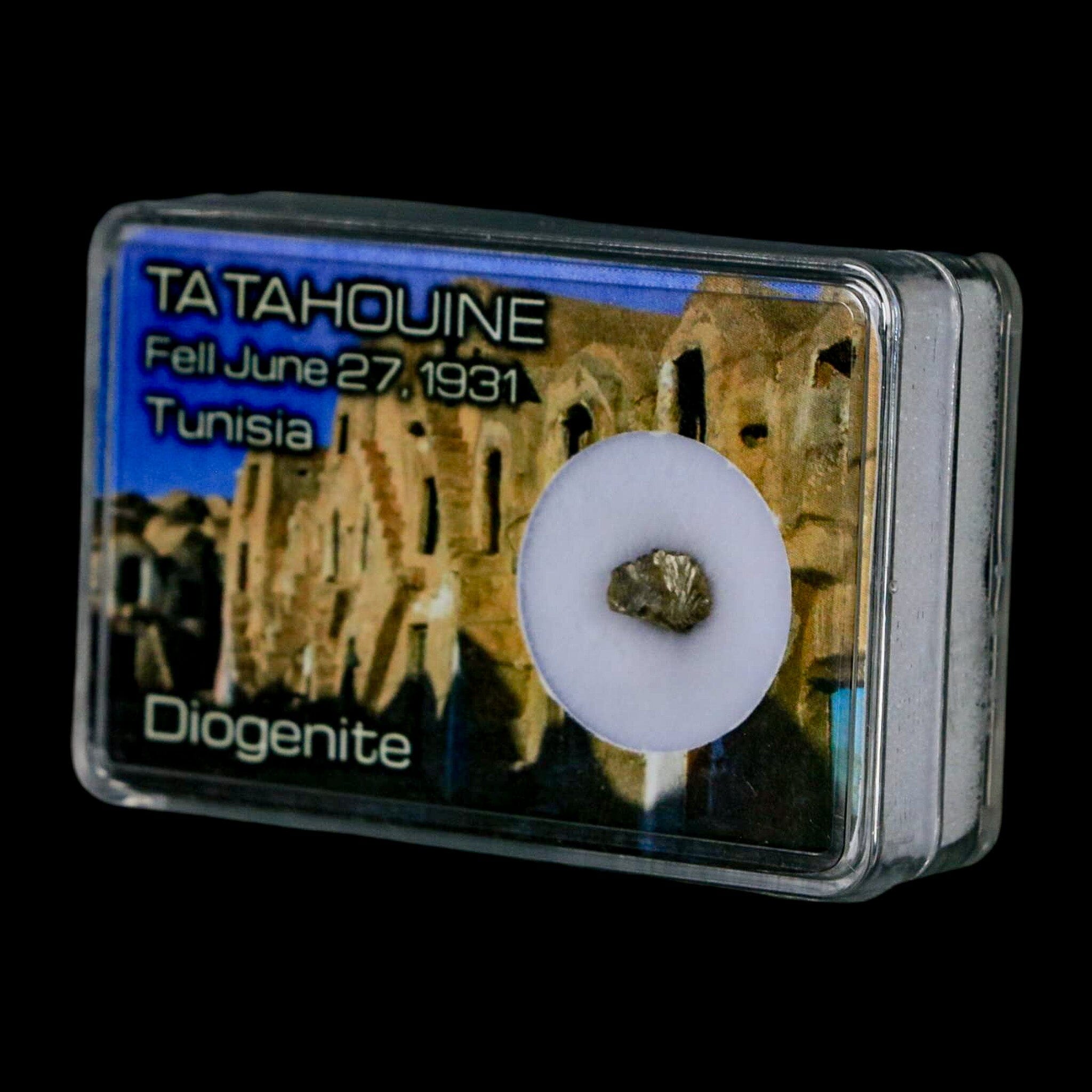
Comes with a Free Display Case.
The item pictured is the one you will receive.
Tatahouine Diogenite is a type of meteorite classified as an achondrite, meaning it is a stony meteorite that has undergone differentiation and crystallization, similar to processes in planetary bodies. Diogenites, including Tatahouine, are believed to originate from asteroid 4 Vesta, one of the largest objects in the asteroid belt. Studying these meteorites provides valuable insights into the formation and evolution of the early solar system.
This Tatahouine diogenite represents a fragment of Vesta's violent past—a piece of ancient planetary geology that defied the odds to reach Earth. Forged in the depths of a differentiated asteroid, this specimen crystallized from molten magma as heavy orthopyroxene minerals sank and solidified into dense, coarse-grained formations. Its dark, iron-rich composition tells the story of slow cooling in Vesta's magma chambers, interrupted by catastrophic impacts that blasted it into the cosmos. Alongside orthopyroxene, traces of olivine, plagioclase, and metallic phases reveal the complex processes that shaped this extraterrestrial relic. Fallen in 1931, this achondrite carries the raw evidence of planetary differentiation—a tangible connection to the solar system's earliest chapters.
The study of diogenites provides valuable information about planetary differentiation processes—how celestial bodies separate into layers based on density—and helps scientists understand the conditions present in the early solar system.
This Tatahouine diogenite exemplifies the refined taxonomy of meteorite science, occupying a distinguished position within the HED classification system. As a member of this elite group alongside howardites and eucrites, each meteorite type illuminates distinct aspects of Vesta's geological evolution. While eucrites preserve evidence of the asteroid's basaltic surface processes and howardites document the chaotic aftermath of impact events, diogenites such as this specimen provide invaluable insight into Vesta's differentiated interior. The mineralogical and chemical signatures preserved within this 1931 fall offer collectors and researchers a sophisticated window into planetary formation and the complex processes that shaped our solar system's earliest chapters.
This classification aids researchers in tracing back the origins and evolutionary history of these celestial materials while providing context for understanding similar bodies throughout our solar system.