




Description
Location: Tunisia
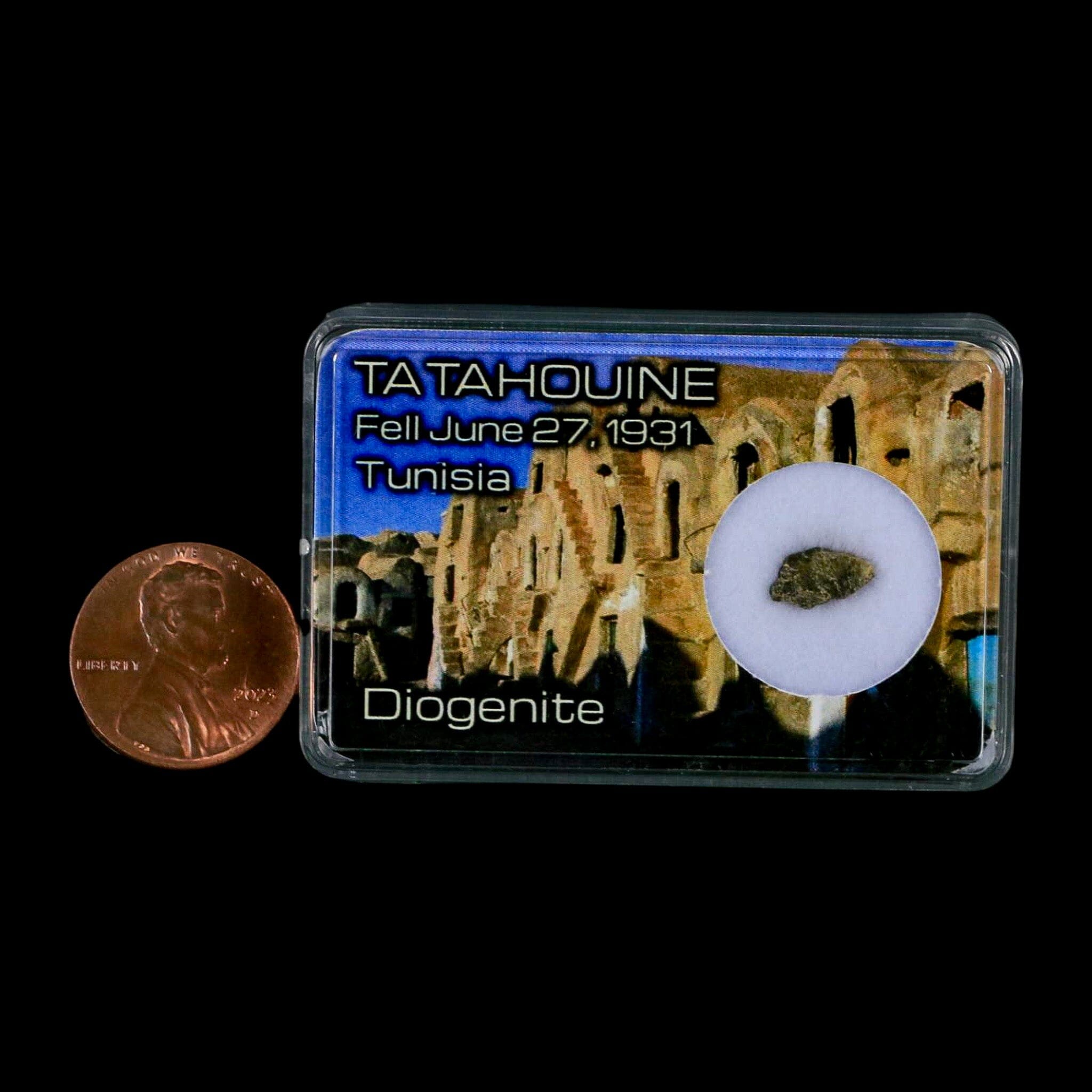
Weight: 0.4 Ounces (Display)
Dimensions: 2.3 Inches Long, 1.5 Inches Wide, 0.6 Inches Thick (Display)
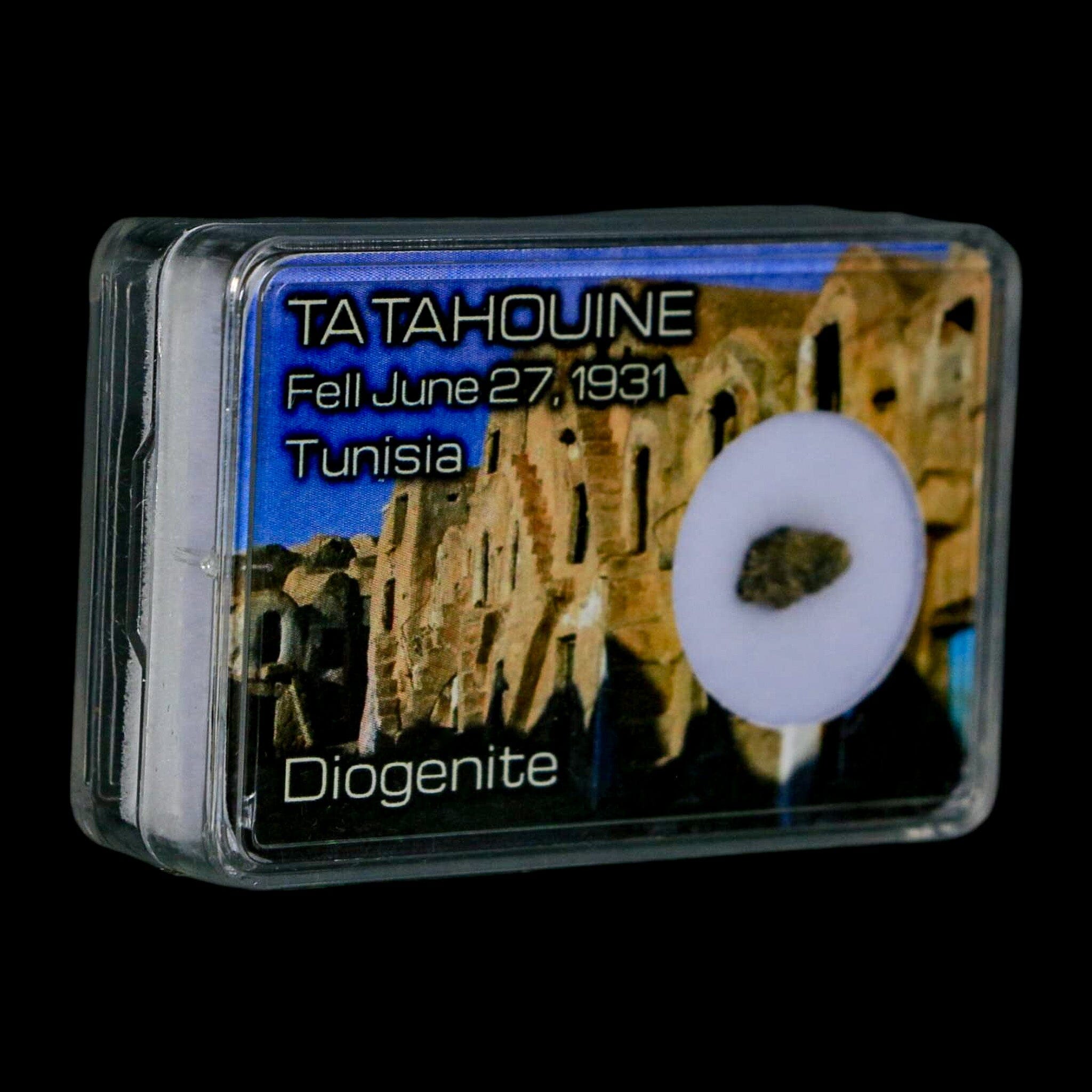
Comes with a Free Display Case.
The item pictured is the one you will receive.
Tatahouine Diogenite is a type of meteorite classified within the group of achondrites, which are stony meteorites that have undergone differentiation and crystallization processes similar to those that occur in planetary bodies. Specifically, diogenites are believed to originate from the asteroid 4 Vesta, one of the largest bodies in the asteroid belt. This classification is part of a broader understanding of meteorites and their origins, which provides insights into the early solar system's formation and evolution.
Diogenites derive their distinctive appearance and physical properties from orthopyroxene, an iron and magnesium-rich mineral that imparts their characteristic dark coloration and substantial density. Beyond this primary constituent, these specimens frequently incorporate olivine, plagioclase feldspar, and metallic phases, with compositional variations reflecting unique cooling trajectories and parent body conditions. The coarse-grained texture typical of diogenites results from gradual crystallization during formation, enabling crystal development substantially larger than observed in other meteorite classes. Many specimens exhibit cumulate textures, evidence of crystal accumulation within cooling magma chambers. Scientific consensus attributes diogenite genesis to differentiated basaltic magmatism on Vesta's surface, where heavier orthopyroxene minerals crystallized and settled within magma chambers. Subsequent impact events on Vesta excavated these materials, launching them into space where they eventually reached Earth as meteoritic specimens, preserving a record of planetary differentiation processes.
Diogenites represent a crucial window into planetary evolution, revealing how differentiation processes shaped celestial bodies in the early solar system. These meteorites belong to the HED (Howardite-Eucrite-Diogenite) group, a classification system that encompasses three distinct types based on mineralogical and chemical characteristics. While howardites represent composite material from both eucrite and diogenite sources, and eucrites display basaltic compositions unique to their parent body, diogenites stand apart with their own distinctive mineral assemblages. By examining these specimens, researchers reconstruct the thermal and compositional histories of planetary bodies, establishing connections between meteoritic materials and the broader context of solar system formation and evolution.