


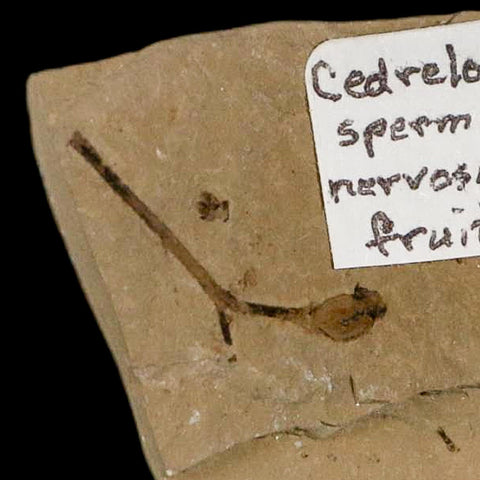
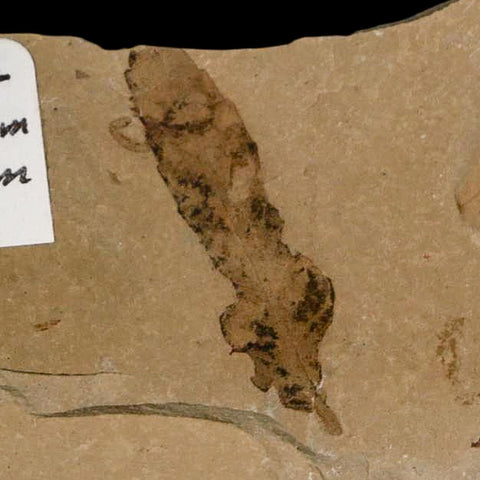
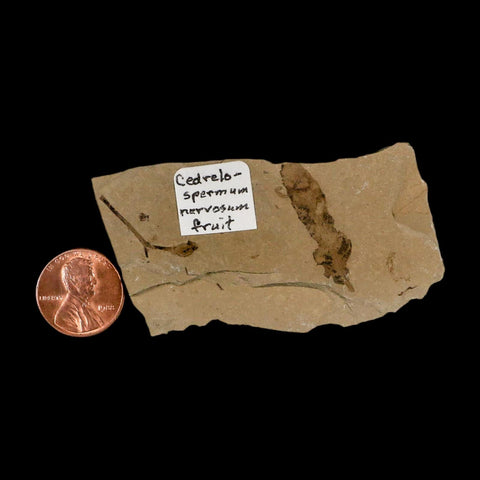
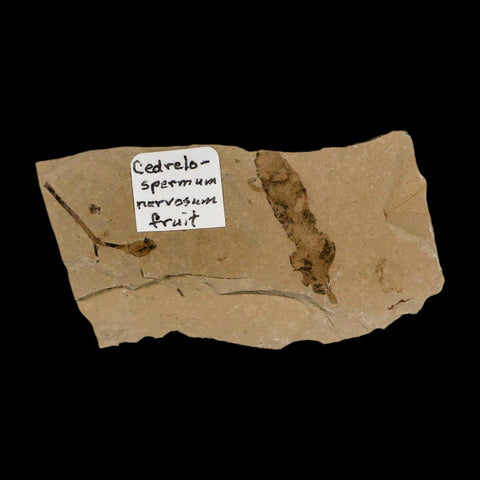
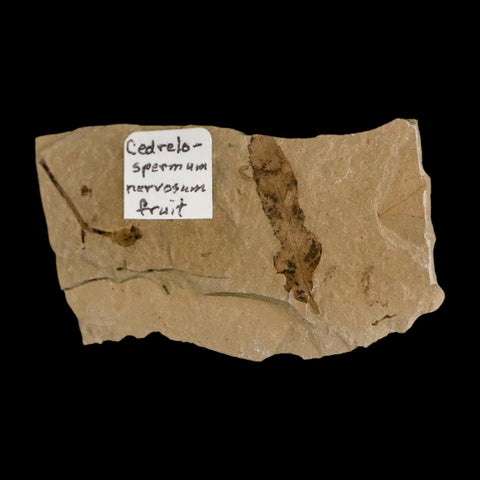
Rare Cedrelospermum Nervosum Fruit Fossil Plant Leaf and Balloon Vine Leaf Eocene Age
Location: Green River Formation, Uintah County, Utah
Weight: 0.6 Ounces
Dimensions: 2.7 Inches Long, 1.4 Inches Wide, 0.3 Inches Thick (Plate)
Friut Dimensions: 0.9 Inches Long, 0.4 Inches Wide
The item pictured is the one you will receive.
Cardiospermum Fossil Leaf – Rare Eocene Herbaceous Vine from the Green River Formation
Step back in time with this exquisite Cardiospermum fossil leaf, dating to the early Middle Eocene (approximately 48–50 million years ago). Preserved in the famous Green River Formation across Utah, Colorado, and Wyoming, this specimen exhibits a deep, dark chocolate hue and exceptional detail, capturing the delicate structure of this herbaceous vine genus.
Cardiospermum was an important component of the Eocene lake-margin vegetation, thriving around the ancient lakes where the Green River shales formed. Fossilized leaves like this provide valuable insight into paleoecology, plant diversity, and freshwater ecosystems of the Paleogene period. The genus includes herbaceous vines, and today, one species is considered invasive in the Southern United States, illustrating the enduring ecological relevance of this plant lineage.
Ideal for fossil collectors, paleobotany enthusiasts, educators, and museums, this Cardiospermum fossil leaf is both a scientifically significant and visually stunning specimen. Its preservation quality makes it perfect for display, study, or collection, providing a tangible connection to the lush Eocene landscapes of North America. As one of the most captivating examples of Green River flora, this fossil highlights the rich diversity and ecological importance of prehistoric plants, making it a must-have for any serious collection or educational exhibit.