

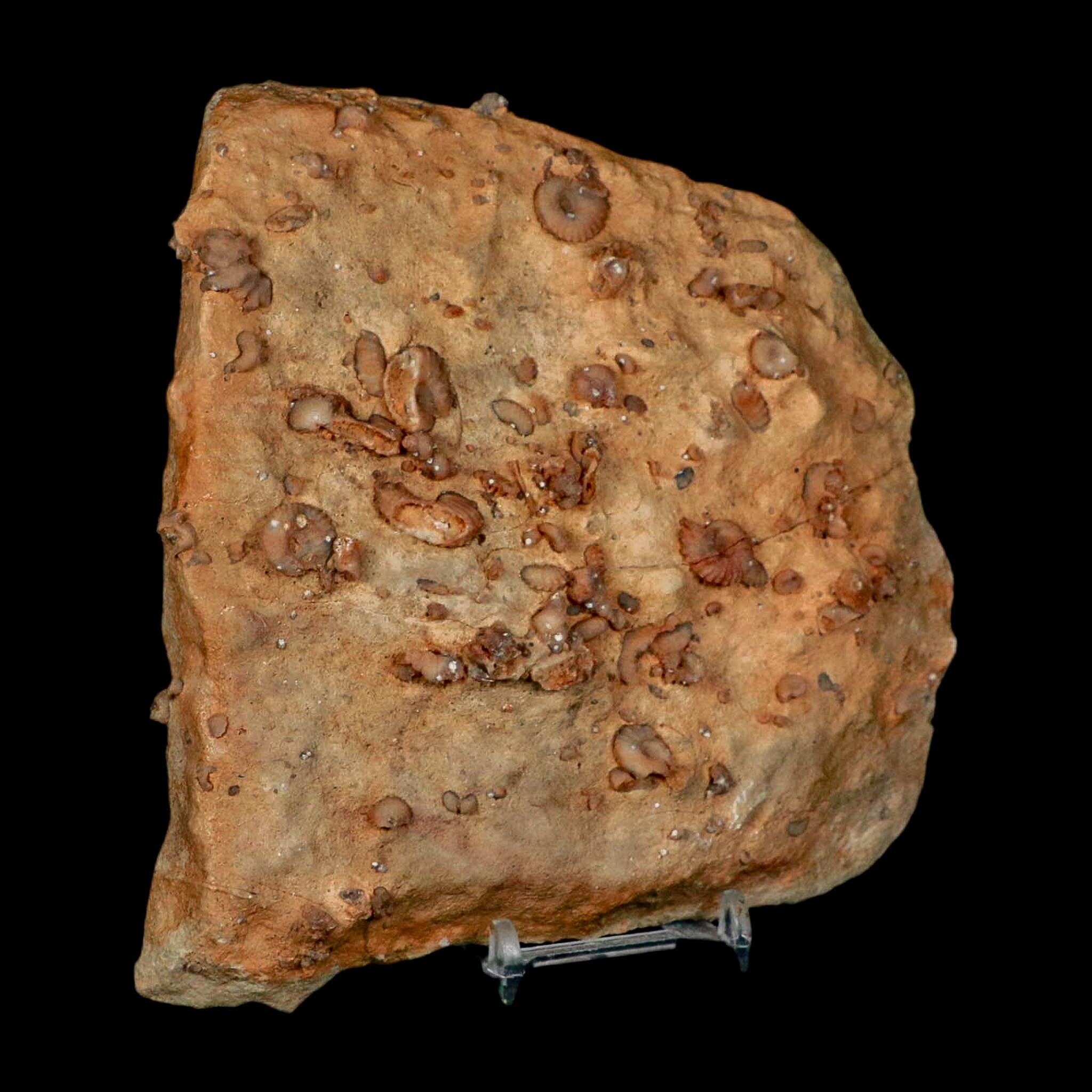


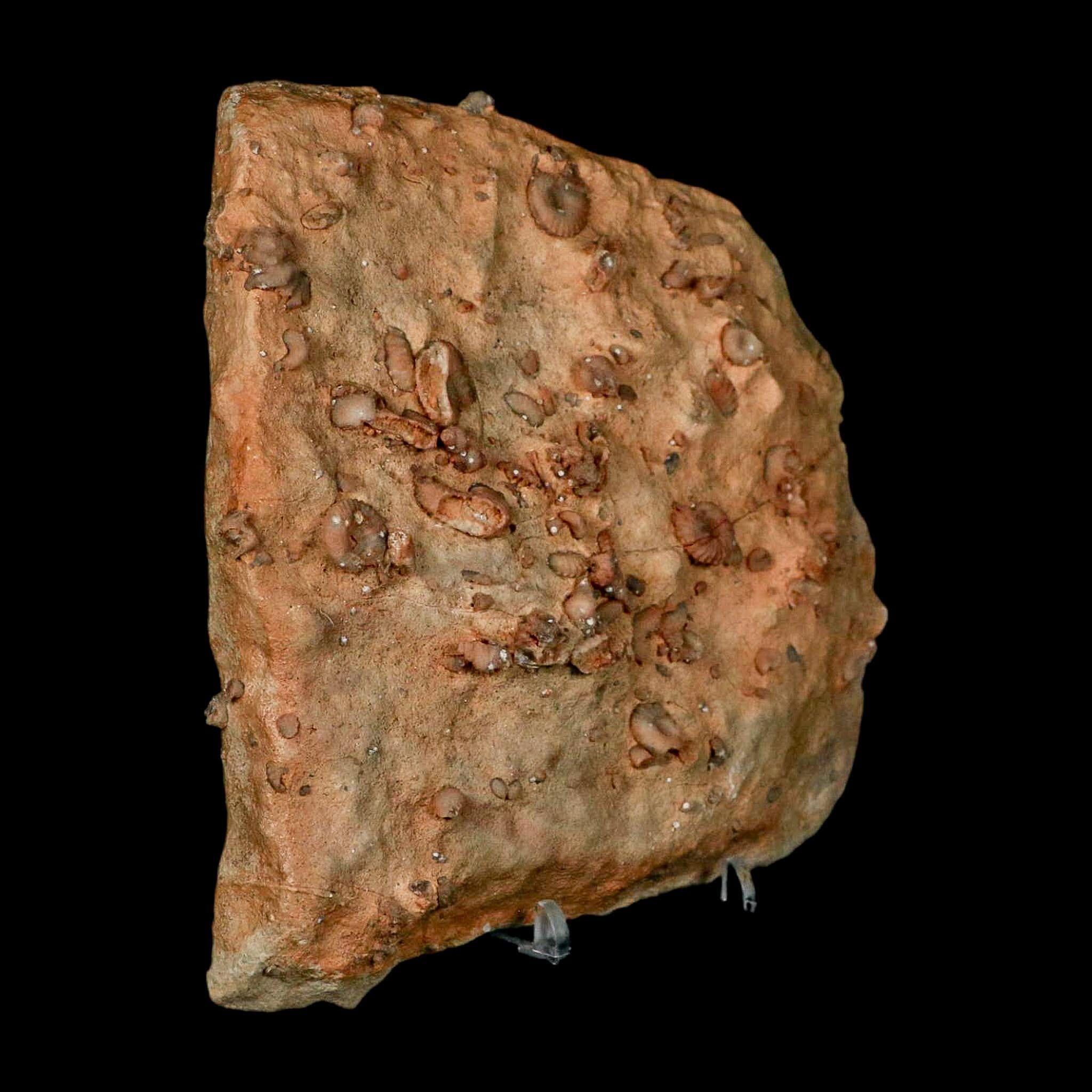
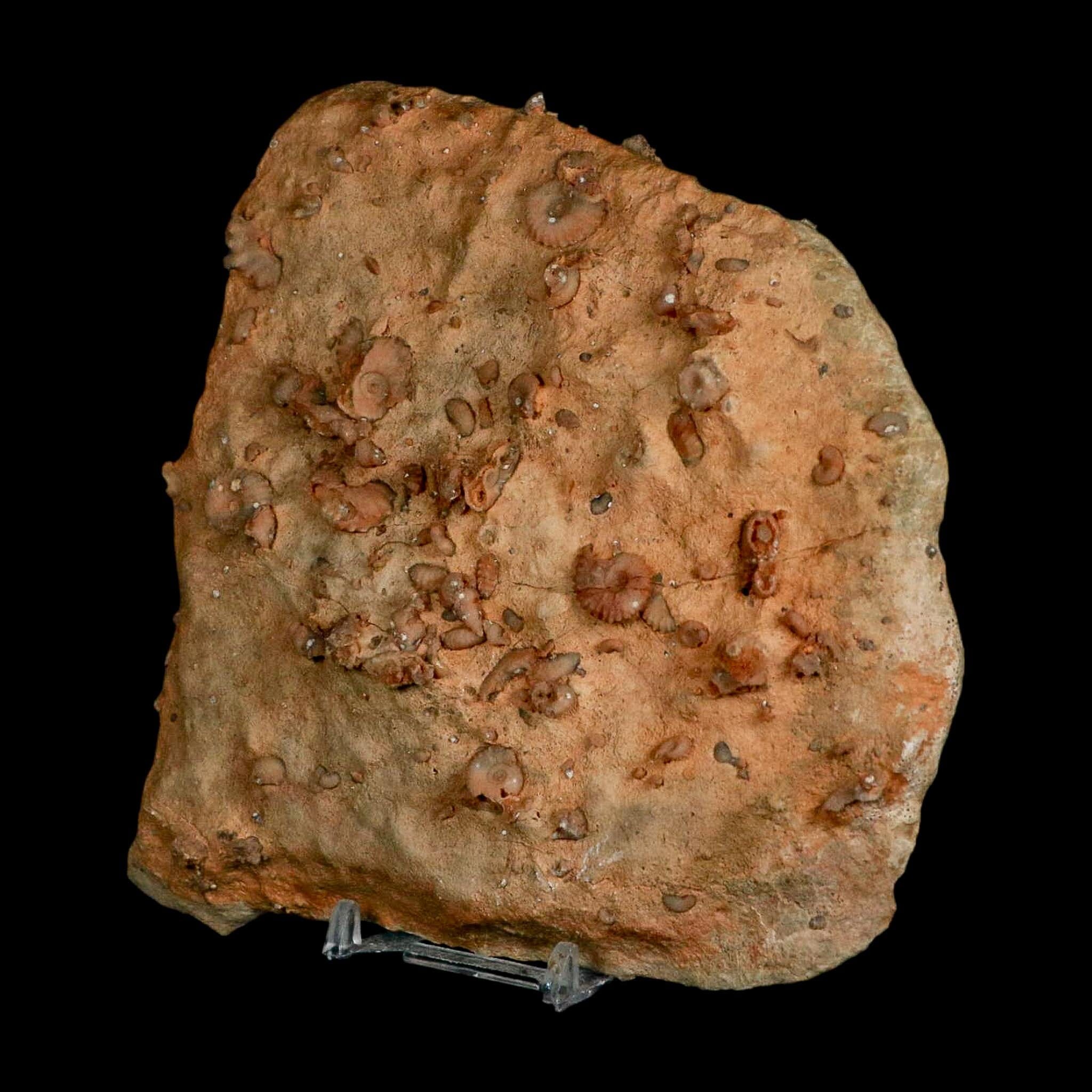



Description
Location: Agadir, Morocco
Weight: 1 Pound 9.3 Ounces
Dimensions: 5.6 Inches Long, 5.5 Inches Wide, 1.3 Inches Thick
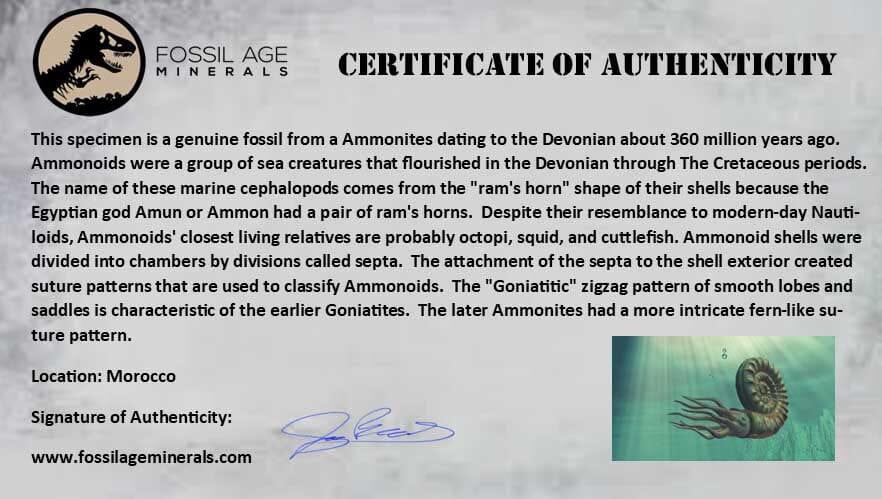
Comes with a Certificate of Authenticity.
Comes with a Free Stand.
The item pictured is the one you will receive.
360 million years old.
Ammonoids were extinct marine cephalopods that flourished in Earth’s oceans from the Devonian through the Cretaceous periods. Belonging to the subclass Ammonoidea, these remarkable invertebrates dominated prehistoric seas for hundreds of millions of years before disappearing in the mass extinction that ended the age of dinosaurs.
Their iconic coiled spiral shells—often compared to a ram’s horn—inspired their name, derived from the Egyptian god Amun, traditionally depicted with curved horns. Although their shells resemble those of modern nautiloids, ammonoids are more closely related to living octopus, squid, and cuttlefish.
The ammonoid shell was divided internally into chambers separated by thin walls called septa. As the animal grew, it moved forward into new chambers, sealing off older ones. The intricate lines where septa met the outer shell created distinctive suture patterns used to classify different groups. Early forms, known as Goniatites, displayed simple zigzag sutures, while later Ammonites evolved complex, fern-like patterns of extraordinary detail.
