

Description
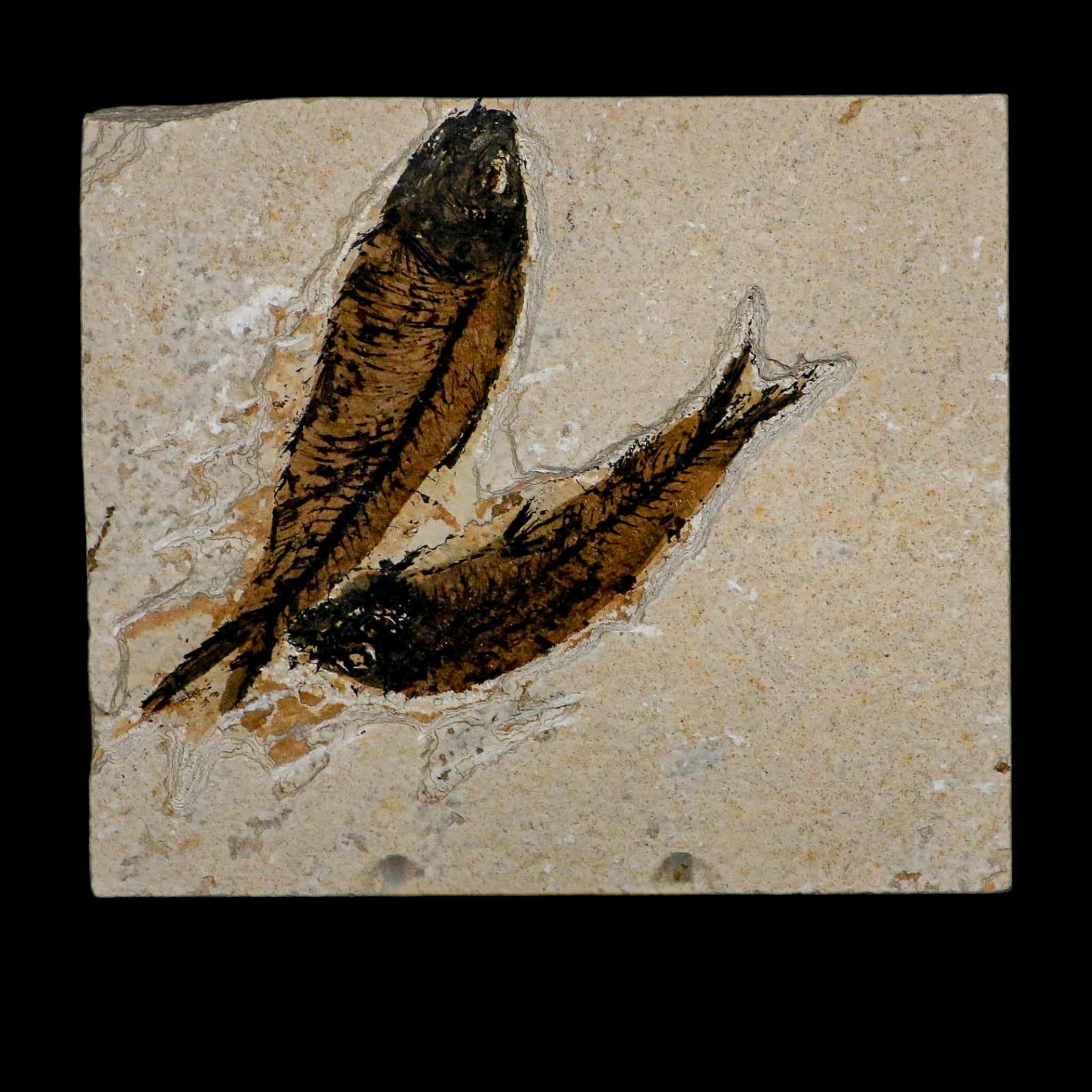
Location: Kemmerer, Wyoming
Weight: 10.1 Ounces
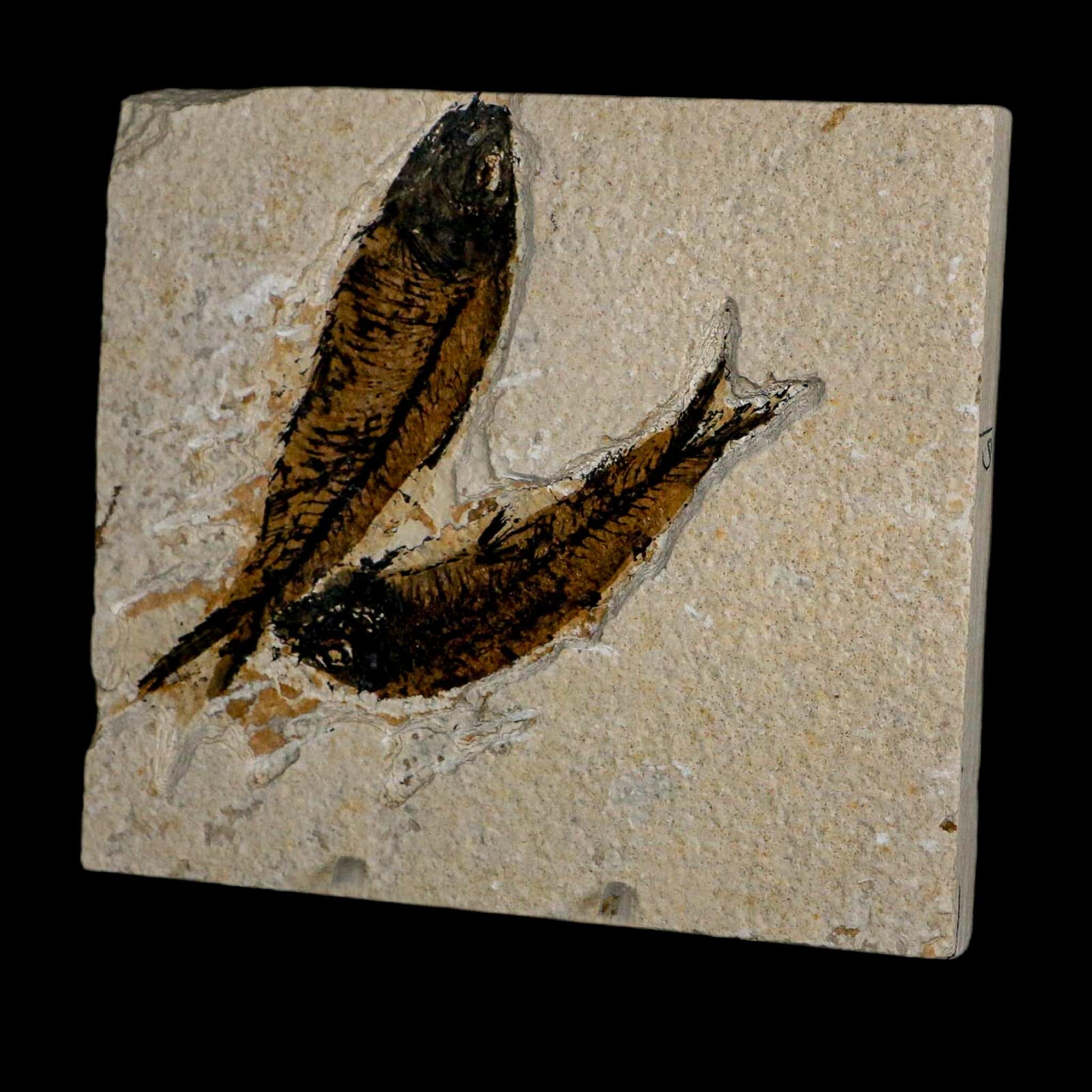
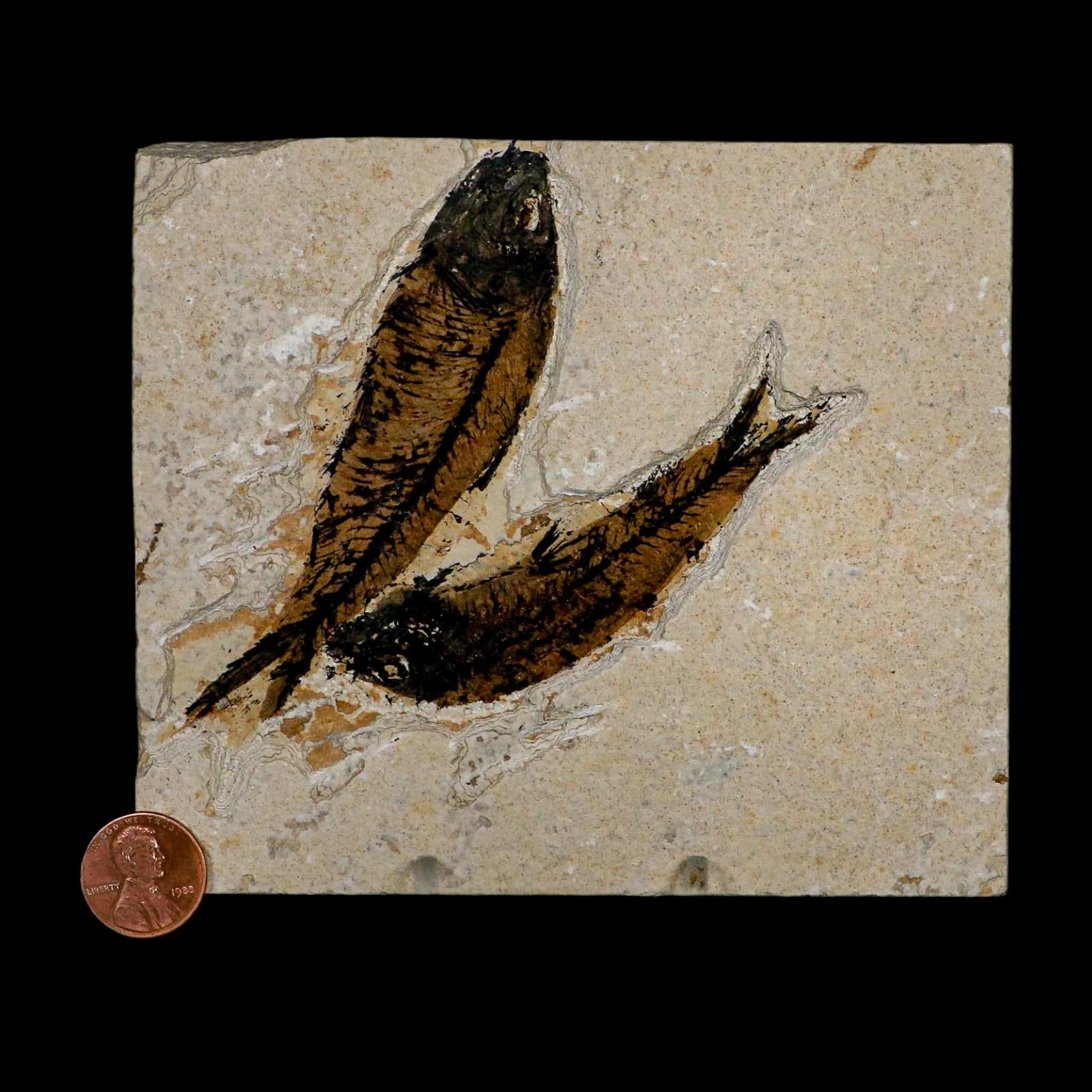
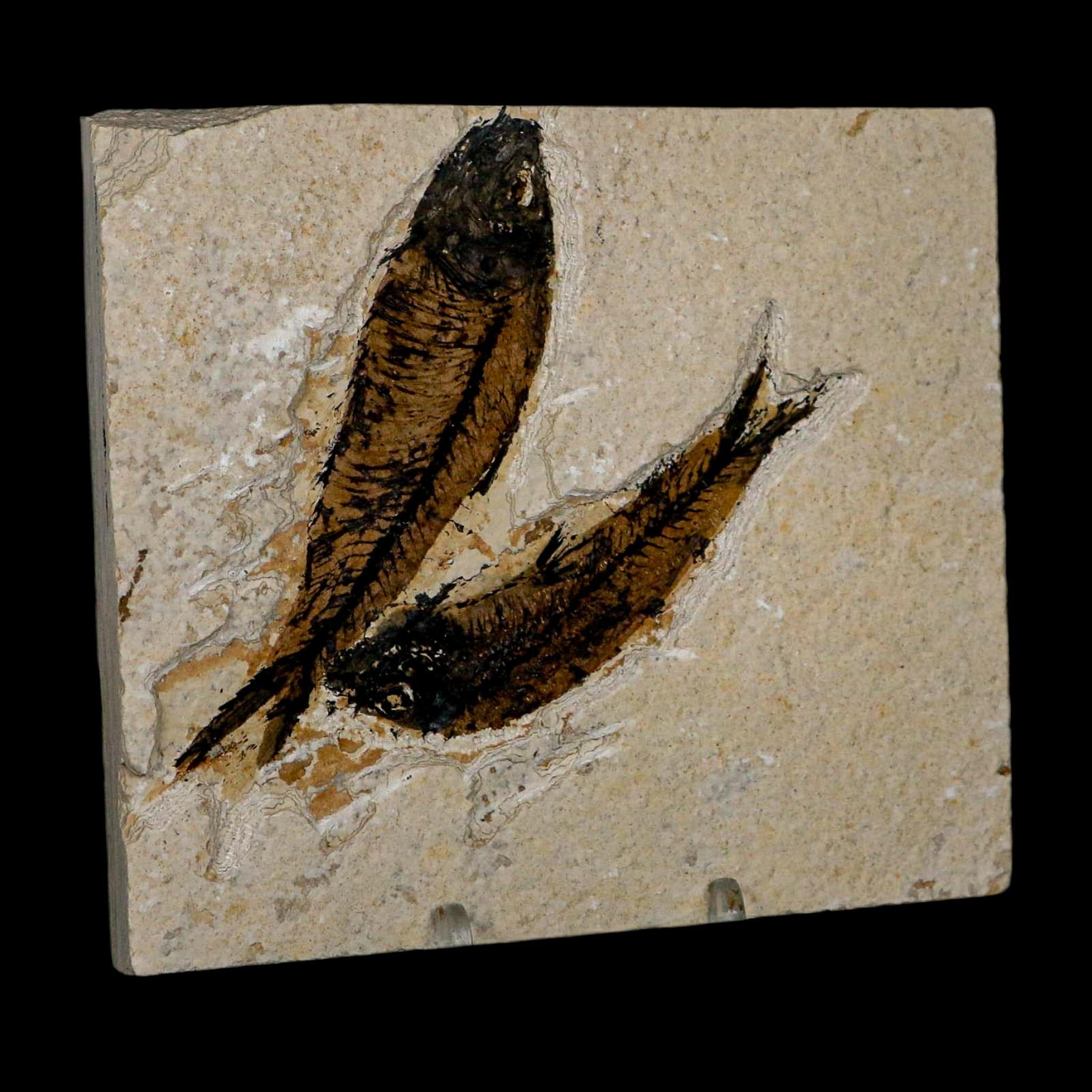
Dimensions: 5.1 Inches Long, 4.5 Inches Wide, 0.4 Inches Thick (Plate)
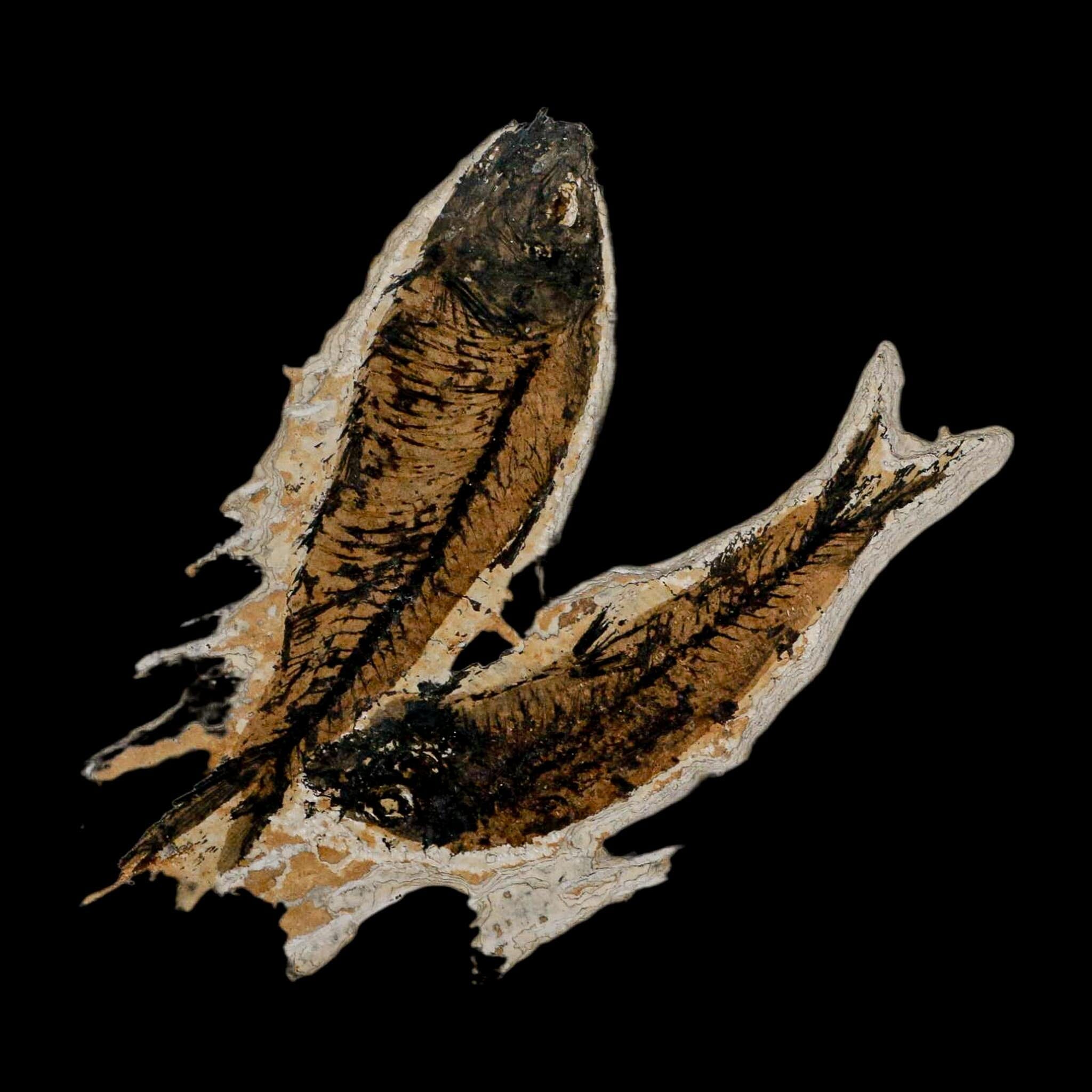
Fish One Dimensions: 3.8 Inches Long, 0.9 Inches Wide
Fish Two Dimensions: 3.2 Inches Long, 0.9 Inches Wide
Comes with a Certificate of Authenticity.
Comes with a Free Stand.
The item pictured is the one you will receive.
50 million years old, Eocene age
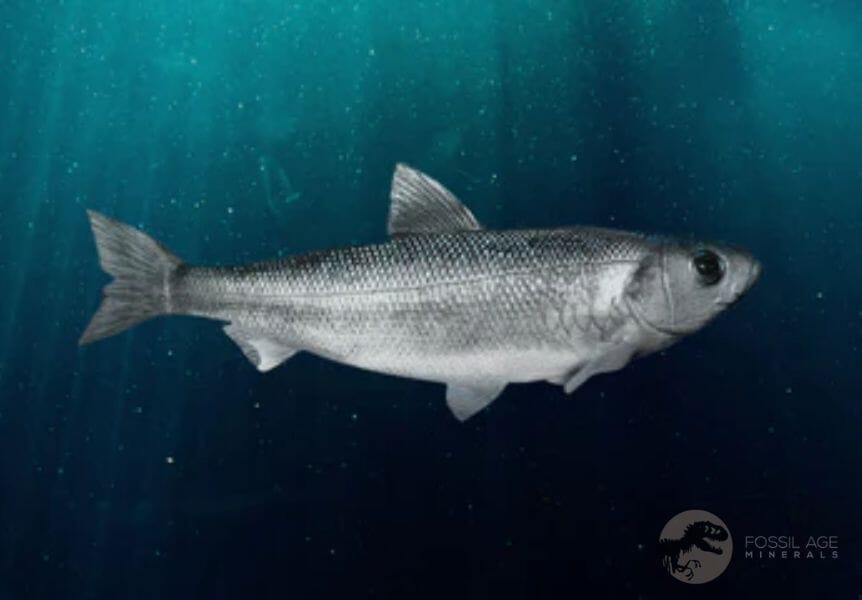
The small herring-like fish Knightia eocaena dominates the fossil assemblage of Fossil Lake and is considered the most frequently preserved articulated vertebrate fossil in the world. Its abundance and scientific importance led to its designation as Wyoming’s State Fossil. Specimens commonly reach lengths of up to 25 cm (10 inches), making them a defining feature of Green River Formation fossil collections.
During the early Paleogene, roughly 50 million years ago, Fossil Lake occupied a broad basin in what is now southwest Wyoming. At its greatest extent, the lake spanned approximately 930 square miles. Today, around 500 square miles of fossil-bearing sediments are still preserved. Within this area, the 230 square miles of central lake-bed limestone are especially famous for their fossil richness, as well as for associated geologic features such as ancient beaches, deltas, and spring deposits that reveal shifting lake margins and nearshore habitats.
The remarkable fossil preservation at Fossil Lake is the result of distinctive water chemistry that reduced decomposition and discouraged scavengers. Thin, millimeter-scale layers of limestone accumulated gradually, sealing organisms within finely laminated rock. These conditions created the densest known concentration of fossil fish in the world and established Fossil Lake as the most complete Paleogene freshwater lake record.
Since the first major discoveries in the late 19th century, thousands of exceptionally detailed fossil fish have been collected. These laminated deposits document a complex aquatic community that included cyanobacteria, diverse plant life, insects, and crustaceans such as shrimp, crawfish, and ostracods. Amphibians like frogs and early salamanders thrived alongside turtles, alligators, birds, and early mammals, including the earliest pantolestid, a semi-aquatic, otter-like species. The surrounding subtropical forests and wetlands are preserved through rare terrestrial fossils, including early horses, snakes, lizards, bats, birds, an apatemyid insectivore, miacoid carnivores, and a remarkable plant assemblage of over 325 identified leaf, seed, and flower types.
