
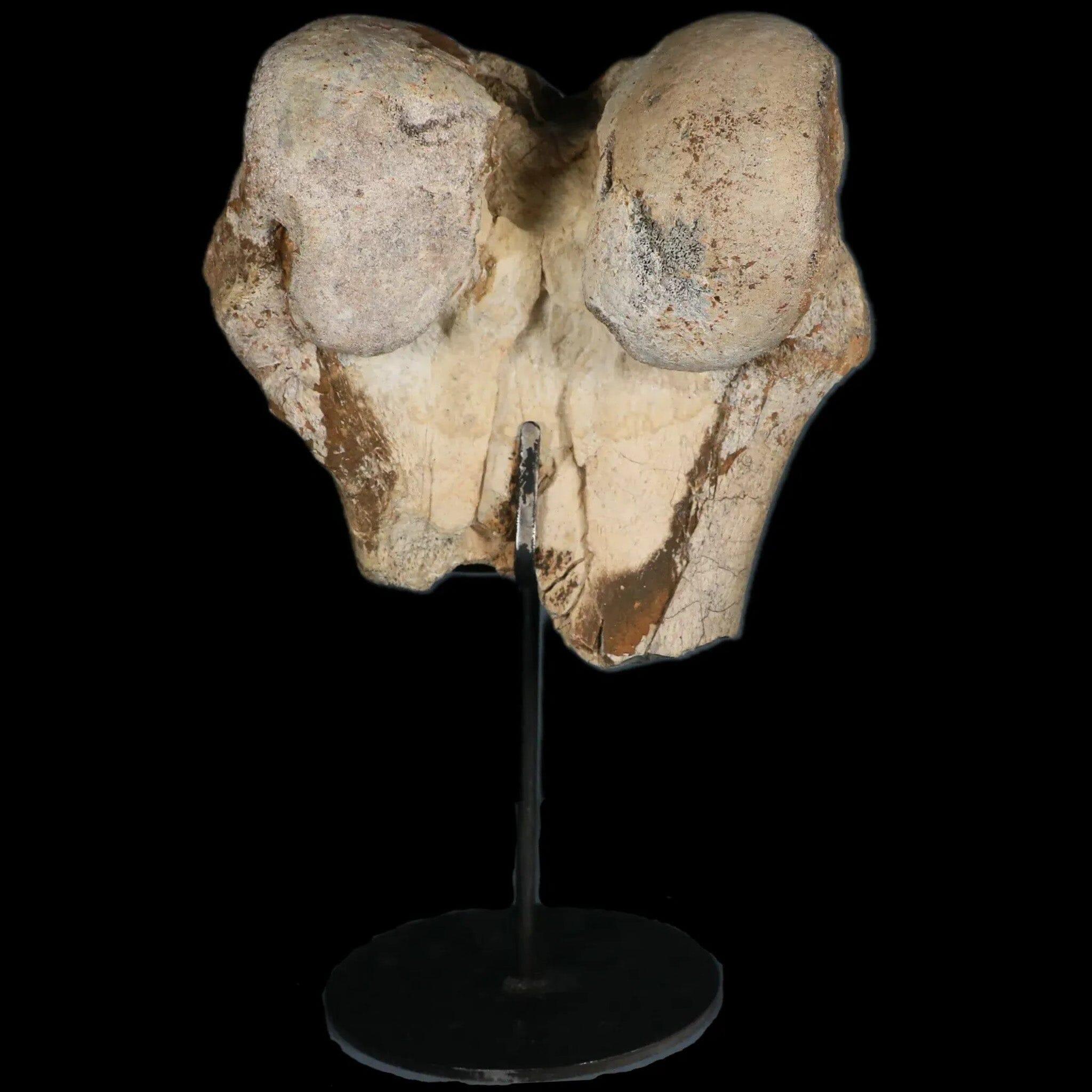
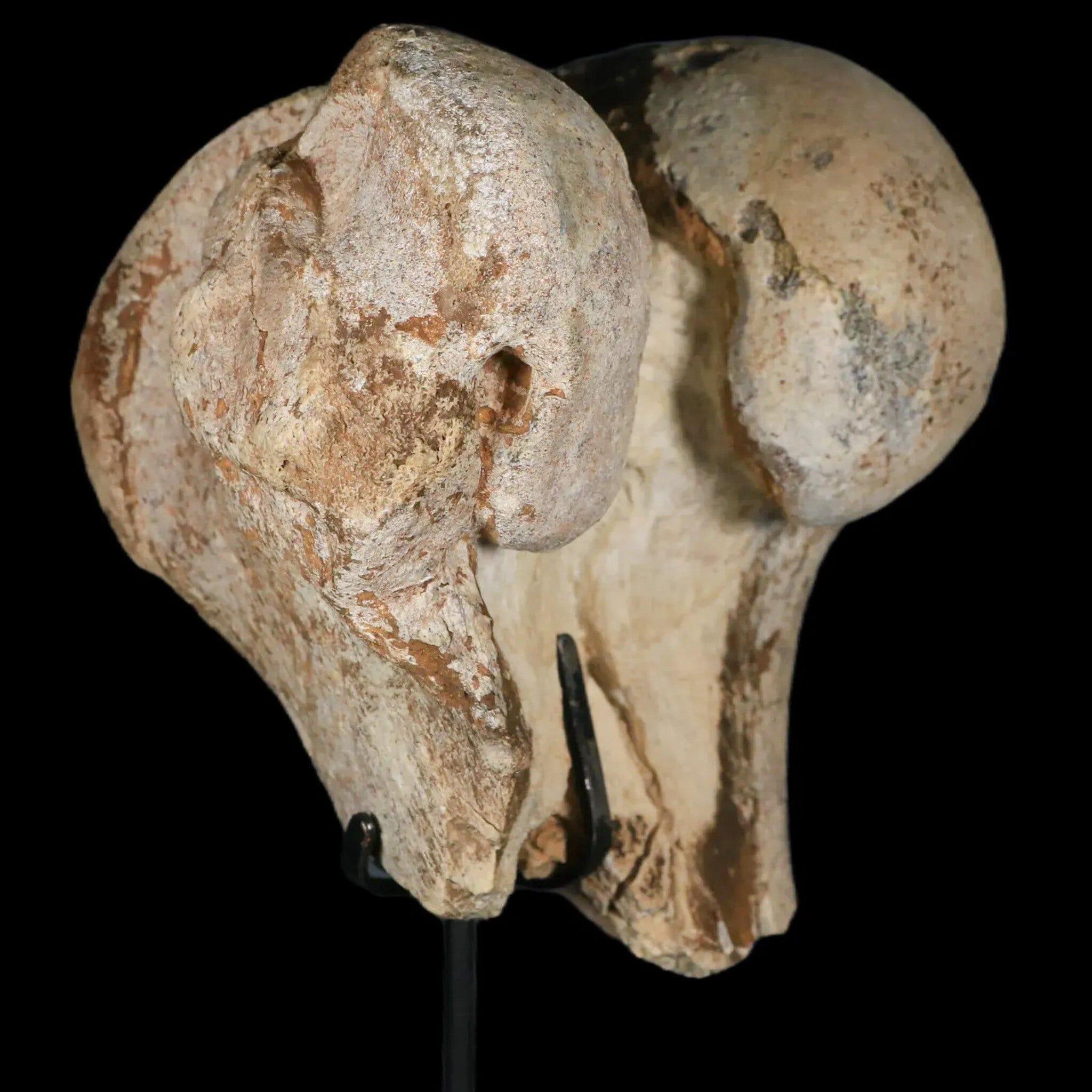
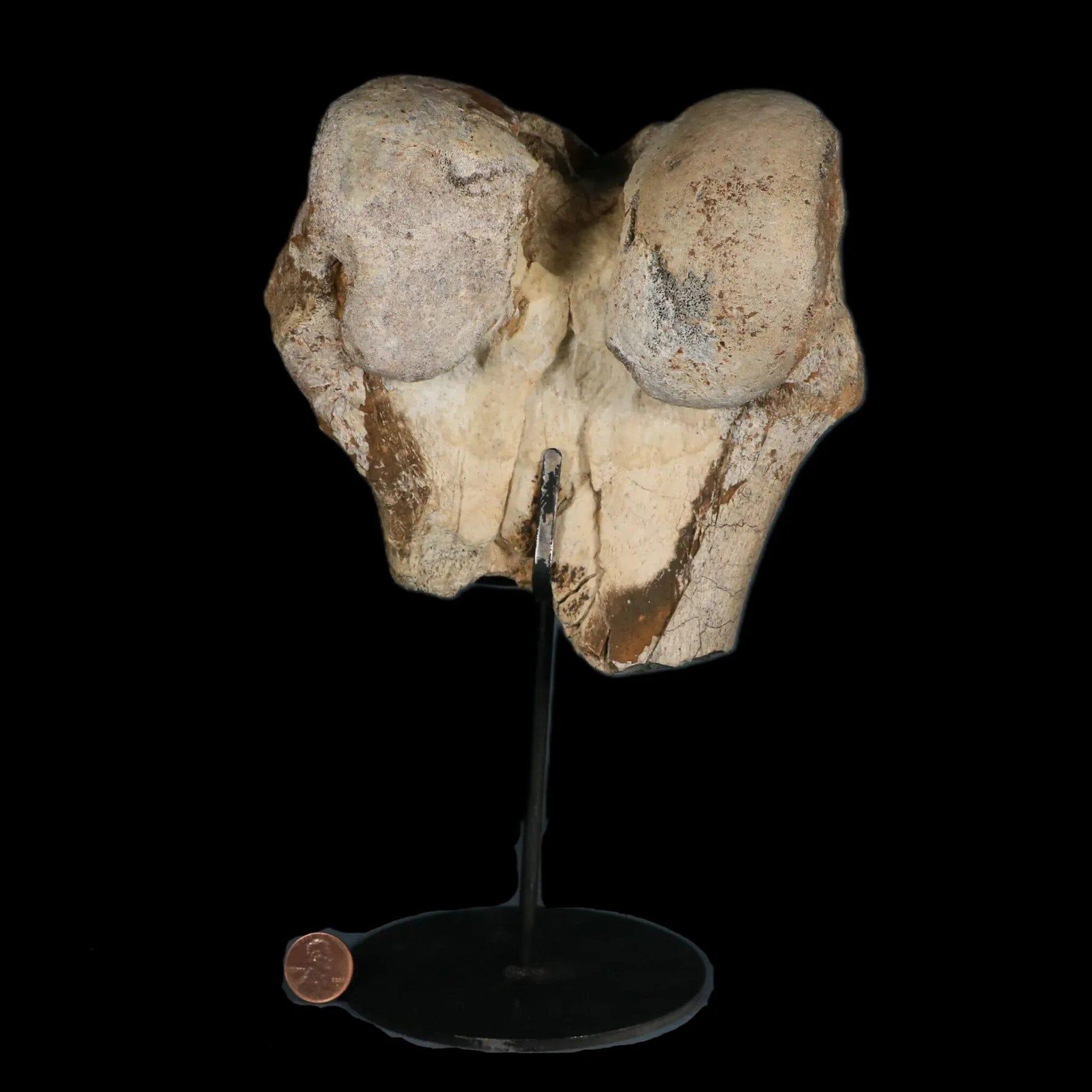
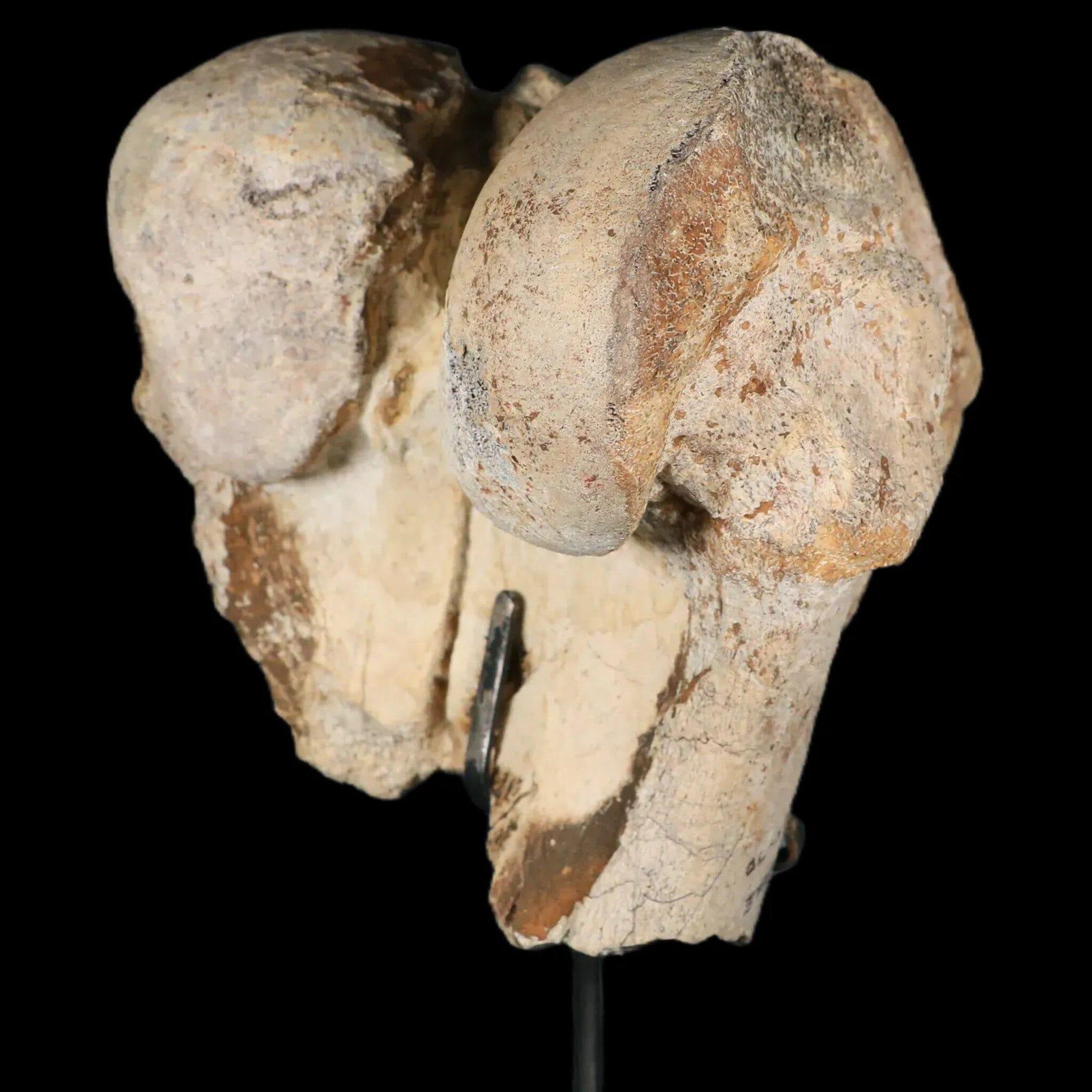
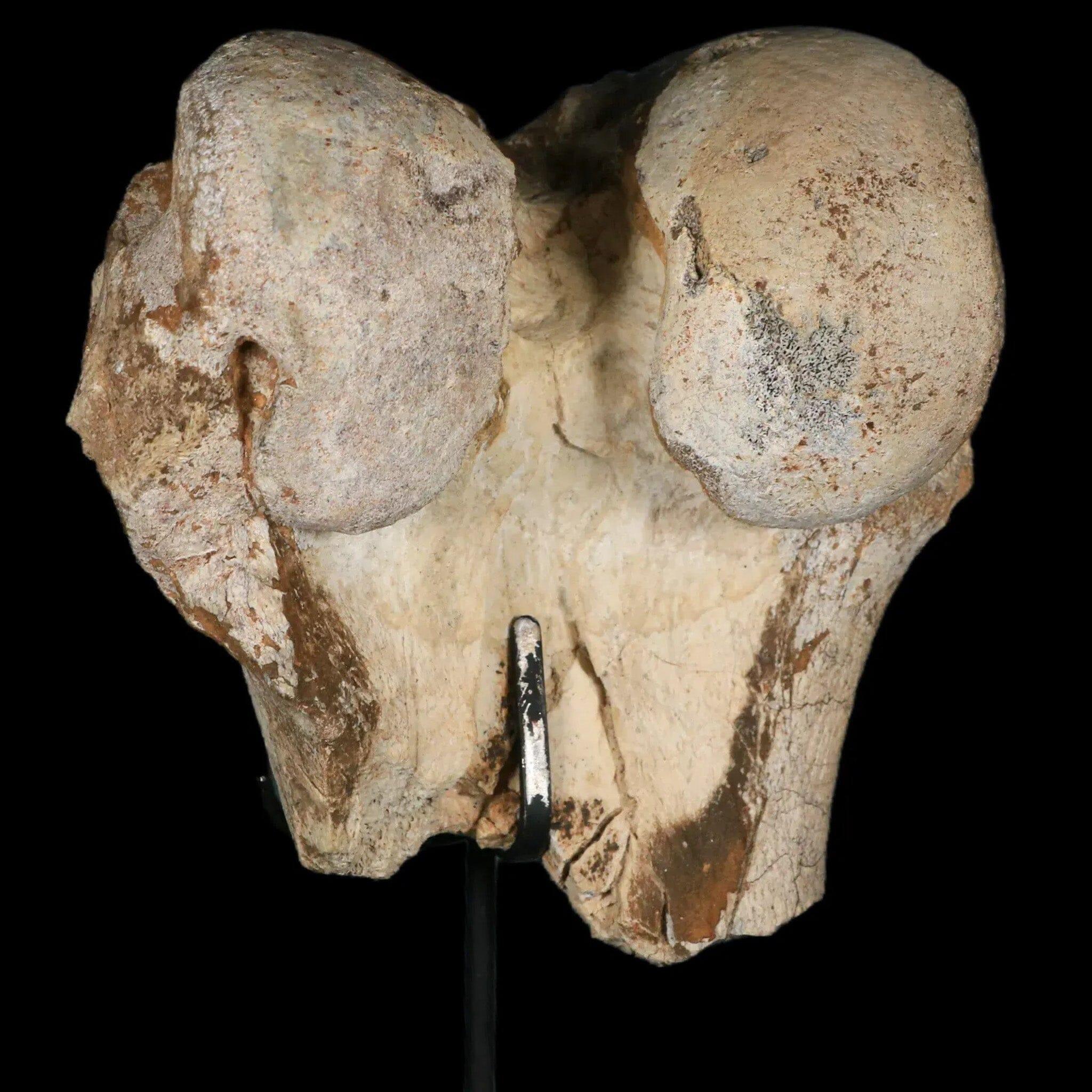
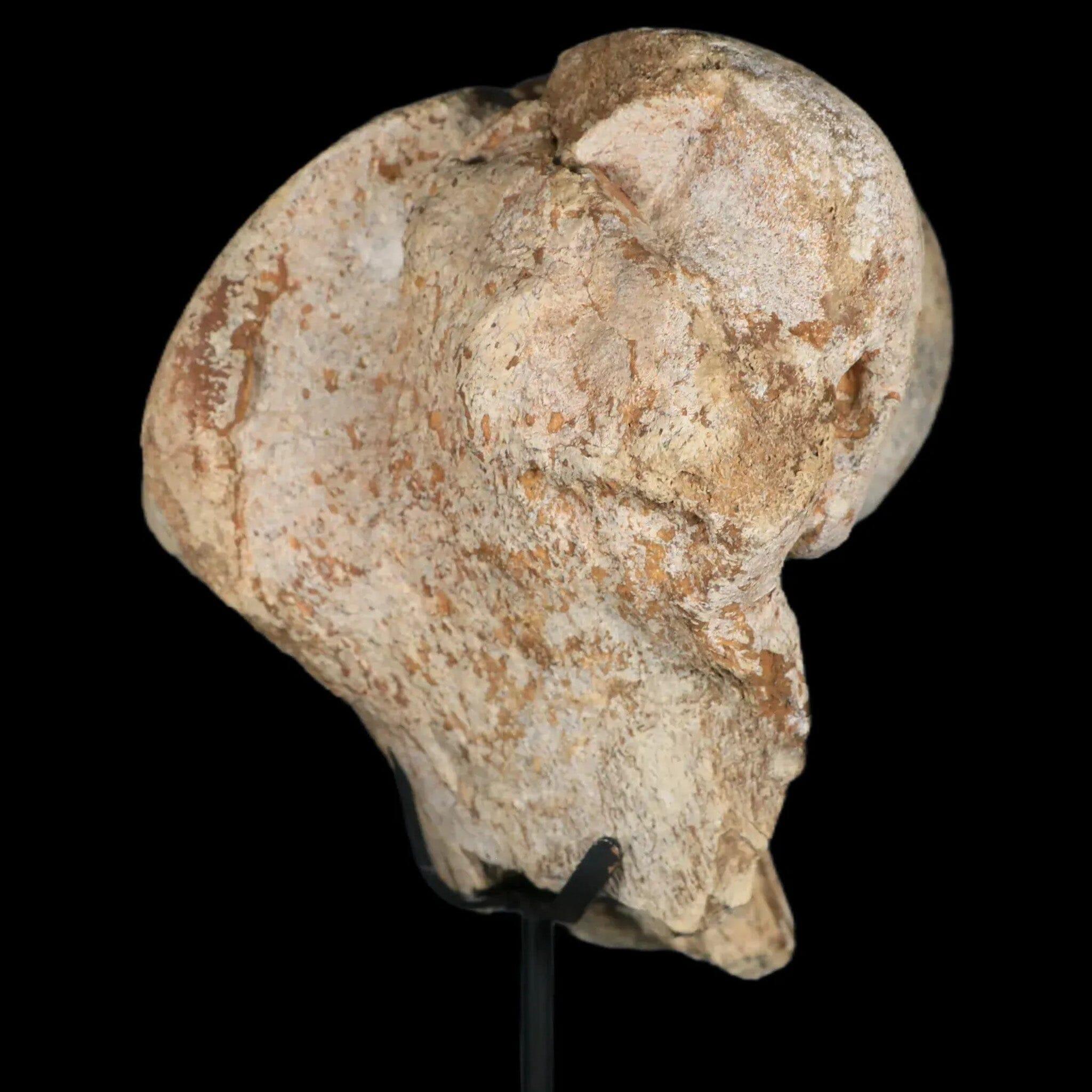
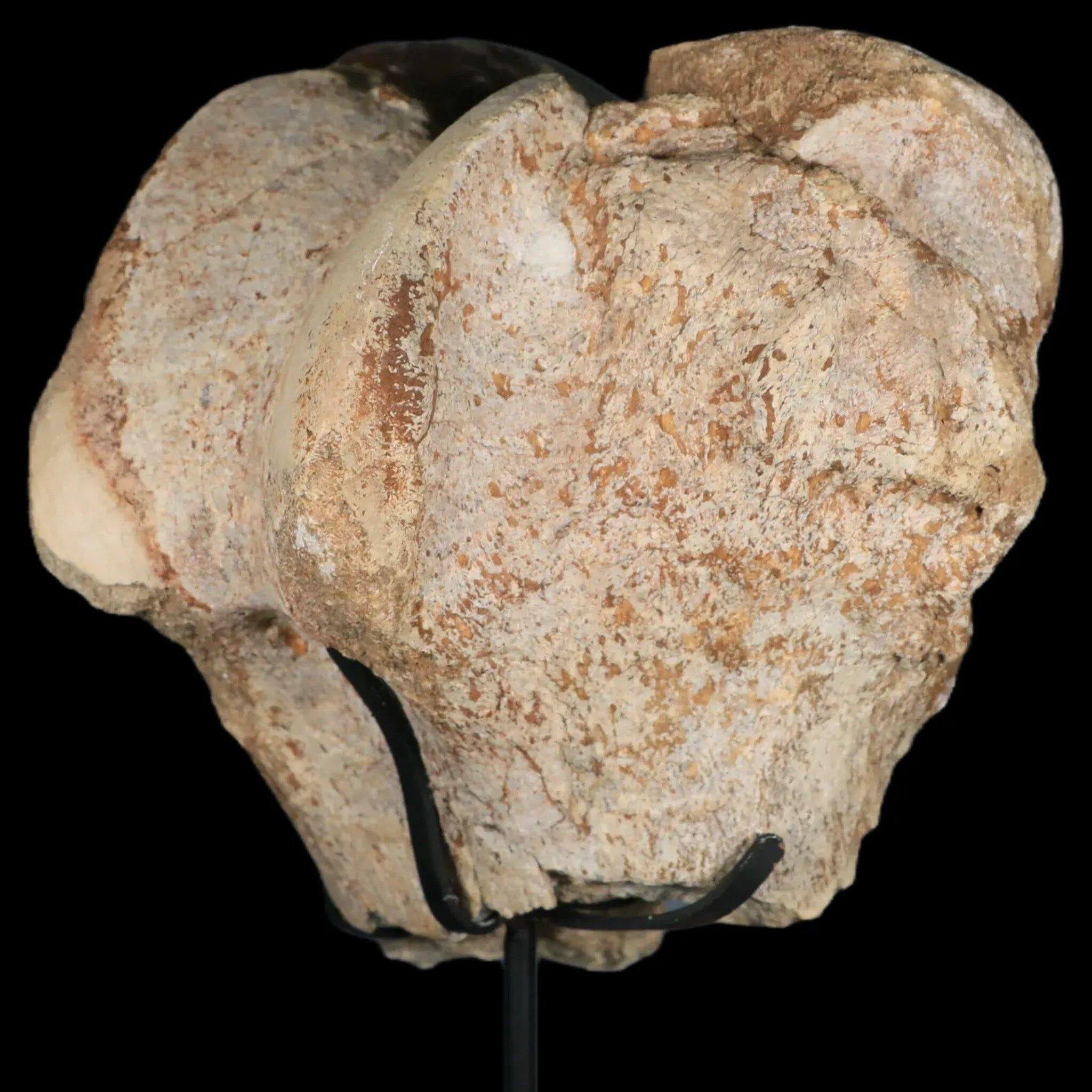
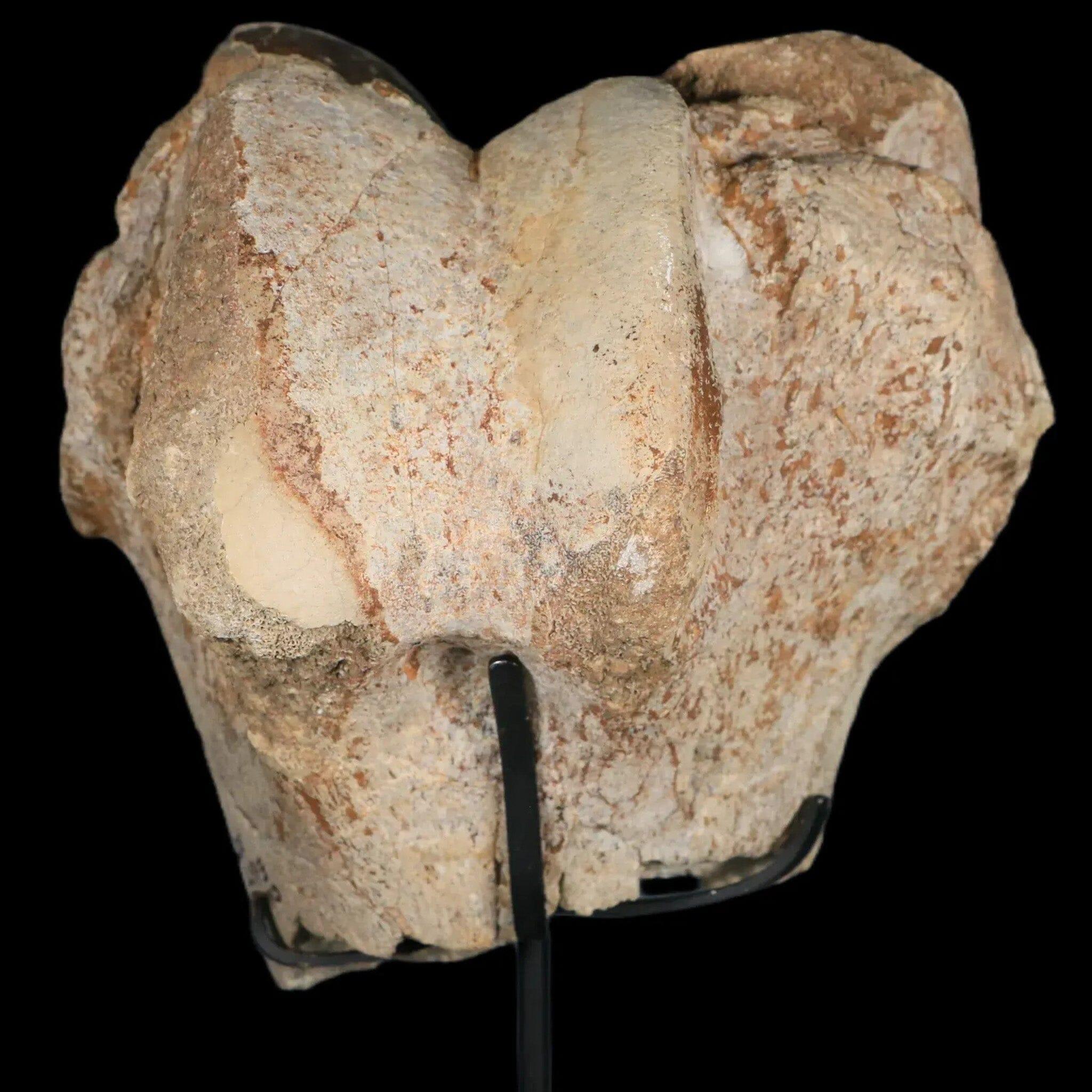
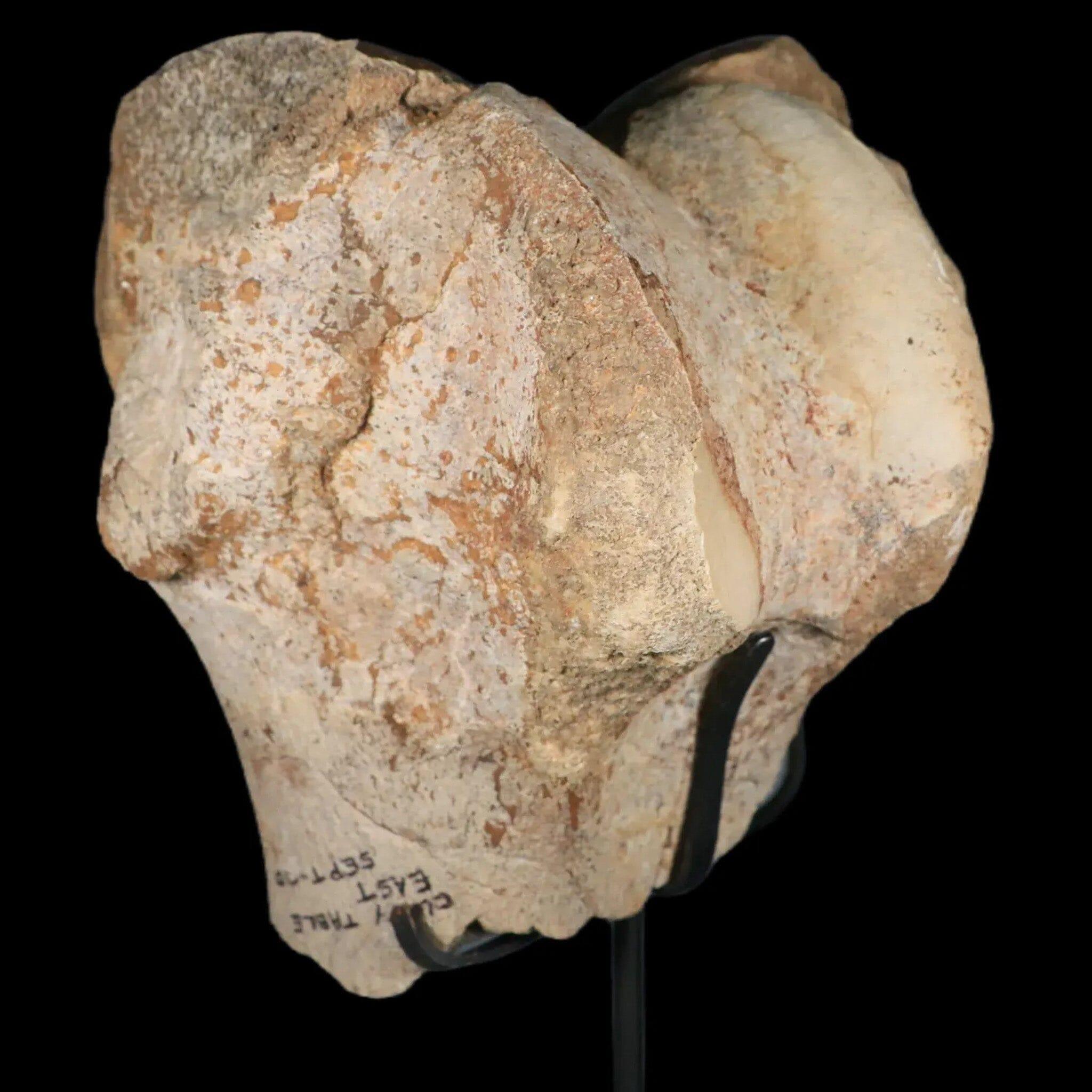
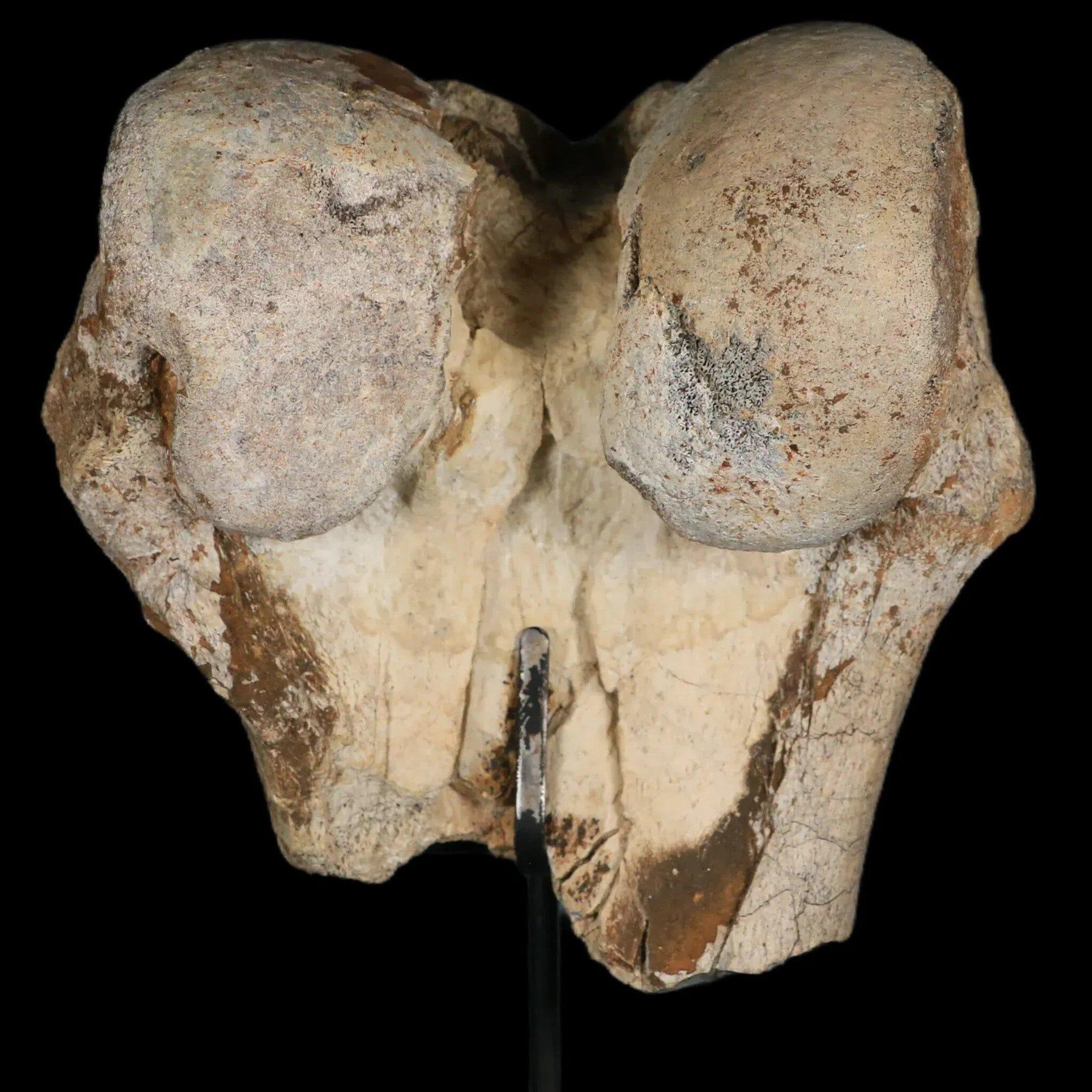
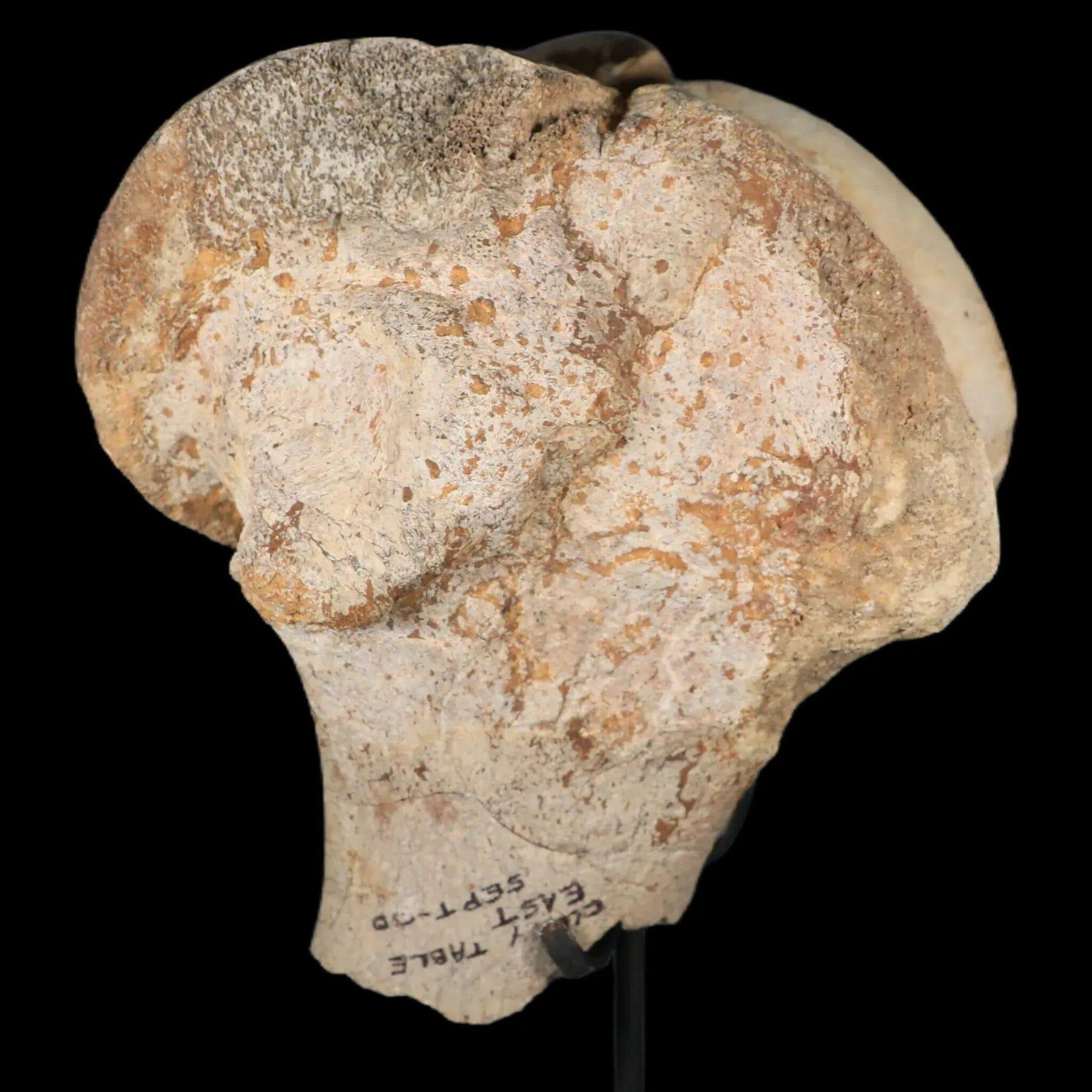


Description
Location: White River Badlands, South Dakota
Weight: 5 Pounds 8.5 Ounces
Limb Bone Dimensions: 6 Inches Long, 5.8 Inches Wide, 5.6 Inches Thick
Comes with a Custom Metal Stand.
The item pictured is the one you will receive.
This is a genuine fossil
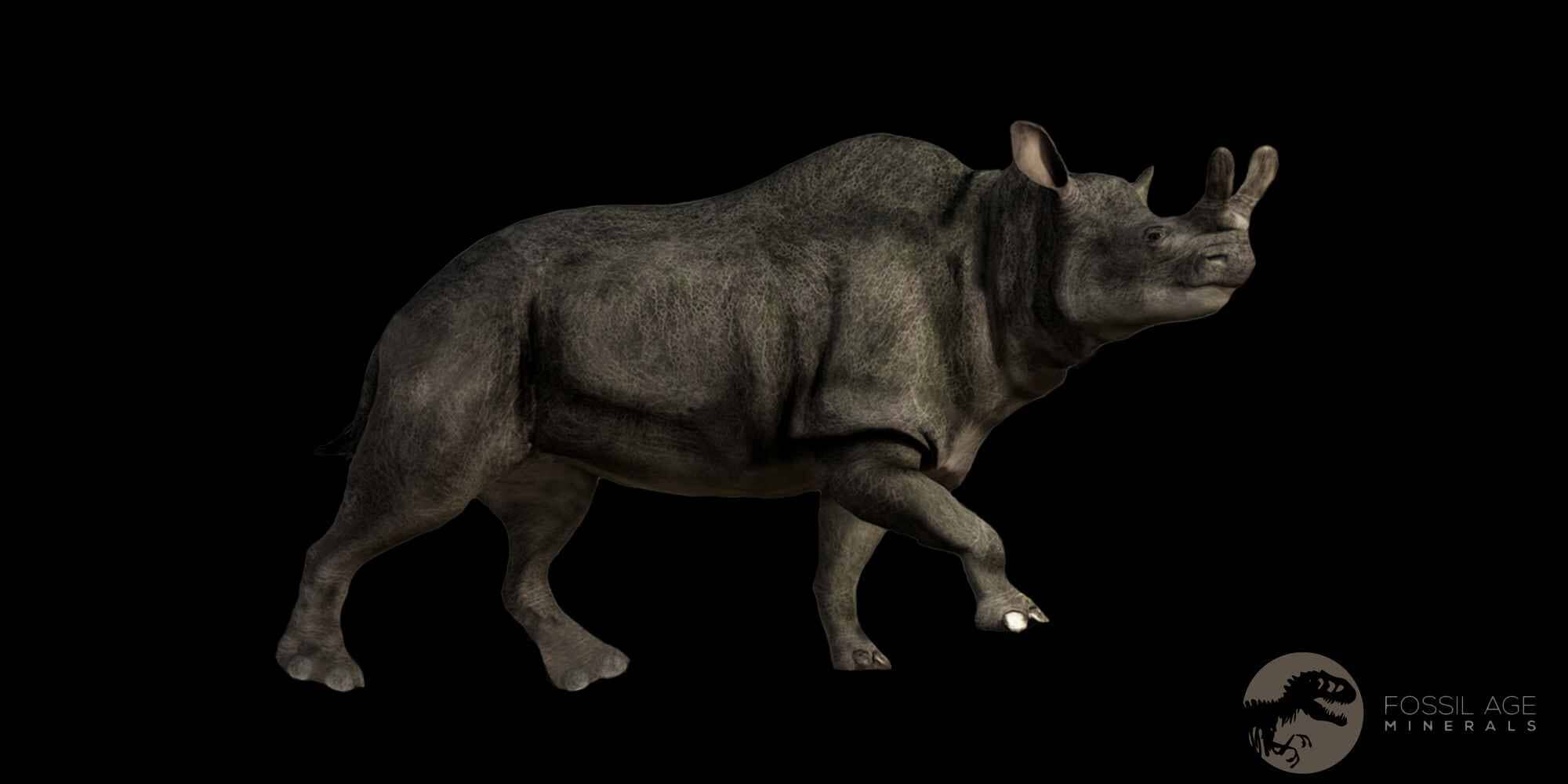
Brontothere is an ancient mammal that roamed the area of Badlands National Park about 38-34 million years ago. Badlands brontotheres are also known as Megacerops coloradensis in scientific literature. Sometimes called “titanothere,” its name means “thunder beast,” referring to how a traveling herd of massive brontotheres may have sounded long ago, thundering through ancient environments.
Brontotheres that inhabited the Badlands reached impressive proportions, growing up to 8 feet tall and 16 feet long, similar in size to a large rhinoceros or small elephant. However, during the early Eocene epoch, these ancient mammals were only the size of a dog. Over the next 20 million years, they gradually evolved, becoming larger and more robust as they adapted to their changing environments. By the late Eocene, brontotheres had achieved the massive size preserved in the fossil record, offering a remarkable example of long-term evolutionary growth and diversification in prehistoric North America.
Brontotheres are most notable for the paired blunt horns that jutted from their noses. These horns began as small growths in early species and eventually expanded into massive structures, reaching over 3.3 feet (1 meter) long in adult Badlands specimens. Horn size generally differed between sexes, with males having larger horns than females. Although their horns may resemble those of modern rhinos, brontotheres are only distantly related. The Badlands fossil record also preserves species such as Subhyracodon, which are the true ancestors of today’s rhinoceroses, shedding light on the evolution of the rhino family and the diversity of prehistoric North American mammals.
