
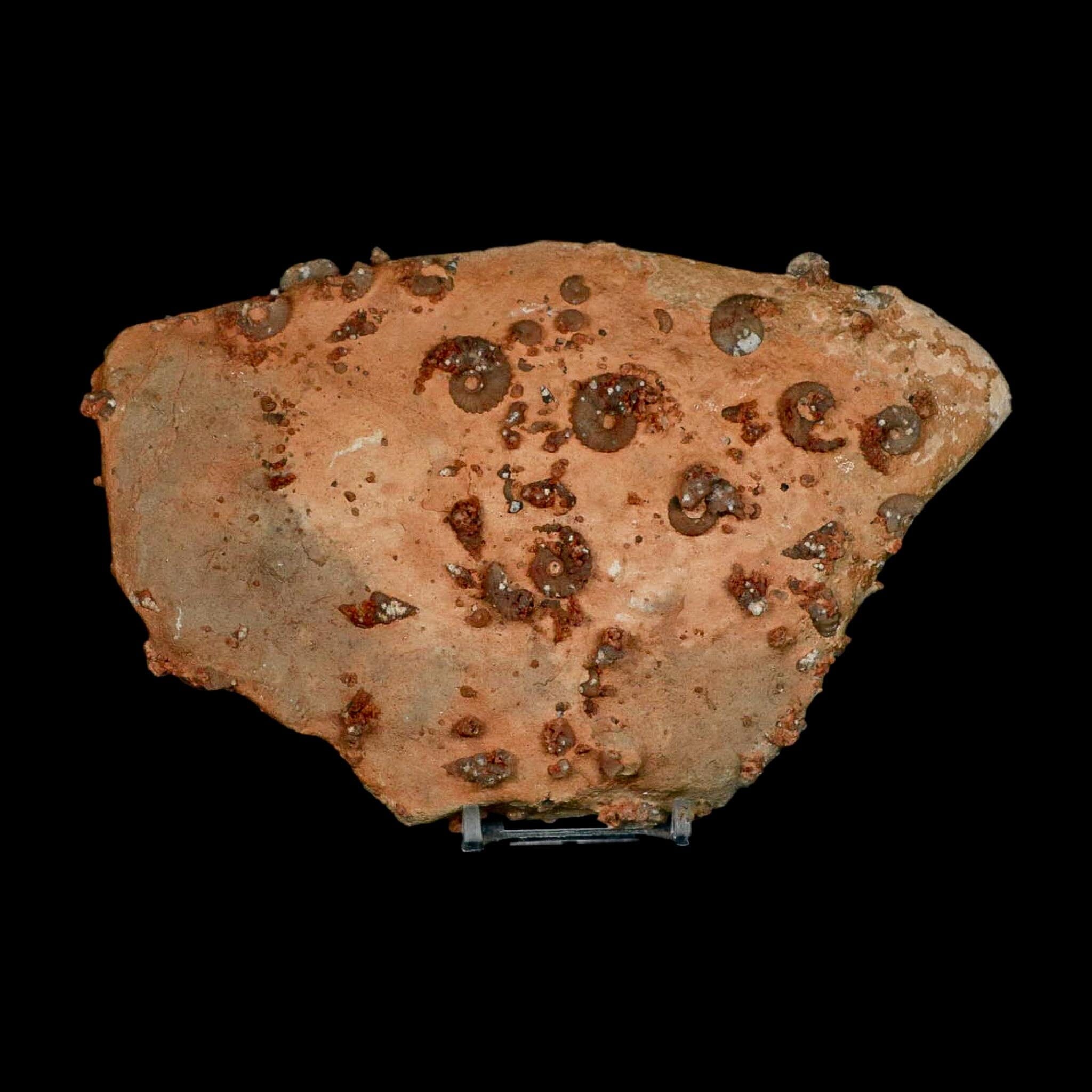
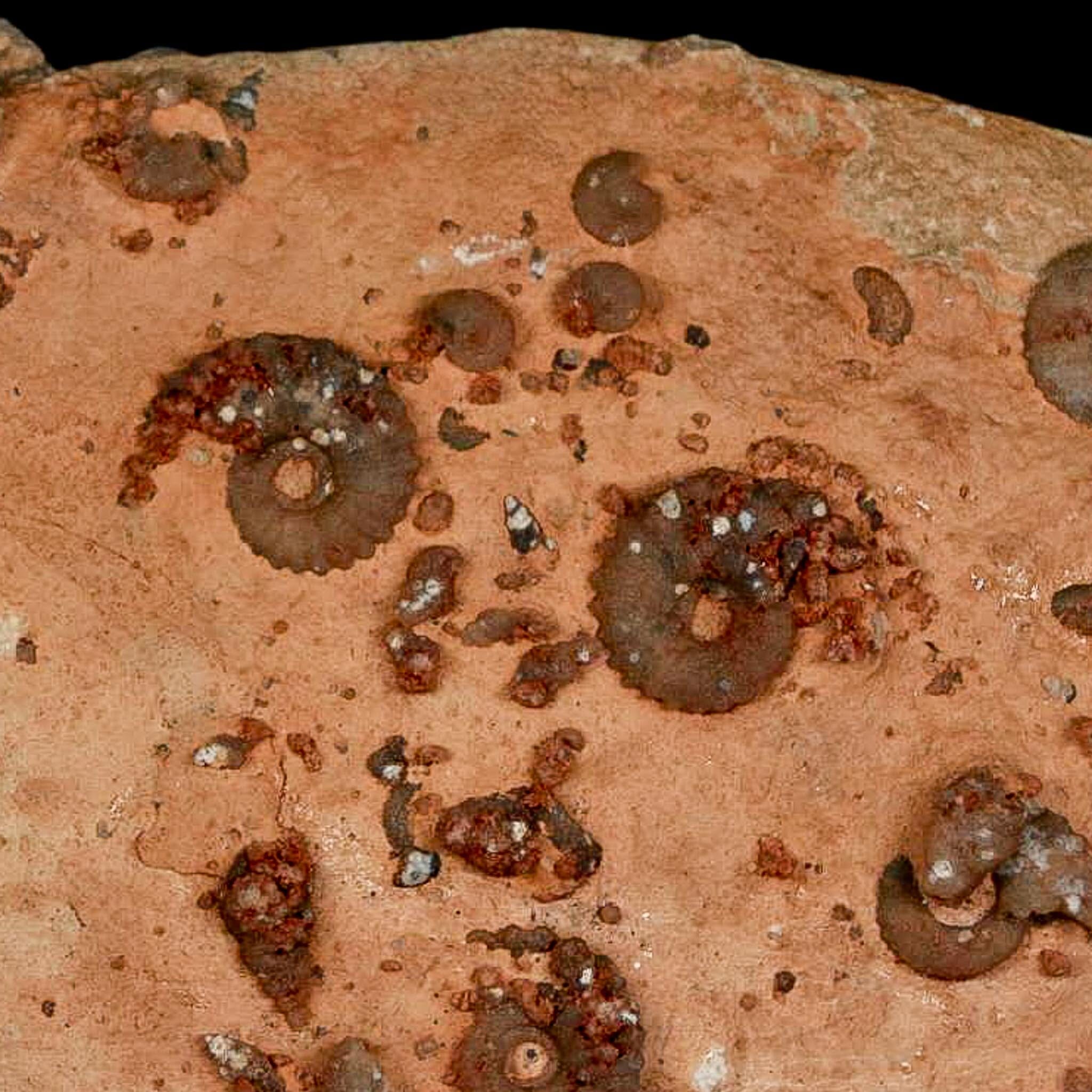
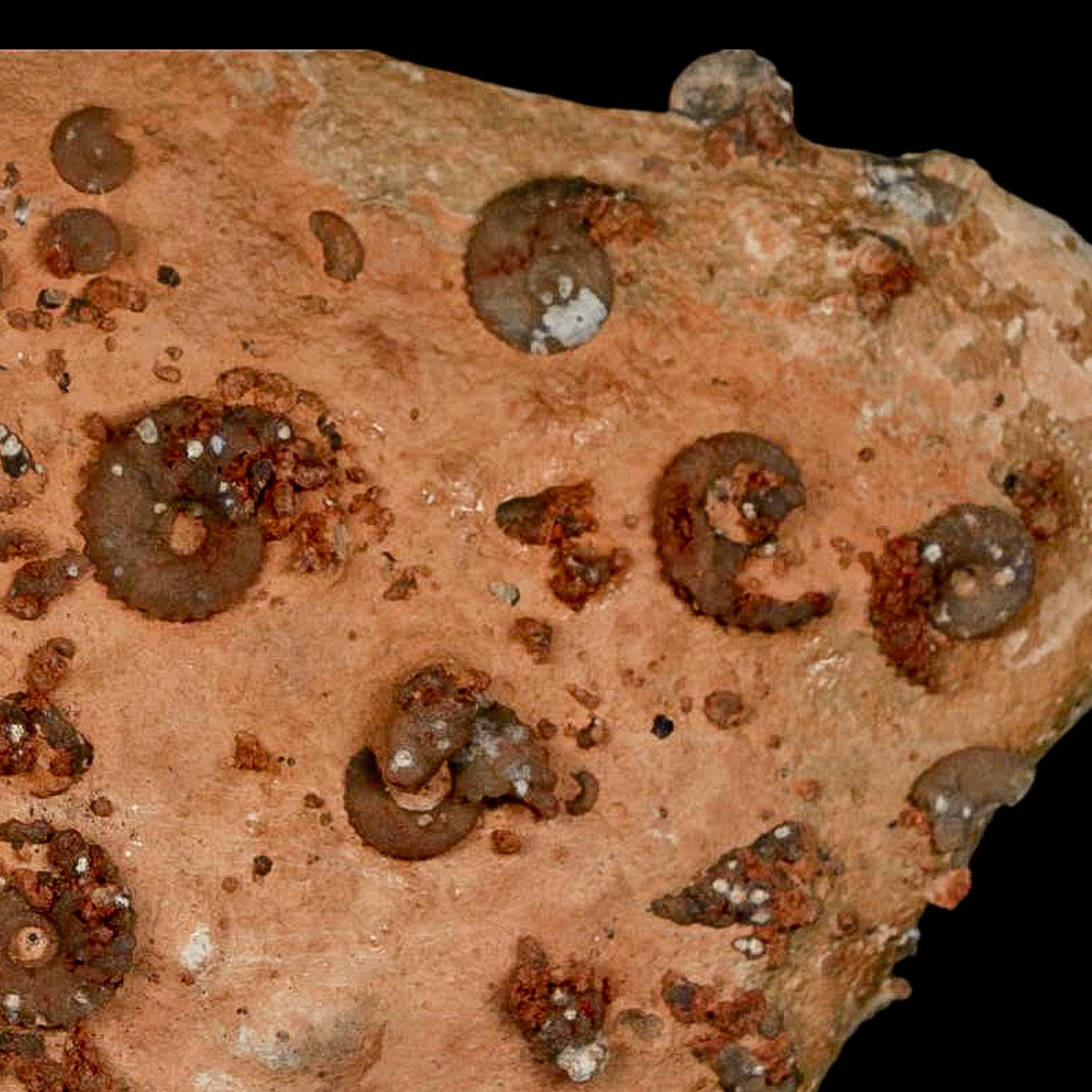
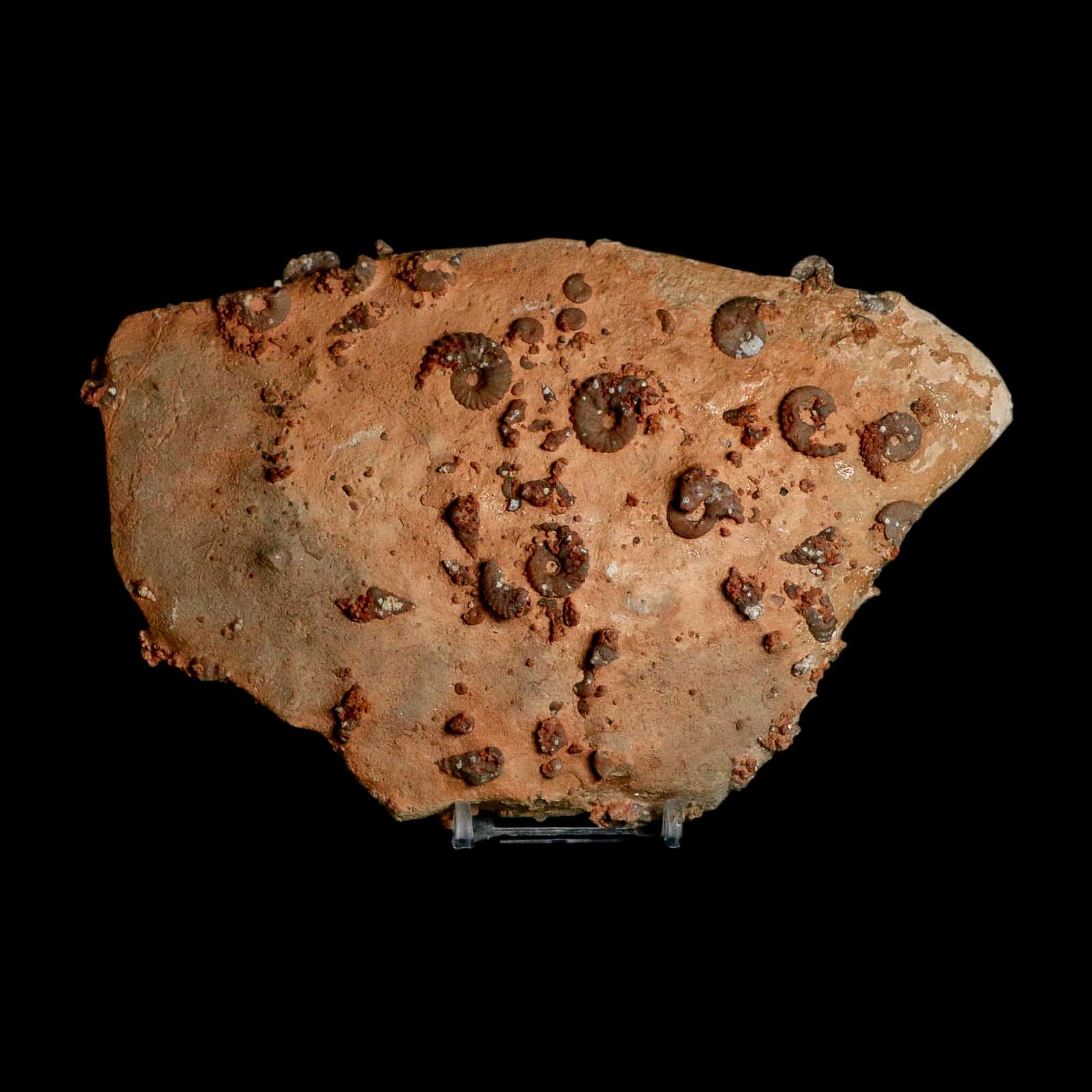
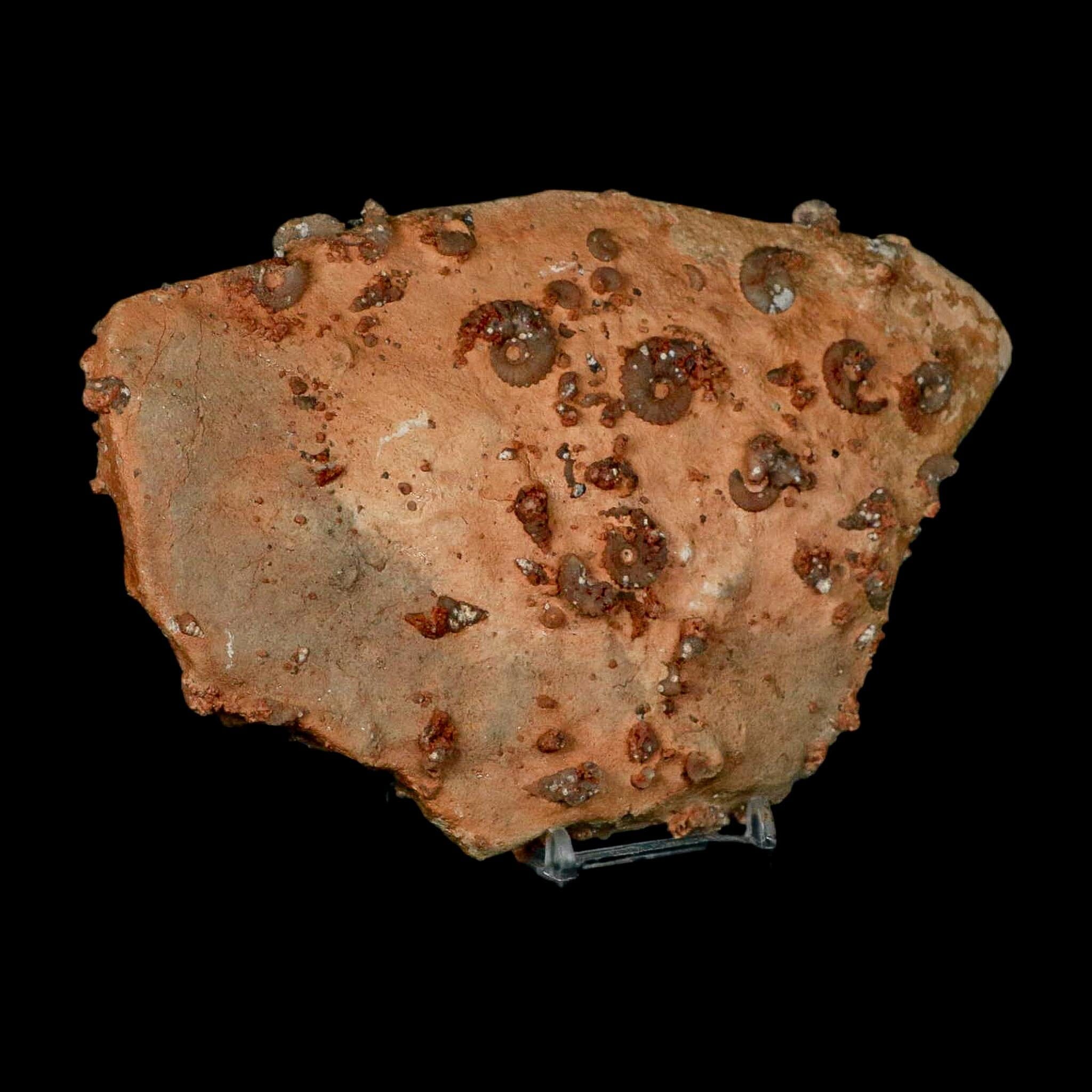
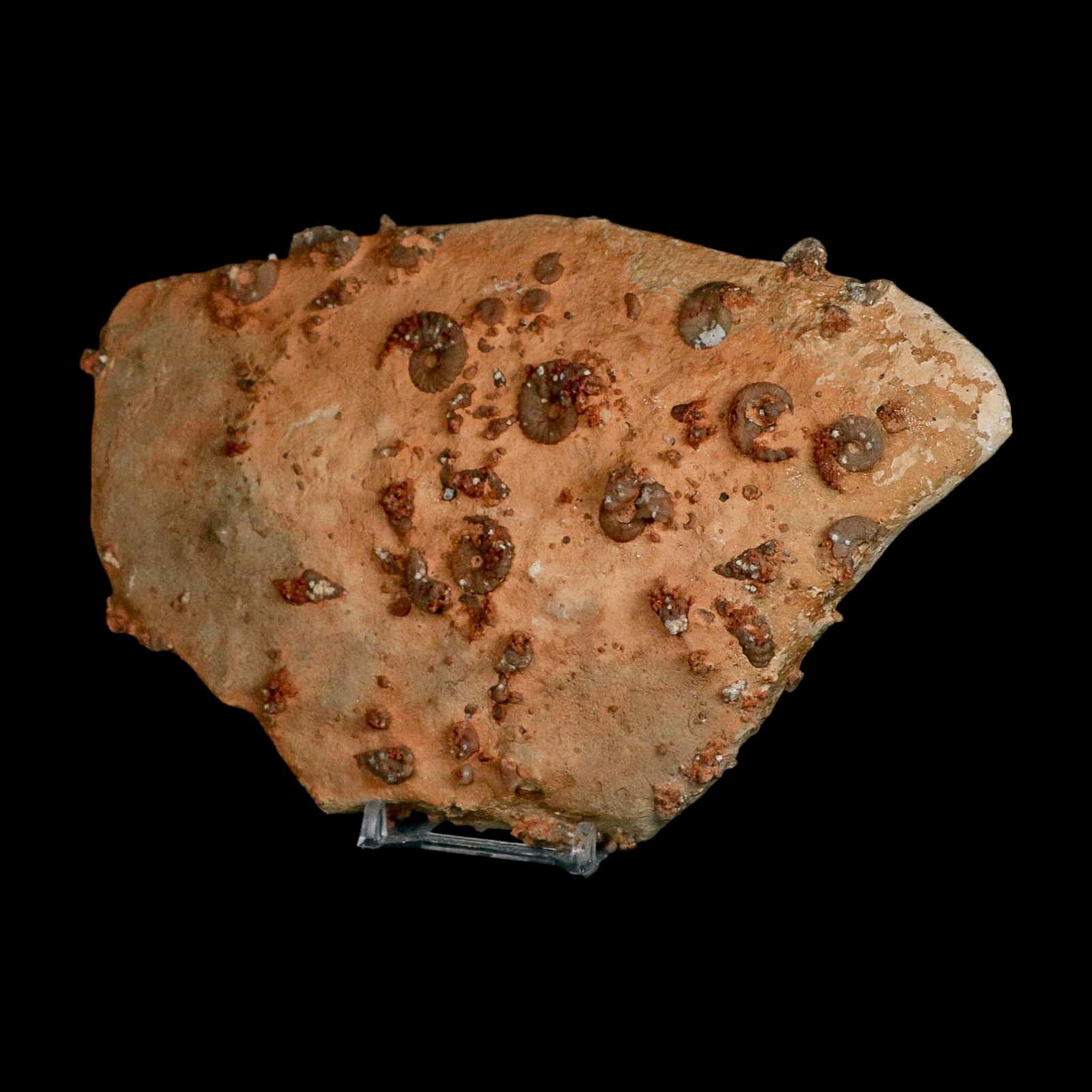
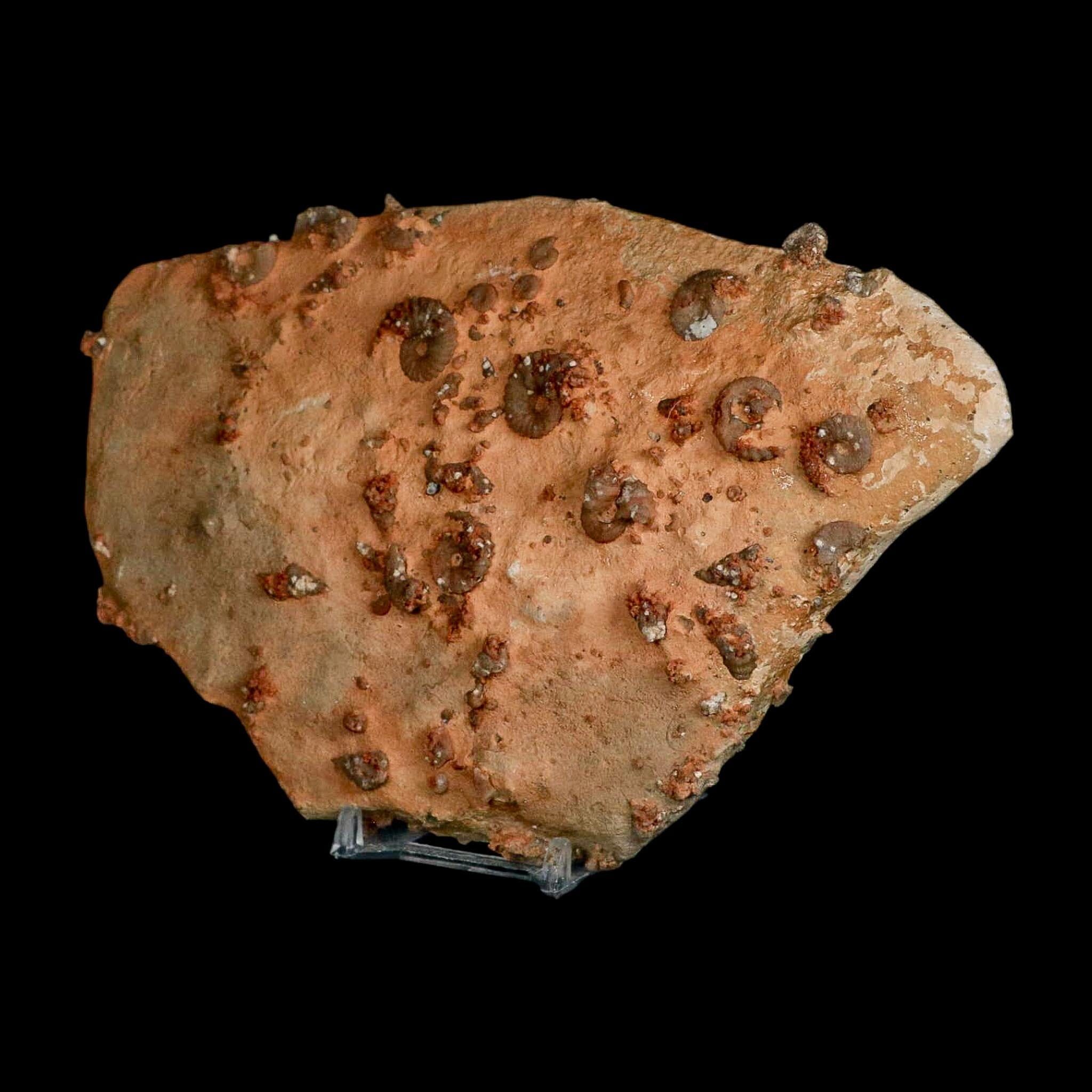
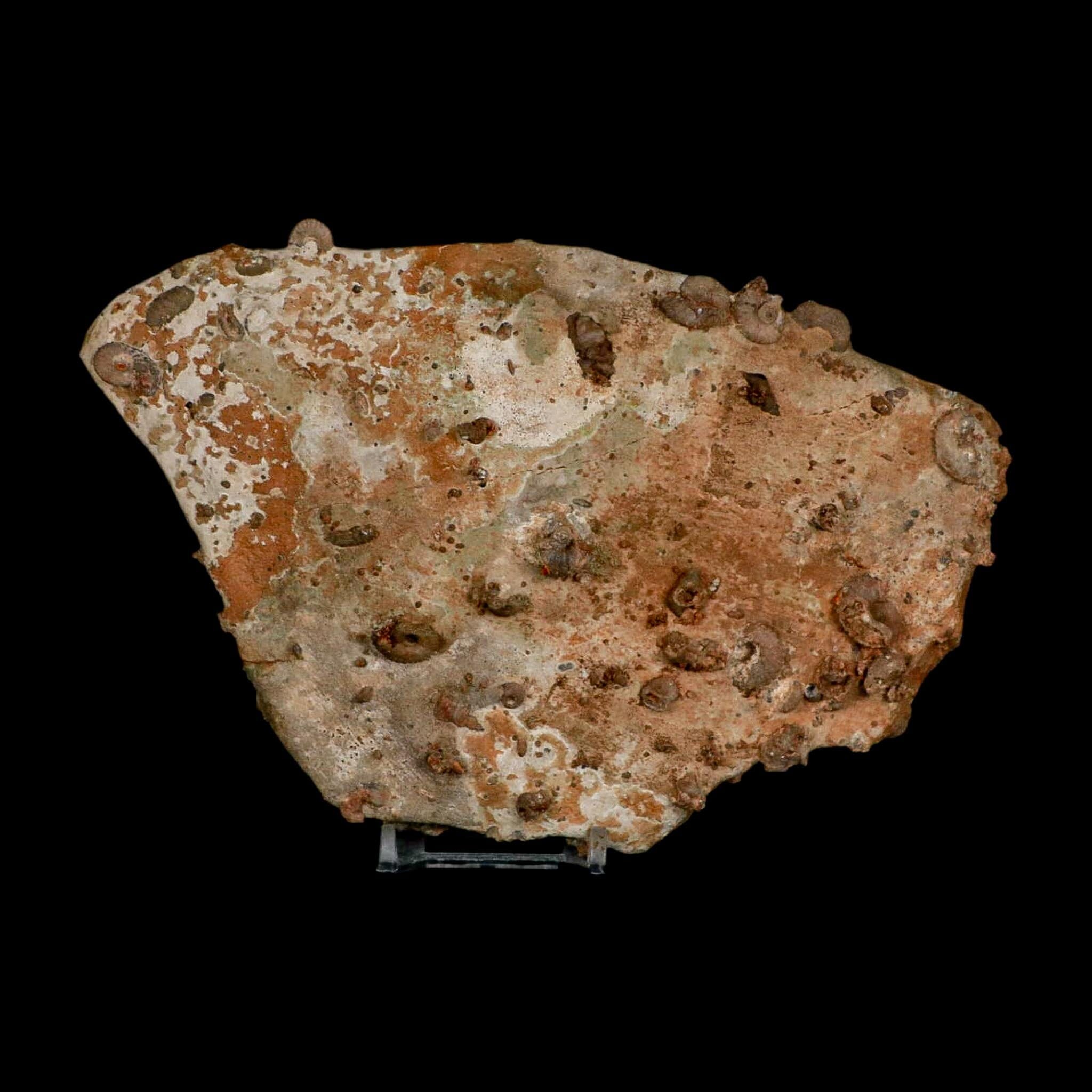


Description
Location: Agadir, Morocco
Weight: 1 Pound 3.2 Ounces
Dimensions: 7 Inches Long, 4.5 Inches Wide, 0.9 Inches Thick
Comes with a Certificate of Authenticity.
Comes with a Free Stand.
The item pictured is the one you will receive.
360 million years old.
Ammonoids are among the most recognizable and scientifically important marine fossils. Classified within the extinct cephalopod group Ammonoidea, they thrived from the Devonian period until their extinction at the end of the Cretaceous.
Their tightly coiled shells, often preserved in remarkable detail, are divided into internal chambers by thin walls called septa. These chambers helped regulate buoyancy, allowing ammonoids to move efficiently through ancient oceans. The junctions between septa and shell walls formed suture lines—intricate patterns that became increasingly complex over time.
Early ammonoids, known as Goniatites, exhibited relatively simple suture patterns with smooth lobes and saddles. Later evolutionary forms, commonly referred to as Ammonites, developed highly elaborate, leaf-like sutures that resemble delicate engravings in stone. These patterns are crucial for species identification and geological dating.
Because ammonoids evolved rapidly and were widely distributed, they serve as important index fossils for dating marine sedimentary rocks. Their aesthetic spiral form and delicate sutures make them equally prized for scientific research and fossil collections.
