


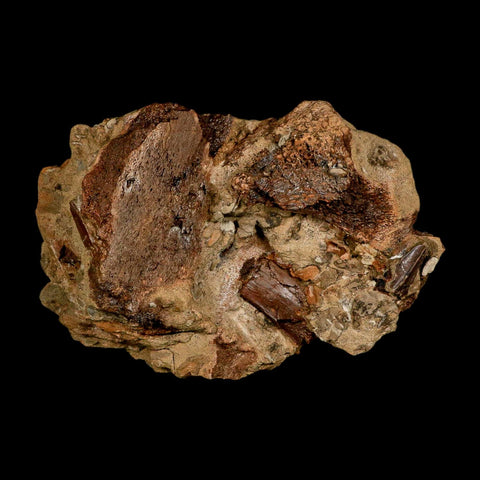
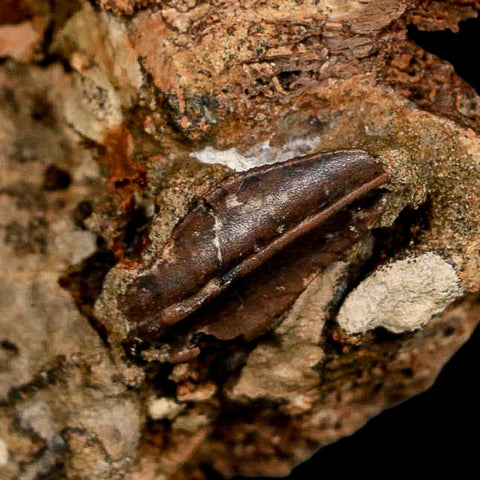
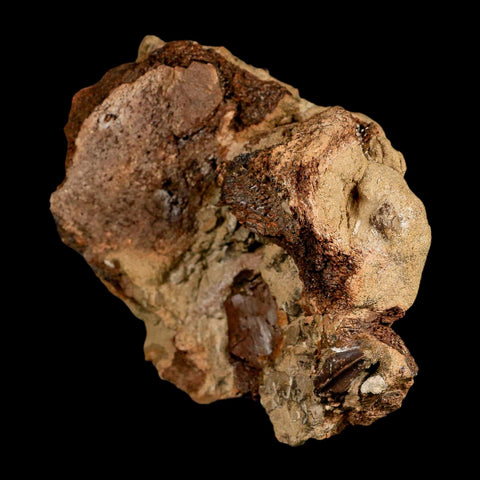
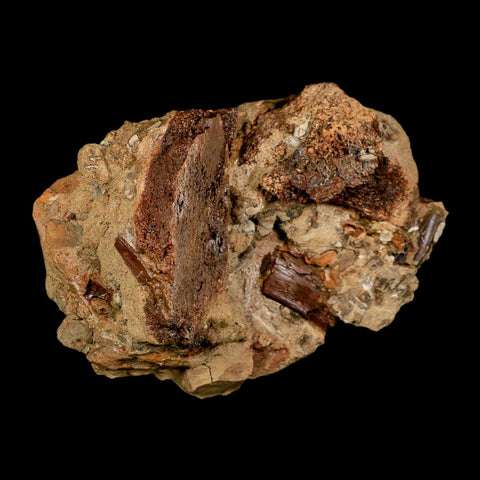
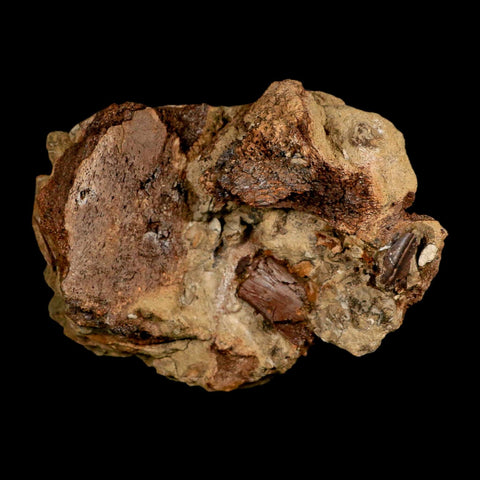
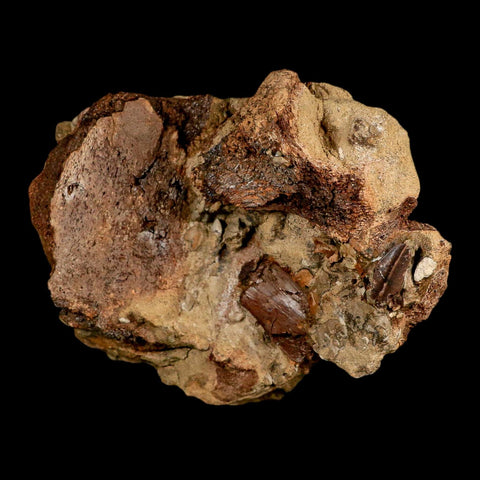

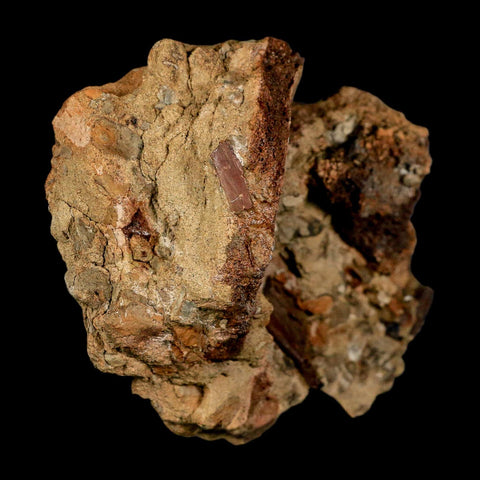
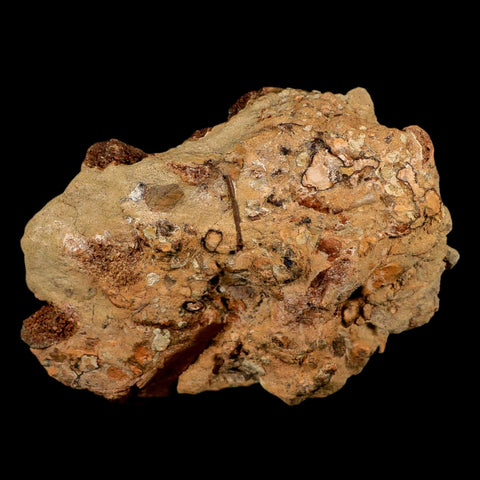

5.6" Edmontosaurus Fossil Bones And Tooth in Situ Lance Creek FM Dinosaur WY COA
Location: Lance Creek Formation, Wyoming (Private Land Origin)
Weight: 1 Pound 1.7 Ounces (Matrix)
Fossil Dimensions: 5.6 Inches Long, 3.8 Inches Wide, 2.1 Inches Thick (Matrix)
Comes with a Certificate of Authenticity.
The item pictured is the one you will receive.
Edmontosaurus, meaning “lizard from Edmonton,” was a hadrosaurid dinosaur that lived during the Maastrichtian stage of the Late Cretaceous period, approximately 71–65 million years ago. Adults could reach lengths of up to nine meters, with some species growing as large as thirteen meters, and weighed around 3.5 tonnes, making Edmontosaurus one of the largest North American hadrosaurid dinosaurs.
A specialized herbivore, Edmontosaurus could efficiently process tough plant material such as conifer needles, seeds, and twigs. Its mouth contained up to sixty rows of tightly packed teeth, constantly replaced as they wore down, while the jaw bones flexed to allow effective grinding. Muscular cheek pouches helped move food across the teeth, supporting its role as a tree browser and ground-level feeder.
Fossil discoveries, particularly the 1908 Wyoming specimen, revealed scaly, leathery skin impressions and tubercles along the neck, back, and tail, emphasizing its distinctive duck-like appearance. Edmontosaurus was primarily bipedal, but it could also walk on all fours. Its forelimbs were shorter than its hind limbs, with weight-bearing pads and hooves, while its hind feet had two hooked toes. Strong lower limb muscles supported its movement, though it was likely slow.
Despite limited physical defenses, Edmontosaurus relied on keen eyesight, hearing, and smell to detect predators. Its low-tilted spine enabled feeding close to the ground, complementing its versatile locomotion and complex dentition. As a Late Cretaceous herbivorous dinosaur, Edmontosaurus provides crucial insight into hadrosaurid anatomy, feeding strategies, and paleoecology, making it a key species for understanding North American dinosaur ecosystems.
