




5.2" Glyptodon Fossil Osteoderm Scute Plates Bony Armor Pleistocene Uruguay COA
Location: Uruguay
Weight: 9.5 Ounces
Dimension: 5.2 Inches Long, 4.4 Inches Wide, 0.9 Inches Thick
Comes with a Certificate of Authenticity.
The item pictured is the one you will receive.
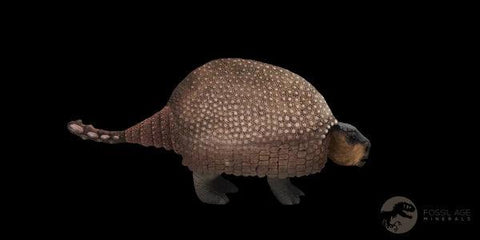
Glyptodon is a genus of extinct giant mammals related to modern armadillos and found as fossils in deposits in North and South America dating from the Pliocene and Pleistocene epochs (5.3 million to 11,700 years ago). Glyptodon and its close relatives, the glyptodonts, were encased from head to tail in thick, protective armor resembling in shape the shell of a turtle but composed of bony plates much like the covering of an armadillo. The body shell alone was as long as 1.5 meters (5 feet). The tail, also clad in armor, could serve as a lethal club; indeed, in some relatives of Glyptodon, the tip of the tail was a knob of bone that was sometimes spiked. Glyptodonts ate almost anything—plants, carrion, or insects.
When you first see a reconstruction of Glyptodon, you might think it’s a mash-up of several animals—a turtle’s shell, a beaver’s shape, and an armadillo’s texture. In reality, though, it shared no close connection with turtles or beavers. Its true relatives are the armadillos that still live today.
Glyptodon was astonishingly large for a mammal with armor. It stretched close to 10 feet long and weighed roughly a ton, putting it in the same size range as a classic Volkswagen Beetle. Its massive, dome-shaped shell and low, sturdy build provided incredible protection from would-be predators. Almost nothing could bite through or break its thick, bony carapace. The only real danger came if a powerful predator managed to roll it onto its back—exposing the softer belly that the armor didn’t cover.
Glyptodon disappeared near the end of the last Ice Age, roughly 10,000 years ago. While shifting climates certainly played a role in its decline, scientists believe that human activity was an equally significant factor. Early settlers in South America likely found Glyptodon to be a valuable resource—its meat provided ample food, its hide offered warmth, and its massive armored shell could even be repurposed as a sturdy shelter. The combination of environmental changes and sustained hunting pressure is thought to have pushed this remarkable creature into extinction.
