


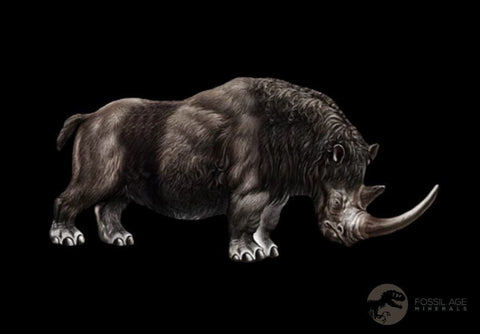


4" Woolly Rhinoceros Fossil Rooted Tooth Pleistocene Age Megafauna Russia COA
Location: Siberia Region, Russia
Weight: 6.5 Ounces
Dimensions: 4 Inches Long, 2.5 Inches Wide, 1.5 Inches Thick
Comes with a Certificate of Authenticity.
The item pictured is the one you will receive.
Pleistocene Age 2.6 - 11.6 million years old
*Trade in raw fossil “Woolly Rhinoceros” ivory is illegal in CA, HI, IL, NJ, NV, and NY
The Woolly Rhinoceros (Coelodonta antiquitatis) was a remarkable Ice Age mammal that once roamed vast stretches of Europe and northern Asia during the Pleistocene epoch. Well adapted to the frigid climates of the last glacial period, this species thrived in the cold, open steppe-tundra environments that dominated much of the northern hemisphere. Its range extended from the British Isles and Central Europe across Siberia and into parts of northeastern Asia, making it one of the most widespread large herbivores of its time. As a prominent member of the Pleistocene megafauna, the woolly rhinoceros lived alongside other iconic Ice Age animals such as the woolly mammoth, giant deer, and cave lions.
Physically, the woolly rhino was an impressively built animal. Adults typically reached lengths of 9.8 to 12.5 feet and weighed between 4,000 and 6,000 pounds, placing them on par with or even exceeding the size of modern rhinos. Their bodies were covered in thick, shaggy fur that provided insulation against extreme cold, while a layer of fat beneath the skin offered additional protection. One of their most distinctive features was their pair of horns, with the front horn often growing over three feet long. These horns were likely used for defence, foraging through snow to reach vegetation, and possibly for display or dominance interactions.
The woolly rhinoceros primarily fed on tough, cold-weather vegetation, including grasses, shrubs, and mosses. Its broad, sloping head and strong lips were adapted for scraping snow and grazing close to the ground, allowing it to survive in habitats where plant life was sparse for much of the year. Artistic depictions of the species, found in Ice Age cave paintings across Europe, suggest that early humans encountered these animals and were familiar with their distinctive appearance.
The species disappeared near the end of the Pleistocene, around 14,000 years ago. While climate change played a significant role—transforming the open steppe into forests and reducing their preferred grazing habitat—human hunting may have also contributed to their decline. Regardless of the exact cause, the woolly rhinoceros stands today as one of the most iconic symbols of the Ice Age and a fascinating example of prehistoric adaptation and survival.
