


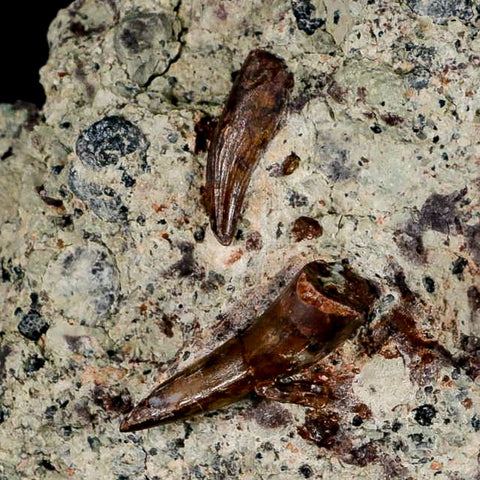
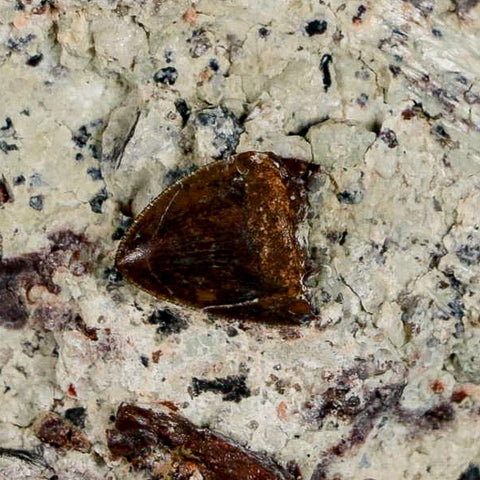
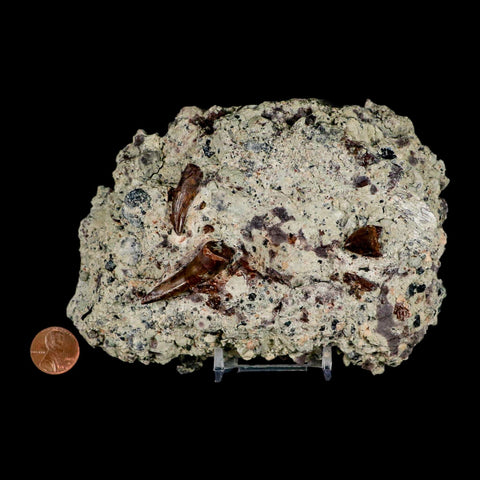
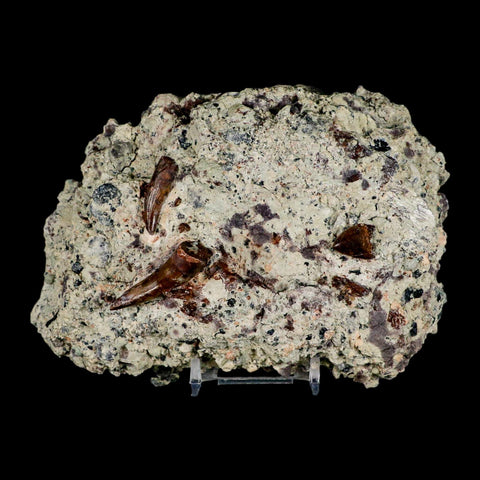
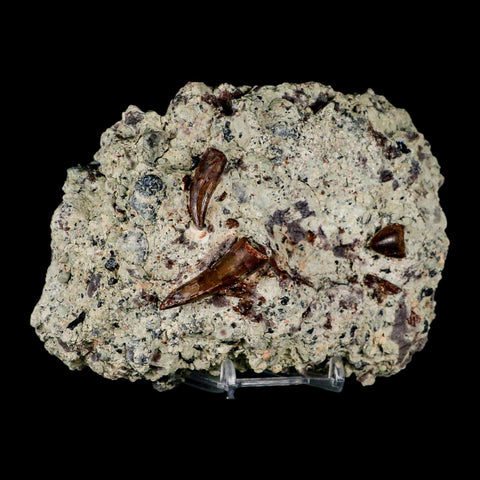
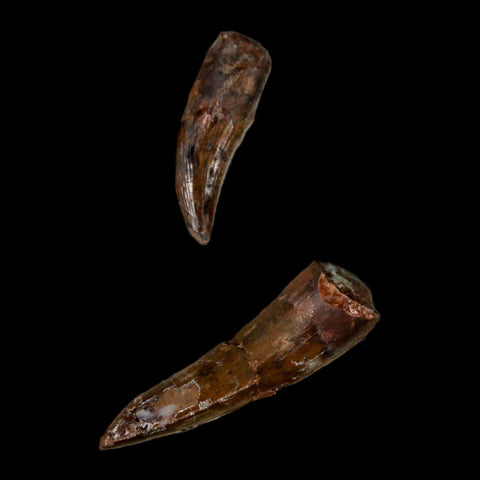

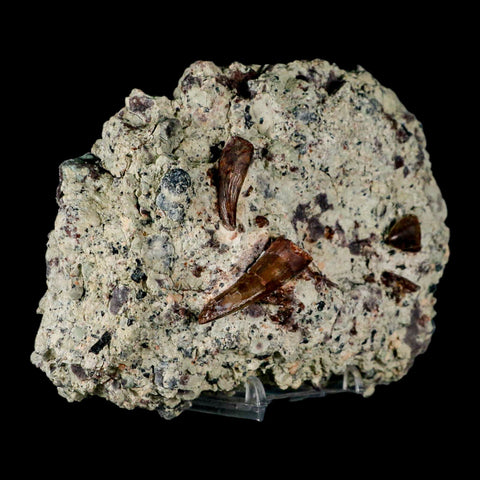
3 Three Phytosaur Fossil Teeth In Matrix Late Triassic Age Archosaur Chinle FM, AZ COA
Location: Chinle Formation, Arizona (Private Land Origin)
Weight: 1 Pound 15.6 Ounces
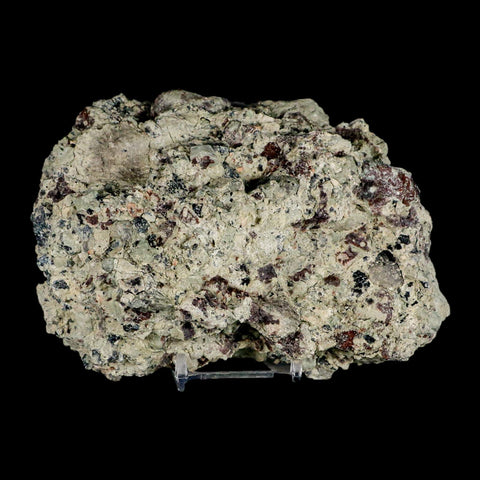
Dimensions: 5.6 Inches Long, 4 Inches Wide, 2.2 Inches Thick (Matrix)
Dimensions Tooth One: 1.5 Inches Long, 0.4 Inches Wide
Dimensions Tooth Two: 1.1 Inches Long, 0.3 Inches Wide
Dimensions Tooth Three: 0.5 Inches Long, 0.5 Inches Wide
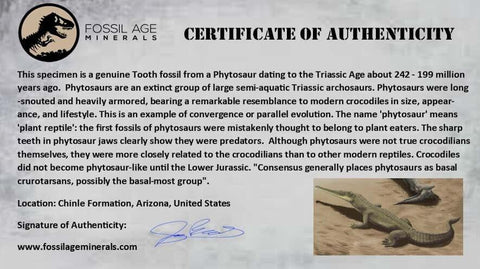
Comes with a Certificate of Authenticity.
Comes with a Free Stand.
The item pictured is the one you will receive.
Late Triassic 242 To 199 Million Years Old
Explore the fascinating world of Phytosaurs, a group of large, semi-aquatic archosaurs that thrived during the Late Triassic period. These prehistoric reptiles are renowned as crocodile-like predators, showcasing a remarkable example of convergent evolution. Phytosaurs, including genera like Rutiodon, were Triassic apex predators, equipped with elongated snouts, razor-sharp teeth, and heavily armored bodies, making them dominant hunters in ancient river and wetland ecosystems.
Although they resembled modern crocodiles, phytosaurs were not true crocodilians, but early relatives within the archosaur lineage. Their raised nostrils near the eyes allowed them to breathe while submerged, enhancing their efficiency as ambush predators in freshwater environments. Fossil evidence of phytosaurs has been found across North America, Europe, India, and Africa, revealing a wide Triassic distribution and ecological dominance.
This archosaur fossil represents one of the most iconic Triassic vertebrate fossils, illustrating the evolutionary link between ancient reptiles and modern crocodilian relatives. Perfect for museum displays, fossil collections, and educational resources, phytosaurs provide a window into prehistoric life, the evolution of carnivorous reptiles, and the rich diversity of Triassic ecosystems.
Rutiodon is an extinct genus of archosaur belonging to the family Phytosauridae, a group of semi-aquatic reptiles that thrived during the Late Triassic period. Fossil evidence of Rutiodon has been discovered in the eastern United States, providing insight into the diversity of prehistoric freshwater ecosystems.
This crocodile-like predator measured between 3 to 8 meters in length, featuring a long, narrow snout lined with sharp teeth, perfectly adapted for hunting fish, amphibians, and small vertebrates. Its heavily armored body and powerful tail made Rutiodon a formidable apex predator of Triassic rivers and wetlands.
Rutiodon exemplifies convergent evolution, resembling modern crocodiles despite not being a true crocodilian. As a member of Phytosauridae, it represents a critical chapter in archosaur evolution, bridging the gap between early reptiles and later crocodilian forms. Rutiodon fossils are highly valued for museum displays, fossil collections, and educational research, offering a window into prehistoric Triassic life and the ecology of ancient river predators.


