


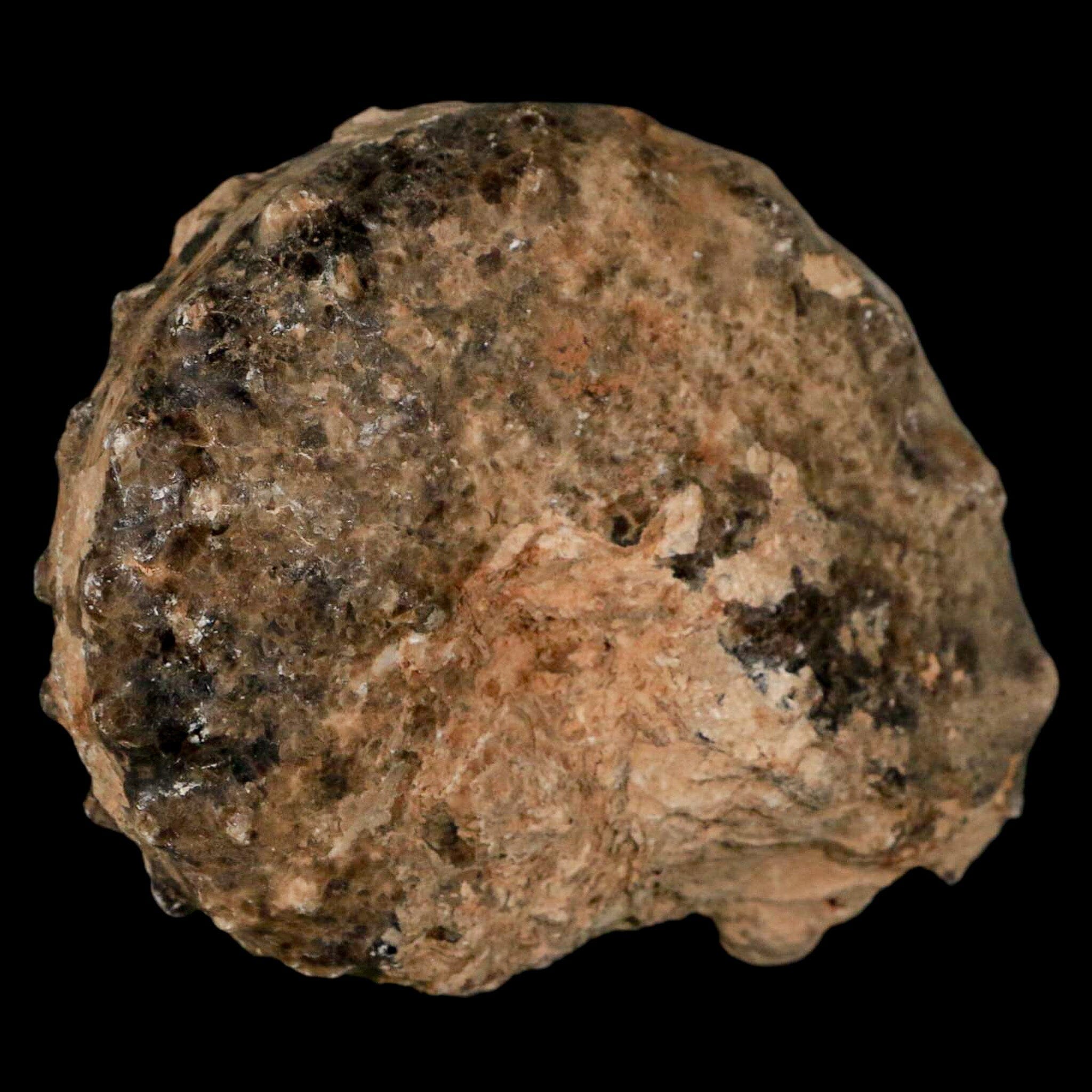


Description
Location: Jbel Toubkal, Atlas Mountains, Morocco
Weight: 7.2 Ounces
Dimension: 3 Inches Long, 2.4 Inches Wide, 1.3 Inches Thick
This is a real fossil
Upper Cretaceous, 80 Million Years Old
The items pictured are the ones you will receive.
Mammites Nodosoides Ammonite
Mammites nodosoides exemplifies the sophisticated morphology of Late Cretaceous ammonoids, a cephalopod lineage that dominated marine environments for approximately 140 million years during the Mesozoic. These mollusks evolved through the Jurassic and Cretaceous periods before succumbing to the K-Pg extinction event approximately 66 million years ago—the same catastrophic episode that eliminated non-avian dinosaurs. Current paleontological consensus attributes this mass extinction to multifactorial causes, primarily a bolide impact coupled with severe climatic and oceanic disruption. This Moroccan specimen, measuring 3 inches, preserves diagnostic nodose ornamentation and represents invaluable paleontological material for understanding Cretaceous marine paleobiology and evolutionary history.
Ammonites are characterized by their distinctive coiled shells, which can vary greatly in size and shape. Their shells were typically divided into chambers separated by walls known as septa. The living animal occupied only the last chamber, known as the body chamber, while earlier chambers were filled with gas or fluid to help regulate buoyancy. The intricate suture patterns where these septa joined the shell wall are key features used for identifying different species and genera.
The ammonite shell served multiple functions: it provided protection from predators and helped with flotation in water.
Ammonites were carnivorous creatures that likely fed on small plankton and other marine organisms such as crustaceans and possibly even other ammonites. They possessed tentacle-like appendages for capturing prey and had sharp beak-like jaws similar to modern cephalopods. Fossil evidence suggests that they may have been agile swimmers, inhabiting warm shallow seas rather than deep ocean environments.
Mammites nodosoides belongs to a cephalopod lineage of extraordinary evolutionary significance, with over 10,000 documented species spanning the Paleozoic through Mesozoic eras. Ammonites evolved from straight-shelled nautiloid ancestors during the Devonian period, subsequently developing increasingly sophisticated shell geometries and suture patterns that enhanced hydrostatic regulation. Their rapid morphological evolution and geographically widespread distribution established them as biostratigraphic markers of exceptional utility for chronostratigraphic correlation. Remarkably resilient through multiple extinction episodes—including the catastrophic Permian-Triassic event—ammonites ultimately perished during the K-Pg extinction 66 million years ago. This Moroccan specimen preserves the characteristic nodose ornamentation of M. nodosoides, offering paleontological insight into Late Cretaceous marine faunal composition and evolutionary adaptation.
This final extinction is believed to have been triggered by a massive asteroid impact that drastically altered global climates and disrupted food chains in marine ecosystems.
