
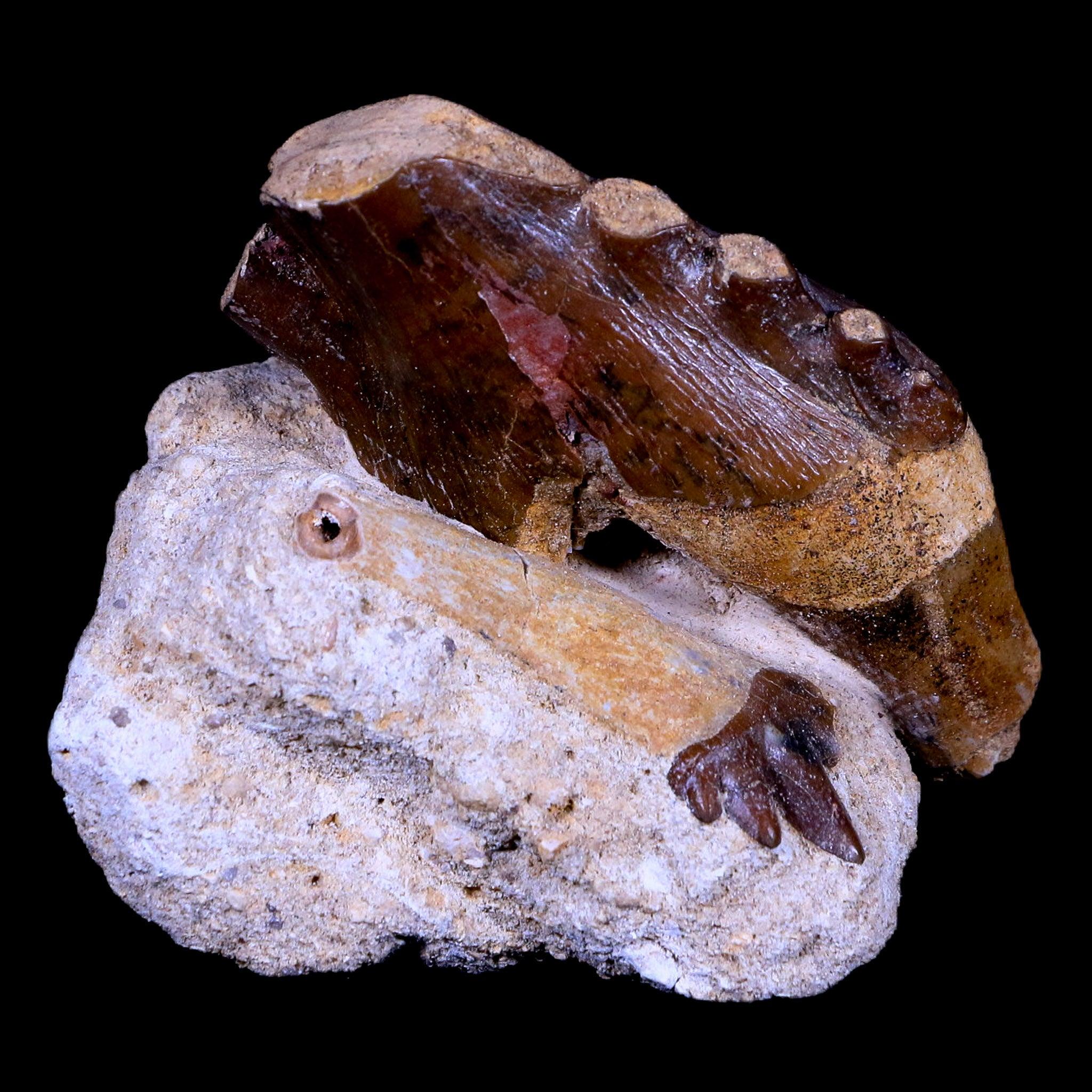
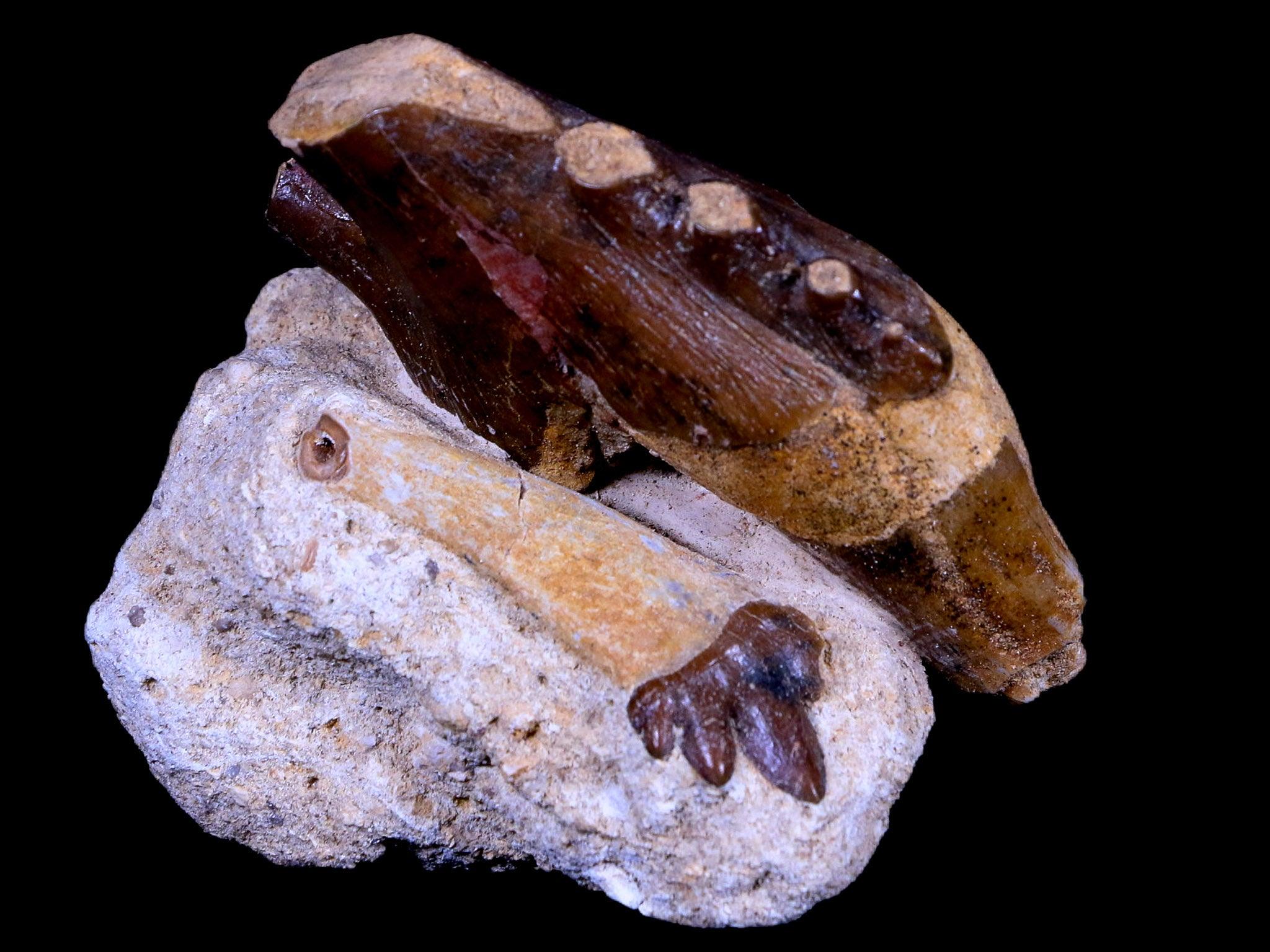
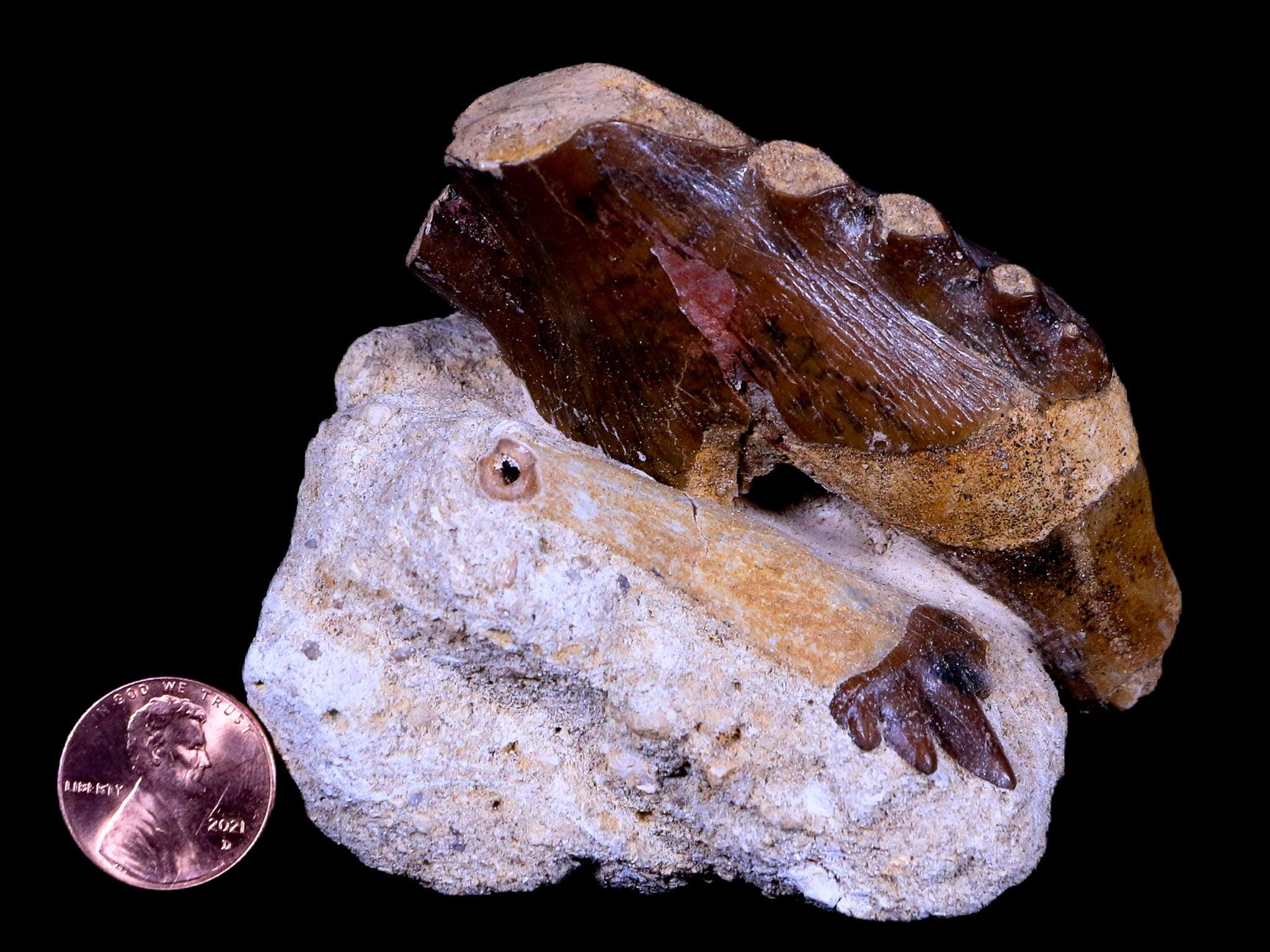
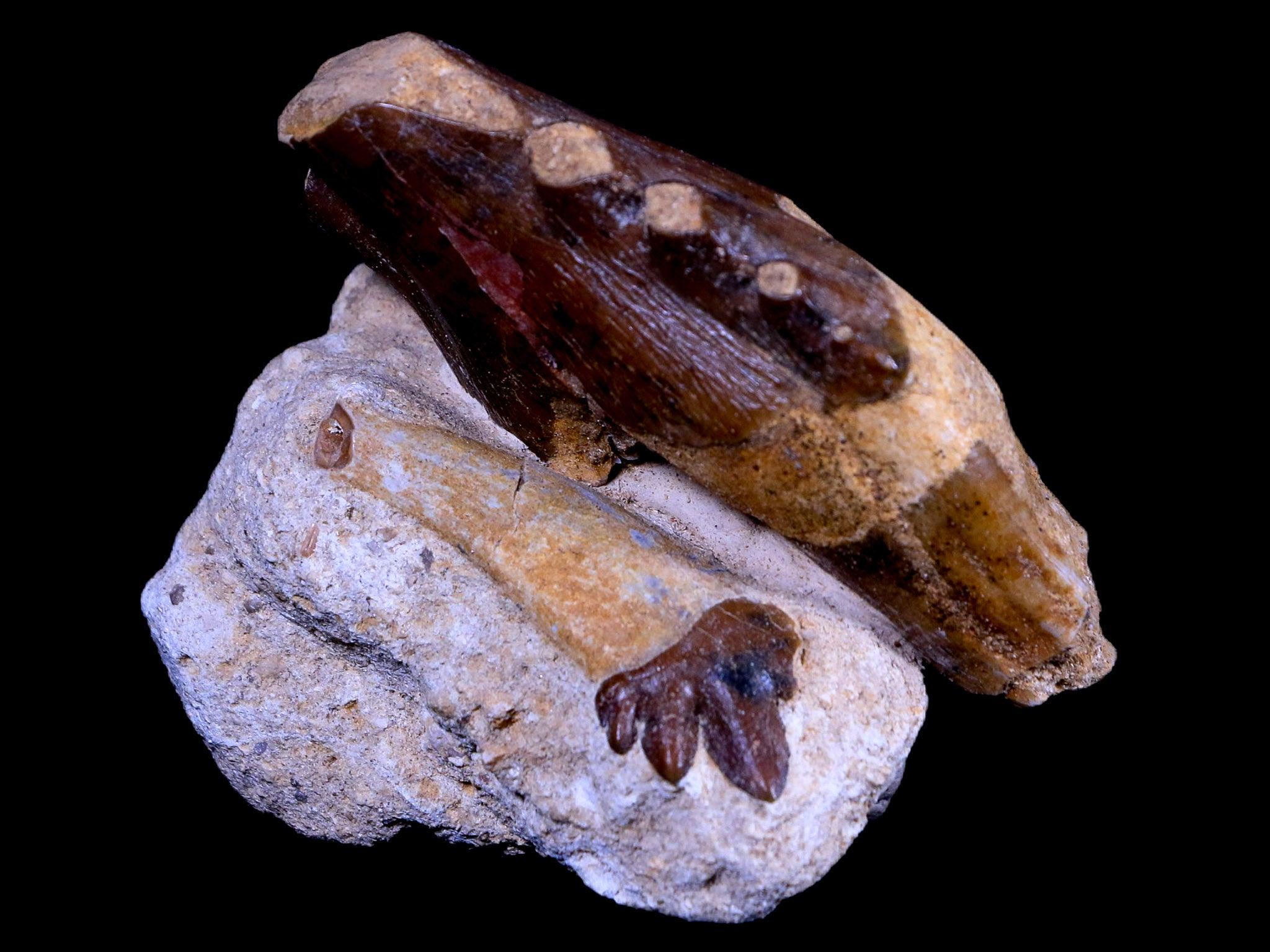
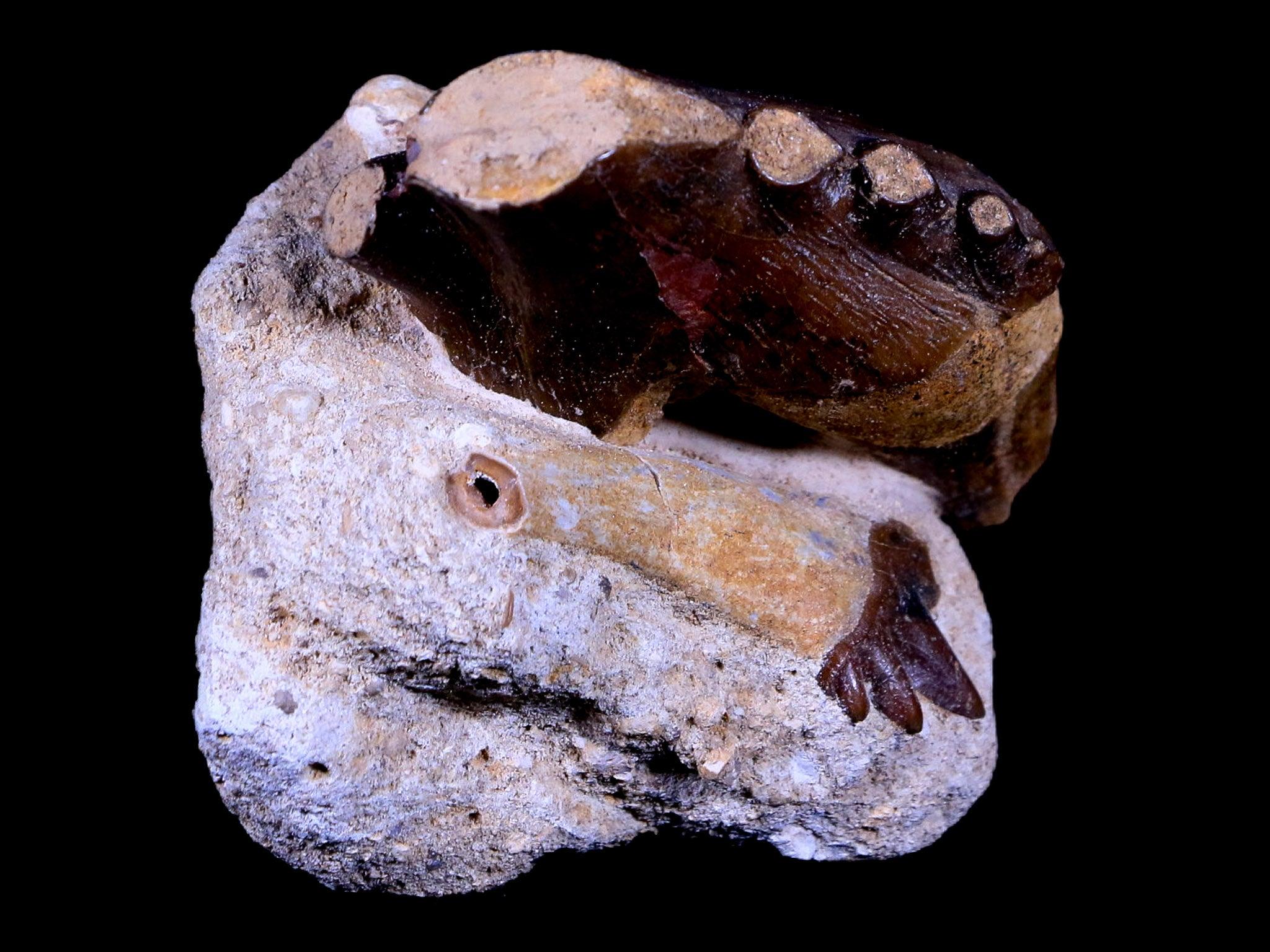
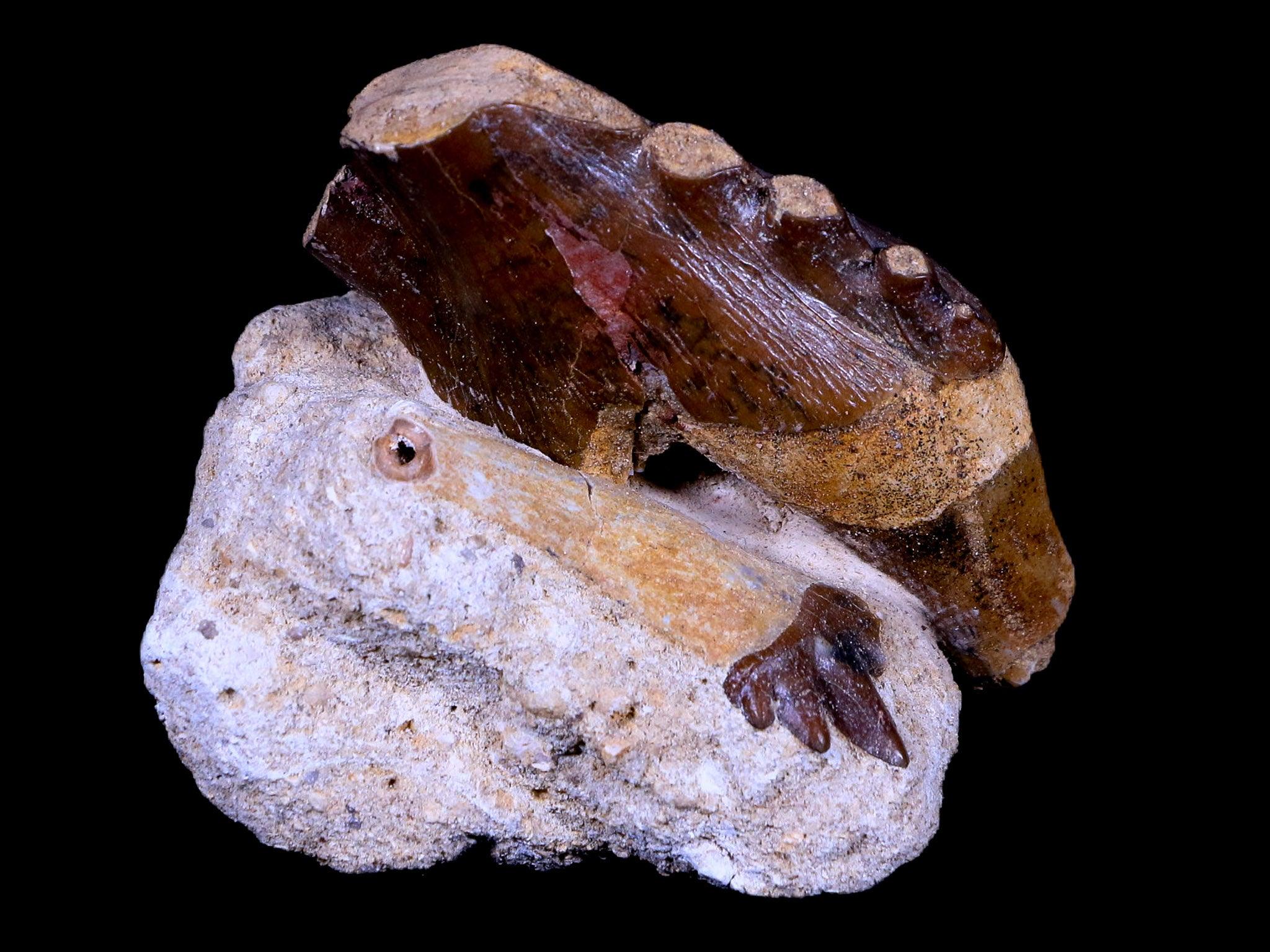
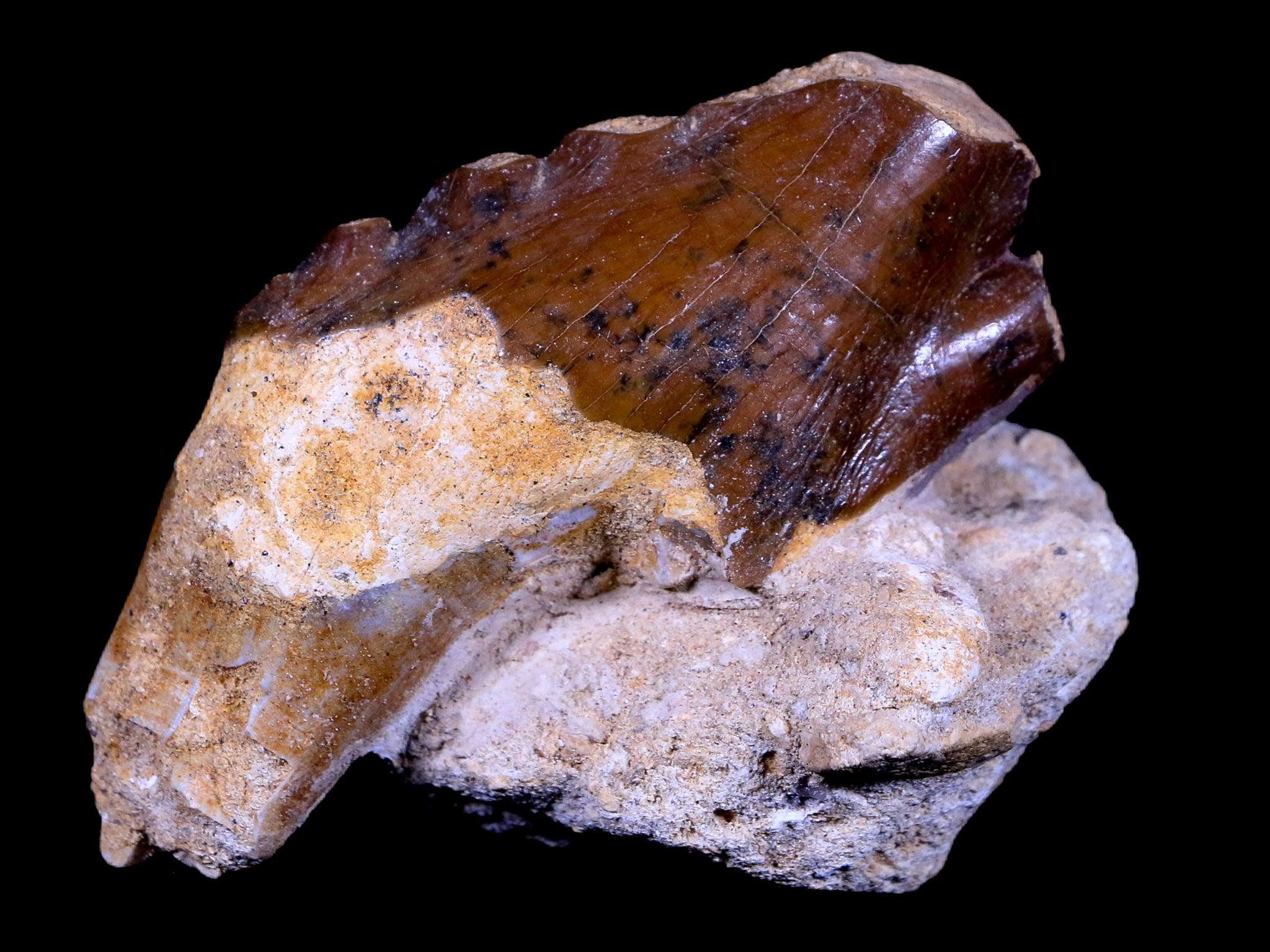
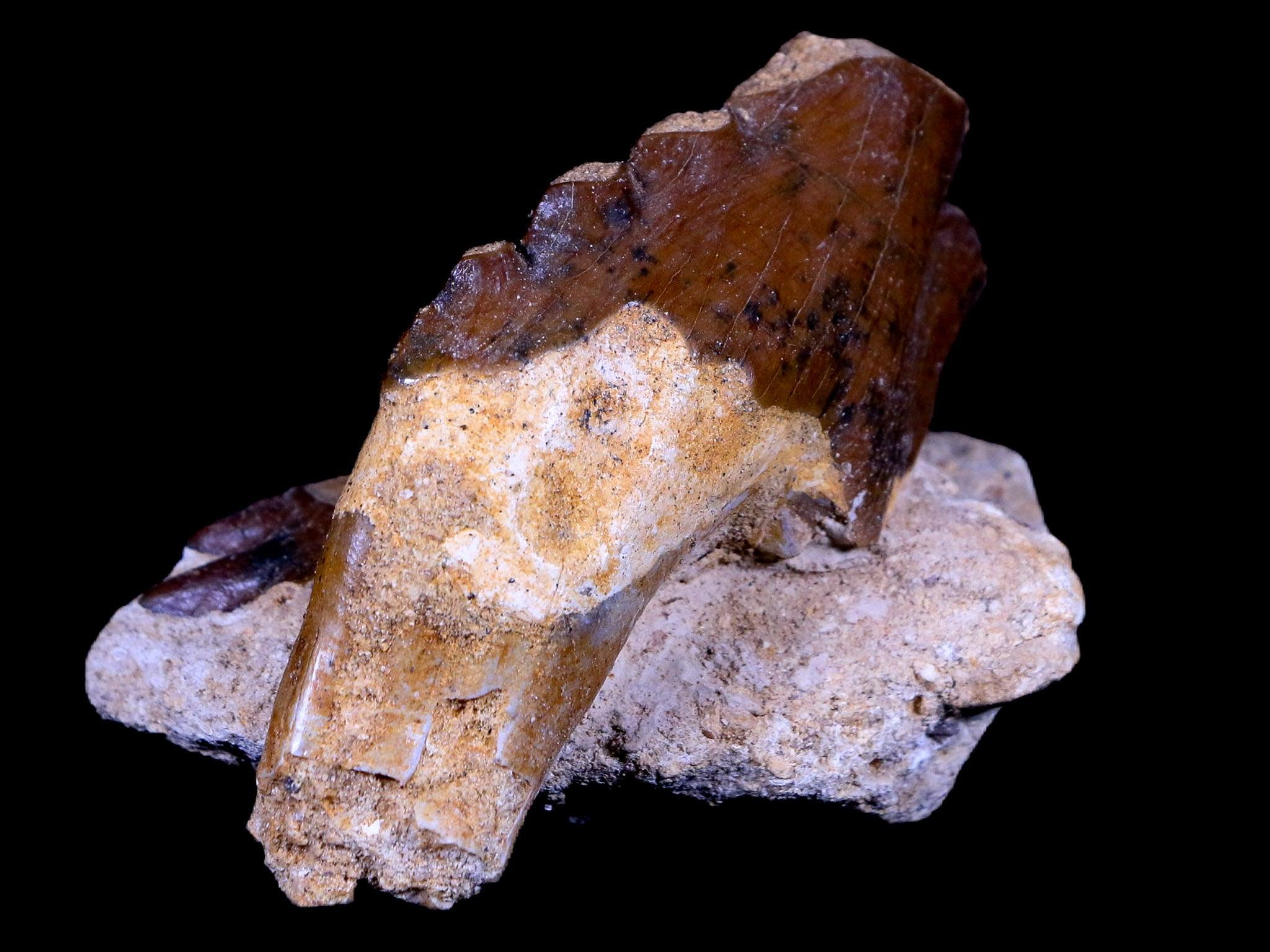


Description
Location: Dakhla, Western Sahara, South Morocco
Weight: 7.1 Ounces
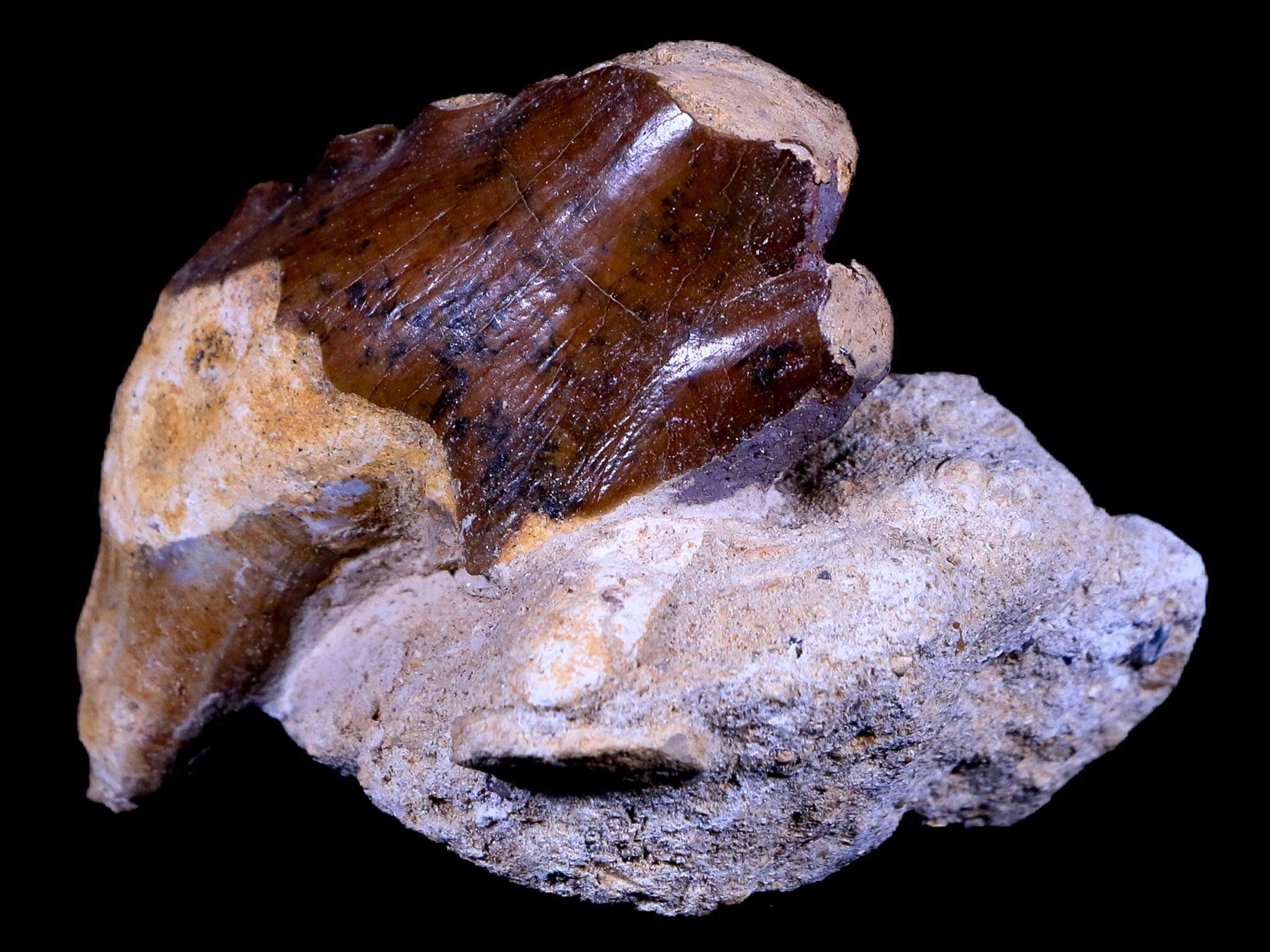
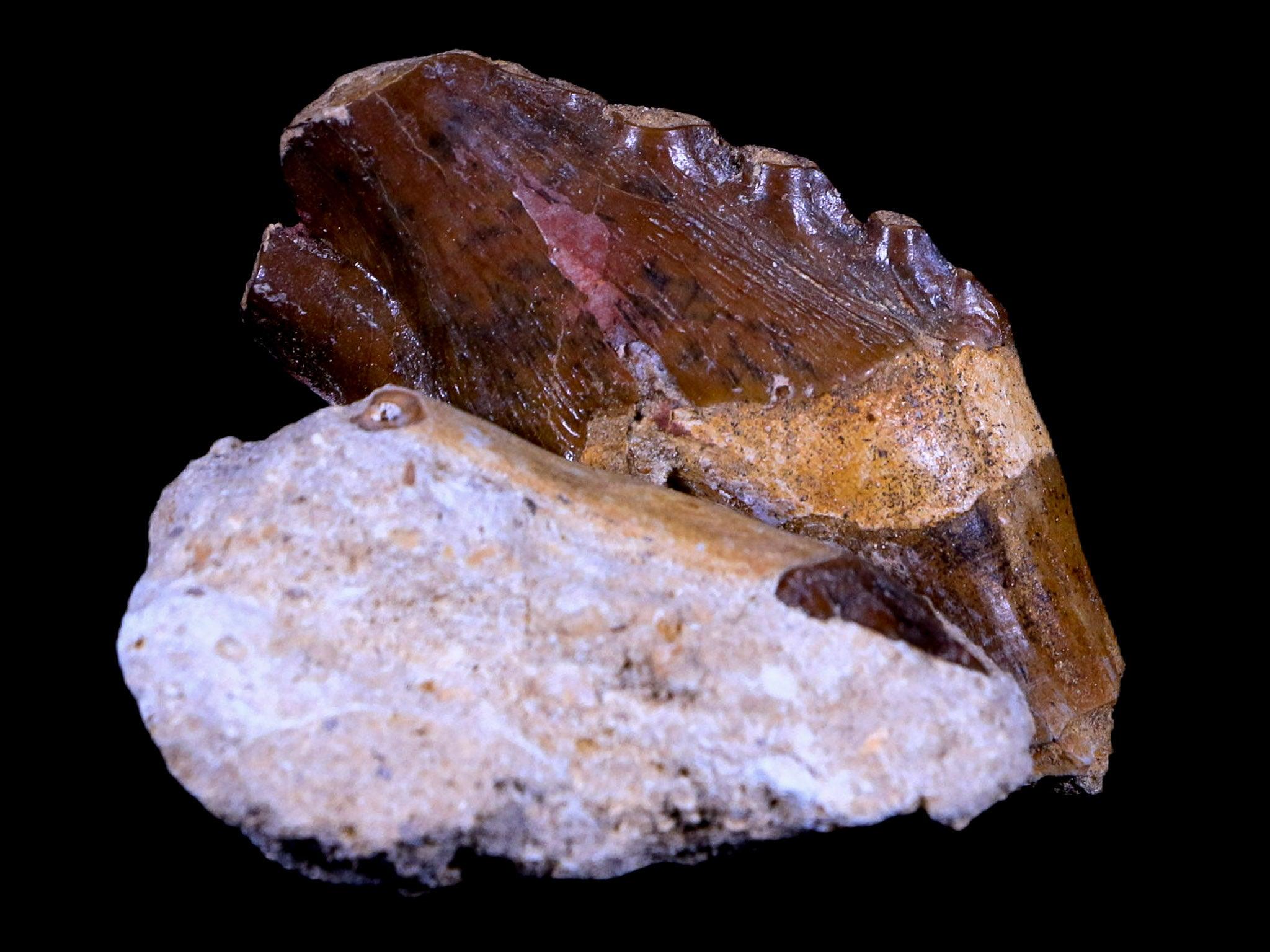
Dimensions: 3.1 Inches Long, 2.6 Inches Wide, 2.3 Inches Thick (Matrix)
Dimensions Tooth One: 3.3 Inches Long, 2.1 Inches Wide, 0.9 Inches Thick
Dimensions Tooth Two: 2 Inches Long, 0.8 Inches Wide
Comes with a Certificate of Authenticity.
This is a real fossil tooth.
The Item Pictured is the one you will receive.
Name: Basilosaurus (King Lizard).
Diet: Piscivore/Carnivore.
Size: Estimated between 50 Feet to 70 feet
Known locations: North Africa
Time period: Late Eocene Period, 40 to 34 million Years Ago
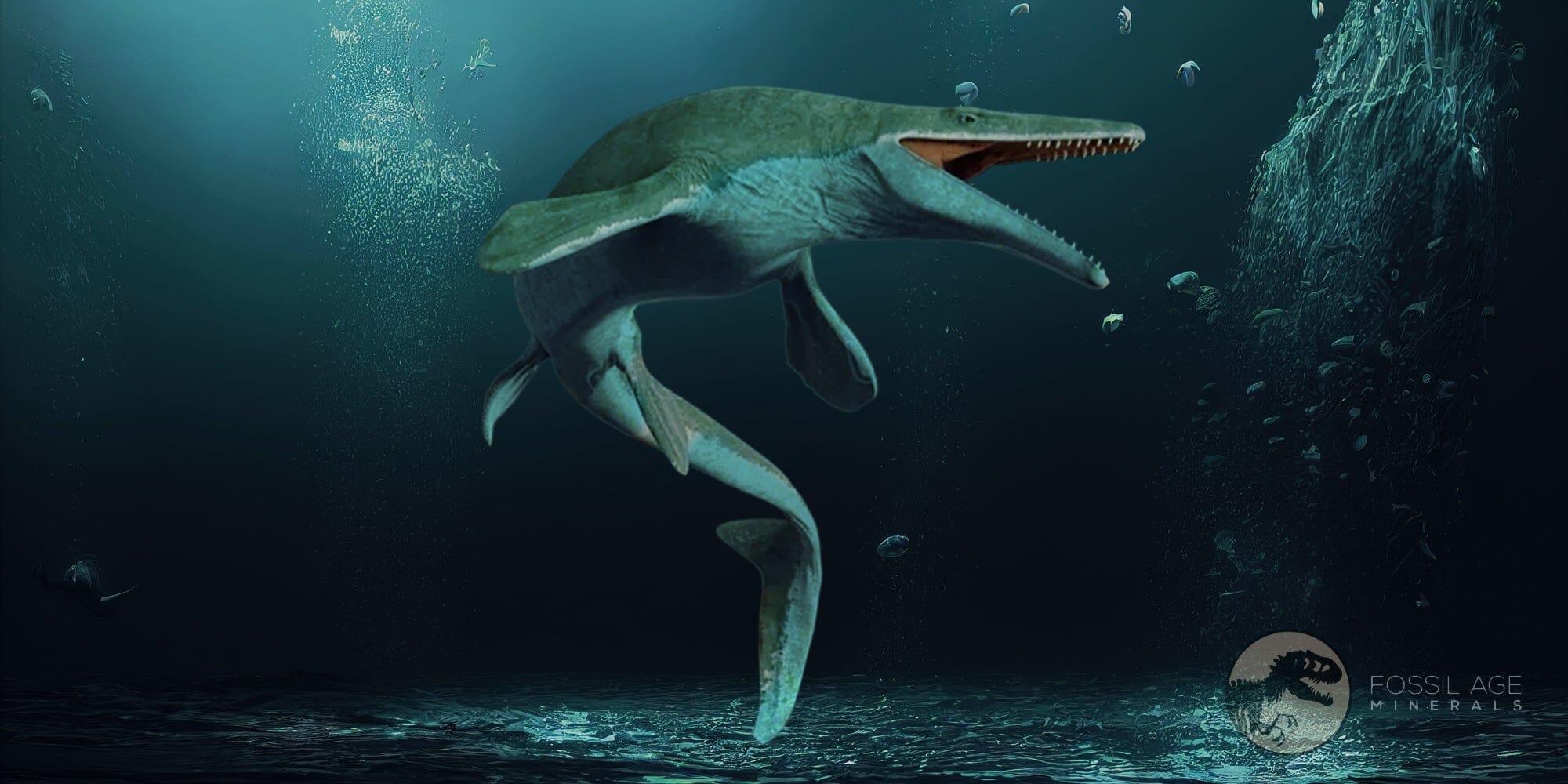
Basilosaurus was a fascinating early whale, known as an archaeocete, that lived about 40 to 34 million years ago during the Late Eocene Period. Its fossils were first unearthed in the 19th century in the United States, and because of its long, snake-like body, scientists at the time mistakenly believed it to be a type of giant reptile. This led to its misleading name, Basilosaurus, meaning “king lizard,” which it received in 1834.
This ancient whale was an enormous marine predator. It could grow up to 70 feet long and weigh roughly 15 tons—longer than a semi-trailer and about as heavy as a modern cruise ship’s anchor. Its long body and powerful tail helped it glide swiftly through ancient seas.
Basilosaurus was a meat-eater, armed with sharp, conical teeth and strong jaws capable of delivering a bite force of around 2,300 pounds. Such strength allowed it to seize and tear apart its prey with ease.
Paleontologists believe this whale hunted large fish, smaller whales, and possibly any other sea creatures it could overpower. With its size, speed, and formidable jaws, Basilosaurus was truly one of the top predators of its time—ruling the warm Eocene oceans with dominance.
