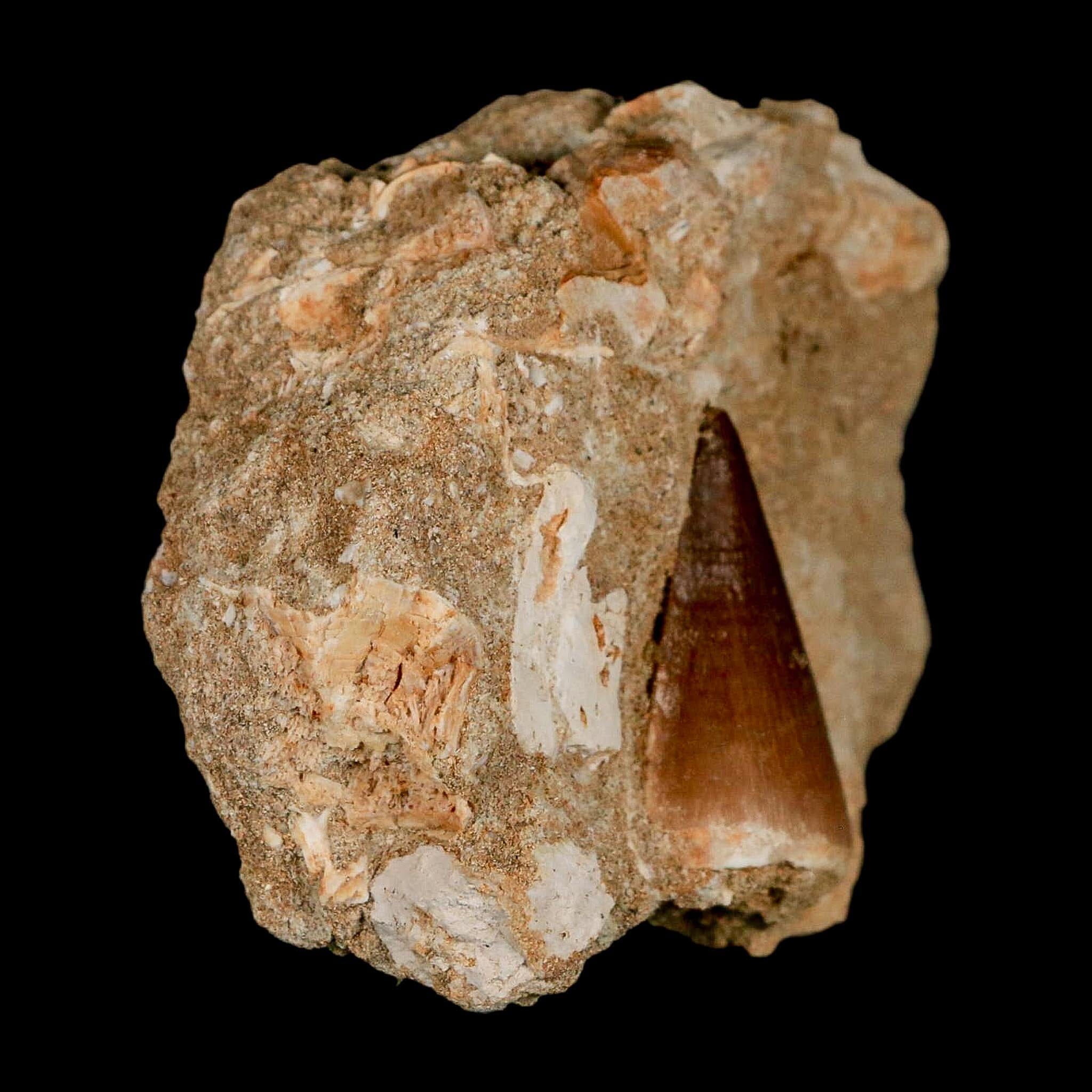
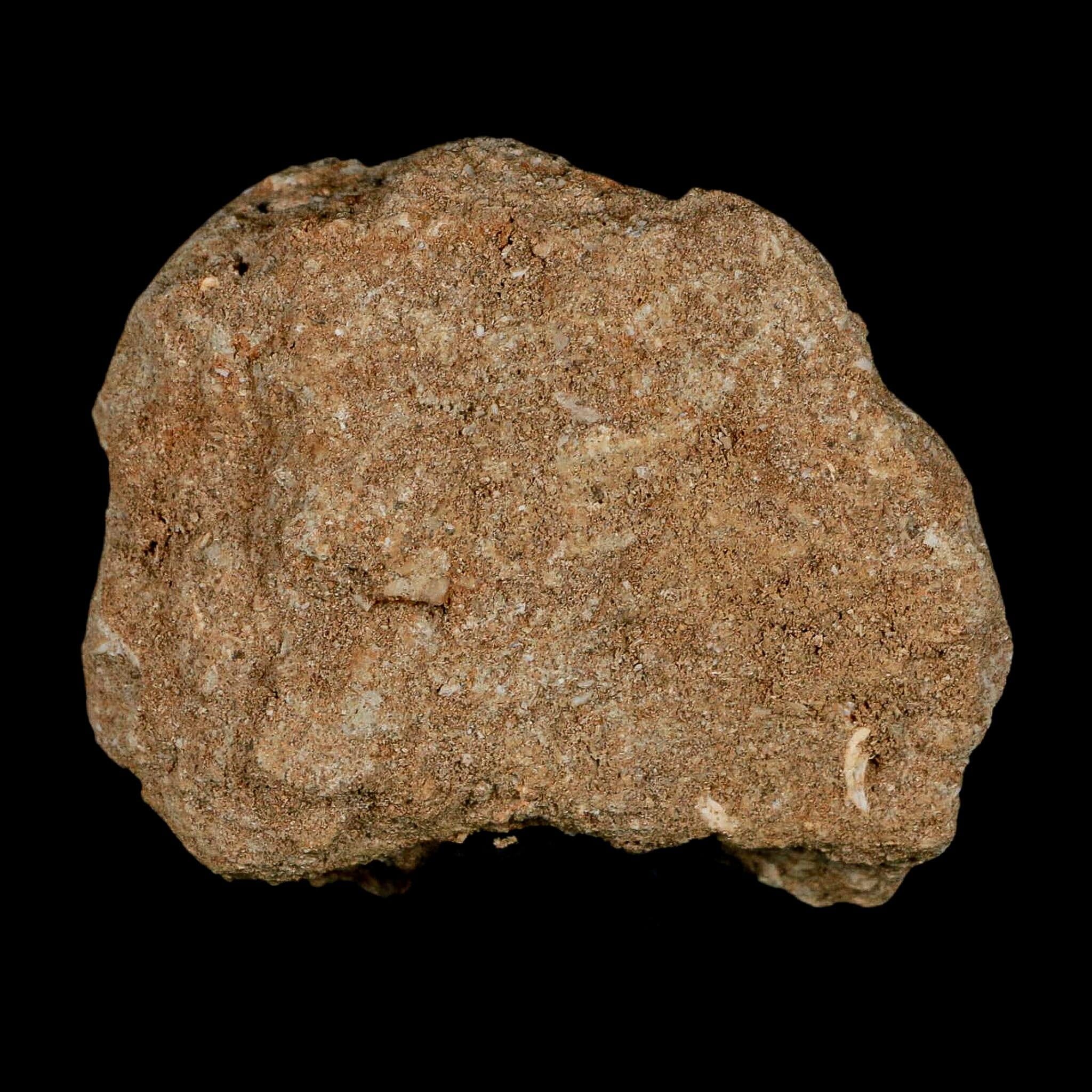


Description
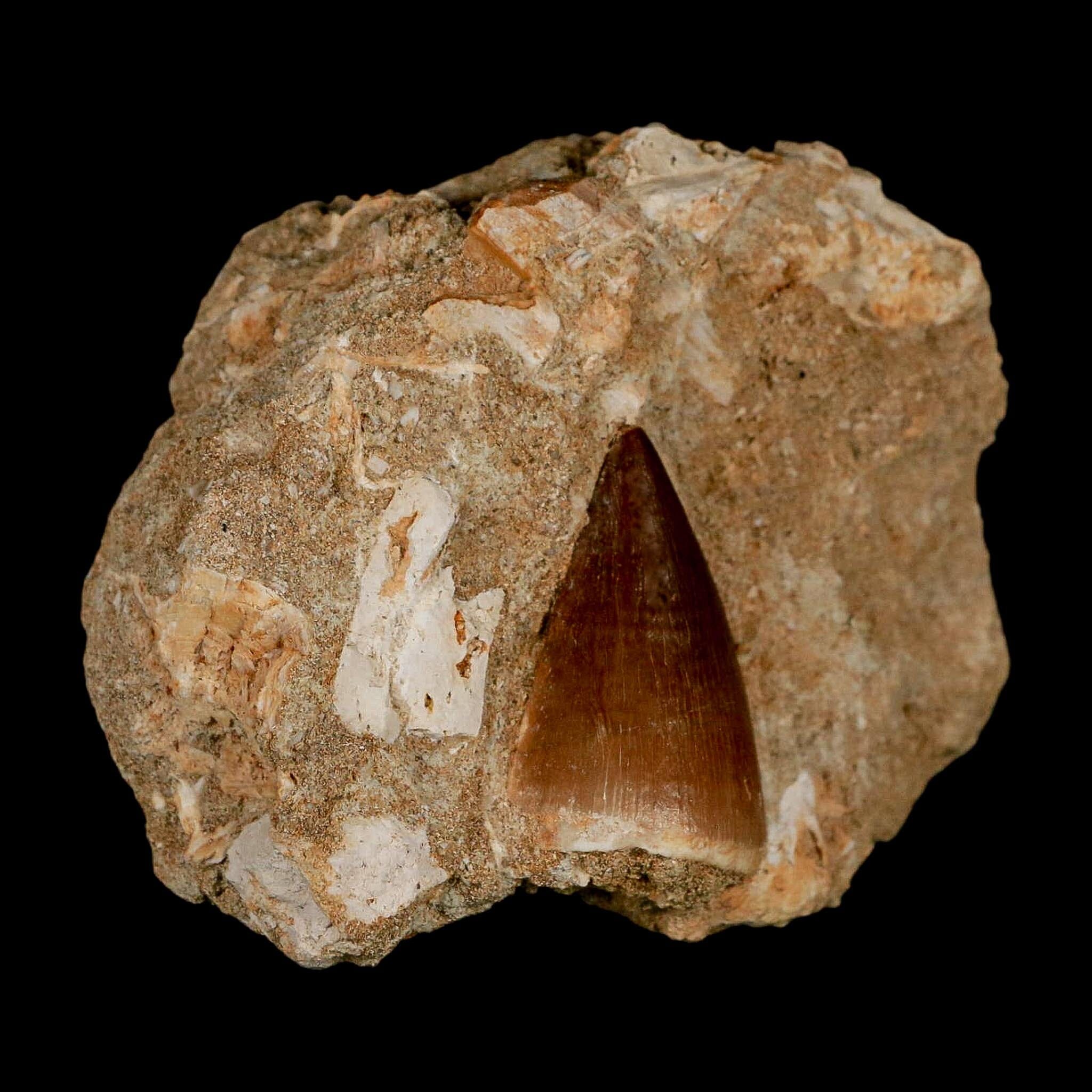
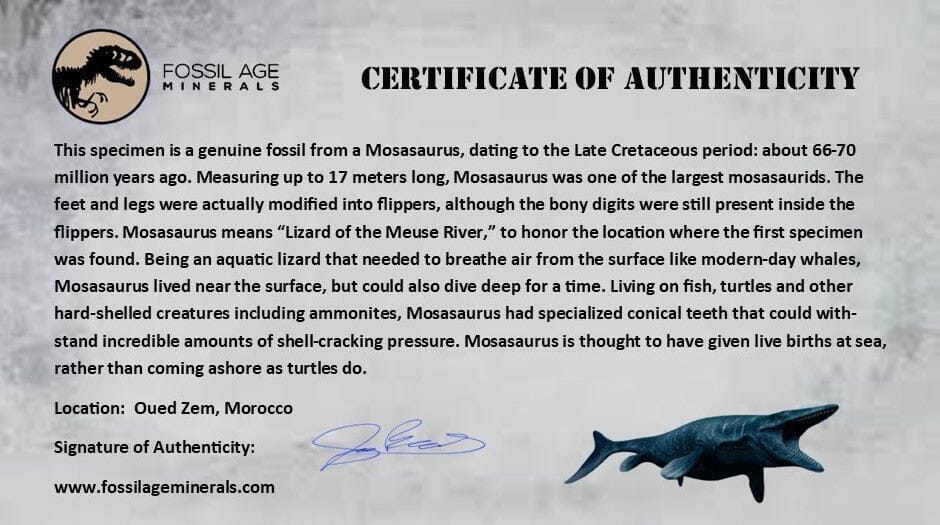
Location: Oued Zem, Morocco
Weight: 4.5 Ounces
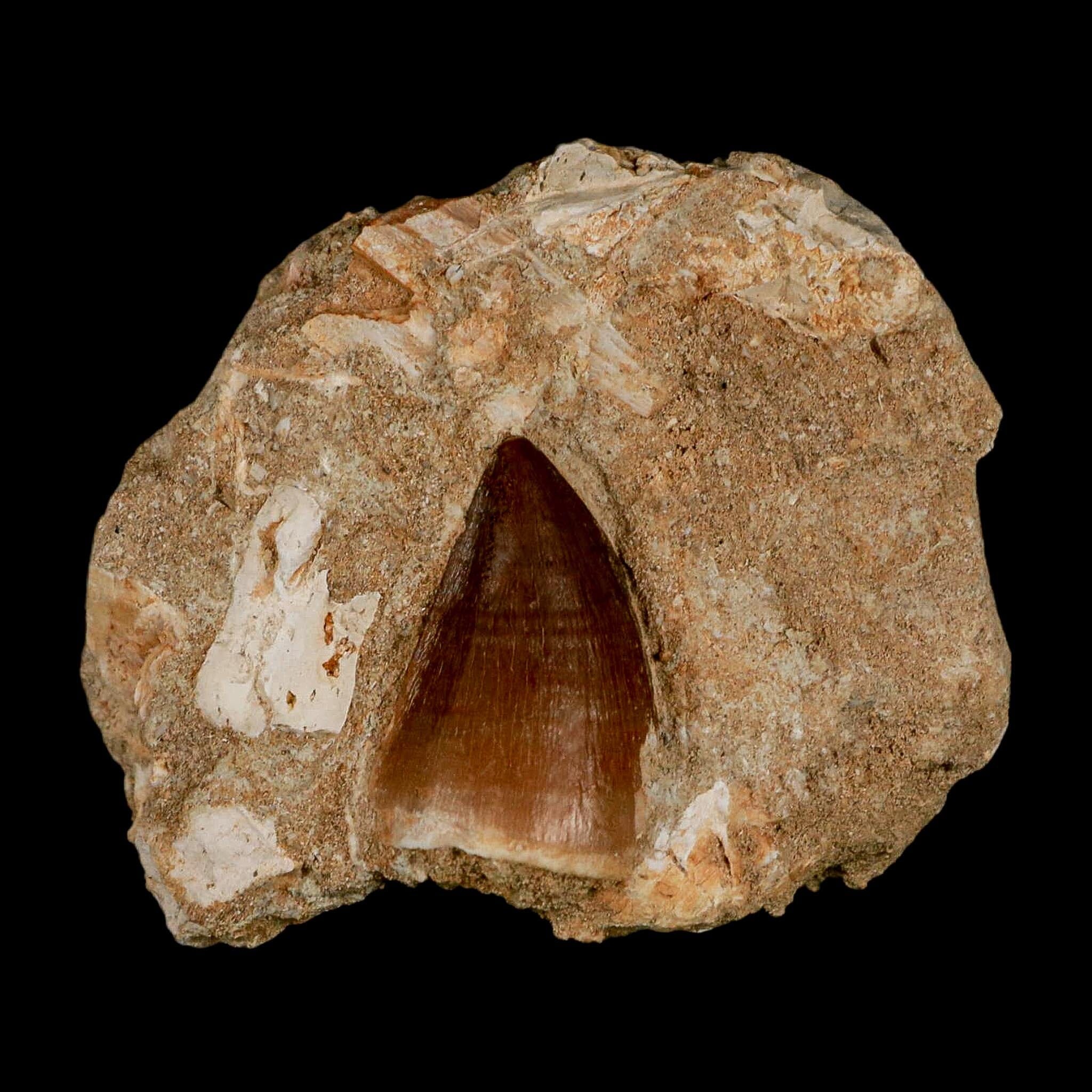
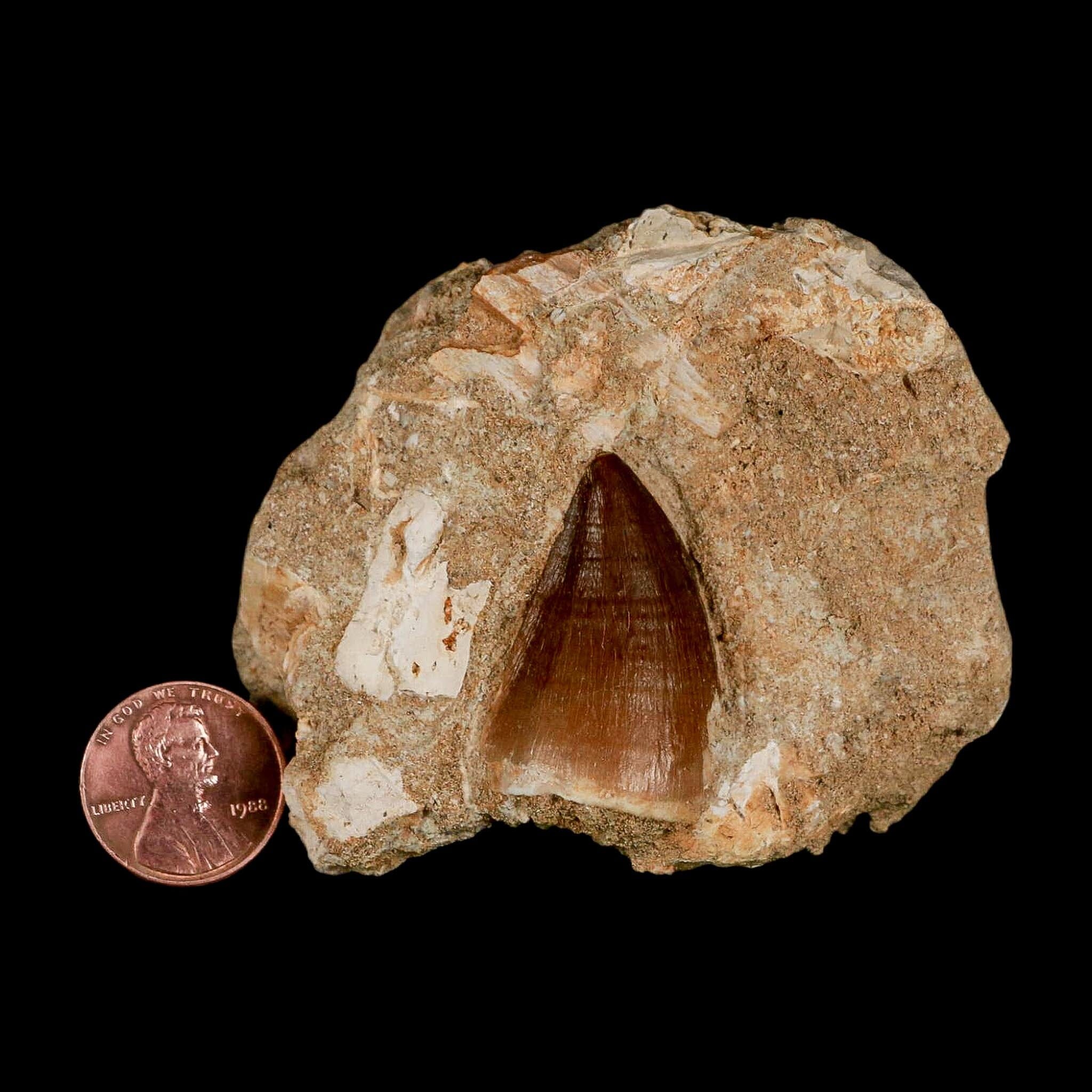
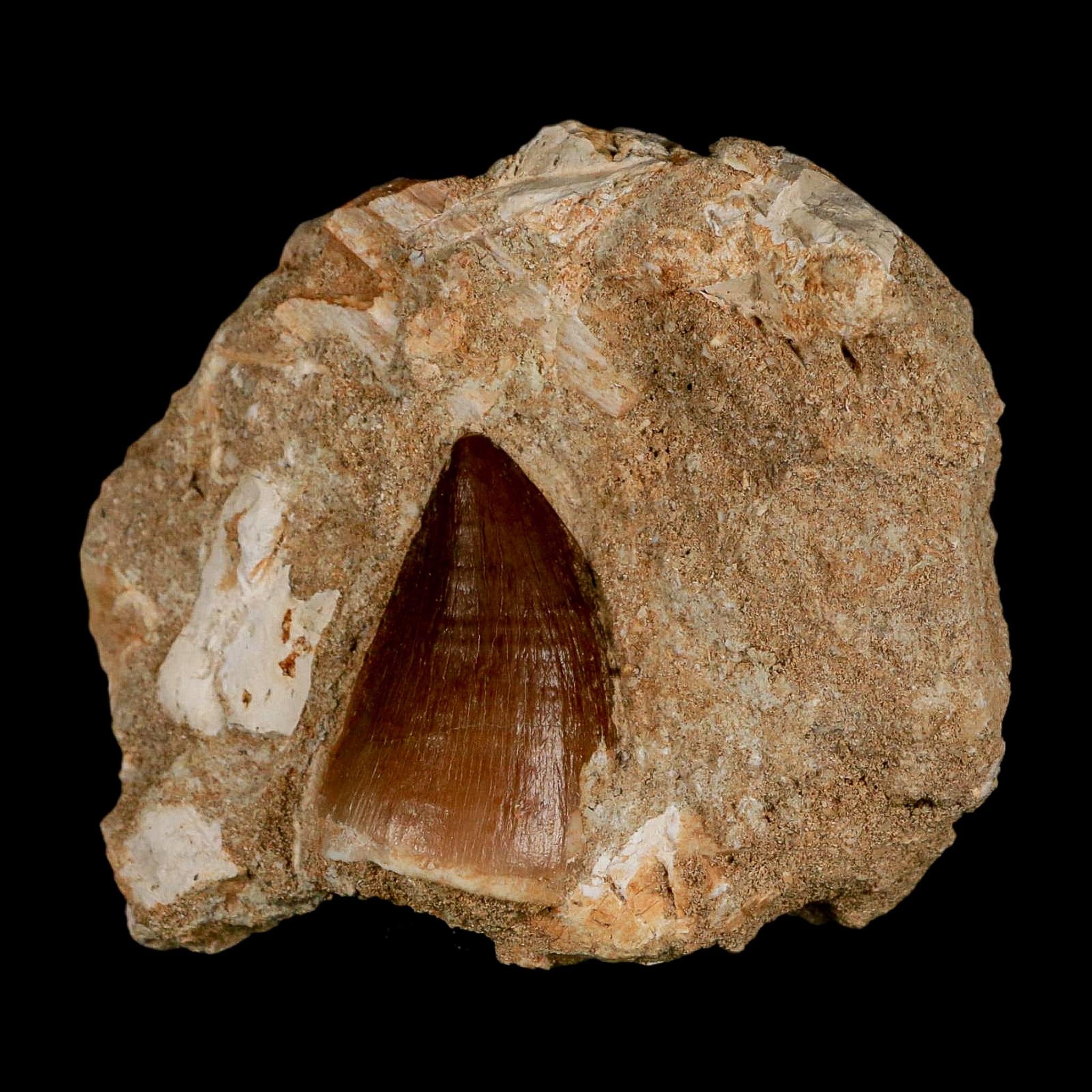
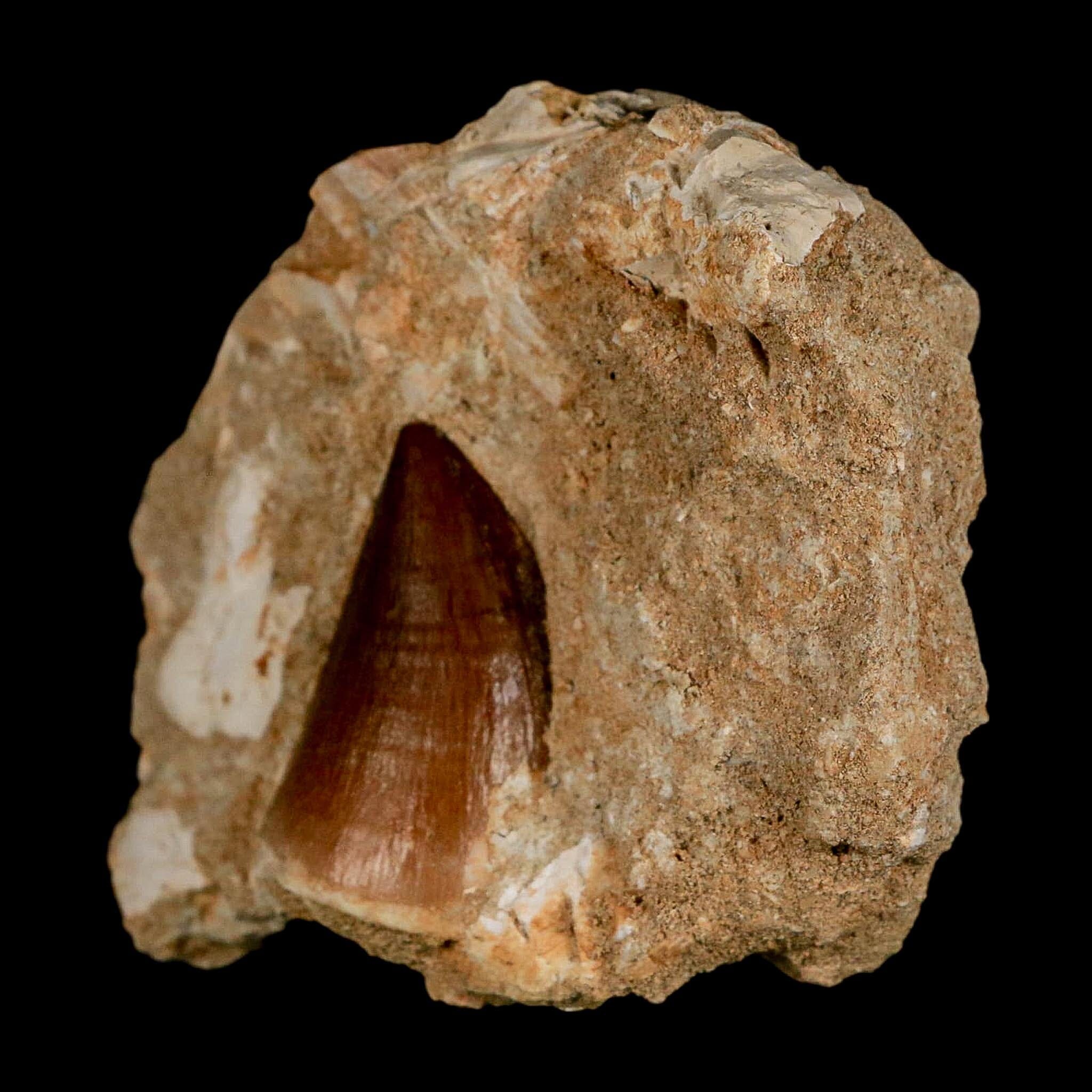
Dimensions: 2.8 Inches Long, 2.4 Inches Wide, 1.2 Inches Thick (Matrix)
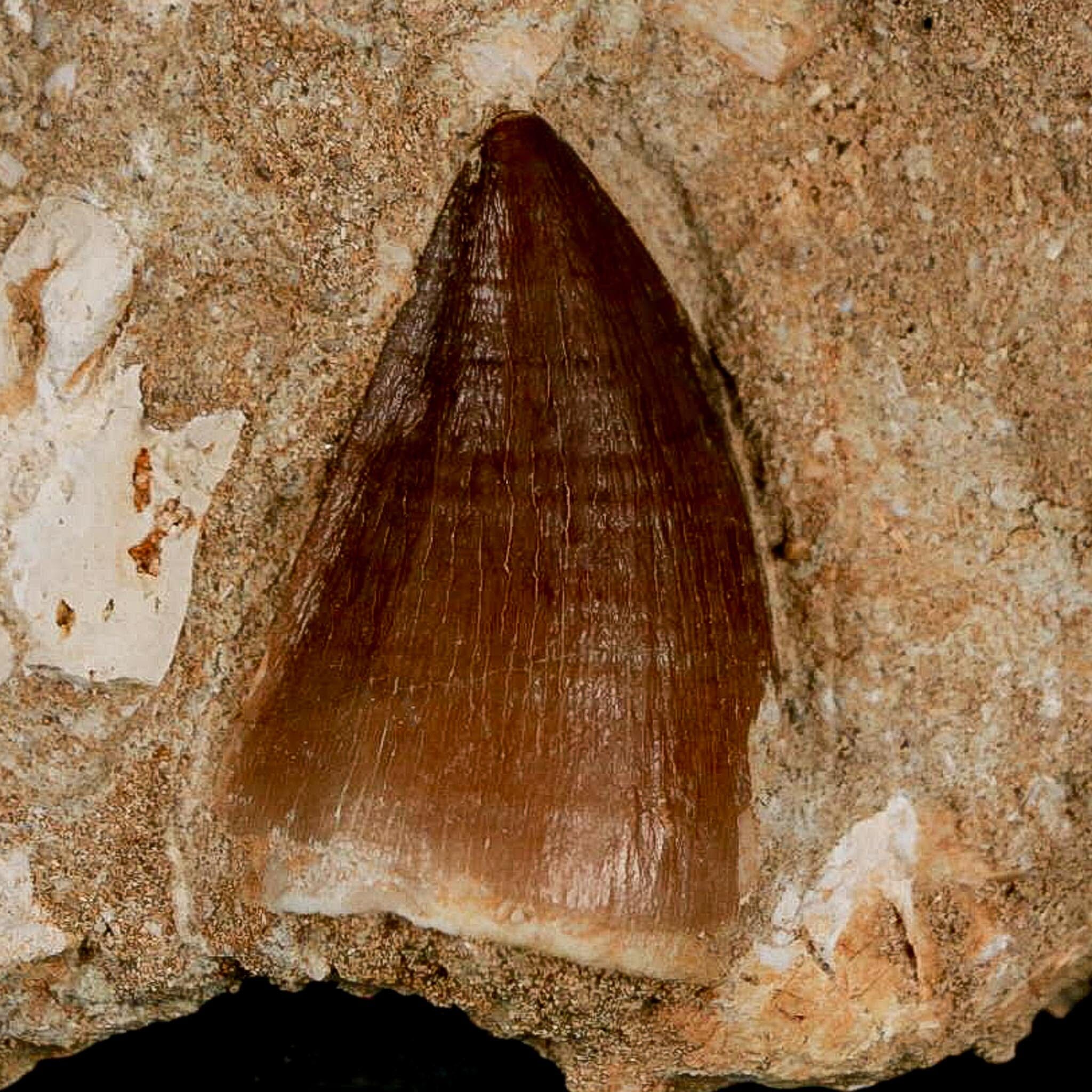
Tooth Dimensions: 1.3 Inches Long, 0.8 Inches Wide
Comes with a Certificate of Authenticity.
The item pictured is the one you will receive.
100 - 66 Million Years old, Upper Cretaceous, Maastrichtian Epoch.
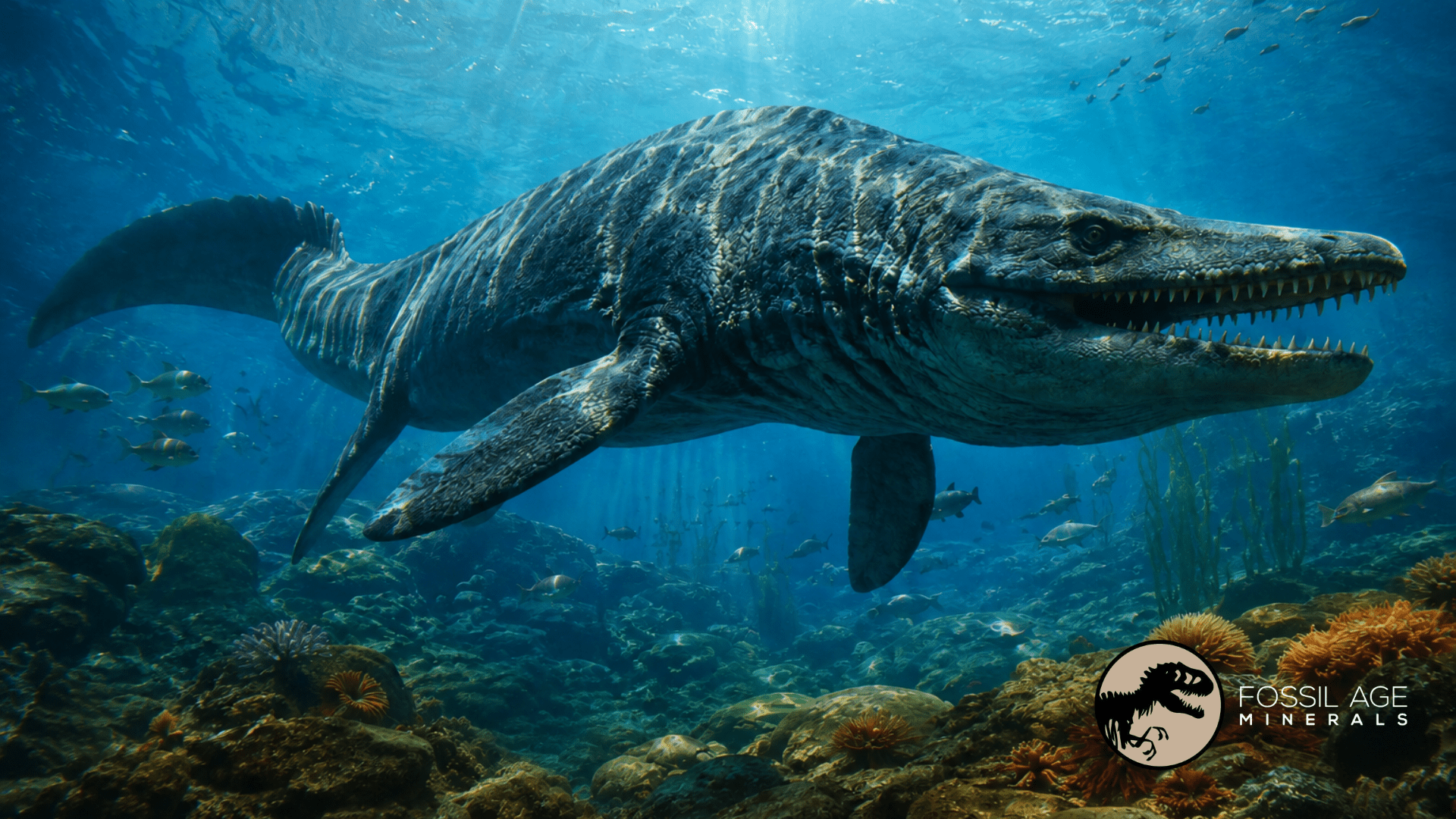
Name: Prognathodon (Forejaw tooth).
Named By: Dollo - 1889.
Diet: Carnivore.
Size: Depending upon the species, Prognathodon could range between 6 and possibly just under 14 meters in length.
Known locations: Fossil locations suggest a worldwide distribution, but are especially well known from Europe and North America.
Time period: Campanian to Maastrichtian of the Cretaceous.
Prognathodon was a powerful Late Cretaceous mosasaur that evolved into one of the most specialized predators of prehistoric oceans. Unlike many mosasaurs that relied on speed to capture fish and other marine reptiles, Prognathodon developed a crushing bite adapted for consuming armored prey. Its diet included hard-shelled organisms such as ammonites, turtles, and shellfish, demonstrating a clear shift toward durophagous feeding within the mosasaur lineage.
This adaptation is reflected in its anatomy. The skull was heavily reinforced and supported by strong jaw muscles capable of delivering immense bite force. Its thick, durable teeth were shaped to withstand repeated impacts while also featuring subtle serrations that aided in slicing flesh once shells were broken. Fossil discoveries in Canada provided direct confirmation of this feeding strategy when remains of turtles, ammonites, and a large fish were found preserved in the stomach region of a specimen. These findings indicate that Prognathodon balanced specialization with opportunistic hunting behavior.
Researchers suggest that competition among apex predators or changes in prey availability may have driven this unique evolutionary path. Alongside other shell-crushing mosasaurs, Prognathodon highlights the ecological diversity that allowed these marine reptiles to dominate Late Cretaceous seas.

Please be aware of the nature of fossils:
Being buried under the ground for millions of years under tons of pressure tends to be rough. No fossil comes out of the ground whole and perfect. Most fossils have undergone some restoration, while others are altered by man simply to enhance their presentation in different ways. The workers in Morocco do a very professional job of unearthing and preserving these natural treasures; however, commonly, natural cracks are visible on the surface. These are part of the natural beauty of the fossil and are not considered defects.