
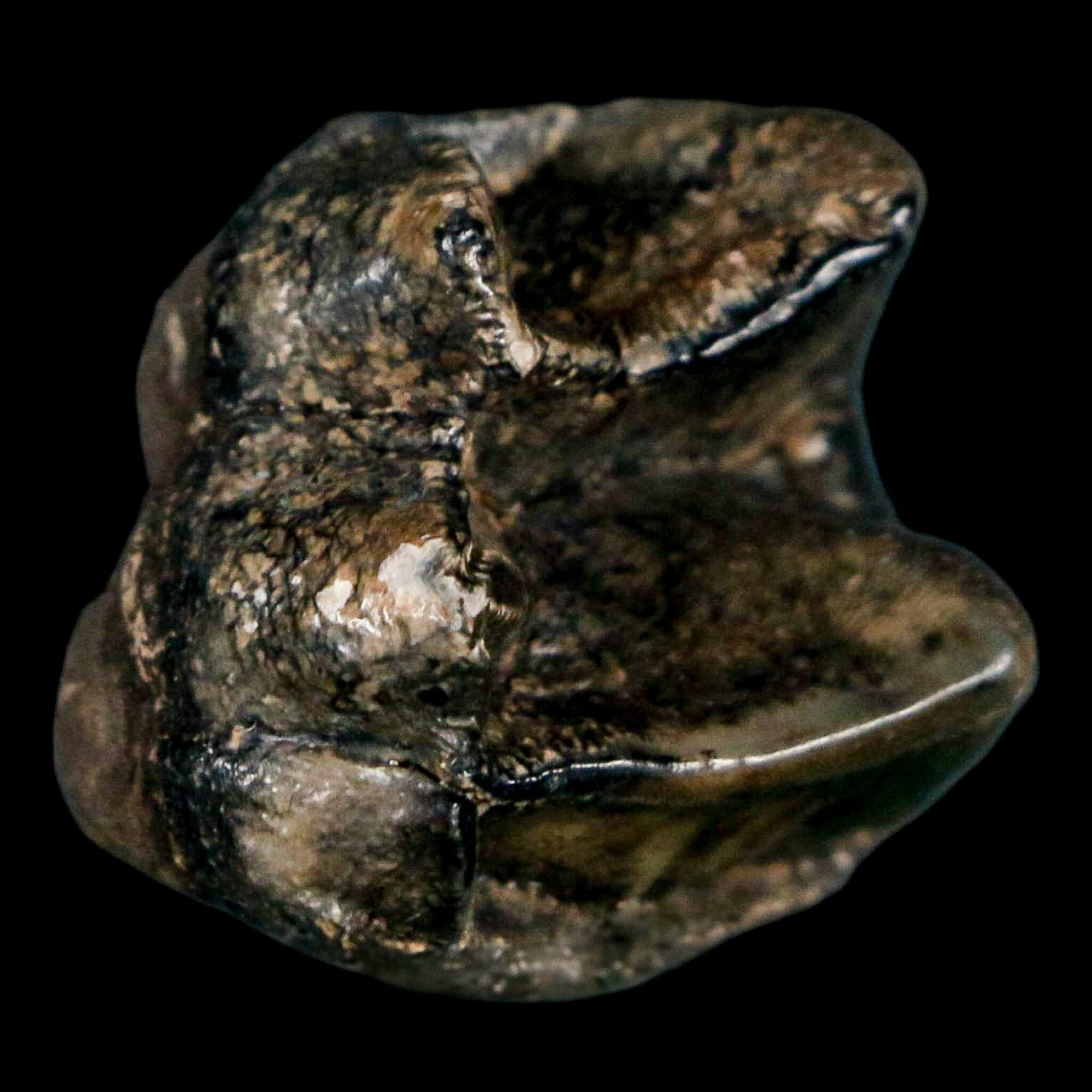
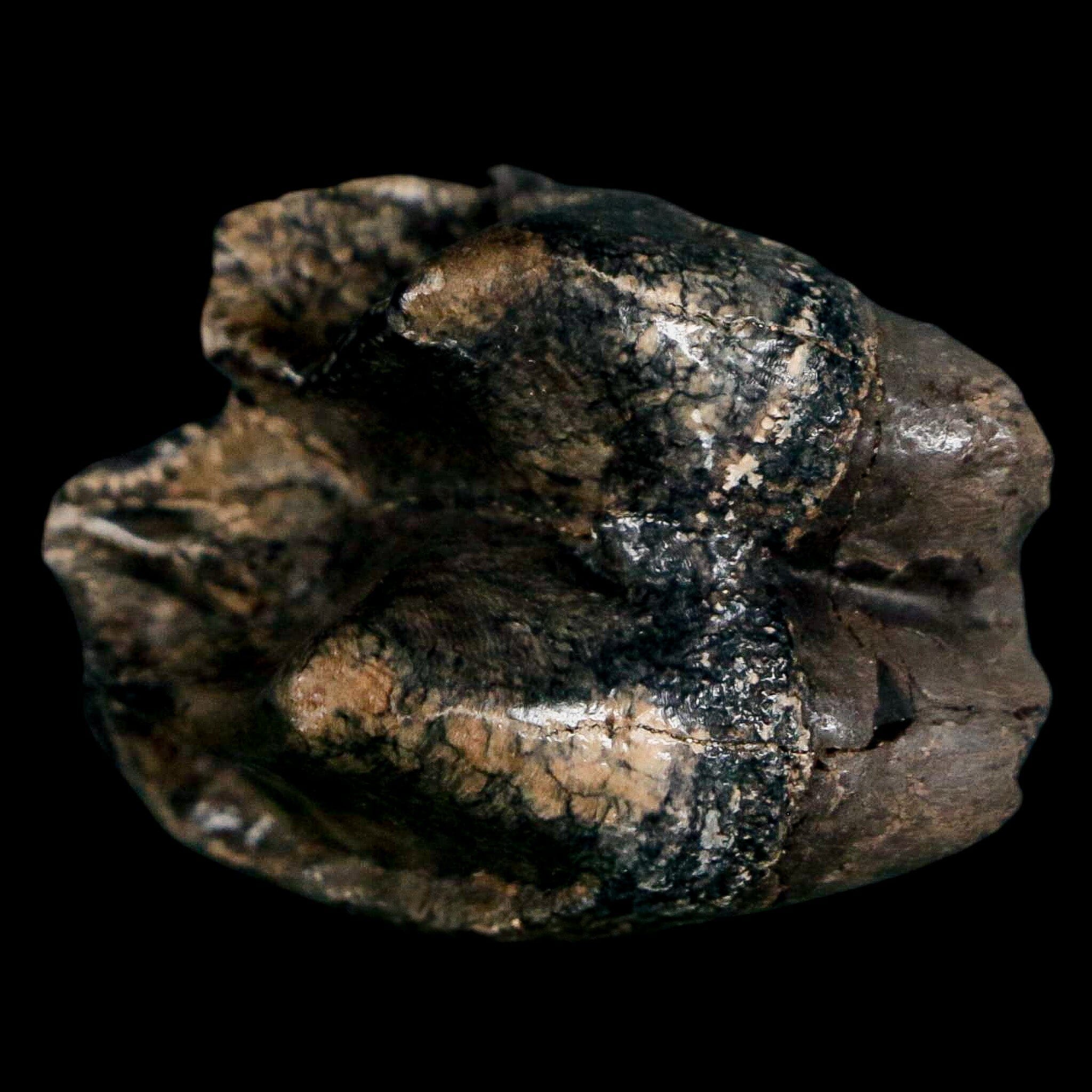
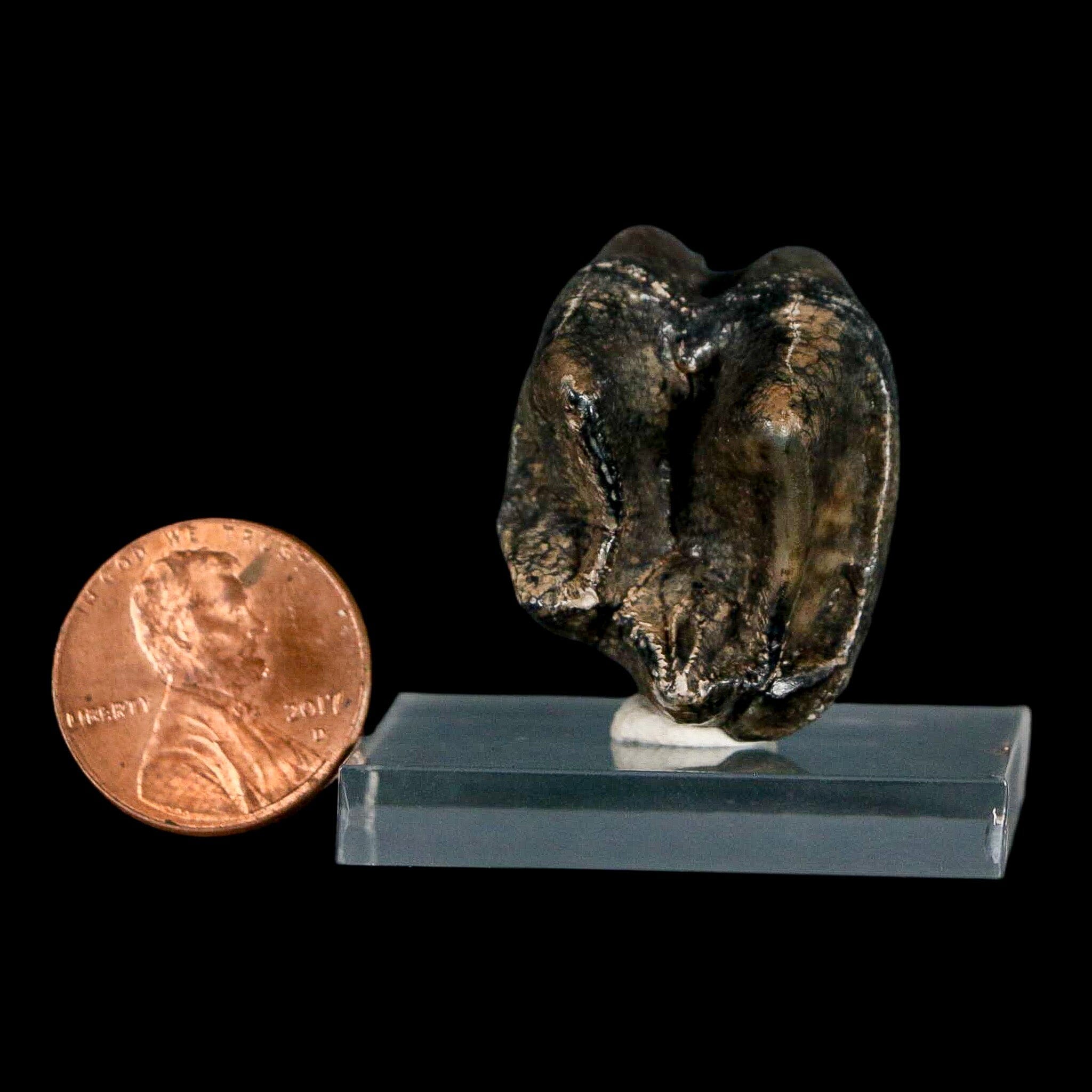
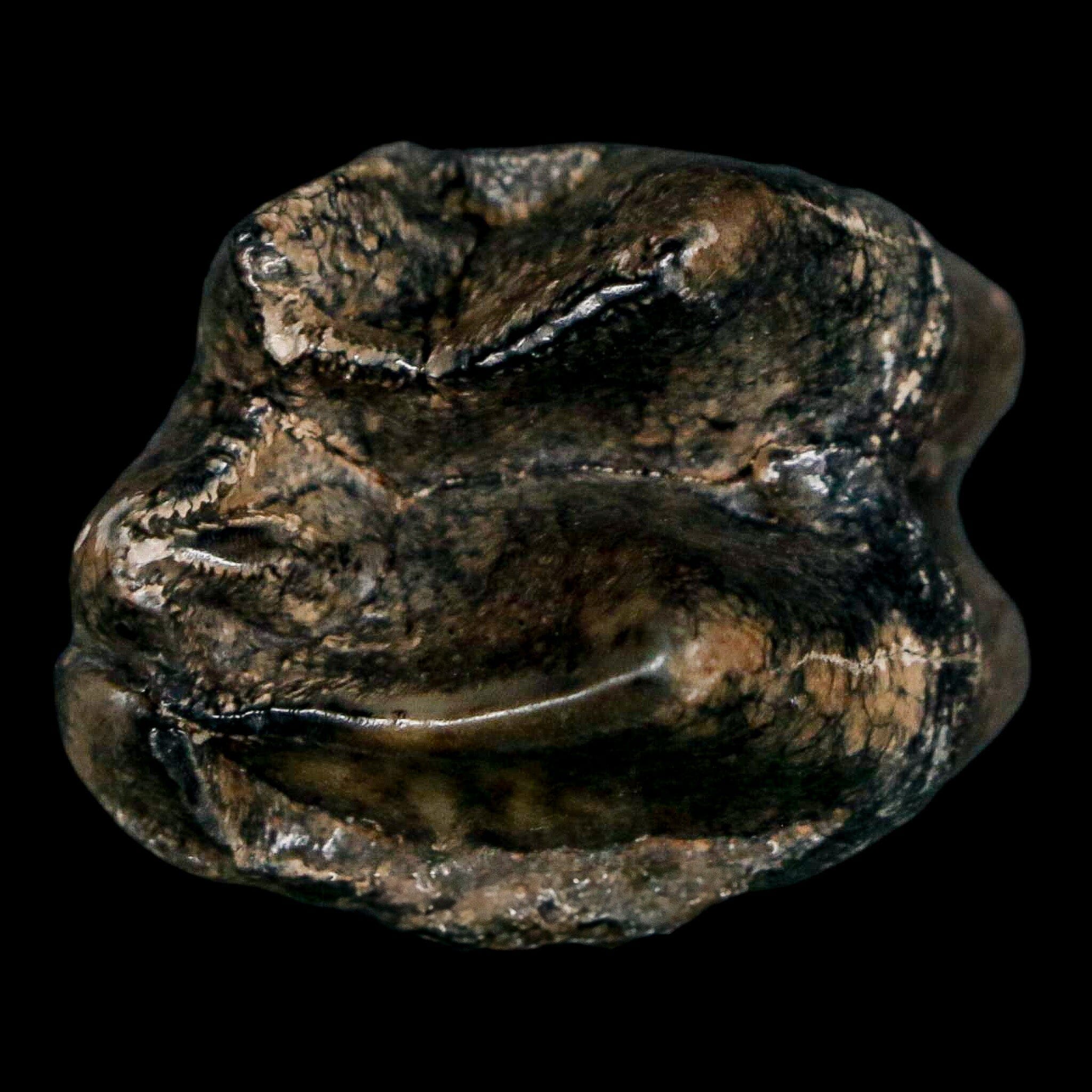
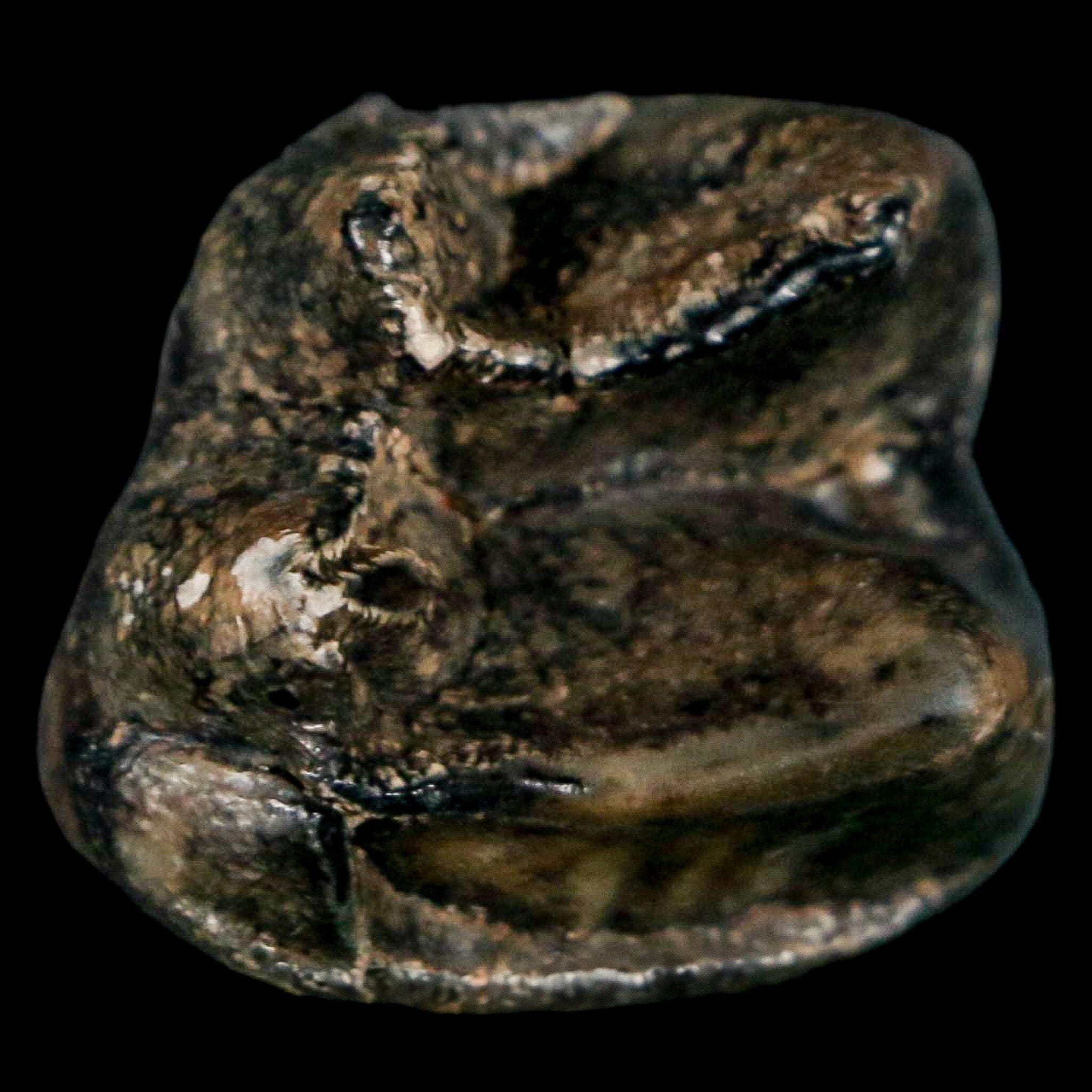
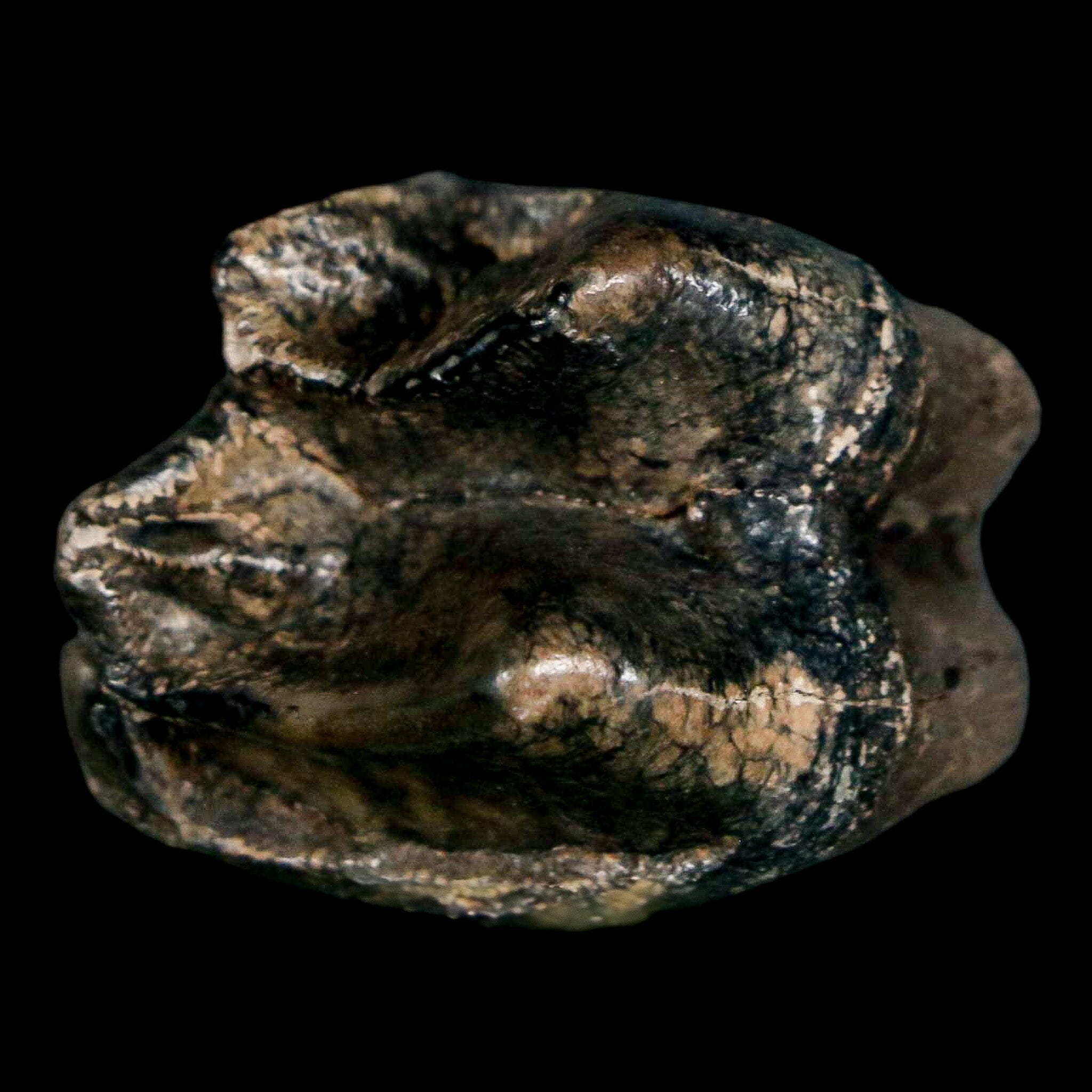
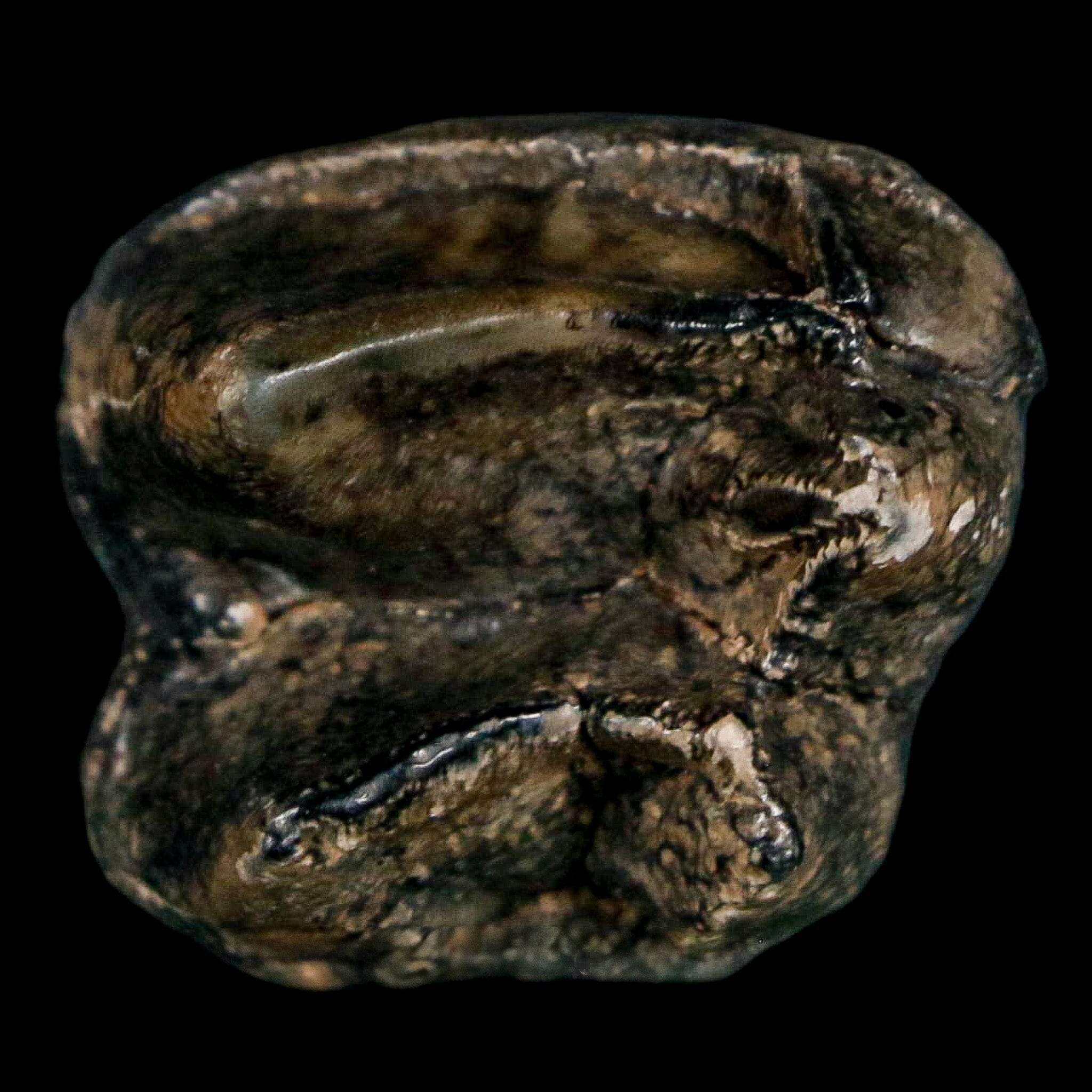
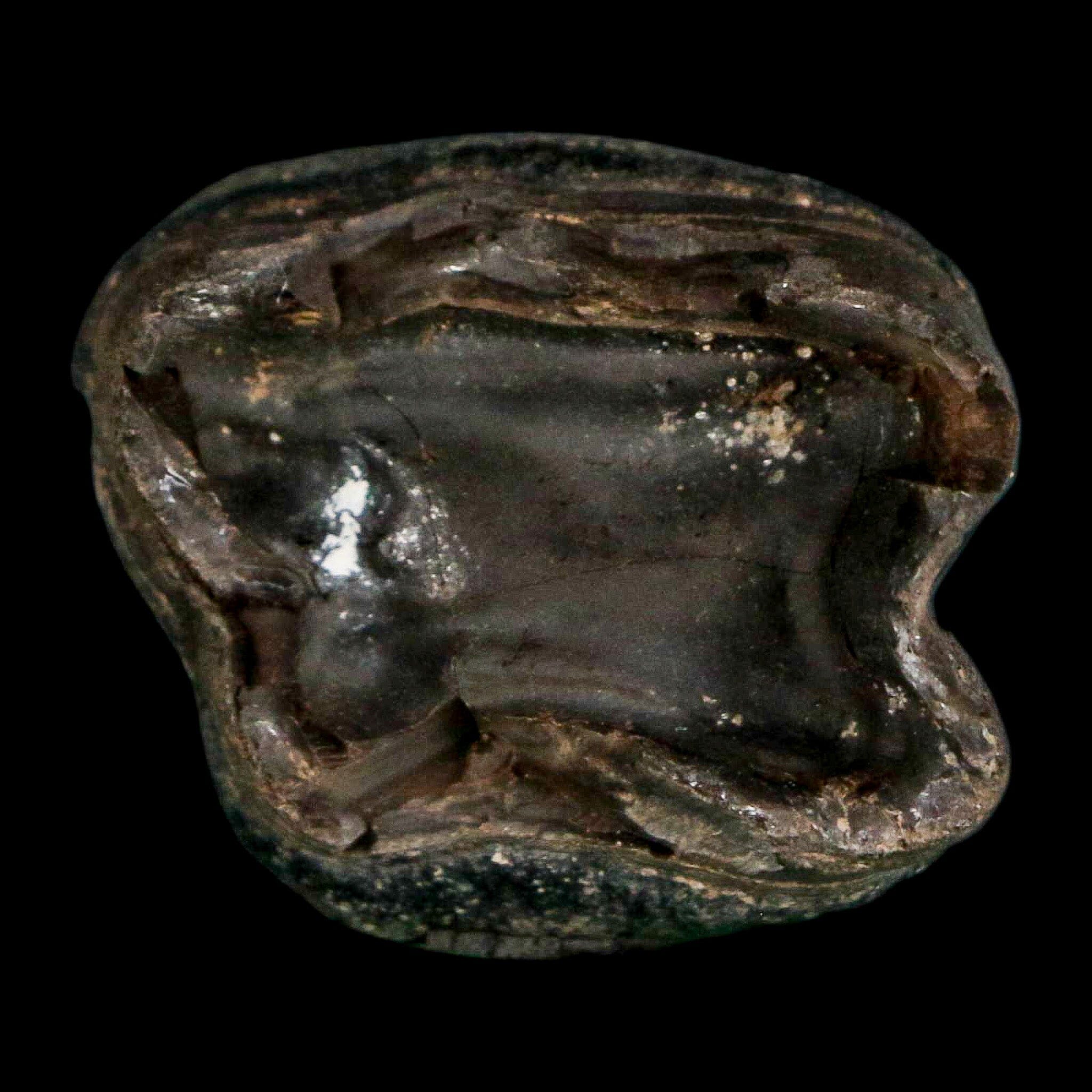


Description
Location: Withlacoochee River, Florida, United States
Weight: 0.4 Ounces
Dimensions: 1.1 Inches Long, 0.9 Inches Wide, 0.8 Inches Thick
Comes with a Free Display.
The Item pictured is the one you will receive.
Pleistocene Age 1 - 1.7 Million Years old.
The Vero tapir (Tapirus veroensis) was an extinct species of tapir that roamed North America during the Pleistocene epoch, commonly referred to as the Ice Age. This period, lasting from approximately 2.6 million to 11,700 years ago, was marked by cycles of glaciation and the widespread presence of large prehistoric mammals.
Fossils of Tapirus veroensis have been uncovered across the southeastern United States, with notable discoveries along Florida’s Withlacoochee River. During the Ice Age, Florida’s environment was markedly different from today. Lower sea levels exposed broad coastal plains, reshaped rivers, and created habitats that supported a wide variety of megafauna. The Withlacoochee River would have been part of a vibrant ecosystem where the Vero tapir thrived alongside other Ice Age species.
The Vero tapir was a large herbivore resembling modern tapirs, equipped with a short, prehensile snout for grasping leaves, fruits, and soft vegetation. Its presence in regions like the Withlacoochee River suggests that these areas offered abundant food and reliable water sources. Like many of its contemporaries, Tapirus veroensis ultimately became extinct near the end of the Pleistocene, likely as a result of environmental changes and hunting pressures from early human populations.