
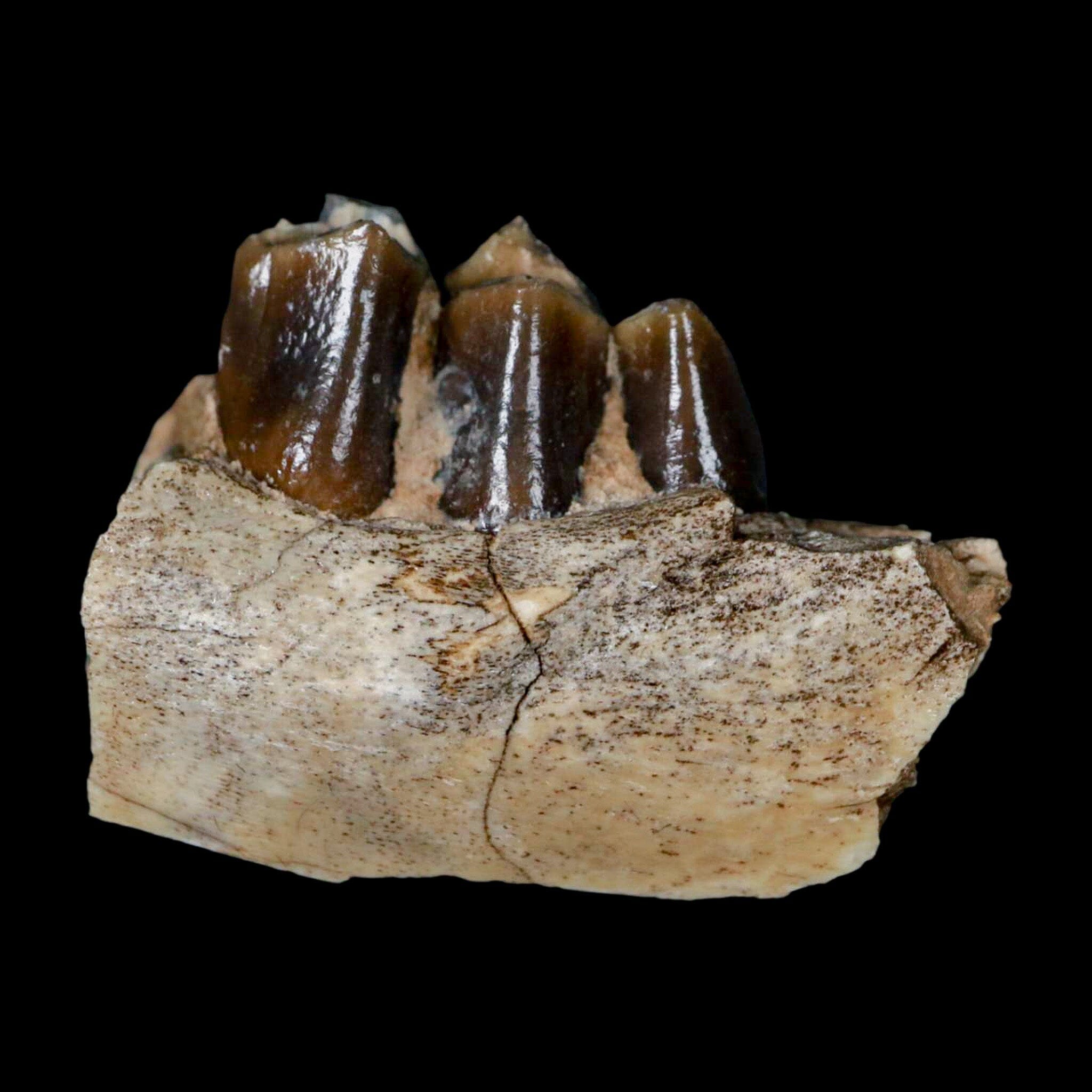
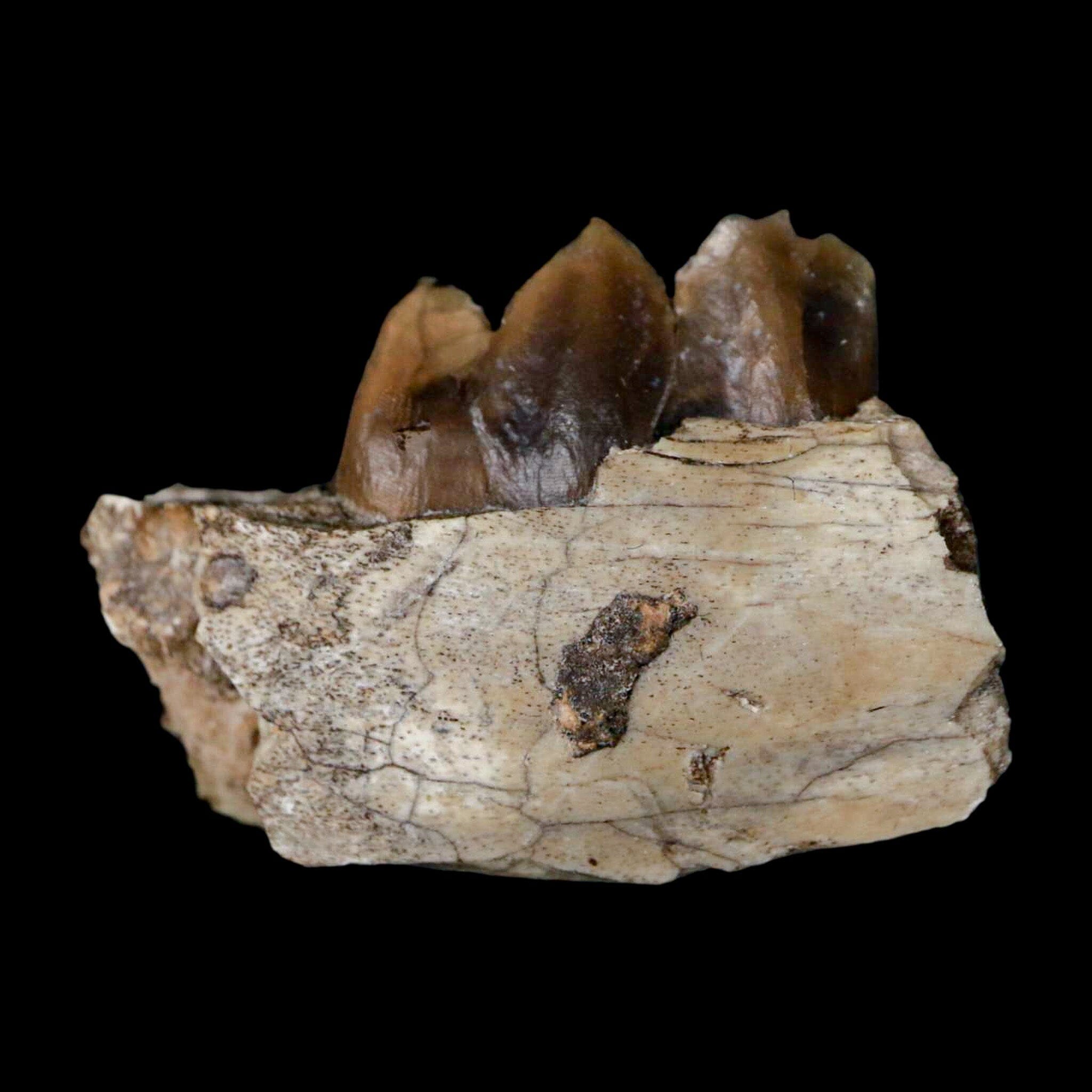
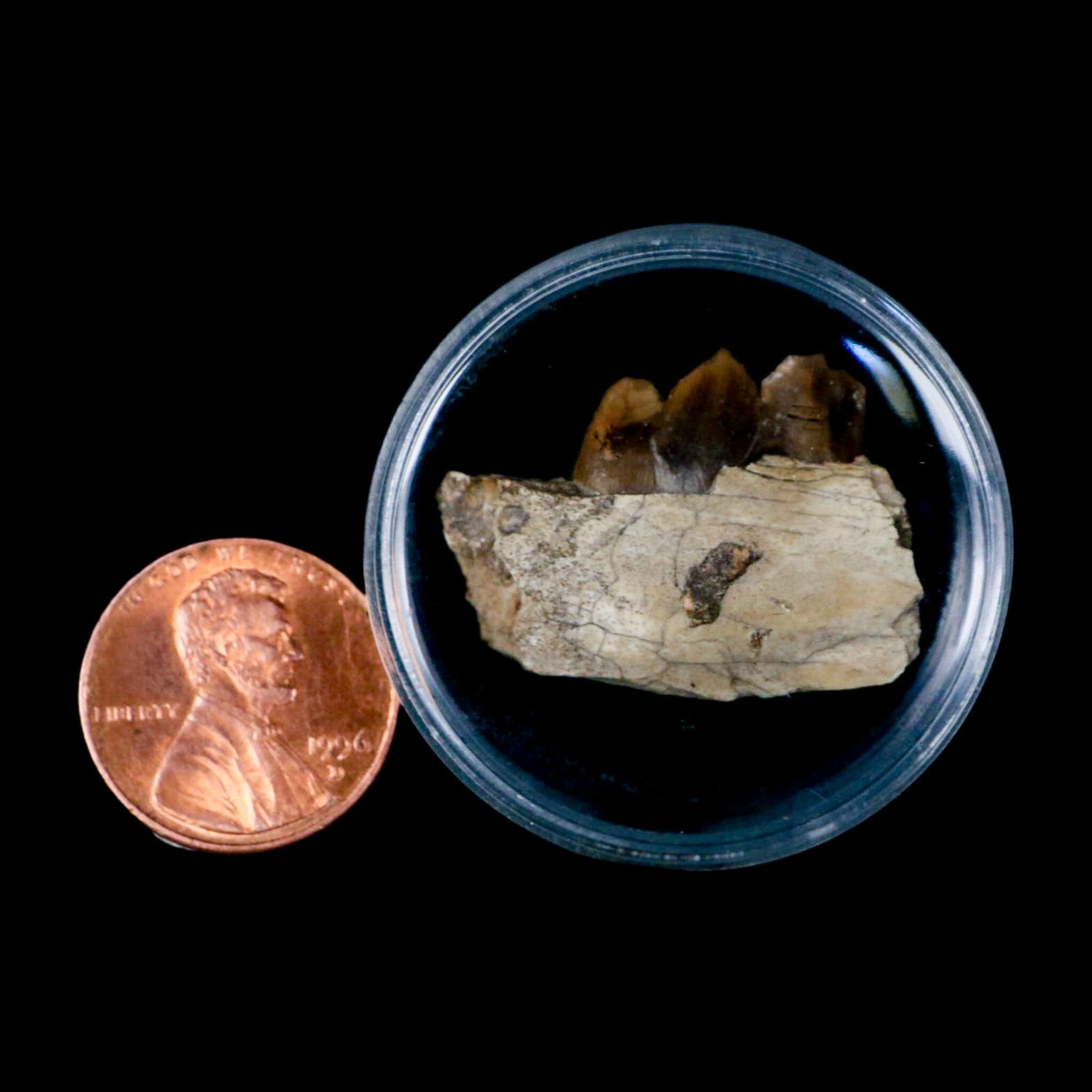
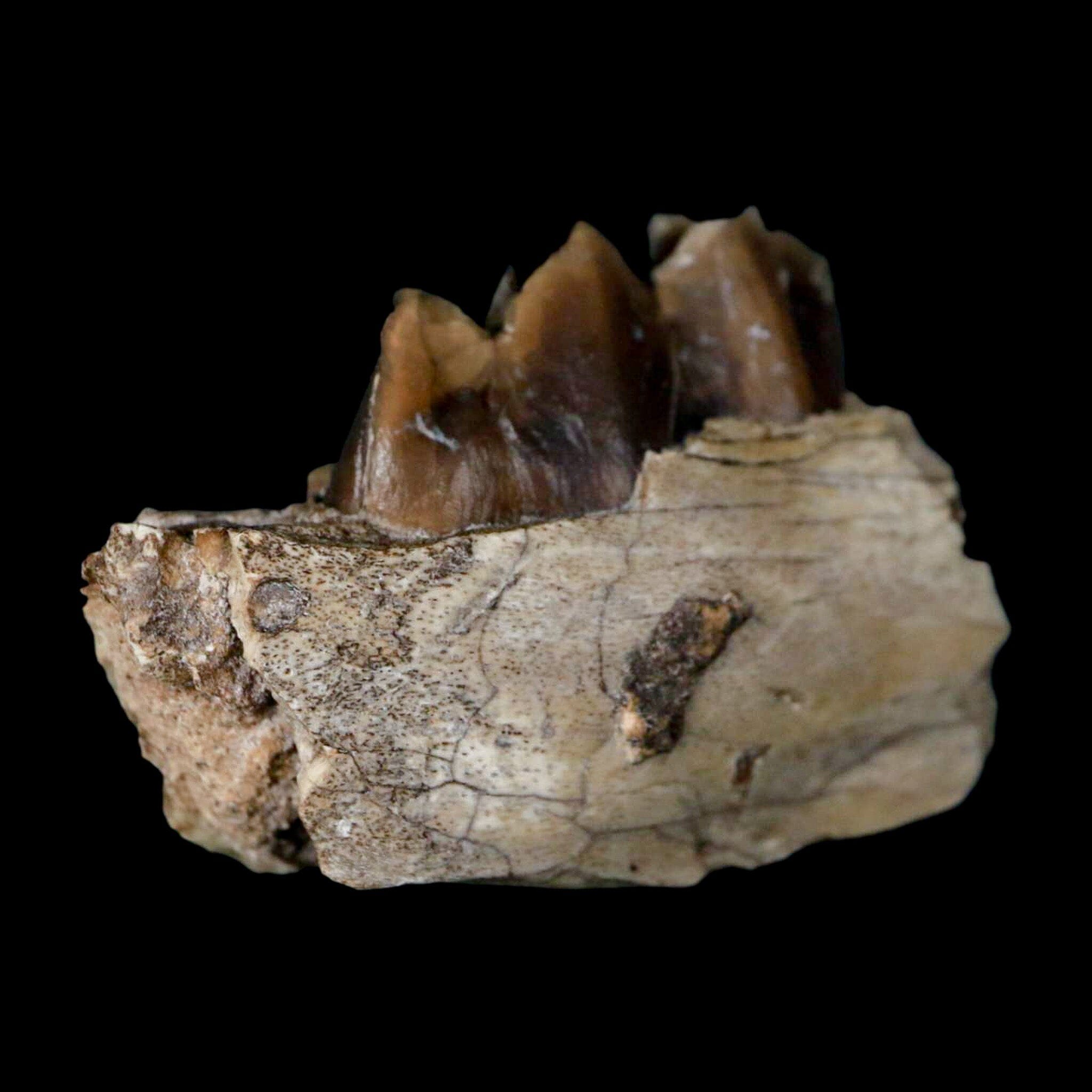
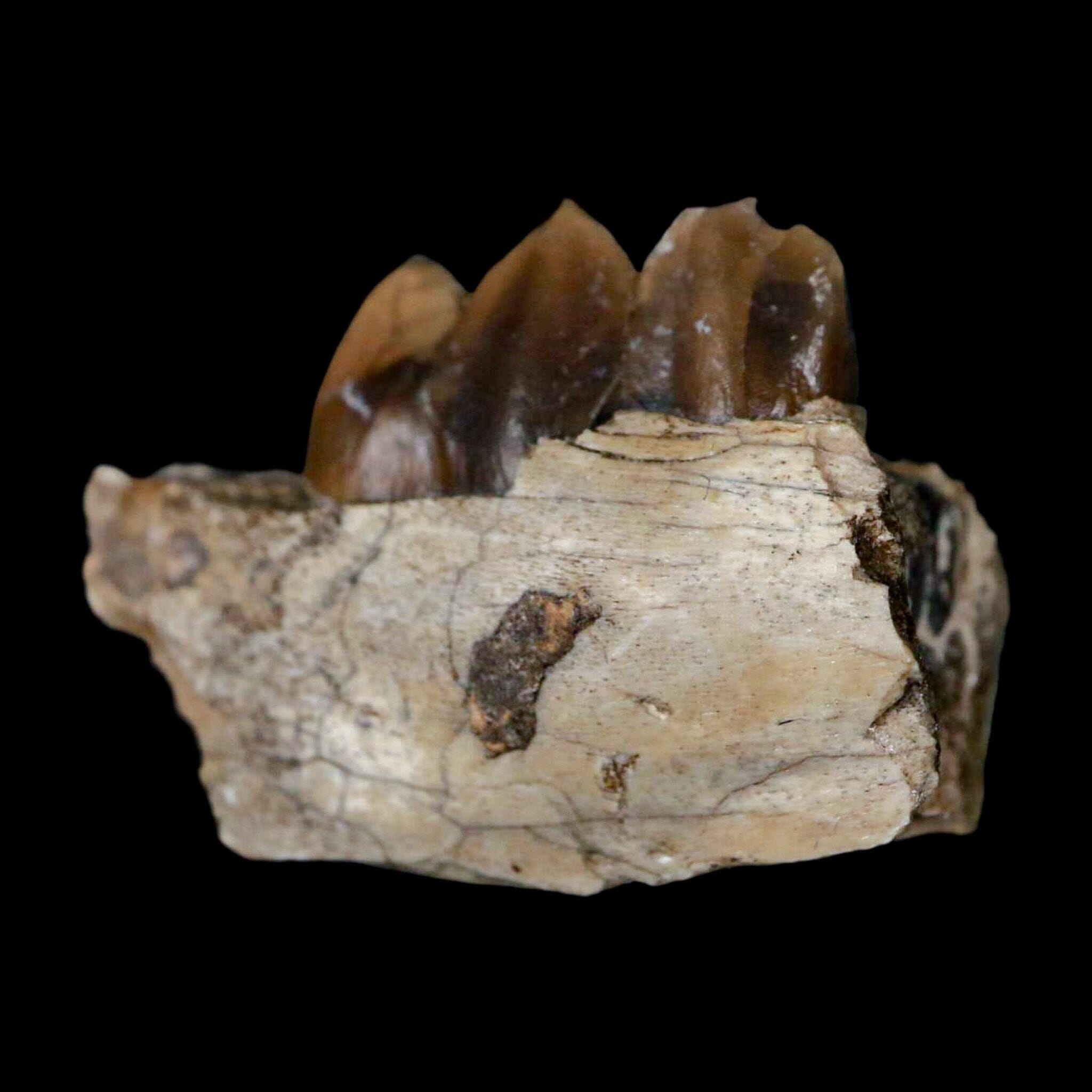
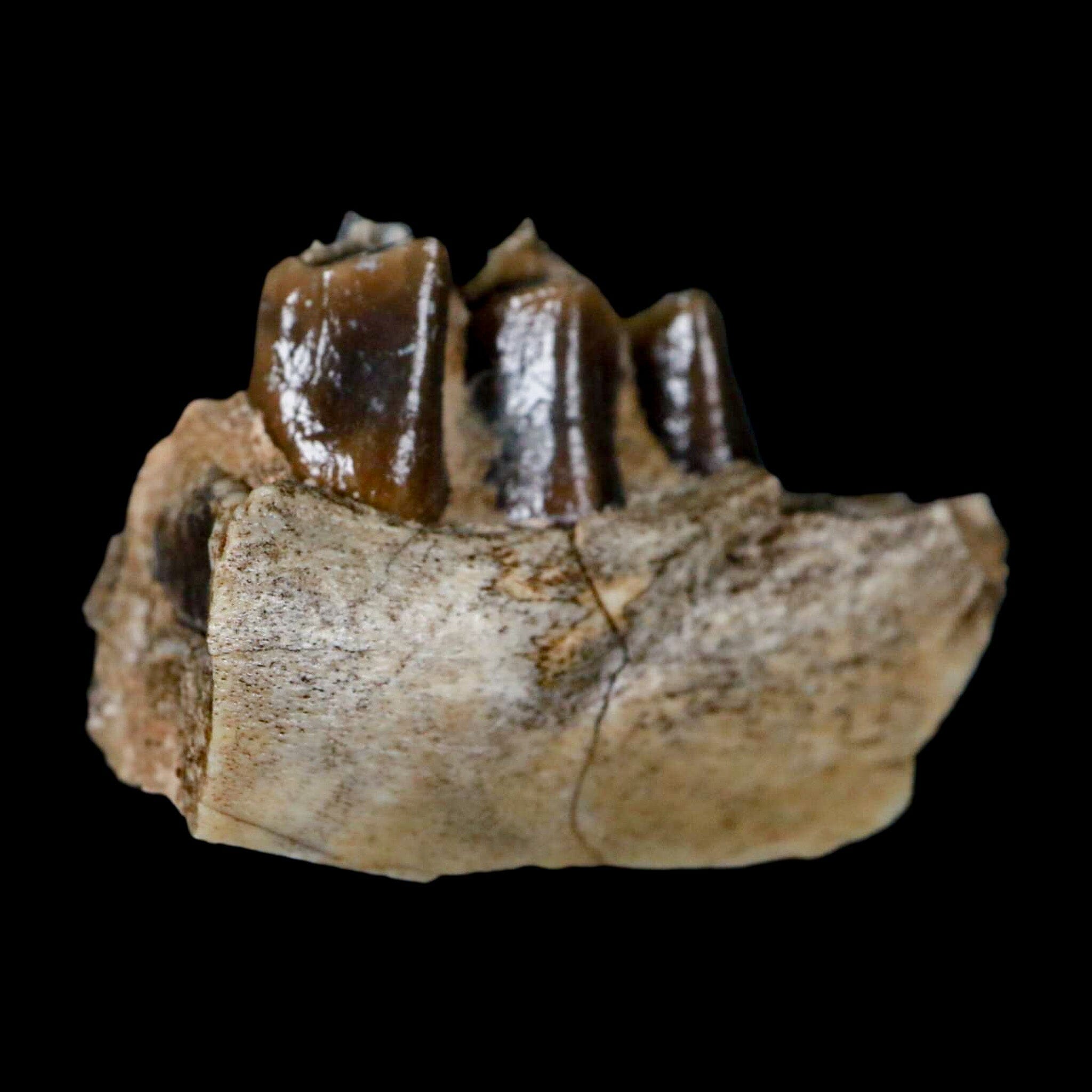
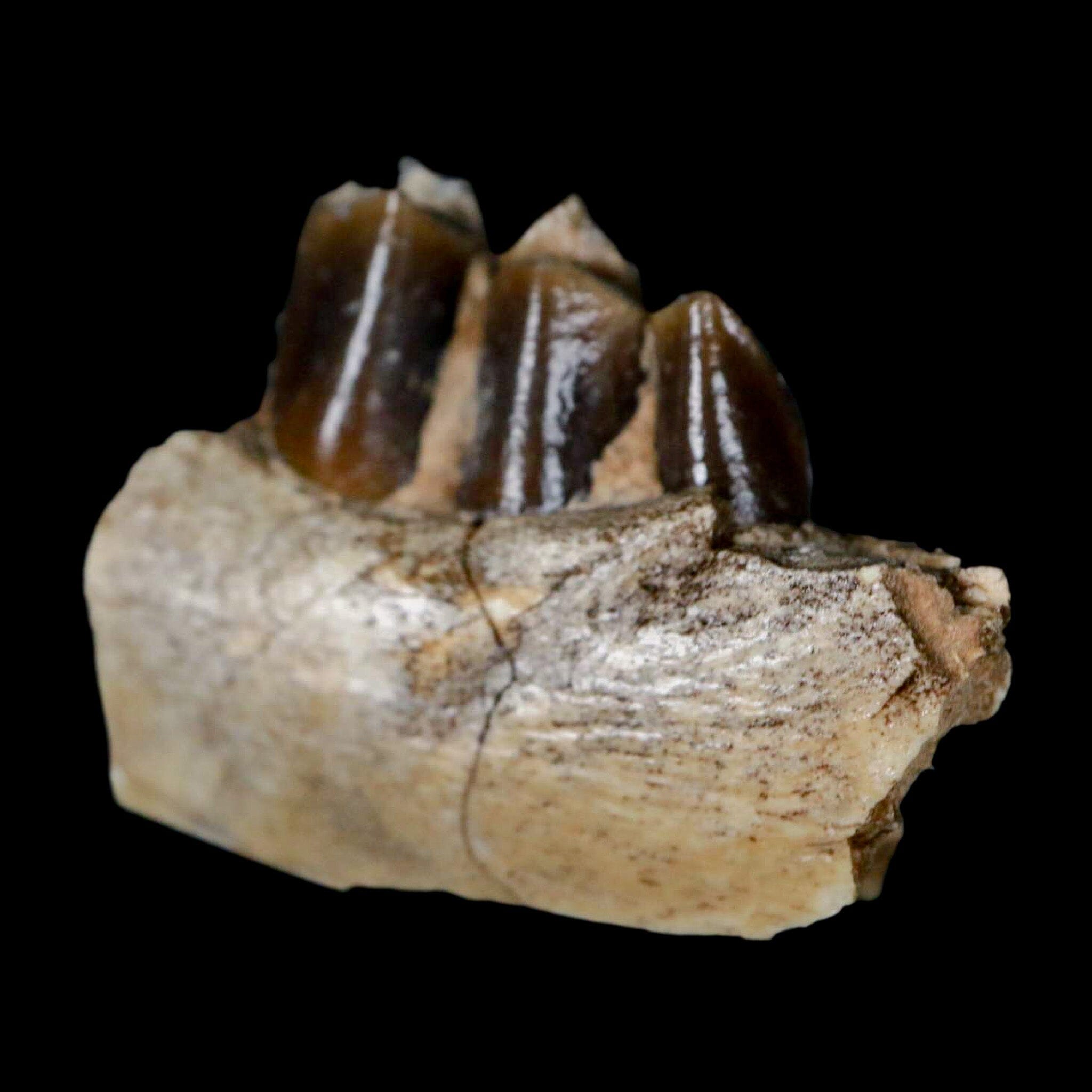
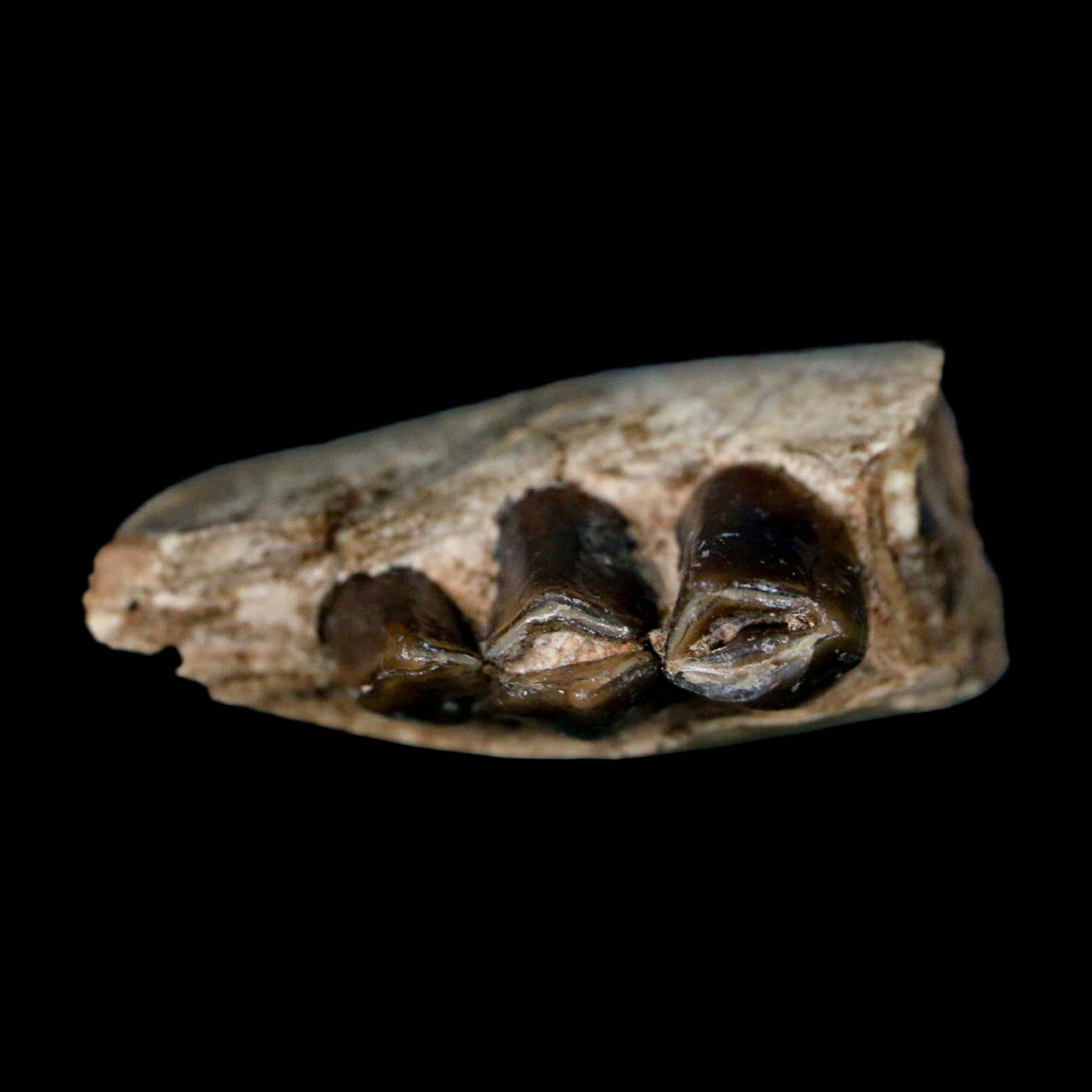


Description
Location: Brule Formation, South Dakota
Weight: 0.4 Ounces
Dimensions: 1.1 Inches Long, 0.8 Inches Wide, 0.5 Inches Thick
Comes with a Certificate of Authenticity.
Comes with a Free Display.
The item pictured is the one you will receive.
33.9 - 22 Million Years Old Oligocene Epoch
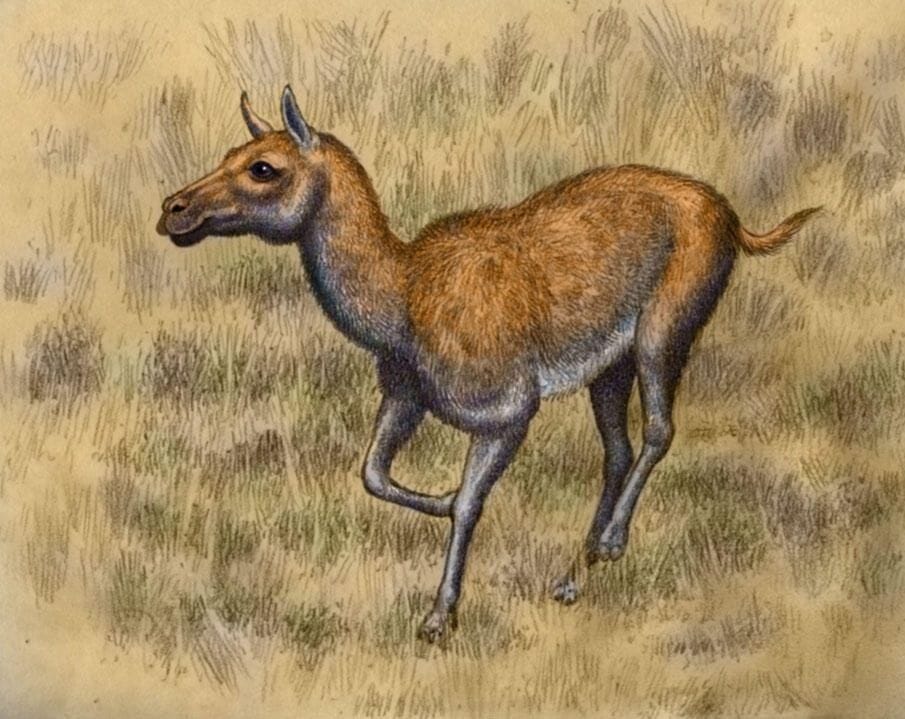
Poebrotherium is an extinct genus of camelid that once roamed North America. These animals lived from the Eocene to the Miocene epochs, surviving for about 32 million years.
The genus was first named by Joseph Leidy in 1848. Based on the fossil remains he examined, Leidy recognized that Poebrotherium shared a relationship with modern llamas. In 1853, he expanded his study to include additional White River fossils that had been sent to him. Unfortunately, only three more teeth of Poebrotherium were among the new material, leaving much about the species’ anatomy and variation still uncertain. Despite the limited specimens, Leidy’s work laid the groundwork for understanding the evolution of early North American camelids.
Its skull resembled that of a modern llama, while its limbs ended in hooved toes and were more built for speed than the feet of Protylopus. Despite this apparent adaptation to the open plains, Poebrotherium has been found in all major environments, including forests and river overbank deposits, indicating that it was not tied to one particular environment. The teeth of Poebrotherium were more generalized than those of modern camelids. In fact, despite the name meaning "grass-eating beast," it is likely that Poebrotherium was either a browser or a mixed feeder, and grass may have played a minimal role in the diet.
Unlike its modern camelid relatives, which are specialized for desert or mountainous environments, Poebrotherium occupied a niche similar to that of a gazelle or deer within its ecosystem. Fossil evidence indicates that it was a common prey item for the entelodont Archaeotherium. Partial Poebrotherium carcasses have been discovered fossilized, showing feeding marks that suggest they were killed and possibly cached by Archaeotherium, the only known predator in the White River ecosystem capable of leaving such marks.
