
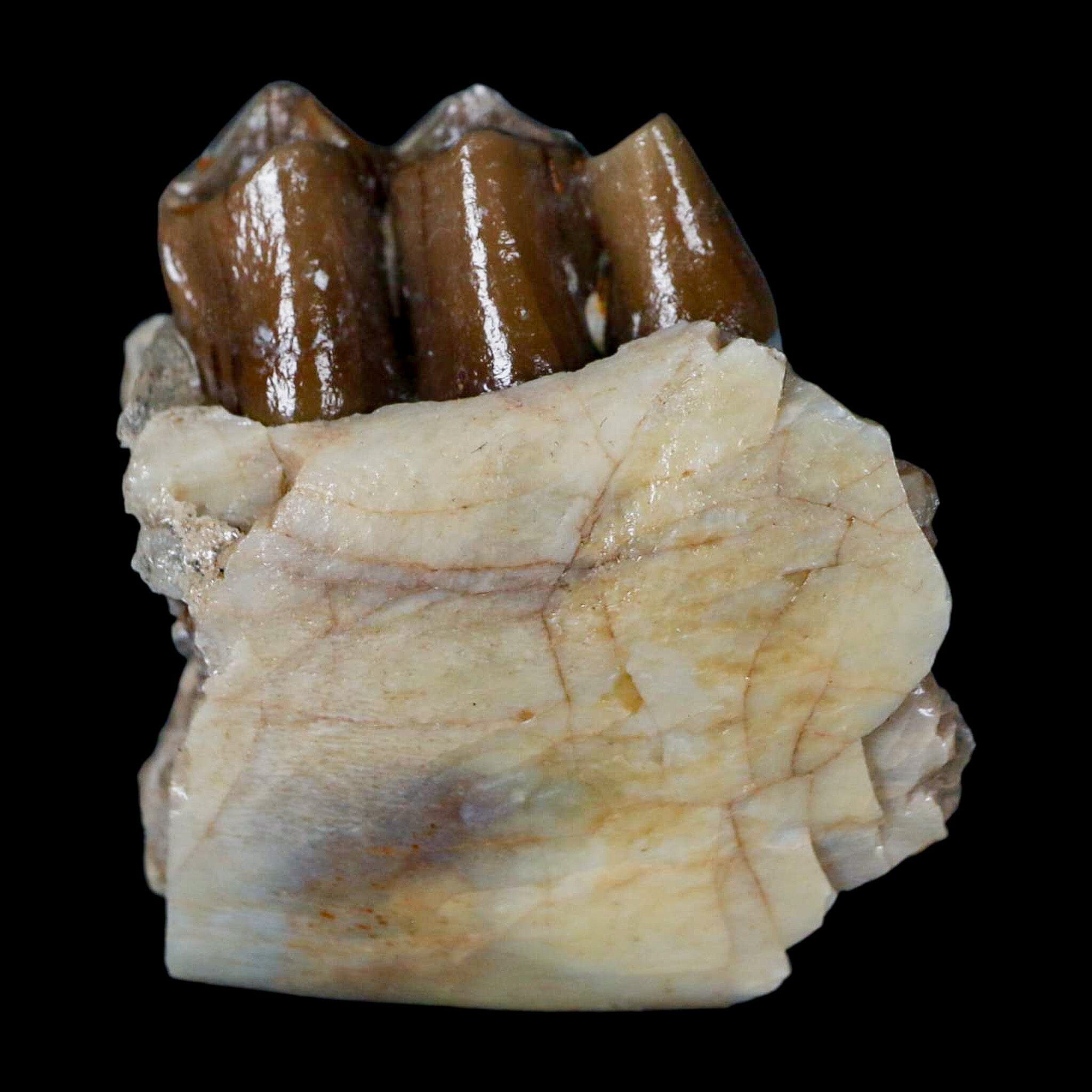
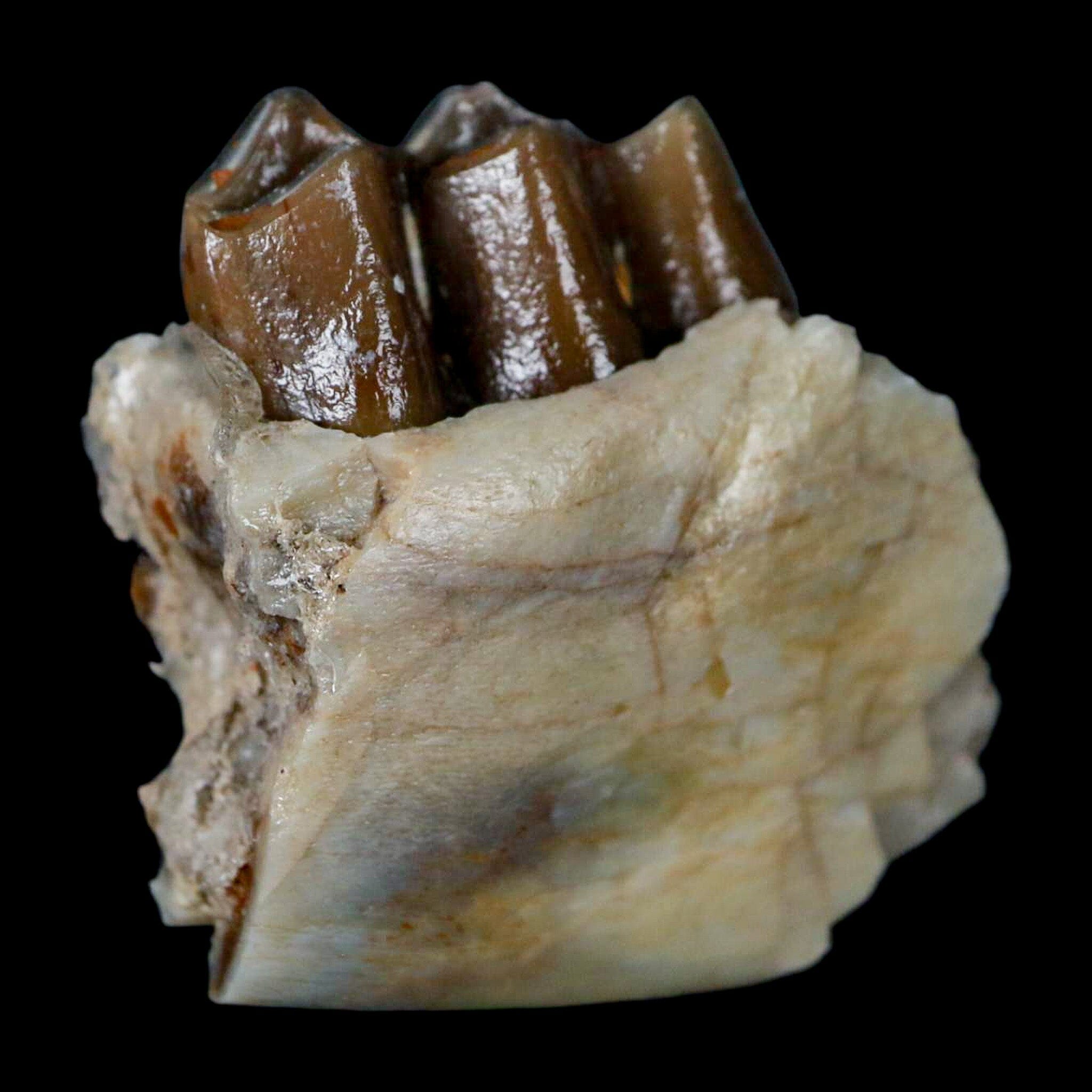
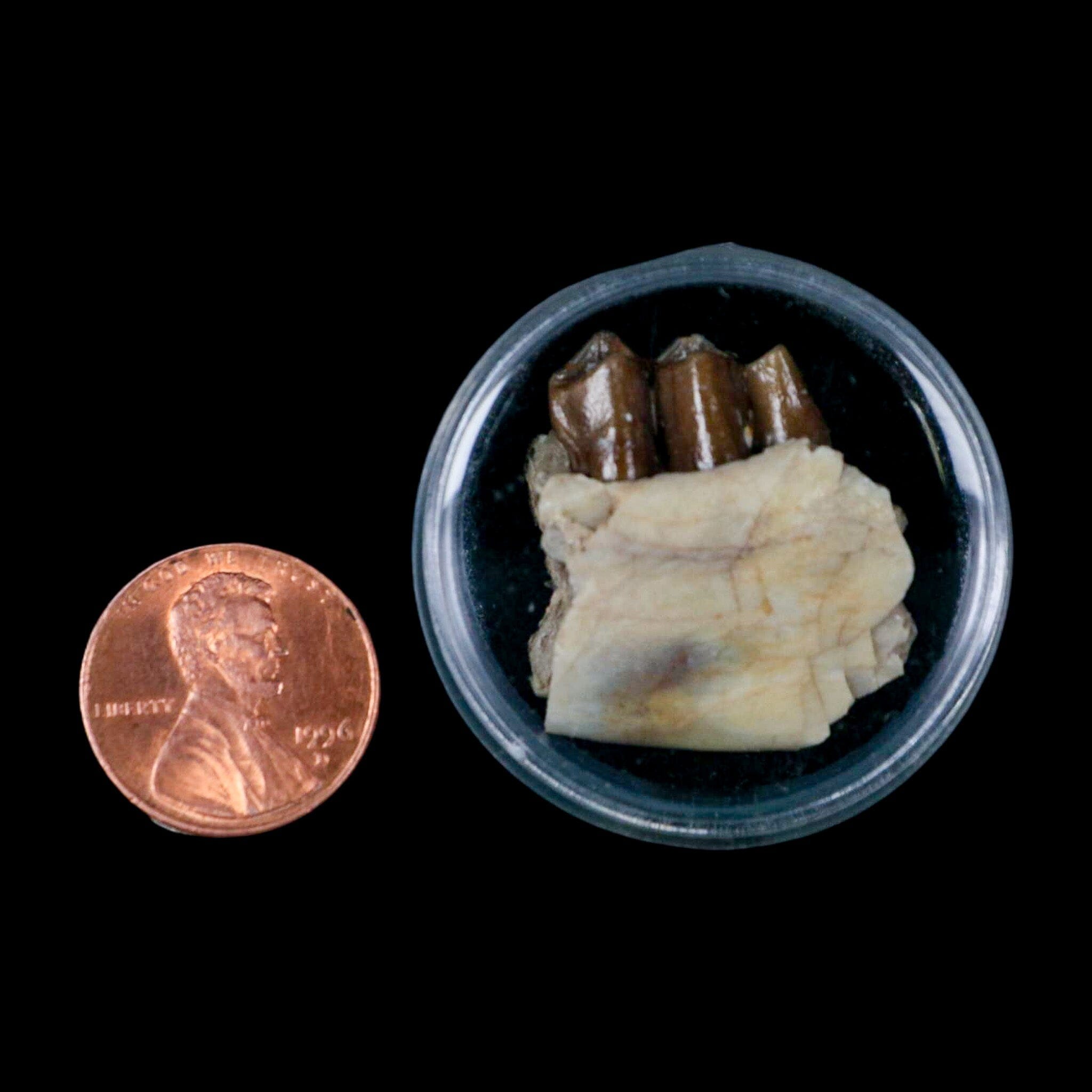
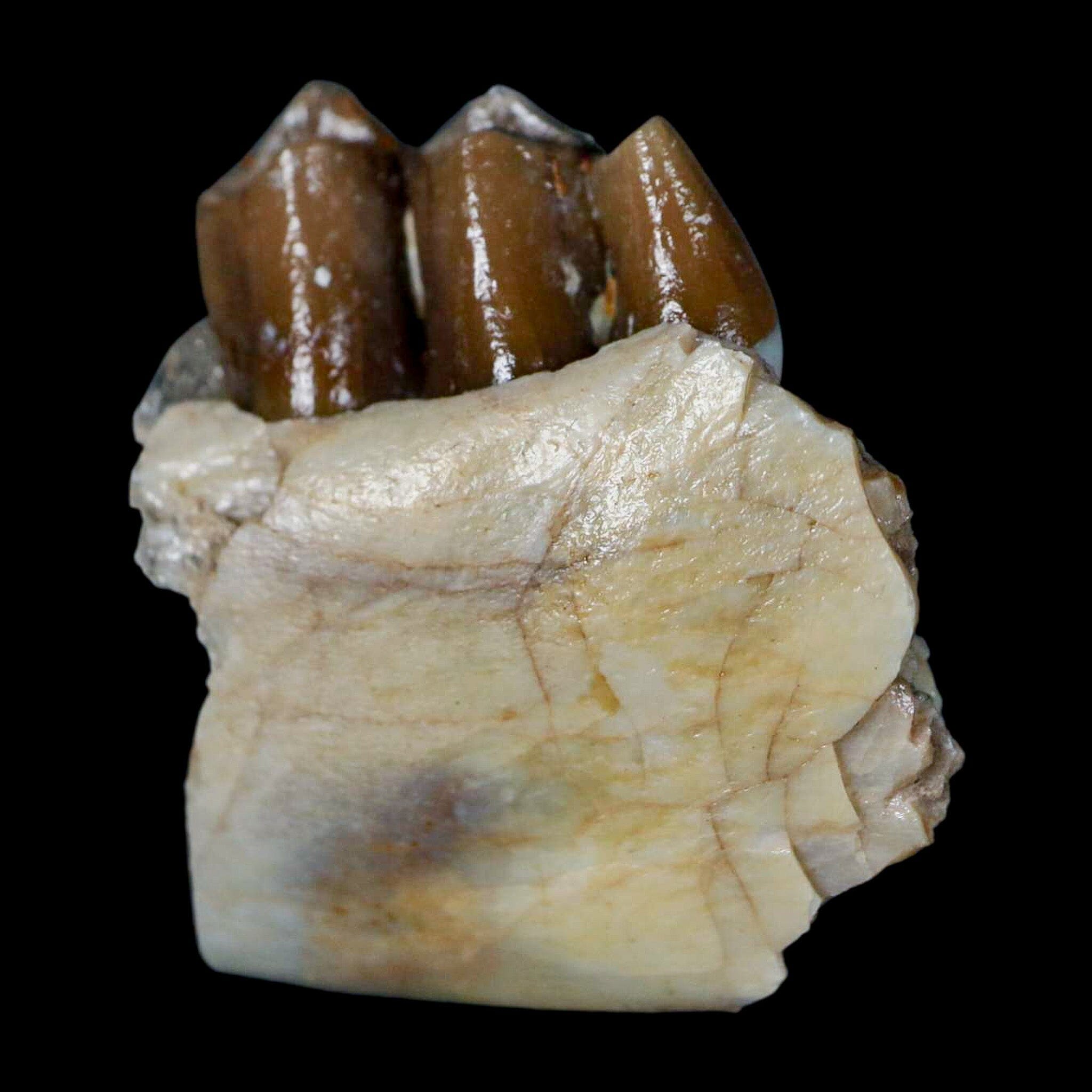
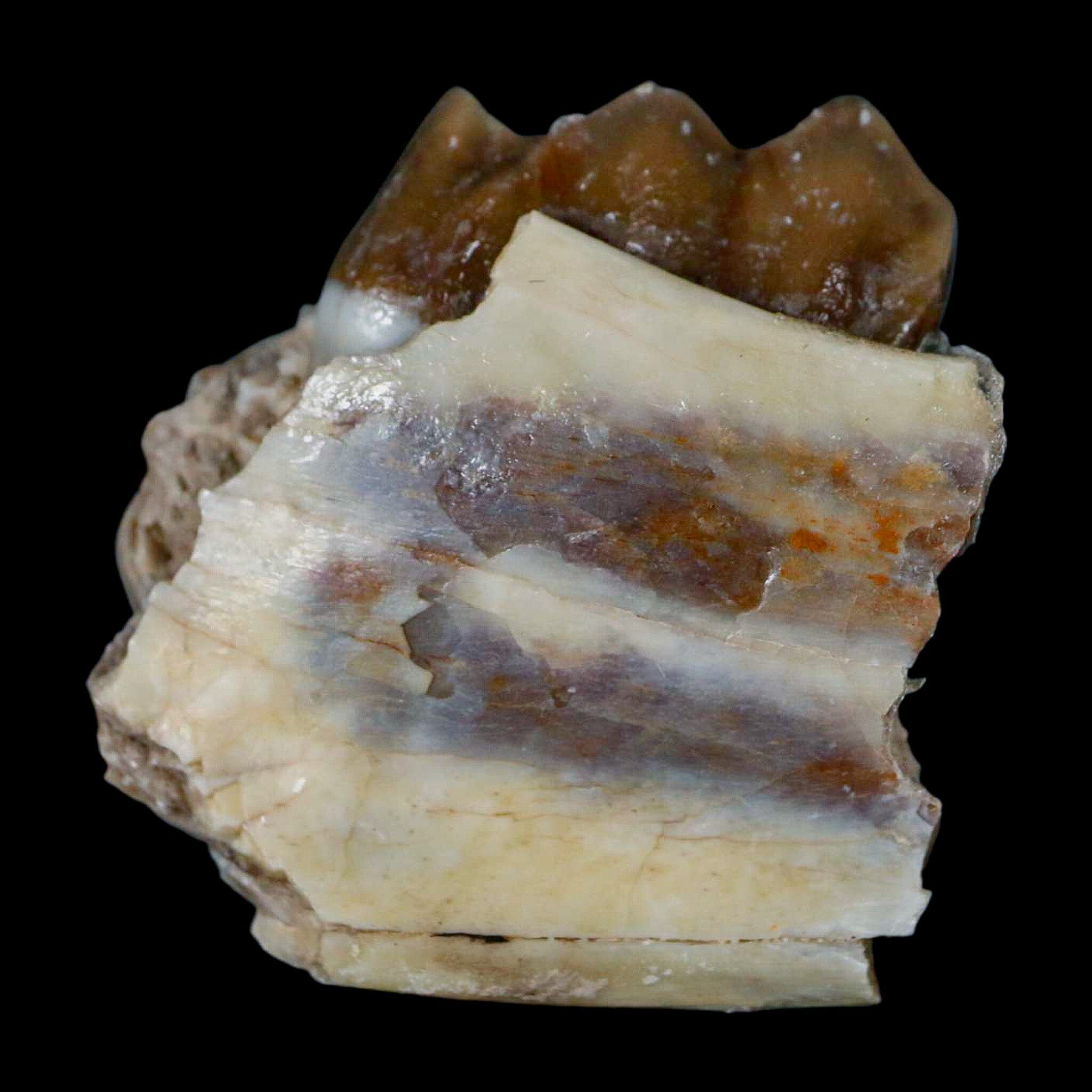
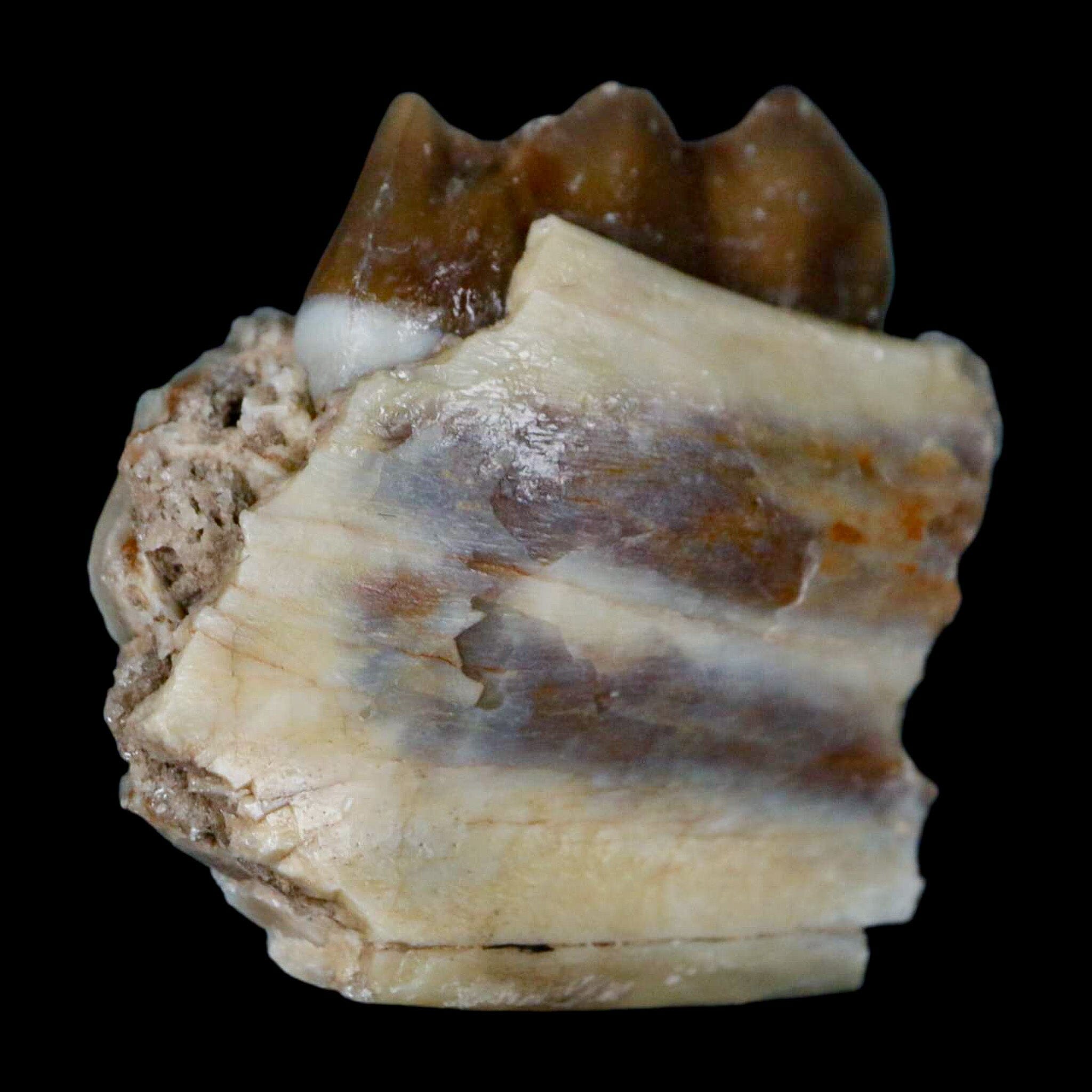
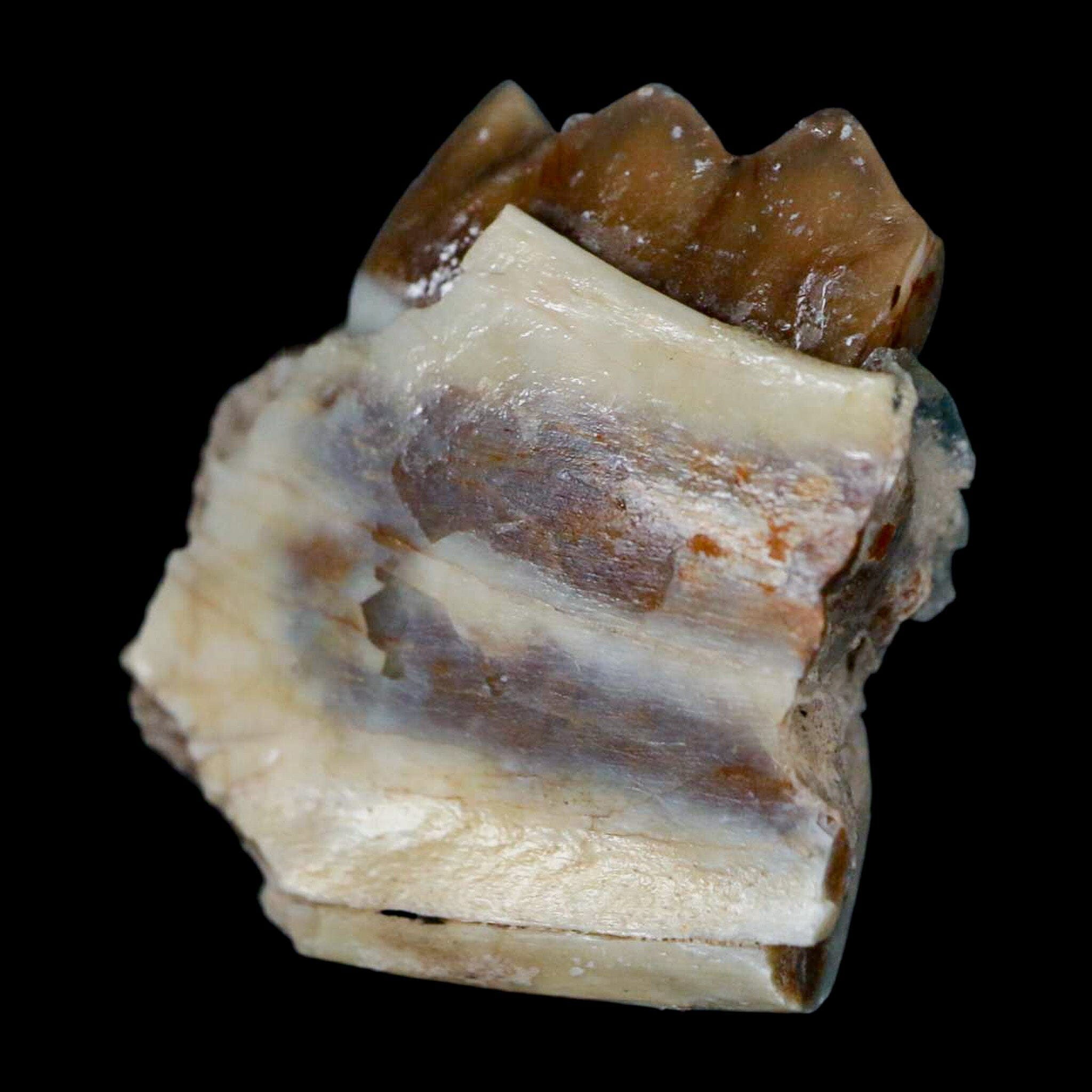
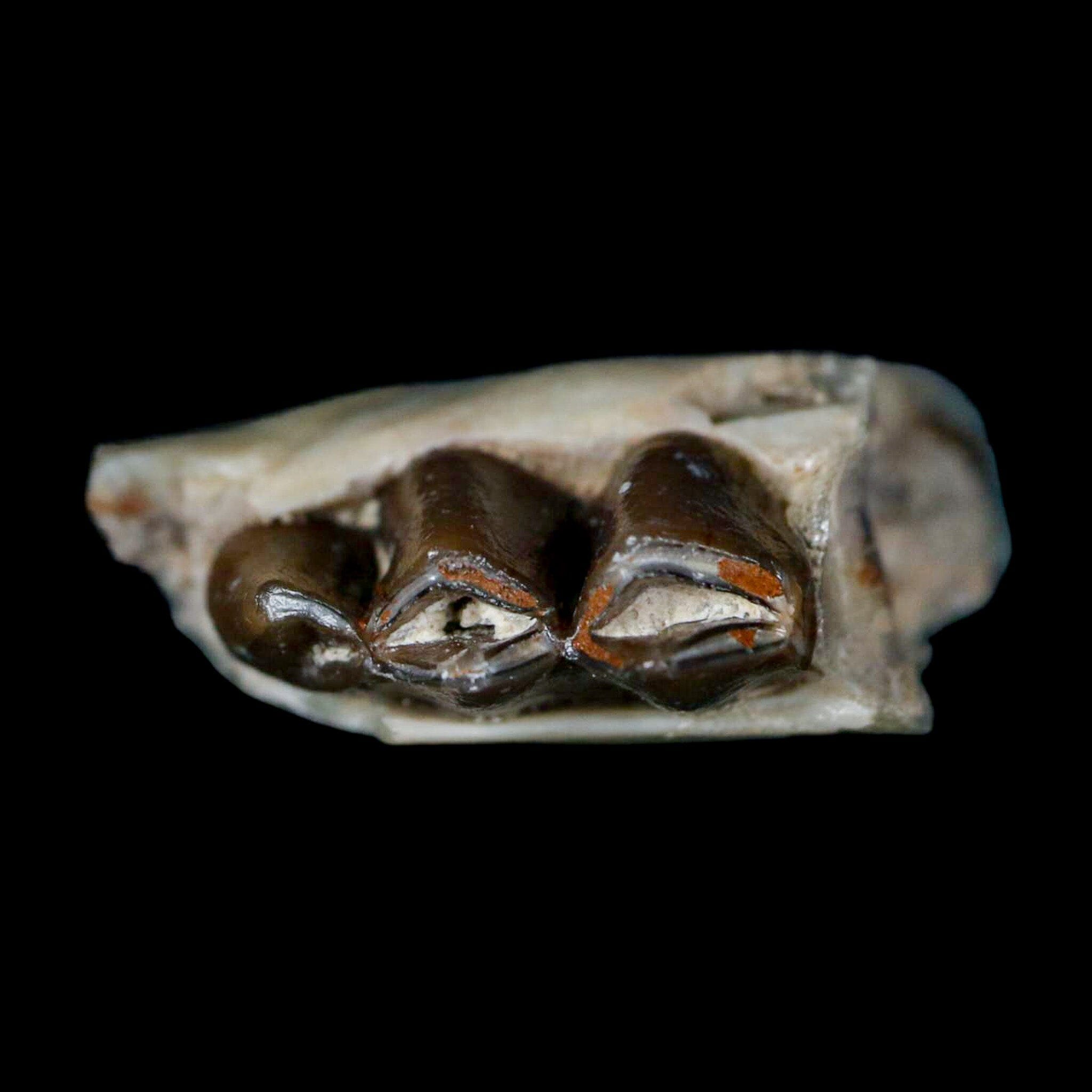


Description
Location: Brule Formation, South Dakota
Weight: 0.4 Ounces
Dimensions: 1.1 Inches Long, 1 Inch Wide, 0.4 Inches Thick
Comes with a Certificate of Authenticity.
Comes with a Free Display.
The item pictured is the one you will receive.
33.9 - 22 Million Years Old Oligocene Epoch
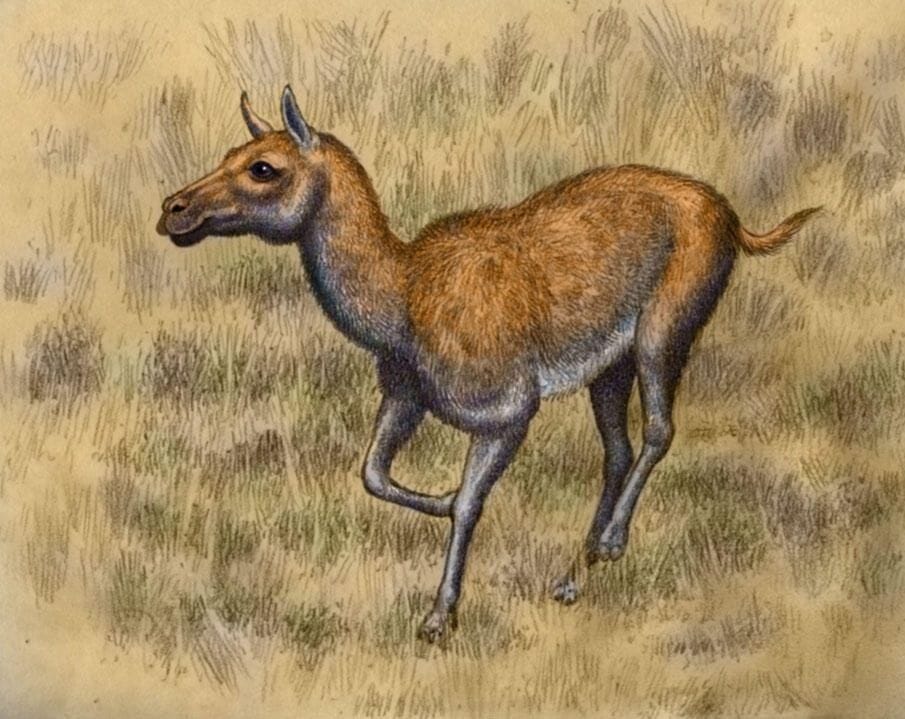
Poebrotherium is an extinct genus of camelid, endemic to North America. They lived from the Eocene to Miocene epochs, existing for approximately 32 million years.
Poebrotherium wilsoni, named by paleontologist Joseph Leidy in 1848, represents an early camelid ancestor with fascinating evolutionary characteristics. This primitive camel exhibited a skull structure comparable to modern llamas, yet possessed limb adaptations suggesting greater speed capabilities than its contemporary Protylopus. Unlike its name suggests, Poebrotherium's generalized dentition indicates it functioned as a browser or mixed feeder rather than a strict grazer. Remarkably versatile in habitat preference, fossil evidence places this species across diverse environments—forests, plains, and riverine deposits—demonstrating ecological flexibility. This South Dakota Badlands specimen showcases the dental morphology that distinguished early camelids from their modern descendants, offering collectors tangible insight into Eocene-Oligocene mammalian evolution and the ancestral lineage of contemporary camelids.
This Poebrotherium wilsoni specimen illuminates the ecological role of early camelids in Oligocene ecosystems. Unlike their modern desert-adapted relatives, these primitive camelids occupied the ecological niche of contemporary ungulates such as gazelles and deer. Paleontological evidence reveals that Poebrotherium served as a significant prey species for the formidable entelodont Archaeotherium. Fossilized partial carcasses bearing distinctive feeding marks provide compelling taphonomic evidence of predation and caching behavior—traces attributable exclusively to Archaeotherium within the White River fauna. This specimen thus documents not merely an extinct species, but a critical predator-prey relationship that shaped Paleogene mammalian communities in the South Dakota Badlands.
