0.6 Rare Detailed Fossil Bird Feather Green River FM Uintah County UT Eocene Age
Location: Uintah County, Utah
Weight: 7.2 Ounces
Dimensions: 3.1 Inches Long, 2.7 Inches Wide, 1 Inch Thick (Plate)
Insect Dimensions: 0.6 Inches Long 0.6 Inches Wide
The item pictured is the one you will receive.
50 million years old, Eocene age
Fossil Bird Feather
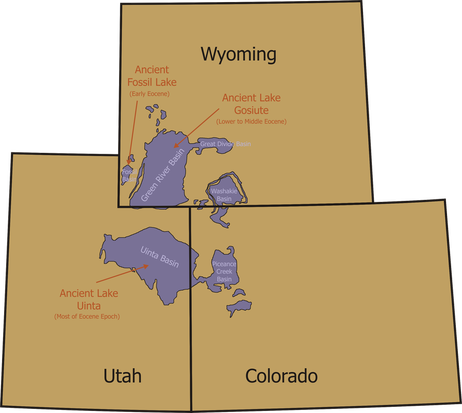
Fifty million years ago, ancient Fossil Lake occupied what is now southwest Wyoming. At its largest, the lake spanned roughly 930 square miles, with about 500 square miles of sediment still preserved today. The central 230-square-mile area of the former lakebed contains exceptionally rich fossil deposits, along with diverse geological features such as deltas, beaches, mineral springs, and sediment layers representing both deep-water and nearshore environments.
The unique chemical conditions of the lake played a crucial role in fossil preservation. Its waters prevented scavenging and slowed the decay of dead organisms, while millimeter-thin layers of limestone accumulated over time. This process produced finely laminated limestone formations that hold the highest concentration of fossil fish anywhere in the world. These beautifully preserved fish, along with other aquatic life and geological structures, make Fossil Lake the most important Paleogene record of a freshwater lake ecosystem.
Since its discovery in the 1870s, countless exquisitely preserved fossil fish have been unearthed from these deposits. Encased alongside the fish in the laminated limestone is a complete aquatic ecosystem, including cyanobacteria, plants, insects, shrimp, crawfish, ostracods, amphibians, alligators, turtles, birds, and early mammals—among them the oldest known pantolestid, a near-shore, otter-like species. The surrounding subtropical landscape is also represented through rare terrestrial fossils such as horses, snakes, lizards, bats, early carnivores (miacids), apatemyids, insects, and more than 325 species of leaves, seeds, and flowers.