
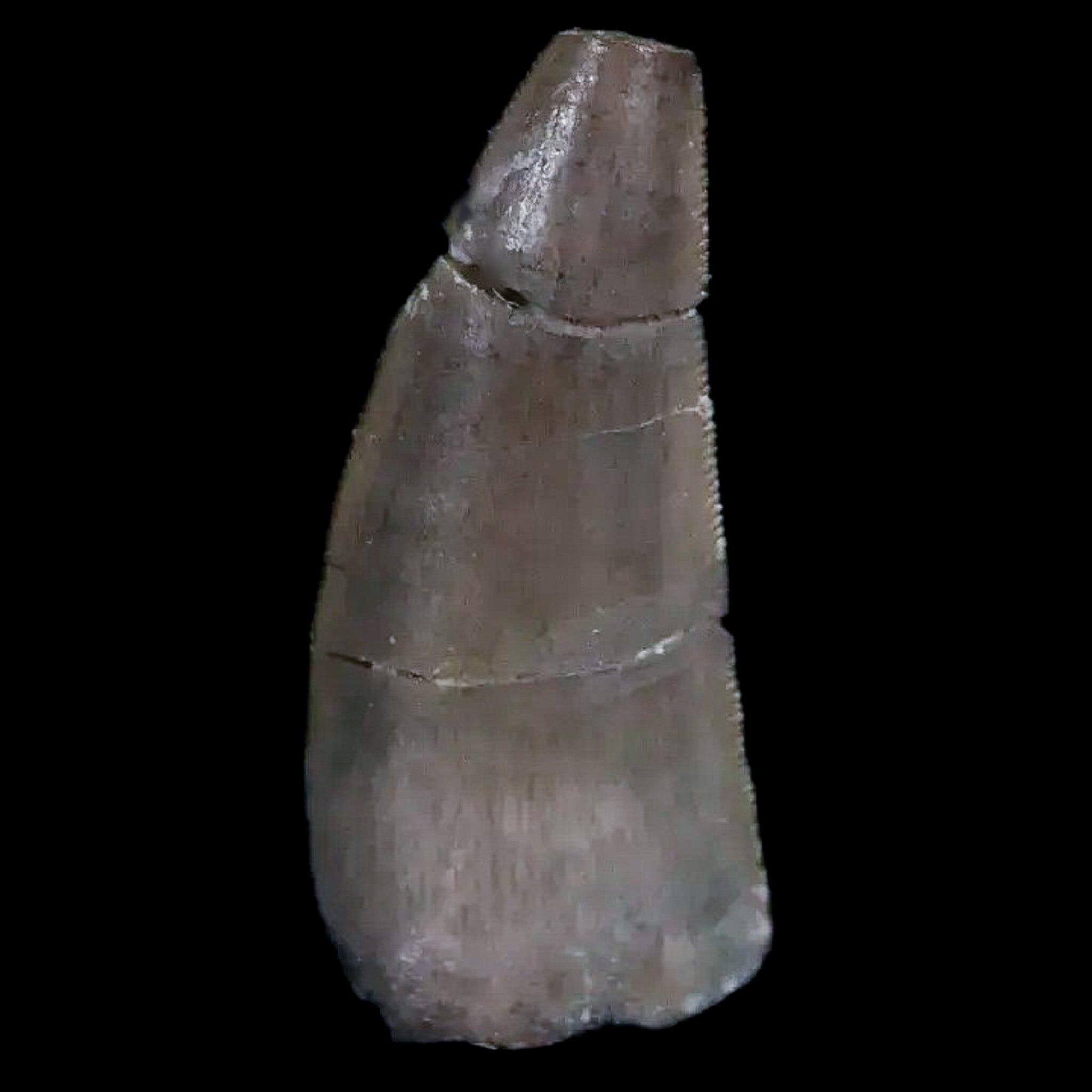
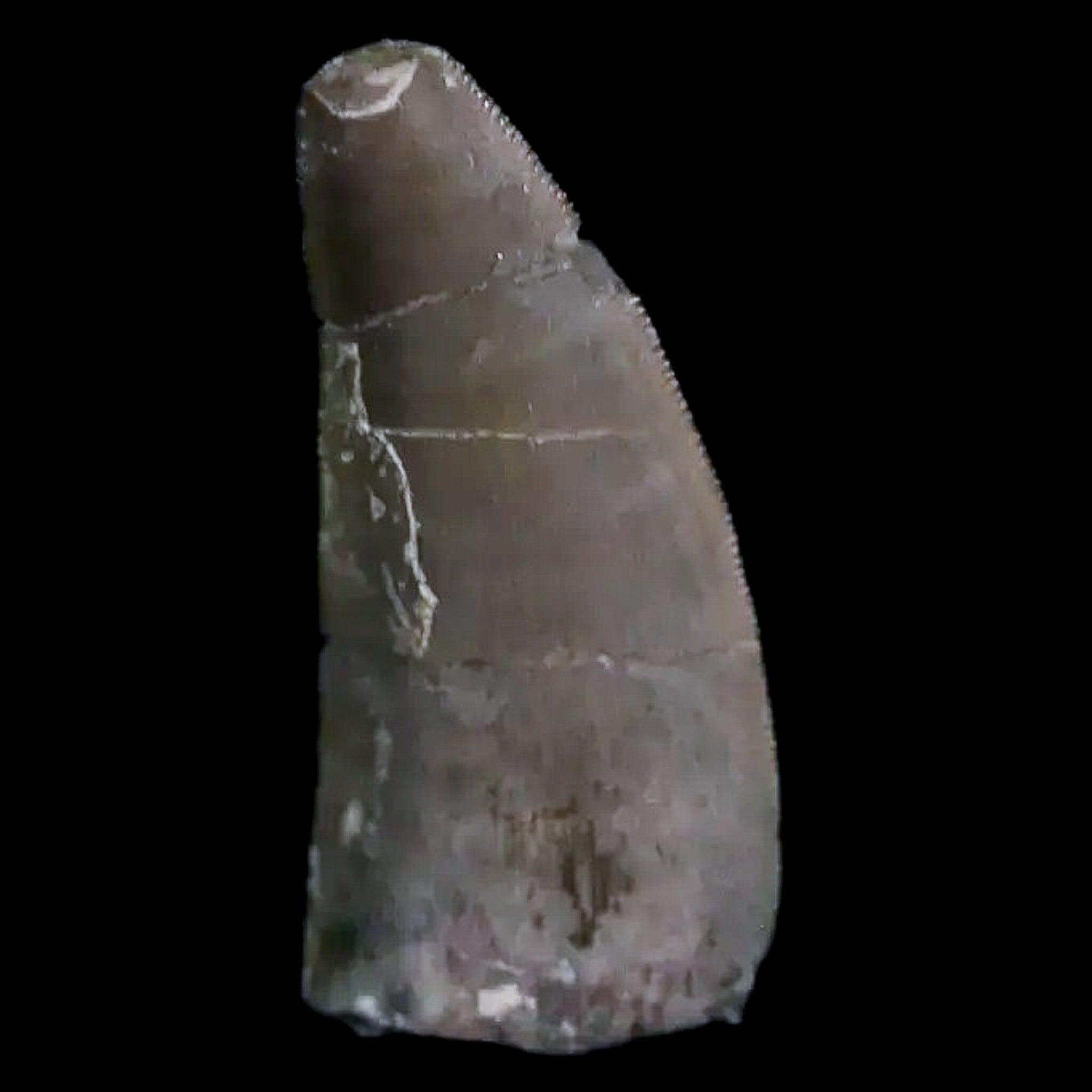


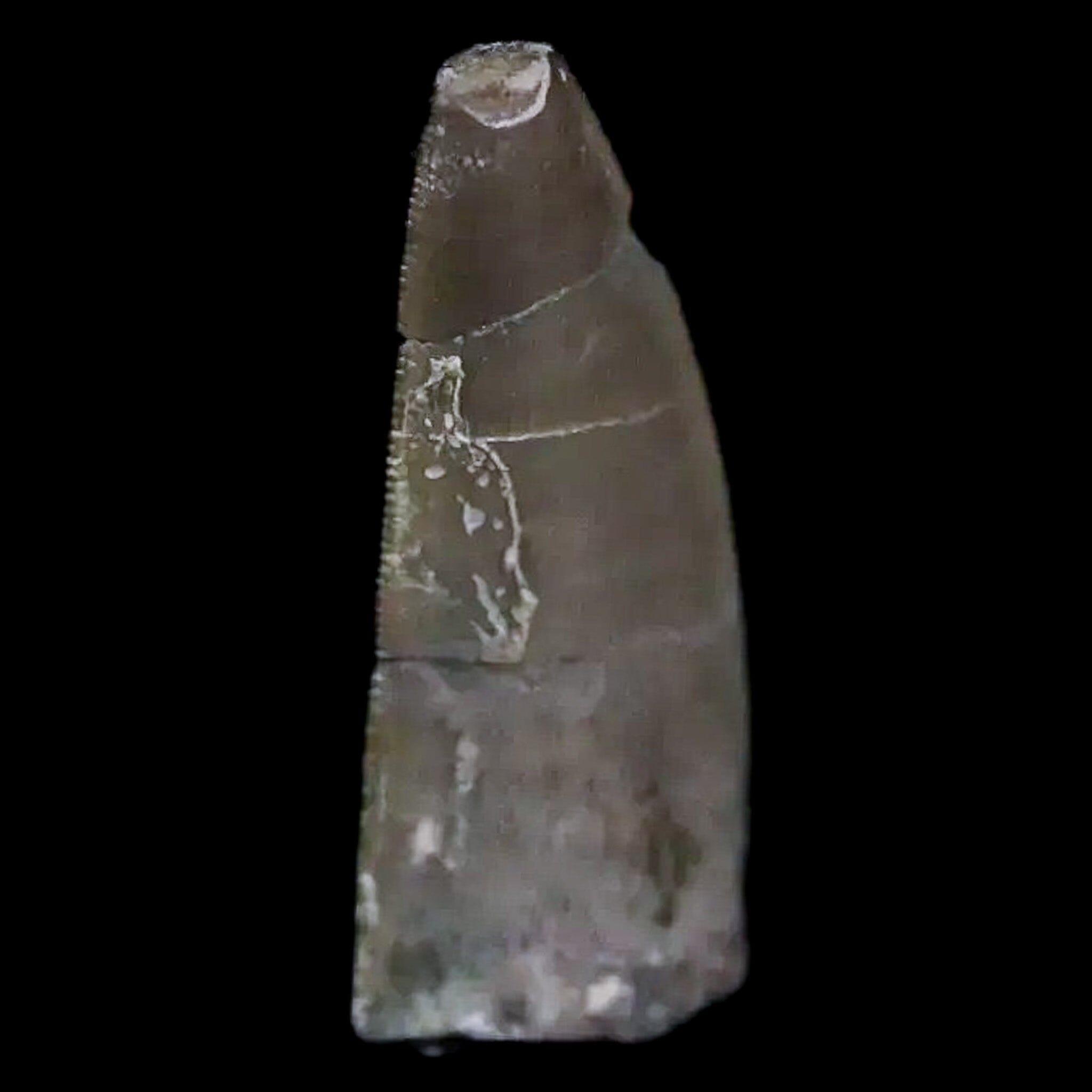


Description
Location: Chinle Formation, Arizona (Private Land Origin)
Weight: 0.3 Ounces
Dimensions: 0.5 Inches Long, 0.2 Inches Wide, 0.2 Inches Thick
Comes with a Certificate of Authenticity.
Comes with a Free Display.
The item pictured is the one you will receive.
This is a genuine fossil.
Late Triassic, 237 to 201 million years old.
Postosuchus is an extinct genus of rauisuchid archosaurs that roamed the Earth during the Late Triassic period, approximately 237 to 201 million years ago. As part of the archosaur clade—which includes modern crocodilians and the ancestors of dinosaurs—Postosuchus was a formidable apex predator of its time. This giant predator reached lengths of 4 to 5 meters and had powerful jaws lined with sharp teeth, adapted for hunting and consuming other reptiles and early mammals. Its robust build and carnivorous adaptations highlight its role as one of the dominant predators of the Late Triassic ecosystems.
Built for relentless pursuit, Postosuchus commanded the Triassic with a powerfully muscled frame, sturdy limbs, and a whip-like tail that made it a lightning-fast hunter capable of explosive strikes. Its skull bristled with massive, serrated teeth engineered for shredding flesh—weapons honed by millions of years of predatory evolution. This ancient archosaur's anatomy reveals a creature caught between worlds, blending crocodilian robustness with dinosaurian agility, positioning it as a pivotal ancestor in the archosaur family tree. Every feature screamed apex predator: a body sculpted for speed, jaws designed for devastation, and an appetite for conquest. This fossil tooth stands as evidence of nature's most daring experiment in reptilian dominance during the Triassic's golden age of predation.
Fossils of Postosuchus have been discovered in North America, particularly in regions that were once part of the supercontinent Pangaea during the Late Triassic period. These well-preserved fossils have offered crucial insights into the evolutionary history of rauisuchids and their role as apex predators in prehistoric ecosystems. As a top predator, Postosuchus likely hunted smaller reptiles, early mammals, and other terrestrial vertebrates, maintaining the balance of its environment. Its fossil record helps scientists understand the diversity of Triassic archosaurs and the ecological dynamics that shaped prehistoric terrestrial habitats.
