
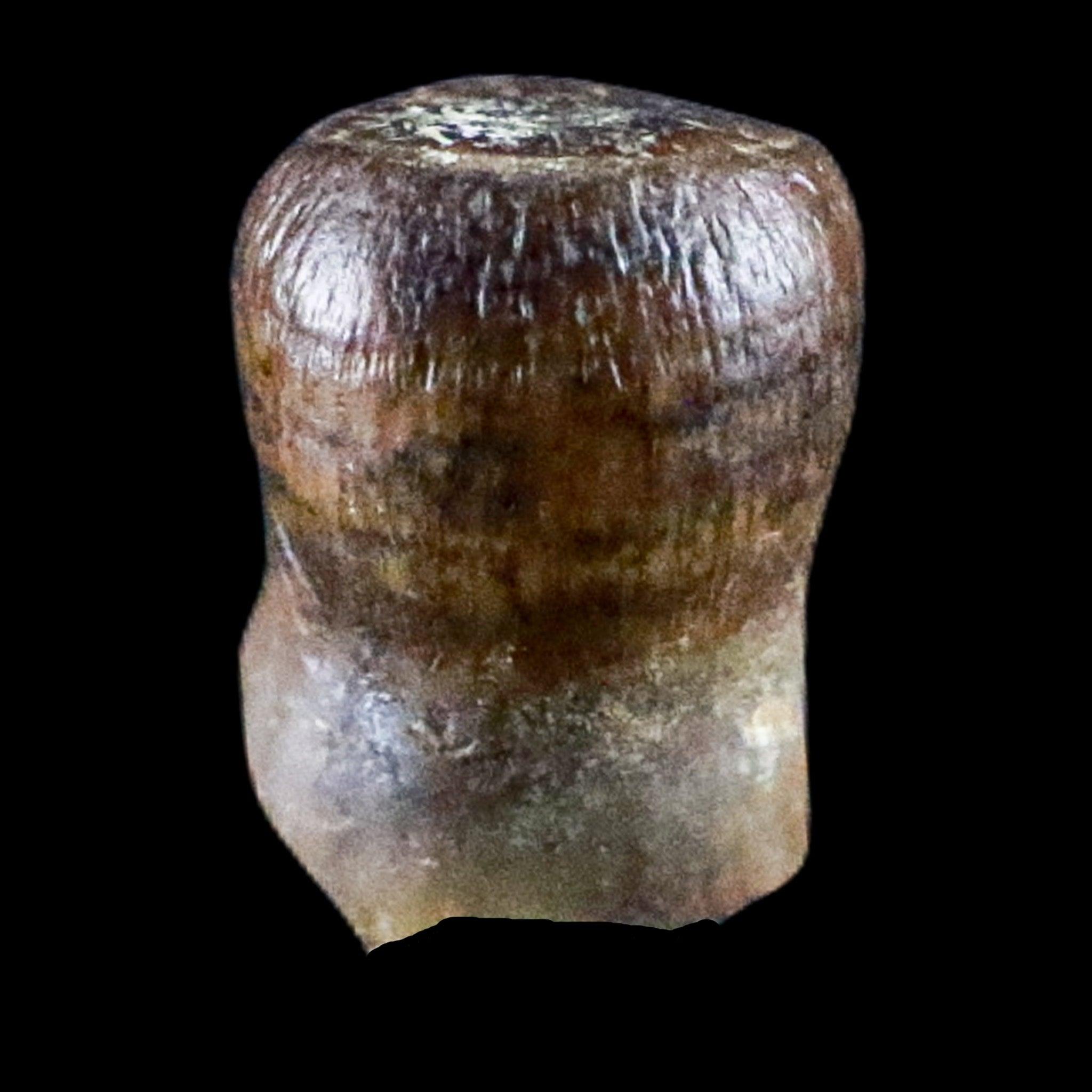

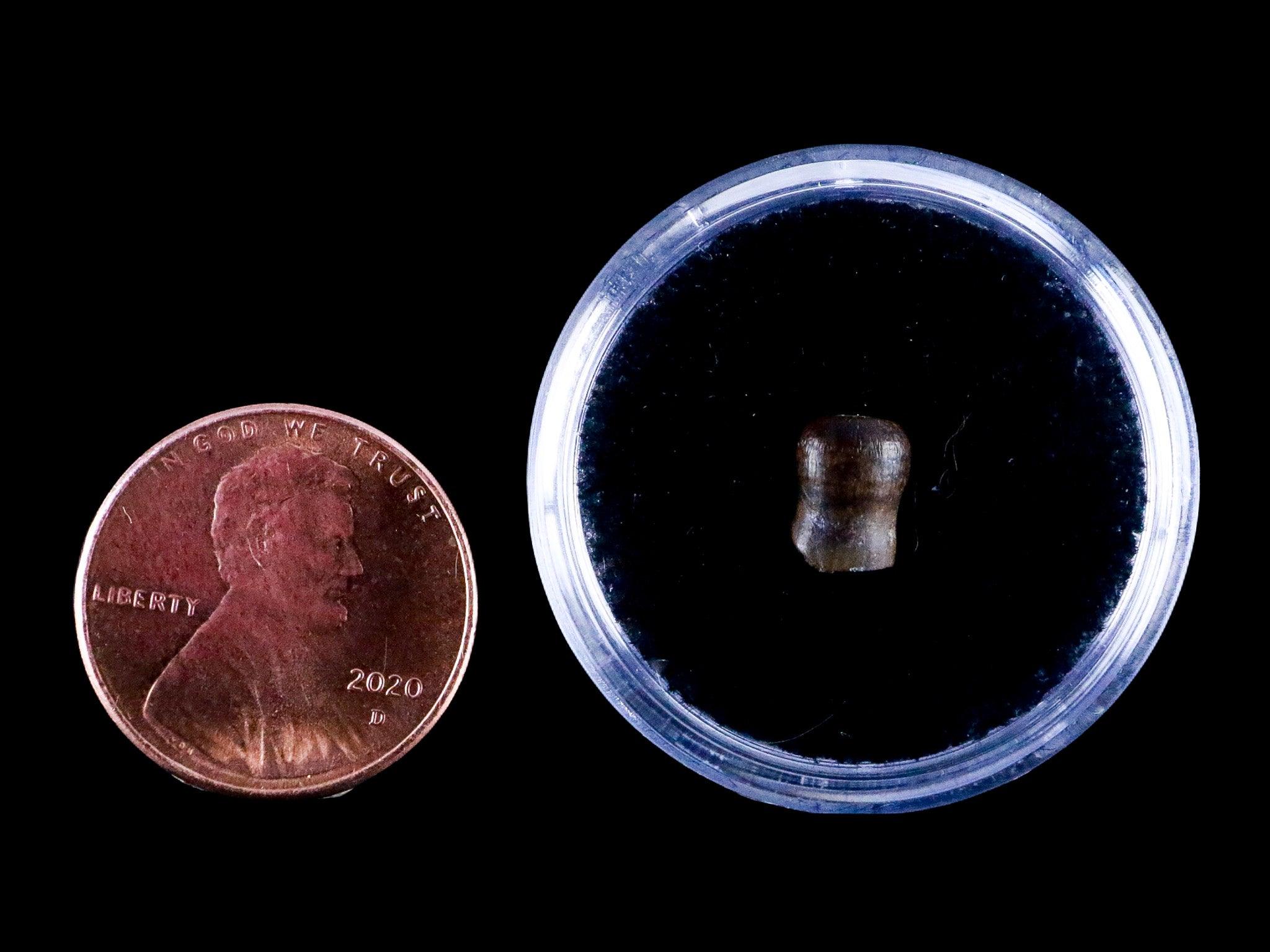


Description
Location: Judith River Formation, Montana (Private Land Origin)
Weight: 0.3 Ounces
Dimensions: 0.3 Inches Long, 0.2 Inches Wide, 0.2 Inches Thick
Comes with a Free Display.
The item pictured is the one you will receive.
Cretaceous Age through to the Eocene Age
Crocodiles are some of the oldest reptiles on Earth, with a history spanning around 240 million years. They first appeared 25 million years before the earliest dinosaurs and long before the rise of birds and mammals. Some of the ancestral crocodiles that lived 230 million years ago were massive, reaching lengths of up to 40 feet (12 meters). Despite the passage of millions of years, the basic body plan of crocodiles has remained largely unchanged, a testament to their evolutionary success.
Today, there are 23 species of crocodilians divided among four main groups: crocodiles (13 species), alligators (2 species), caimans (6 species), and gharials (2 species). These species inhabit tropical and subtropical regions across roughly 100 countries, generally within 4,000 kilometers of the equator. Crocodiles are mostly found in the Old World, while alligators and caimans are native to the New World.
Telling these groups apart is relatively straightforward. Crocodiles have narrow, V-shaped snouts, visible lower teeth when their mouths are closed, and a special notch in the upper jaw for the fourth lower tooth. Alligators and caimans, on the other hand, have wider, U-shaped snouts, and their lower teeth remain hidden inside the upper jaw. Gharials are immediately recognizable for their long, extremely slender snouts, which are highly specialized for catching fish.
Crocodiles share numerous features with dinosaurs, making them the closest living relatives of these prehistoric creatures. Their hips are arranged in a bird-like structure, and their teeth are mounted in sockets rather than fused directly to the jawbone. Modern research suggests that dinosaurs, birds, and crocodiles belong to the same branch of the animal evolutionary tree, underscoring the enduring legacy of these remarkable reptiles.
Crocodiles’ resilience and longevity highlight their adaptability, with a body plan perfected over millions of years that continues to thrive in today’s rivers, swamps, and wetlands around the world.
