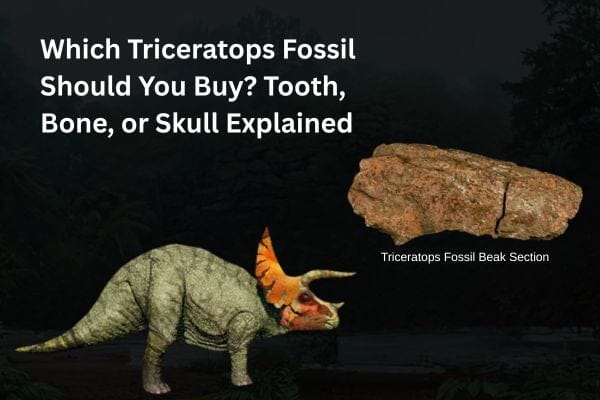
Triceratops fossils are among the most famous discoveries in paleontology and are associated with one of the best-known dinosaurs of the Late Cretaceous. Beginners in fossil collecting, as well as those who want to enhance their existing display, face a tough decision when buying a Triceratops fossil. Teeth, bones, and skulls - every group has its own features, care requirements, scientific value, and price range. By understanding these differences, you will be able to choose wisely and securely.
The Appeal of Triceratops Teeth
Teeth offer one of the most accessible entry points into collecting Triceratops material. Their compact size, durable structure, and distinctive shape make them popular among beginners and experienced collectors alike. Most teeth belonged to the animal’s complex dental battery—thousands of stacked teeth used for grinding tough plant material.
Because they were constantly shed and replaced, teeth tend to be more available, which affects both pricing and rarity. They allow collectors to own a personal piece of prehistoric life without the cost or space requirements associated with larger skeletal elements.
What Makes a Tooth Different from Other Fossils?
The tooth is a narrative of the animal's food habits and changes; thus, it has biological importance that is sometimes not conveyed by bones alone. The enamel, ridges, and wear patterns reveal information about the dinosaur's feeding habits and its age at death. Thus, teeth are a typical attraction to the scientific crowd of fossil collectors.
If you are considering a triceratops tooth for sale, these characteristics will not only help you compare different specimens, but also easily identify well-preserved ones.
The Versatility of Triceratops Bones
Bones are found in many different sizes: from tiny frill parts to thick parts of limbs. Their nature gives the possibility of collectors getting something more than a tooth, but less than a full skull in terms of display. Bones are also seen as structurally or anatomically interesting. The segment of a limb bone might highlight the points where muscles were attached, while the pieces of frill can show the texture and shape that are called Triceratops. Besides, larger bone fragments can also be used as items in offices, homes, or schools.
The collectors value the bones mainly for their aesthetic quality and the wide range of stories told about them, such as movement, defense, and the animal's life. Their worth differs with respect to size, completeness and aesthetic quality.
When Does a Skull Become the Right Choice?
A Triceratops skull is among the most impressive specimens a collector can own. With its sweeping frill, rugged horns, and massive structure, a skull captures the full presence of the species like no other fossil can. These pieces require significant space, careful handling, and a larger investment, but they deliver unmatched display power.
Skulls are often favored by museums, advanced collectors, and educators. They offer a visual and scientific richness that few fossils can match—making them legacy pieces for long-term collections.
Comparing Tooth vs Bone vs Skull
In order to assist your decision concerning which type best fits your objectives, it would be good to think about the following:
-
Budget: Teeth are typically the least expensive, and bones have a very large range in price, with skulls being the most expensive.
-
Space: Teeth need very little room, bones need a moderate amount of space, and skulls require a lot of display planning.
-
Scientific Interest: Teeth show the type of diet, while the bones give clues to the anatomy, meanwhile the skulls represent the whole identity of the animal.
-
Aesthetic Impact: Teeth are inconspicuous, bones are very beautiful, and skulls are the ones that take the limelight in any exhibit.
It is clear that these arguments will lead you to the specimen that is the best fit for your collecting style and long-term goals.
Conclusion
The selection of teeth, bones, or skulls is entirely a matter of personal choice and depending on whether you prefer scientific detail, display presence, investment potential, or a mixture of all three. It will be very crucial to get the specimens from a trustworthy source. An expert will accompany you to assist you in evaluating the reliability and quality of the triceratops bone that you are thinking of purchasing.
Fossil Age Minerals offers collectors a helping hand throughout the whole process, presenting them with carefully selected specimens and friendly, expert support. If you are prepared to embrace an aspect of your collection that holds genuine importance, go ahead and contact us to learn more about the choices that align with your preferences and display ideas.


