


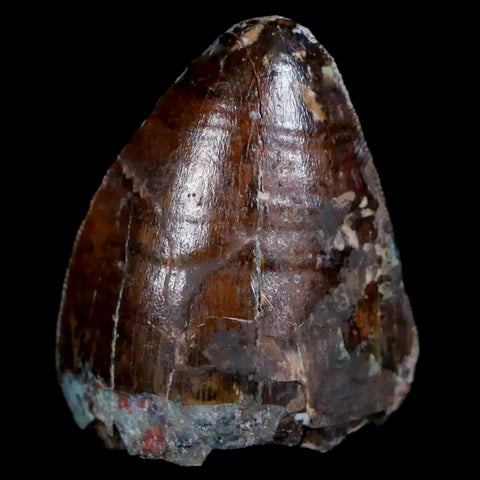
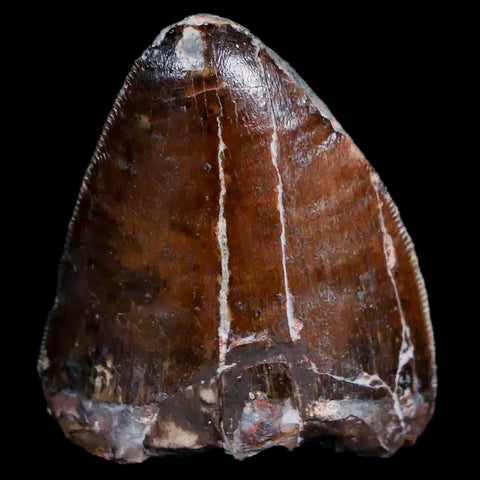
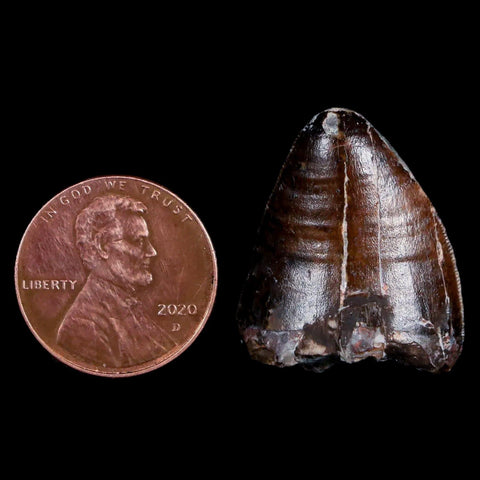
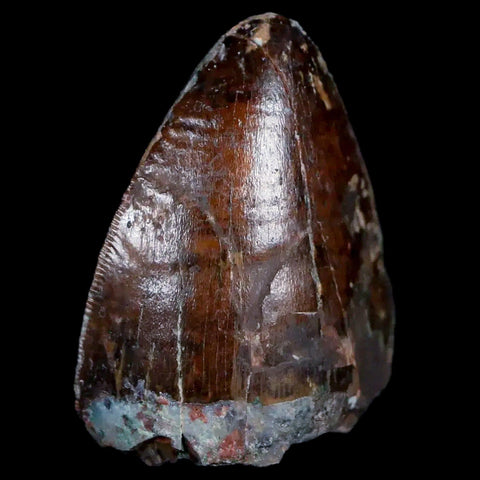
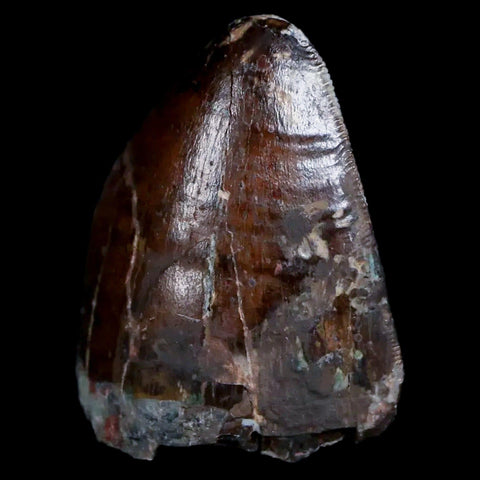
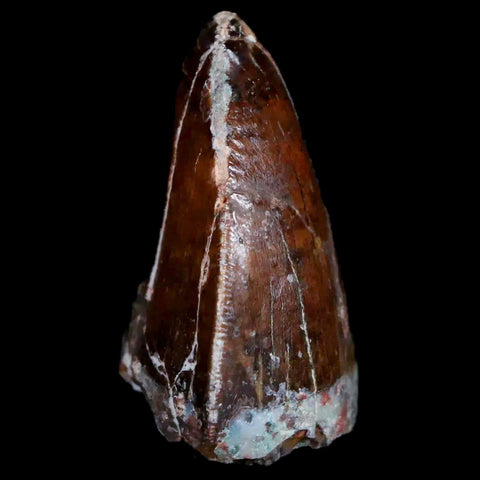
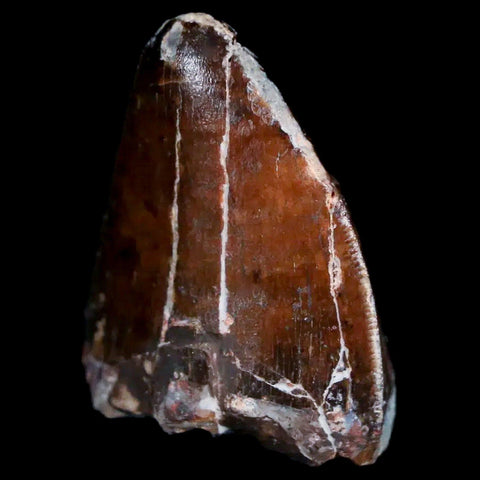
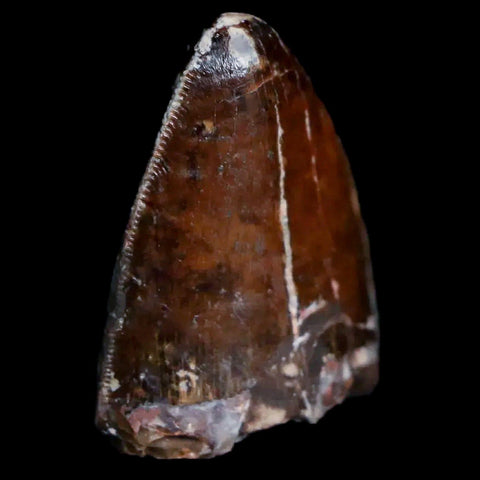
XL 1" Phytosaur Fossil Tooth Triassic Age Archosaur Redonda FM New Mexico COA
Location: Redonda Formation, New Mexico (Private Land Origin)
Weight: 0.4 Ounces
Dimensions: 1 Inch Long, 0.8 Inches Wide, 0.6 Inches Thick
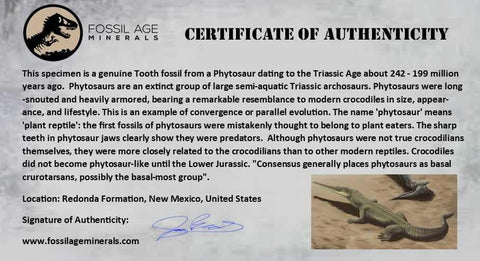
Comes with a Certificate of Authenticity.
The item pictured is the one you will receive.
This is a real fossil.
Late Triassic 242 To 199 Million Years Old
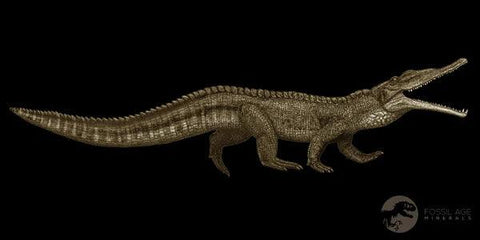
Phytosaurs were an extinct group of large, semi-aquatic archosaurs that lived during the Upper Triassic period. These reptiles were long-snouted, heavily armored, and closely resembled modern crocodiles in appearance and lifestyle, making them a prime example of convergent evolution. Despite their crocodile-like form, phytosaurs were not true crocodilians, though they were more closely related to crocodiles than to other reptiles. Their name, meaning “plant reptile”, comes from early fossils mistakenly thought to belong to herbivorous animals, but sharp teeth reveal they were predatory hunters.
One notable genus within Phytosauridae is Rutiodon, which lived in the Late Triassic. Rutiodon ranged from 3 to 8 meters in length and dominated rivers, lakes, and wetland ecosystems in the eastern United States. With an elongated snout, strong jaws, and an armored body, Rutiodon was a top apex predator, preying on fish, amphibians, and smaller vertebrates.
Phytosaurs like Rutiodon highlight the diversity of Late Triassic ecosystems and provide insight into early archosaur evolution. Fossils of these reptiles are key to understanding prehistoric semi-aquatic predators, their adaptations, and the origins of modern crocodilians.


