
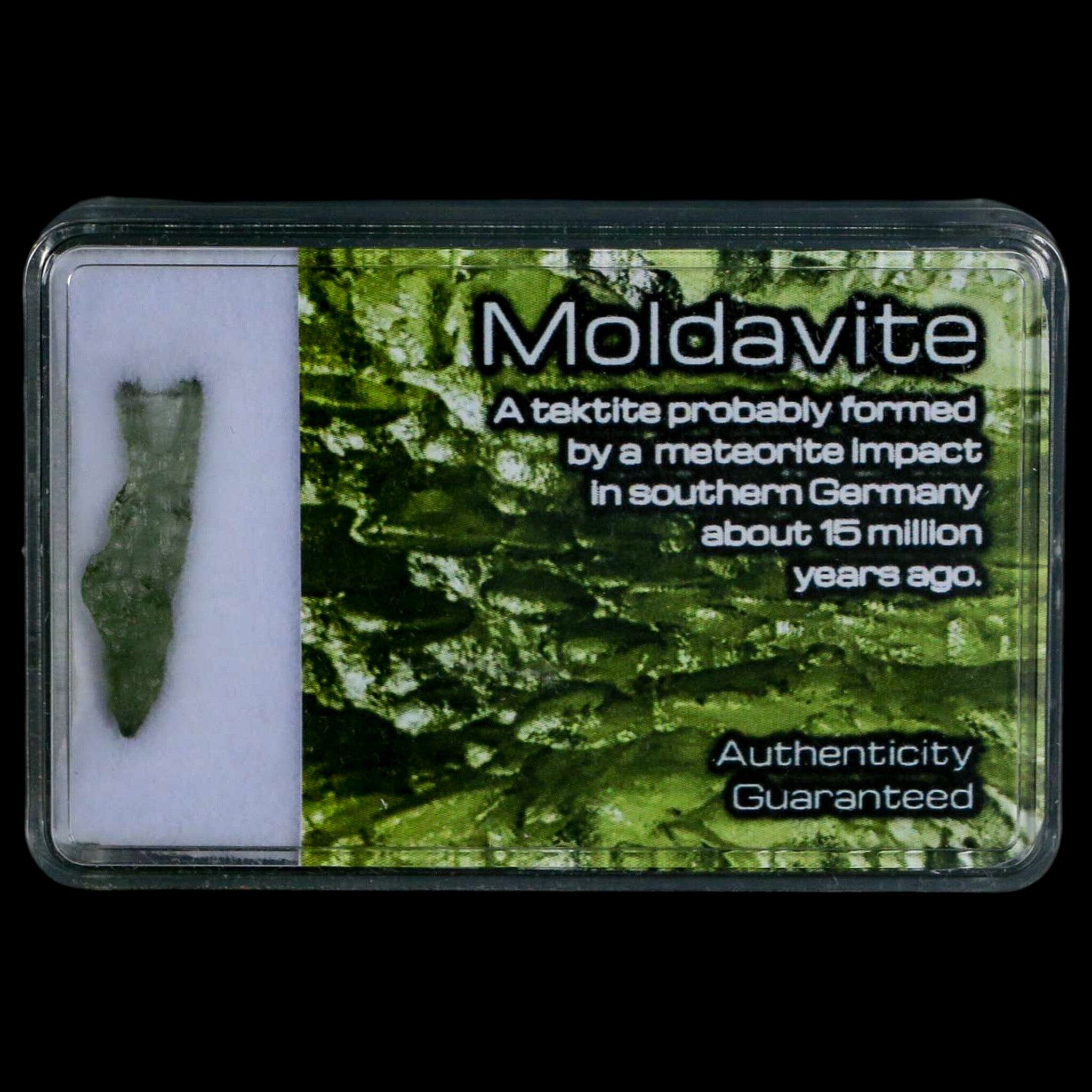


Description
Location: Southern Germany
Weight: 0.4 Ounces (Display)
Dimensions: 2.3 Inches Long, 1.5 Inches Wide, 0.6 Inches Thick (Display)
Comes with a Free Display Case.
The item pictured is the one you will receive.
Moldavite is a type of tektite, a natural glass formed from the extreme heat and pressure generated during a meteorite impact. Its formation is linked to the Ries crater in Bavaria, Germany. When the meteorite struck, it vaporized both itself and surrounding portions of the Earth’s crust, ejecting molten material into the atmosphere. As this material cooled and solidified during its fall back to Earth, moldavite was created.
The primary deposits of moldavite are located along the banks of the Vltava River in Bohemia (modern-day Czech Republic). These deposits are distinguished by their green color, which can range from pale olive to deep forest green, a result of trace amounts of iron and other elements incorporated during formation.
Moldavite has several distinctive physical properties that make it easily identifiable. It typically exhibits a vitreous (glassy) luster and can have surface textures ranging from smooth to pitted or etched. Its hardness on the Mohs scale ranges from 5.5 to 6, making it relatively soft compared to harder gemstones like diamonds or sapphires.
Another notable characteristic is its low density, which allows it to be easily distinguished from other minerals of similar size. Moldavite often contains inclusions or bubbles within its structure, formed due to the rapid cooling of molten material during its creation.