




Description
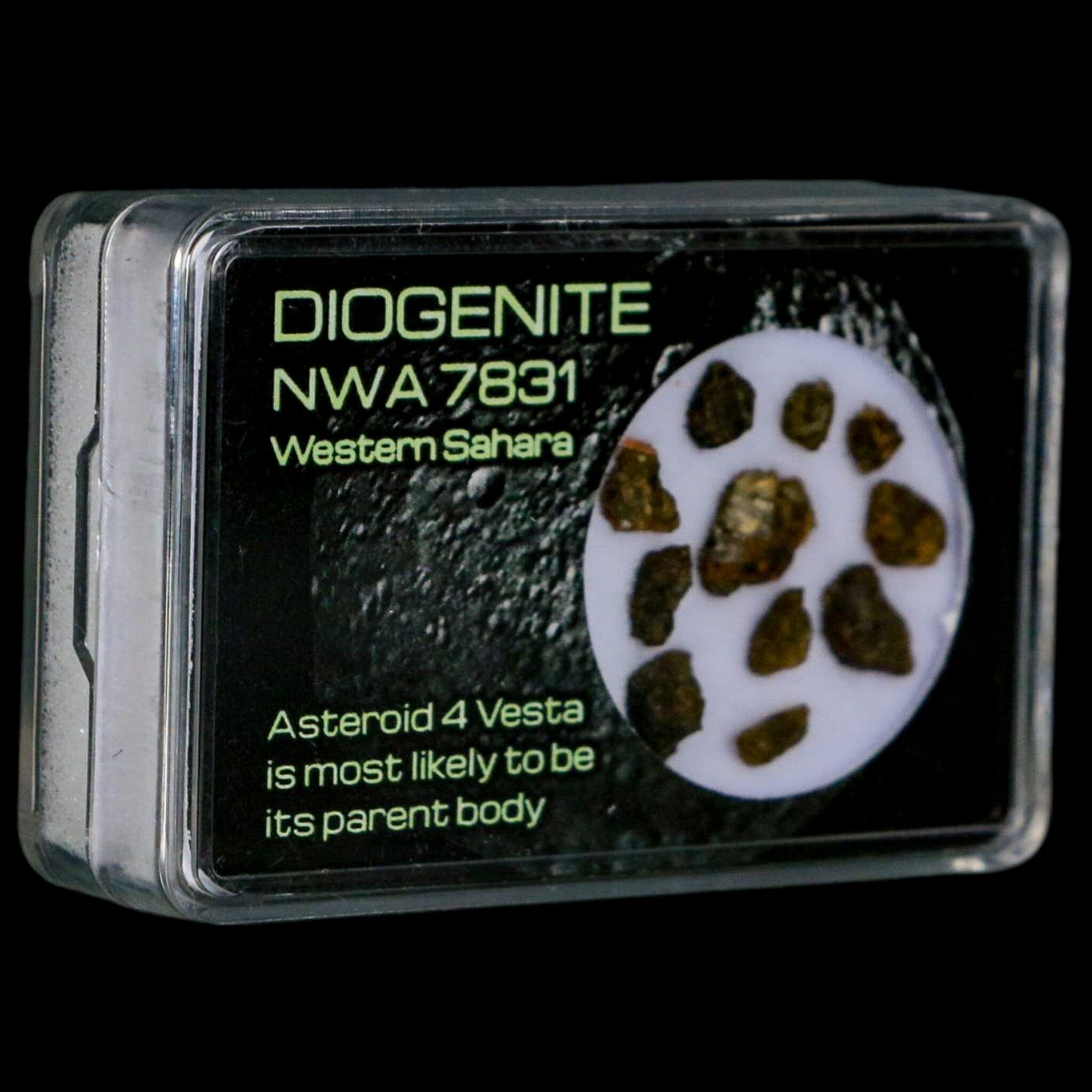
Location: Western Sahara
Weight: 0.4 Ounces (Display)
Dimensions: 2.3 Inches Long, 1.5 Inches Wide, 0.6 Inches Thick (Display)
Comes with a Free Display Case.
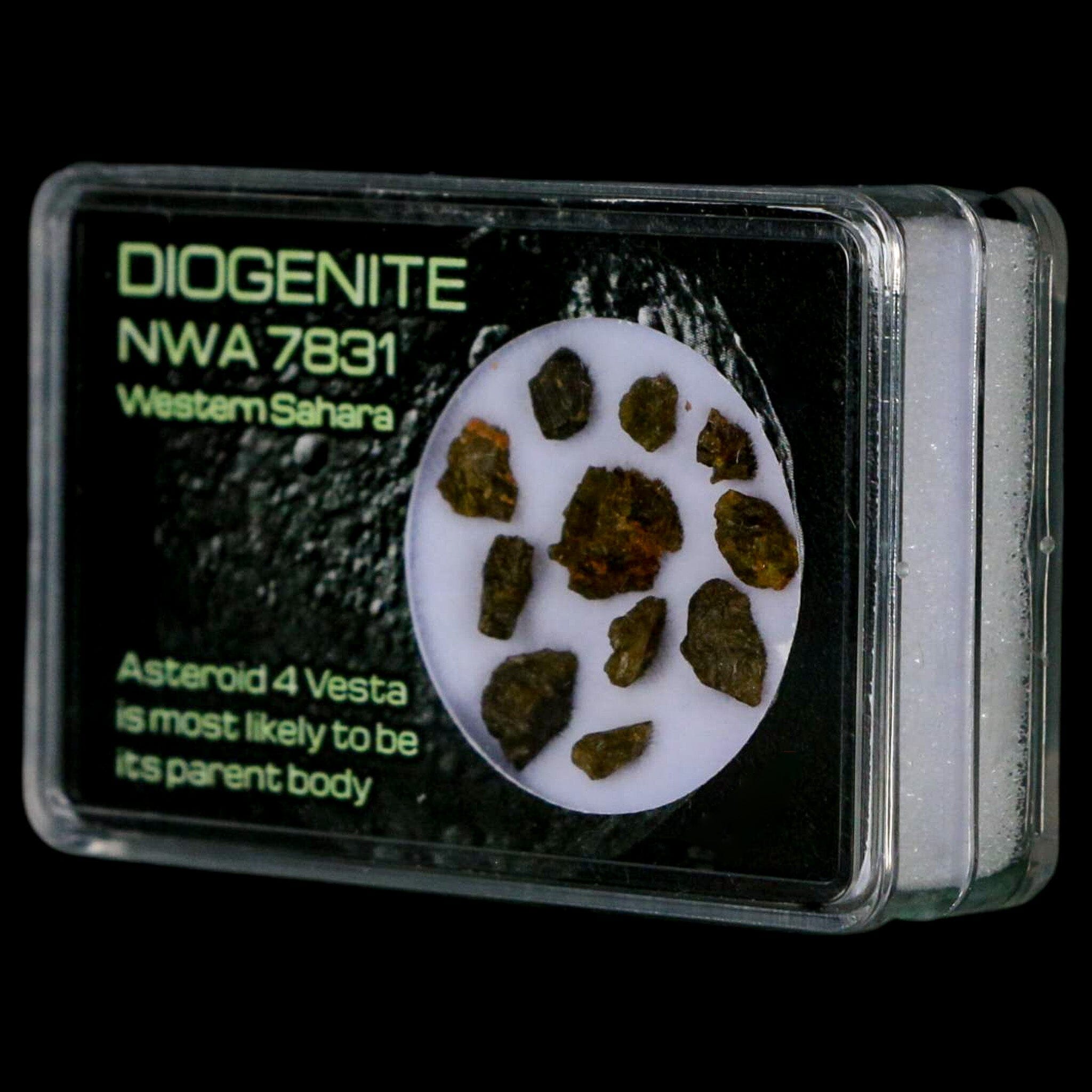
The item pictured is the one you will receive.
Diogenite is a type of meteorite classified within the group of achondrites, which are stony meteorites that have undergone differentiation and crystallization processes similar to those that occur in planetary bodies. Specifically, diogenites are believed to originate from the asteroid 4 Vesta, one of the largest bodies in the asteroid belt. This classification is part of a broader understanding of meteorites and their origins, which provides insights into the early solar system's formation and evolution.
The diogenite specimen provides compelling evidence of Vesta's complex magmatic evolution. Fundamentally composed of iron and magnesium-rich orthopyroxene, the meteorite manifests the characteristic dark coloration and substantial density defining this classification. The mineralogical composition—incorporating olivine, plagioclase, and assorted metallic constituents—exhibits considerable heterogeneity among specimens, each preserving a unique record of cooling kinetics and internal differentiation processes. The pronounced coarse-grained microstructure reflects extended crystallization within Vesta's magmatic reservoirs, permitting the development of notably large crystal phases relative to other meteorite varieties. Cumulate textures evident in select regions chronicle the sequential accumulation and gravitational segregation of minerals during the molten state. Originating from Vesta's differentiated basaltic magma, heavier orthopyroxene phases crystallized preferentially and accumulated within the lower strata of magma chambers. Subsequent impact bombardment excavated and dispersed these materials throughout the solar system, ultimately delivering this ancient fragment to Earth—an invaluable specimen documenting planetary differentiation and the transformative geological processes that characterized the early solar system's formation.
This distinguished diogenite specimen illuminates fundamental principles of planetary differentiation and early solar system dynamics. As a member of the HED meteorite group—alongside howardites and eucrites—this material offers critical insights into the layered structure and compositional evolution of differentiated asteroids. The mineralogical and chemical characteristics of diogenites distinguish them from their HED counterparts: eucrites represent basaltic surface materials from Vesta, while howardites constitute composite assemblages of both eucrite and diogenite components. By examining this specimen's mineralogy and chemical signature, researchers can reconstruct the thermal and compositional conditions that prevailed during Vesta's early differentiation. The specimen serves as an invaluable archive for understanding how density-driven stratification shaped planetary bodies in the nascent solar system. This meteorite's classification within the HED framework provides essential context for comparative planetology, enabling scientists to extrapolate findings to analogous differentiated bodies throughout our cosmic neighborhood. Possessing this specimen grants direct access to the geological record of planetary formation and the fundamental processes governing celestial body evolution.