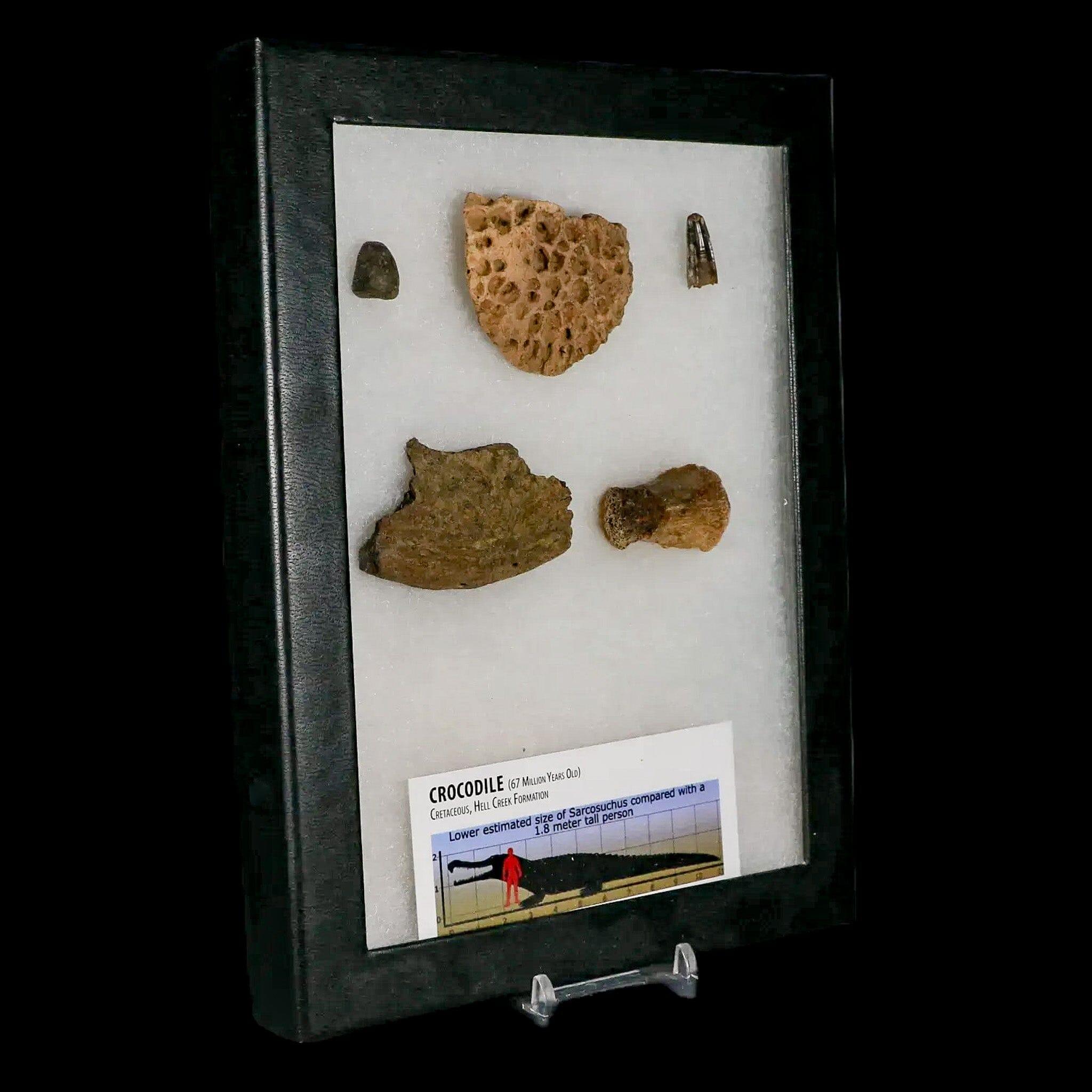
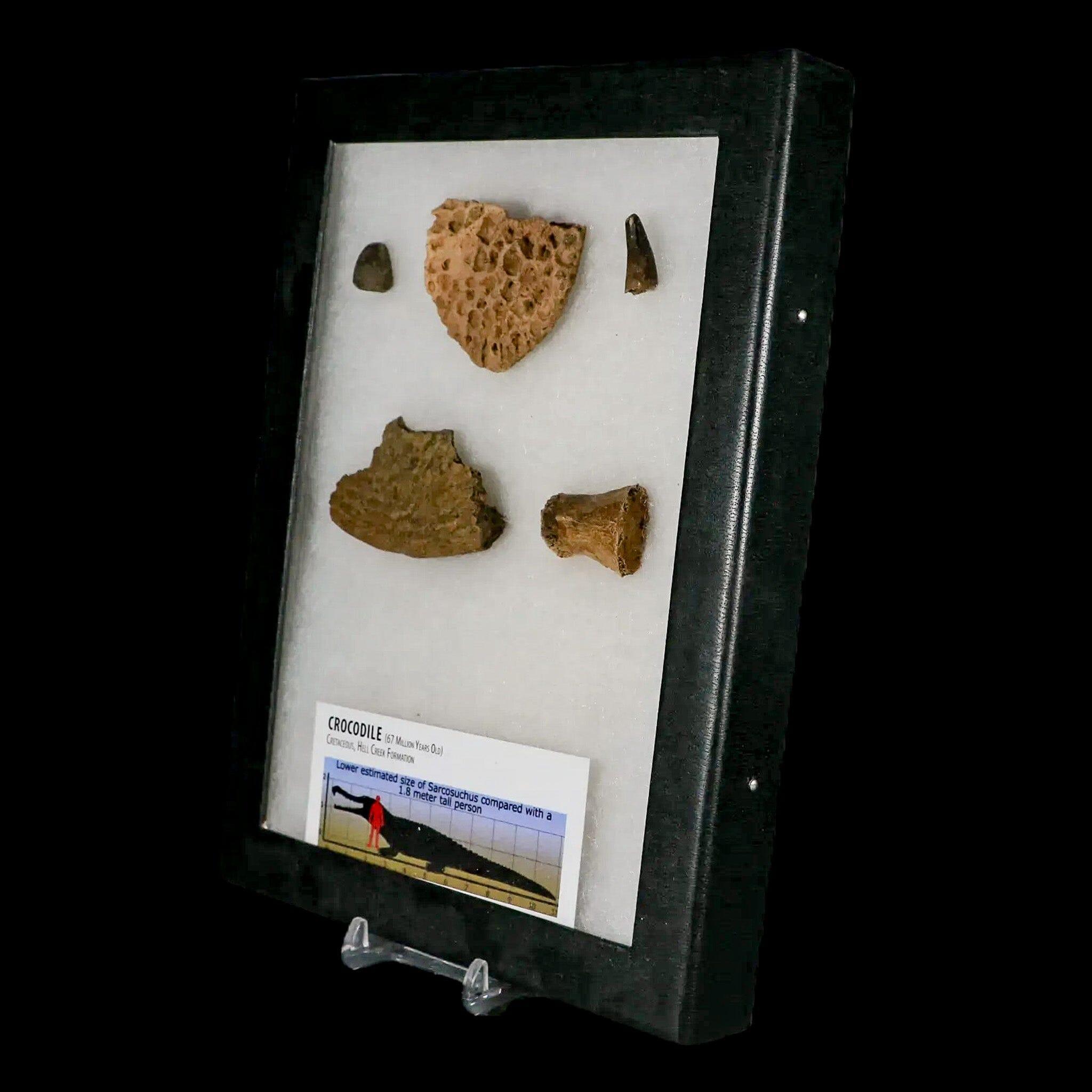


Description
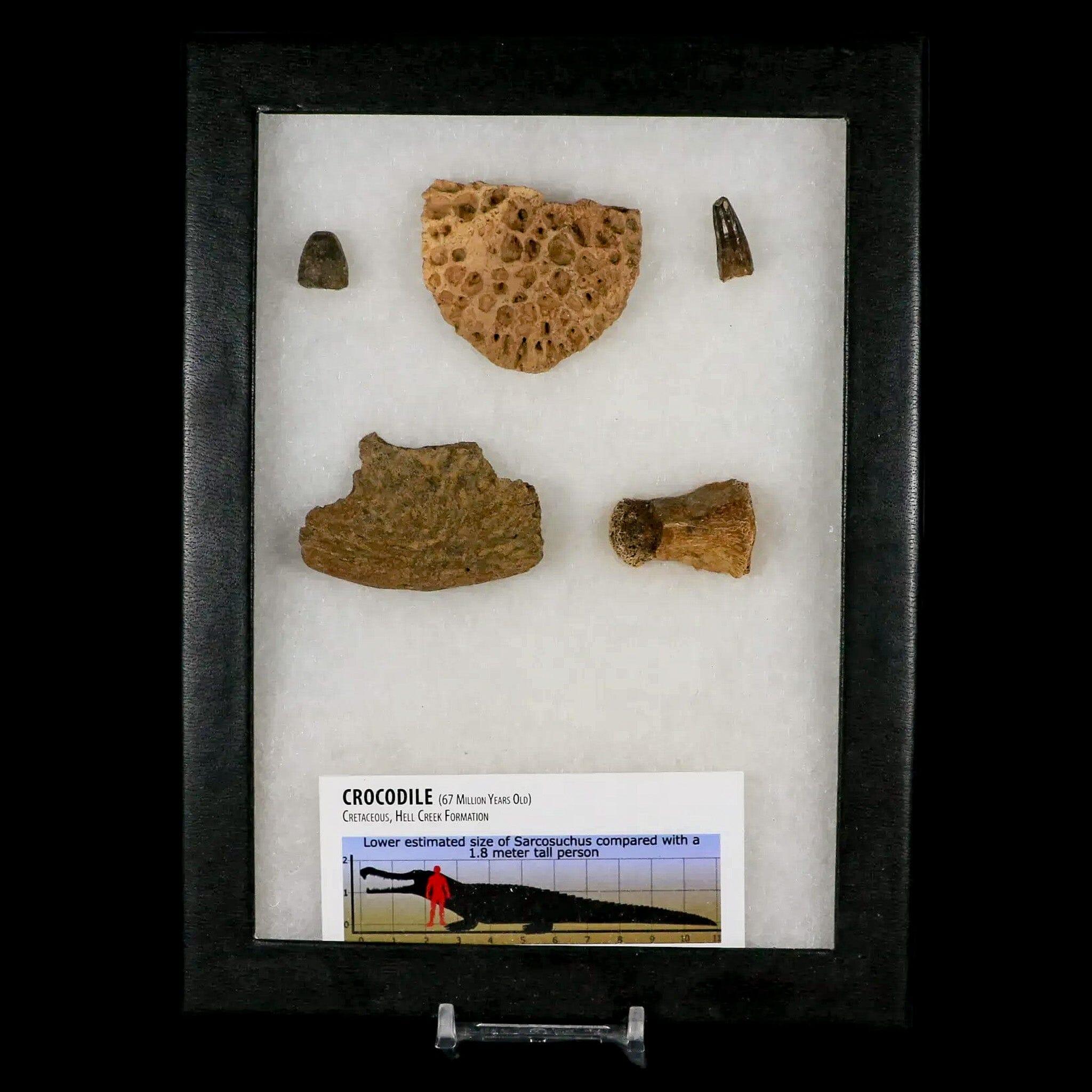
Location: Hell Creek Formation, Montana (Private Land Origin)
Weight: 9.2 Ounces
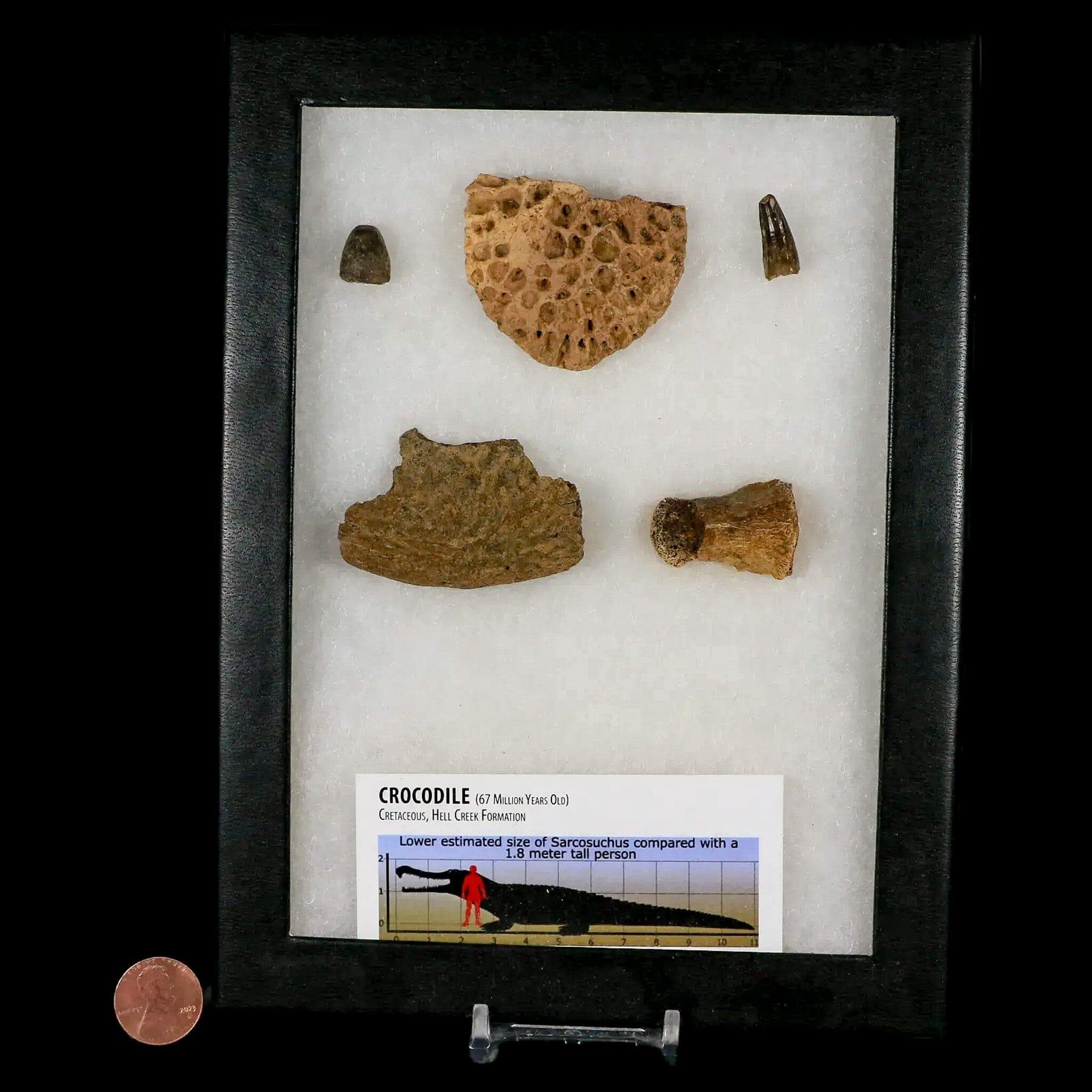
Dimensions: 8 Inches Long, 6.1 Inches Wide, 1 Inch Thick (Matrix)
Comes with a free Riker Display.
Comes with a free Stand.
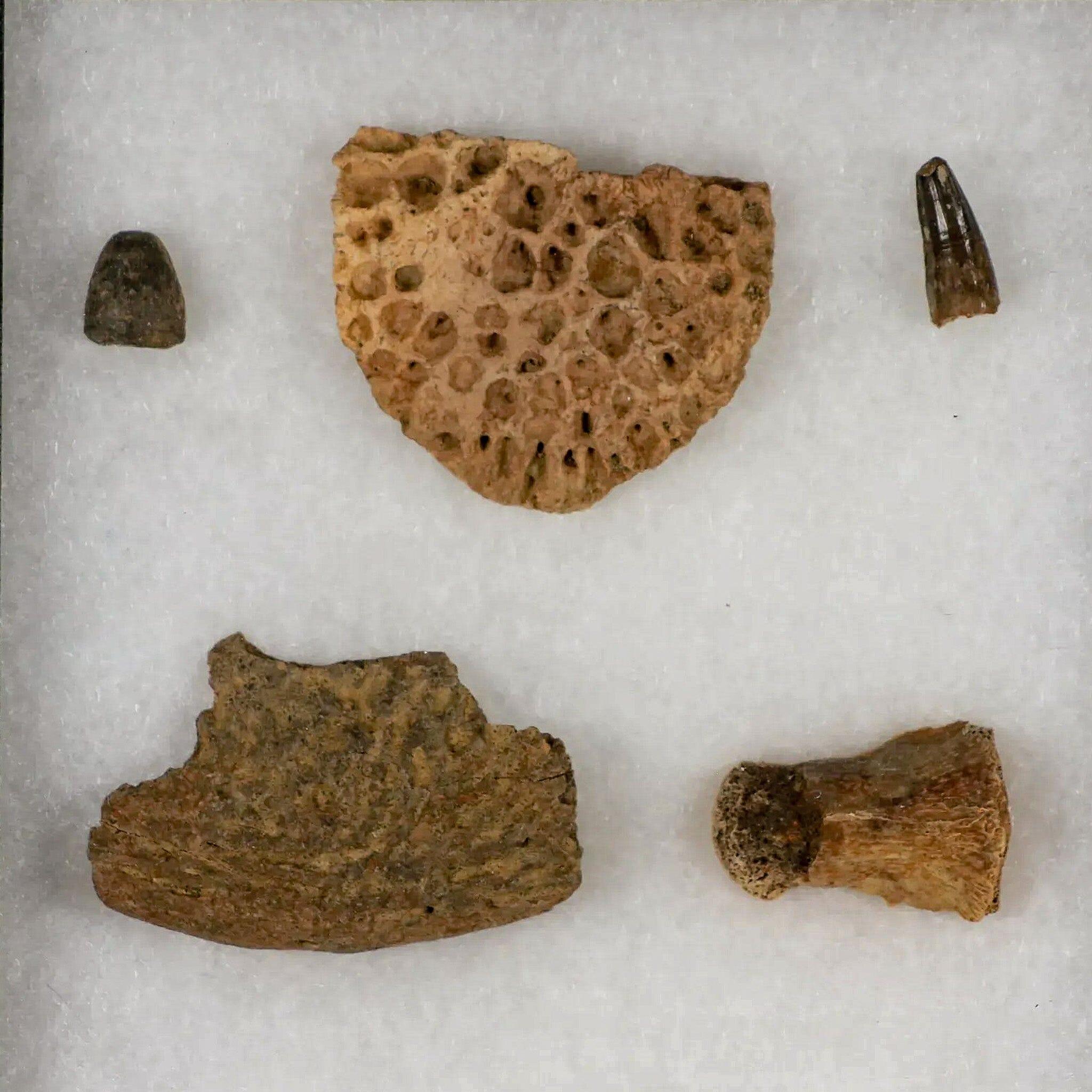
The item pictured is the one you will receive.
Cretaceous Age through to the Eocene Age
Crocodiles of the Hell Creek Formation in Montana
The Hell Creek Formation, spanning parts of Montana, North Dakota, South Dakota, and Wyoming, is one of the most significant geological formations for studying the Late Cretaceous period, around 66 million years ago. This formation is renowned for its exceptionally rich fossil record, which includes numerous crocodilian species that inhabited the region’s rivers, wetlands, and lush forests.
Crocodilians of the Hell Creek Formation
Crocodilians, members of the order Crocodylia, have existed for millions of years, and the Late Cretaceous ecosystems of Hell Creek provided an ideal environment for them. The abundant water sources and dense vegetation supported a variety of crocodile species, each occupying distinct ecological niches.
Notable Crocodile Species
-
Deinosuchus: Perhaps the most famous crocodile of the Hell Creek Formation, Deinosuchus was a giant predator, reaching lengths of up to 40 feet (12 meters). Its robust body and long, tooth-filled snout suggest it was an apex predator, capable of hunting large dinosaurs and other substantial prey.
-
Borealosuchus: This medium-sized crocodile measured approximately 10–15 feet (3–4.5 meters) in length. Compared to Deinosuchus, Borealosuchus had a more slender build and a long snout lined with sharp teeth, indicating a diet focused on fish and smaller vertebrates.
-
Leidyosuchus: A smaller crocodile of about 6–8 feet (1.8–2.4 meters), Leidyosuchus had a broad, rounded snout with blunt teeth, adapted for crushing mollusks, crustaceans, and other small aquatic organisms. This morphology suggests it occupied a different ecological niche, minimizing competition with larger crocodiles in the same habitat.
The diversity of crocodilian species in the Hell Creek Formation highlights the adaptability of these reptiles and their ability to thrive in complex Late Cretaceous ecosystems.