


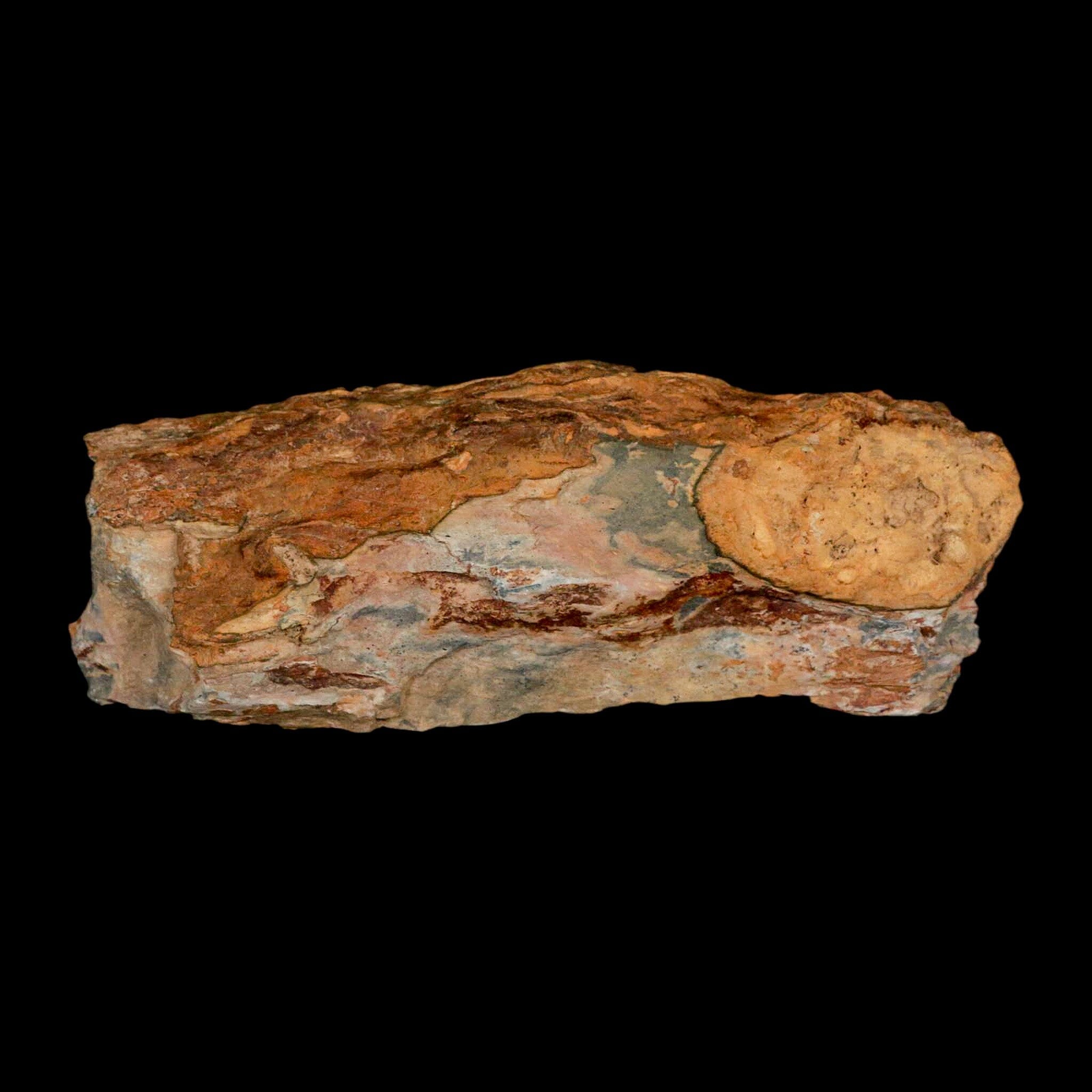


Description
Location: Macao, Portugal
Weight: 7.5 Ounces
Dimensions: 5.7 Inches Long, 2 Inches Wide, 0.9 Inches Thick (Matrix)
The item pictured is the one you will receive.
Upper Ordovician, 452 Million Years old.
Fenestella is a genus of bryozoans, also known as moss animals, famous for forming fan-shaped colonies with a delicate, net-like structure. Its name comes from the Latin word for “little window,” referring to the window-like openings, or fenestrae, in the colony’s skeleton. The skeletal framework is made of stiff branches connected by narrower crossbars called dissepiments, giving the colony its distinctive mesh appearance.
These bryozoans thrived from the Middle Ordovician to the early Upper Triassic (Carnian), reaching their peak diversity during the Carboniferous period. They inhabited marine environments, and their fossils have been discovered in marine sediments worldwide, providing insights into ancient ocean ecosystems.
Fenestella colonies are notable for their bifurcating branches, which split to form a fan-shaped structure. The fenestules, which are typically rectangular, housed two to eight zooids (individual colony members). In well-preserved specimens, the apertures where the zooids lived are often closed by centrally perforated lids. Compared to other fenestellid bryozoans, Fenestella is relatively fine, featuring large apertures and wide dissepiments, making it easily distinguishable among fossil bryozoans.
These fossils are important for paleontologists and collectors alike, offering a window into Paleozoic and early Mesozoic marine life and the evolution of colonial bryozoans.