


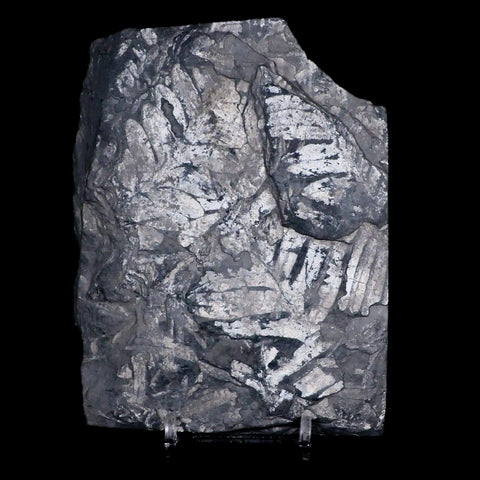
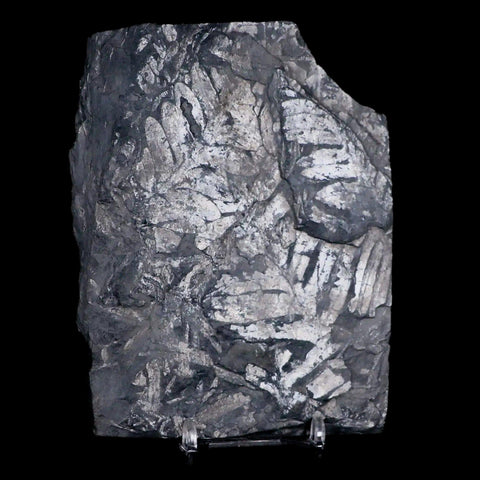
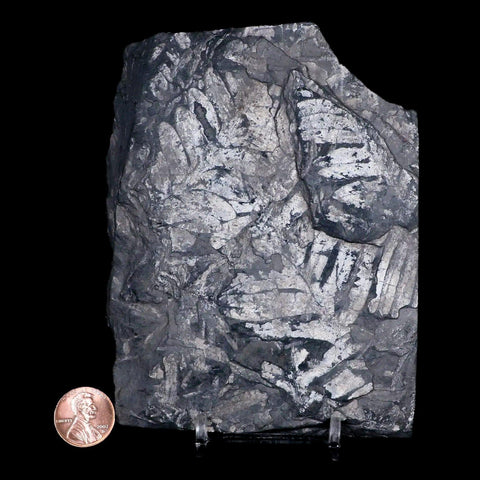

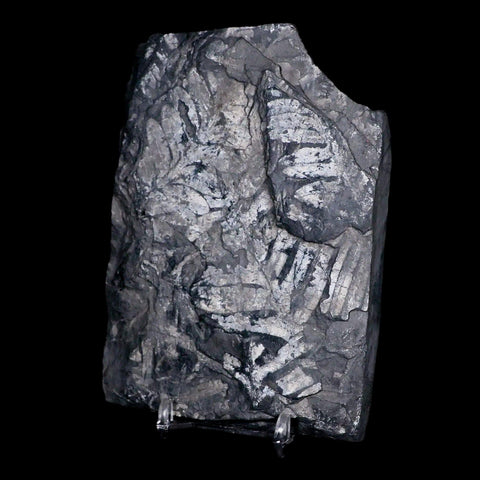
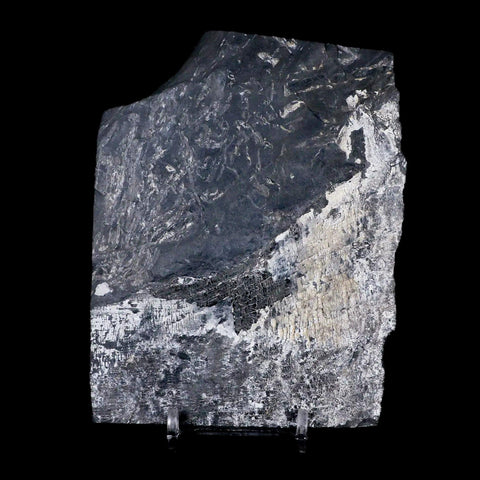
4.8" Alethopteris Fern Plant Leaf Fossil Carboniferous Age Llewellyn FM ST Clair, PA
Location: Llewellyn Formation, St Clair, Pennsylvania
Weight: 11.6 Ounces
Dimensions: 4.8 Inches Long, 3.8 Inches Wide, 0.7 Inches Thick (Plate)
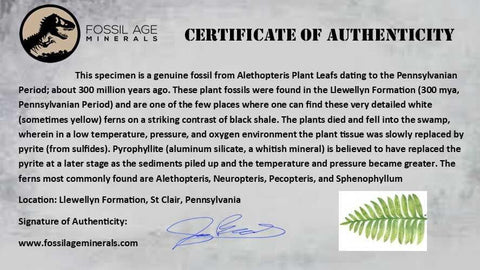
Comes with a Certificate of Authenticity.
Comes with a Free Stand.
The item pictured is the one you will receive.
Pennsylvanian Age, 300 million years old.
Alethopteris Sp Fern Fossil
The Llewellyn Formation, dating back 300 million years to the Pennsylvanian Period, is a treasure trove of exceptionally preserved fossil plants, particularly ferns. These fossils stand out for their white or pale yellow coloration set against the deep black shale, creating a striking visual contrast that showcases the delicate details of prehistoric foliage.
These plants fell into ancient swamps, where low-oxygen, high-pressure, and low-temperature conditions allowed their tissues to mineralize slowly. Initially, pyrite replaced the organic material, and over time, as sediments built up and pressure and heat increased, pyrophyllite (a whitish aluminum silicate mineral) replaced the pyrite. This process preserved even the finest structures of the ferns. Common genera include Alethopteris, Neuropteris, Pecopteris, and Sphenophyllum, with some extinct families like Macroneuropteris represented.
The Carboniferous swamp ecosystems were once dominated by ferns, horsetails, and tree-like club mosses. By the end of the Carboniferous, club mosses and horsetails declined due to cooling climates and disappearing swamps, though some coal swamps persisted into the early Permian, forming coal seams intertwined with fossilized plant layers.
Collectors can easily retrieve high-quality specimens from thinly laminated shale, which splits effortlessly with a chisel or hammer, making these fossils accessible while preserving intricate details. Llewellyn Formation fossils provide a rare glimpse into the lush swamp forests of the Pennsylvanian, making them prized for scientific study, education, and private collections.


