


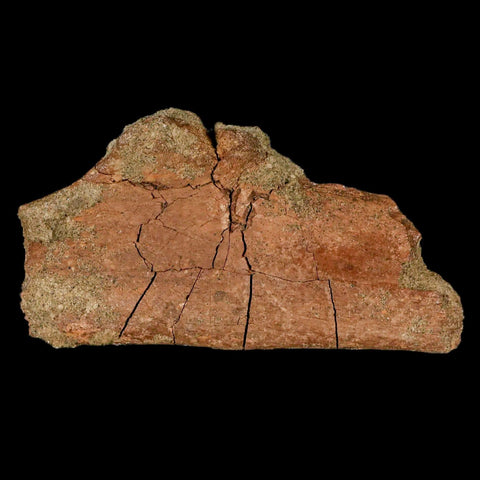
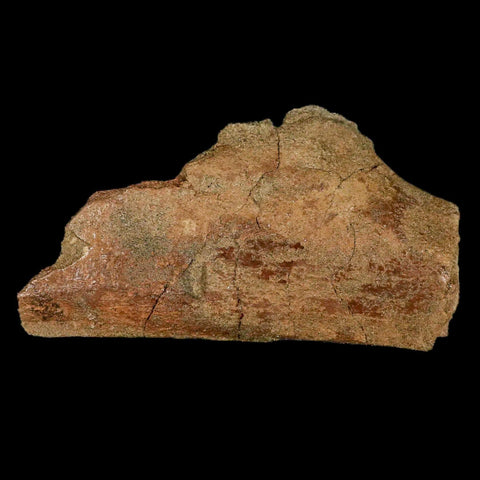
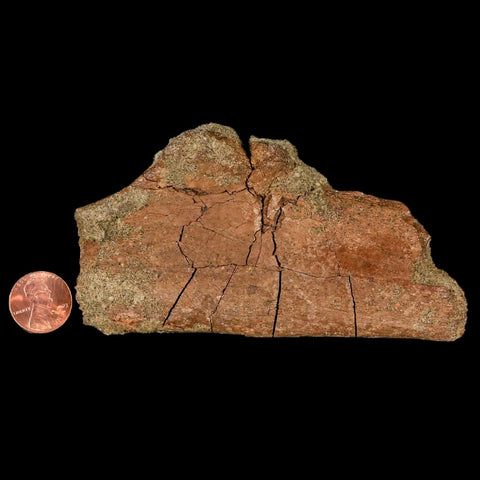
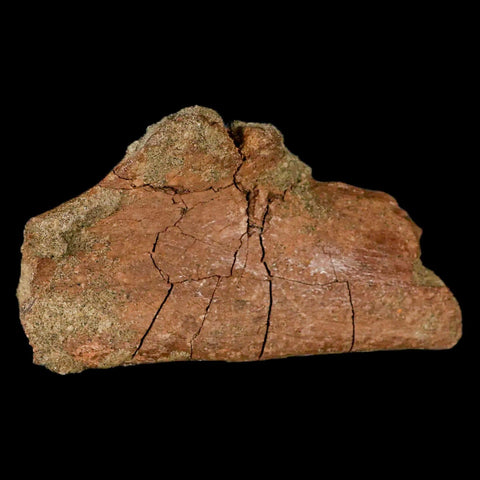
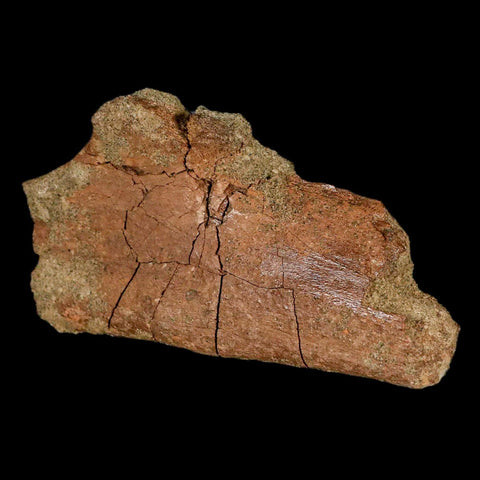
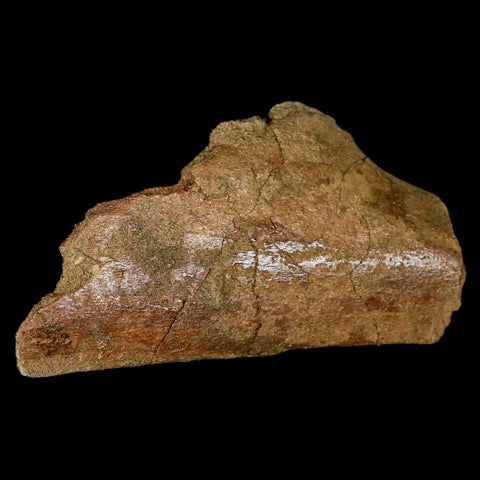
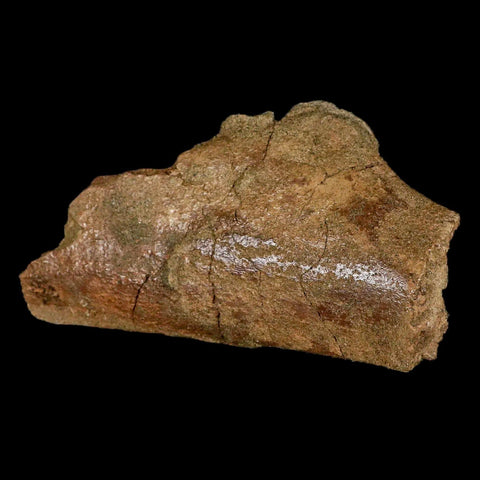
4.6" Triceratops Fossil Rib Bone Lance Creek FM Cretaceous Dinosaur WY COA
Location: Lance Creek Formation, Weston County, Wyoming (Private Land Origin)
Weight: 4.7 Ounces
Dimensions: 4.6 Inches Long, 2.4 Inches Wide, 0.7 Inches Thick
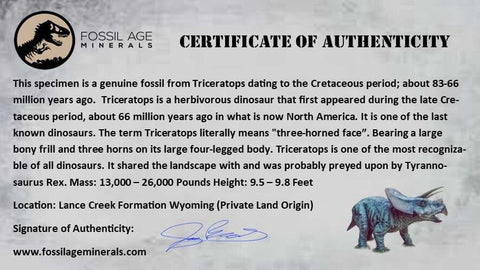
Comes with a Certificate of Authenticity.
The item pictured is the one you will receive.
This is a genuine fossil.
Late Cretaceous, 66-68 million years old.
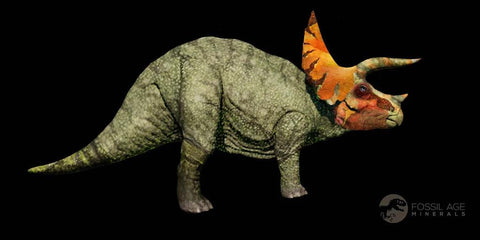
Name: Triceratops
Type: Herbivore
Size: 8 to 9 meters long.
Triceratops is one of the most iconic genera of herbivorous ceratopsid dinosaurs that roamed North America during the Late Cretaceous period, approximately 68 million years ago. This massive quadrupedal dinosaur weighed between 5 and 9 metric tons and is instantly recognizable for its three prominent facial horns and wide, protective bony frill. The two large brow horns above the eyes served as formidable defensive weapons, while the smaller nasal horn projected from the snout. In addition, the frill was lined with smaller spikes, adding extra protection from predators and a visually striking display within the herd.
Triceratops had a massive skull relative to its body, with a short neck frill and sturdy, muscular limbs that supported its heavy frame. These features allowed it to feed efficiently on low-lying vegetation and navigate the open plains of the Late Cretaceous. Its horns and frill were multifunctional, serving not only as defenses against apex predators like Tyrannosaurus rex but also as tools for intraspecific combat, social dominance, and mating displays. Fossil evidence, including healed puncture marks on skulls, confirms frequent encounters with predators and occasional fights between individuals for territory or reproductive advantages.
Living in herds likely enhanced the survival of Triceratops. Adult dinosaurs protected juveniles, while the herd structure facilitated social interaction and defense strategies. The combination of horns, frill, and herd behavior made Triceratops a highly successful herbivore capable of thriving despite the presence of predators. Fossil discoveries across North America highlight its role as a dominant member of Late Cretaceous ecosystems and provide valuable insight into the evolutionary adaptations of ceratopsian dinosaurs.
Triceratops continues to captivate scientists, educators, and dinosaur enthusiasts around the world. Its distinctive anatomy, formidable defenses, and social behaviors offer a comprehensive view into the life of a Late Cretaceous herbivore. As one of the most famous and well-studied ceratopsid dinosaurs, Triceratops exemplifies the remarkable diversity, evolutionary innovation, and ecological resilience of herbivorous dinosaurs. Its horns, frill, and massive quadrupedal body not only ensured survival but also made it a visually iconic species, securing its place as a symbol of prehistoric strength and adaptation in the fossil record.


