

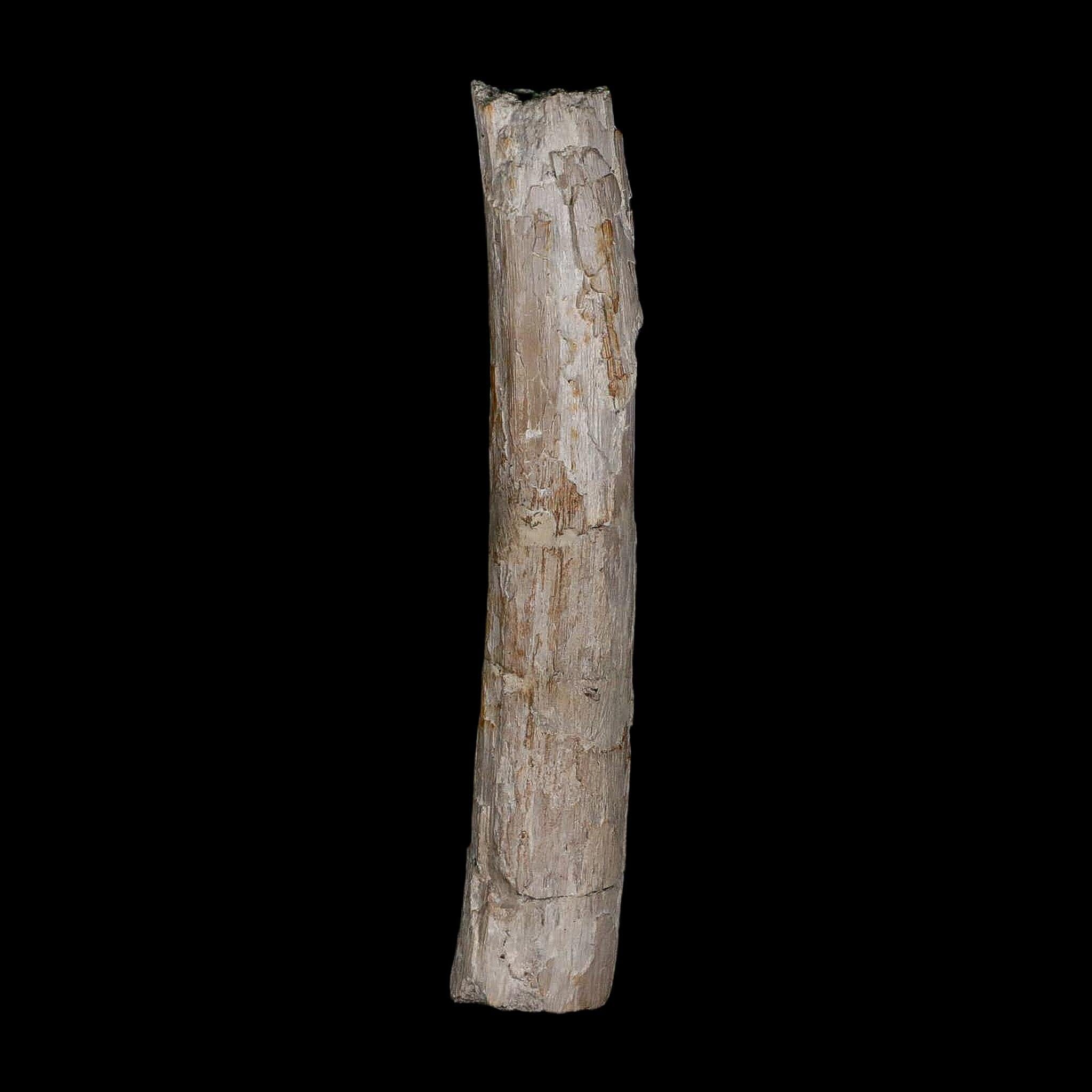


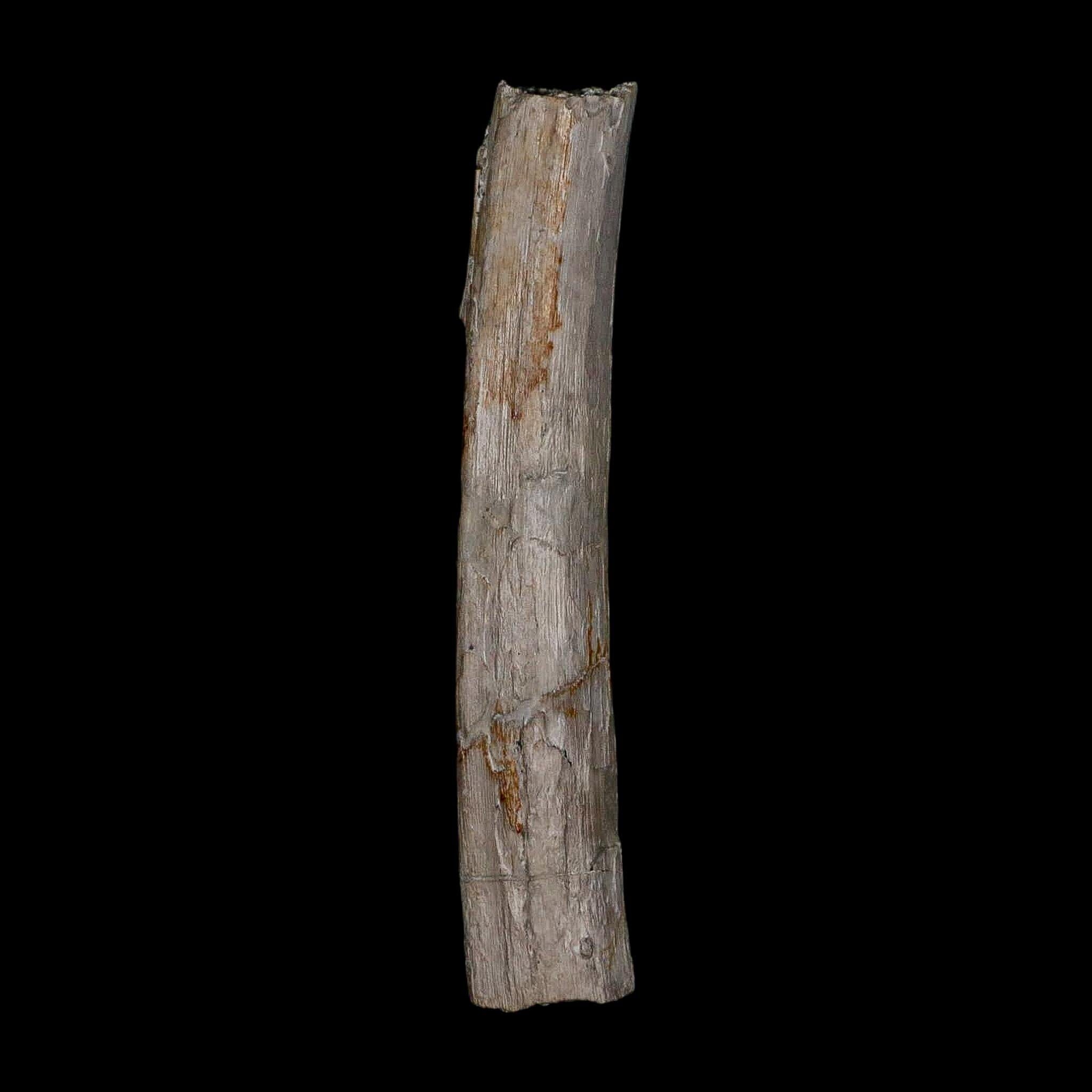
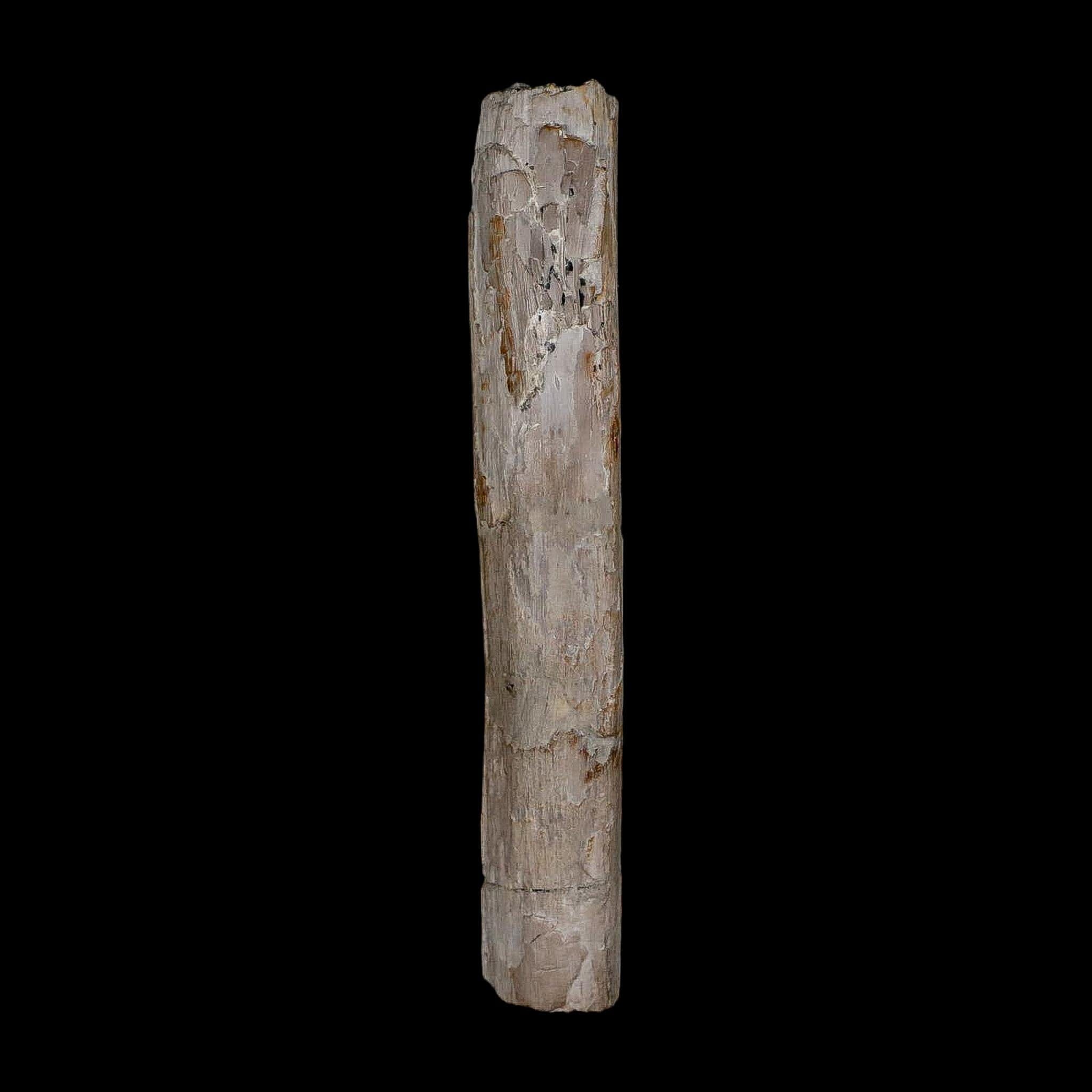


Description
Location: Chinle Formation, Arizona (Private Land Origin)
Weight: 1.9 Ounces
Dimensions: 3.9 Inches Long, 0.7 Inches Wide, 0.6 Inches Thick
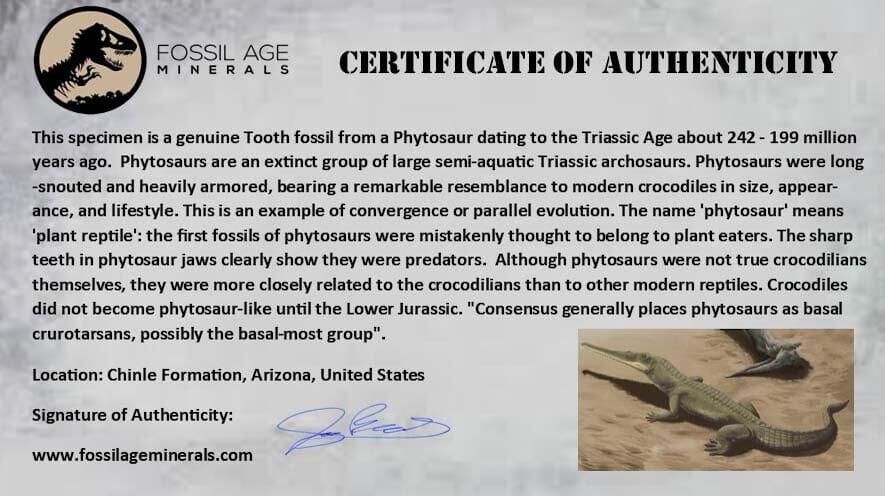
Comes with a Certificate of Authenticity.
The item pictured is the one you will receive.
Late Triassic 242 To 199 Million Years Old
Phytosaurs were large predatory reptiles that thrived during the Late Triassic period, long before the rise of true crocodiles. These semi-aquatic archosaurs inhabited rivers, floodplains, and coastal wetlands, where they functioned as top predators. At first glance, their long snouts, armored bodies, and sprawling posture make them nearly indistinguishable from modern crocodilians, yet this similarity is the result of parallel evolution, not close ancestry.
Although phytosaurs are more closely related to crocodilians than to lizards or dinosaurs, they do not belong to the crocodile lineage itself. Instead, they occupy a very early position among crurotarsans, representing one of the earliest branches of the group that would later give rise to crocodiles. Interestingly, crocodilians would not evolve a comparably crocodile-like body form until the Early Jurassic, after phytosaurs had already disappeared.
The name Phytosaur—meaning “plant reptile”—reflects an early scientific error. When their fossils were first described, phytosaurs were mistakenly thought to be herbivores. Subsequent discoveries of their skulls revealed long jaws filled with sharp, recurved teeth, clearly adapted for seizing and holding prey. These animals were efficient ambush predators, likely feeding on fish, amphibians, and other vertebrates that shared their watery environments.
Among the best-known phytosaurs is Rutiodon, a genus documented from Late Triassic deposits in the eastern United States. Rutiodon was a massive animal, reaching lengths of 3 to 8 meters, with a powerful tail and heavily armored back. Its size and anatomy suggest it played a dominant role within Triassic freshwater ecosystems.
Phytosaurs vanished at the end of the Triassic, likely as a result of global environmental upheaval. Despite their extinction, they remain an important example of how similar ecological pressures can shape unrelated animals into remarkably similar forms, foreshadowing the later success of crocodilians.
