


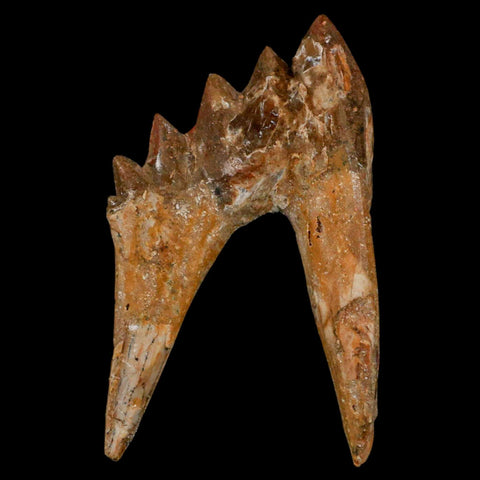
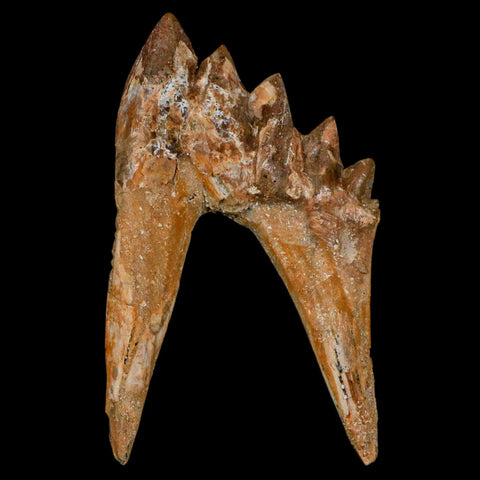
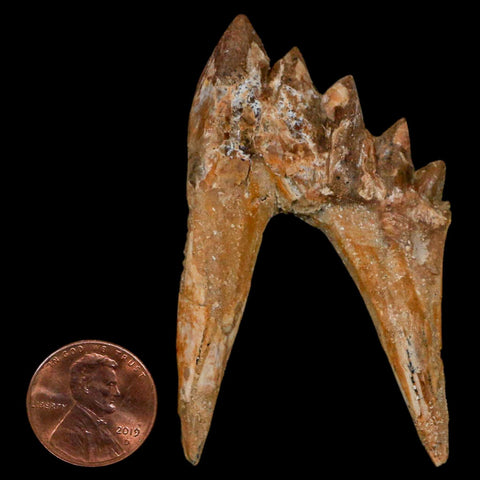
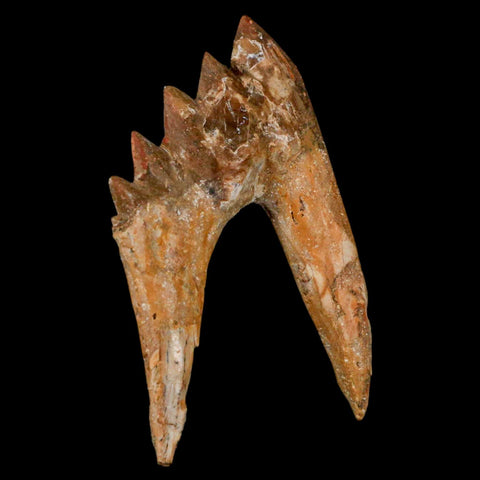
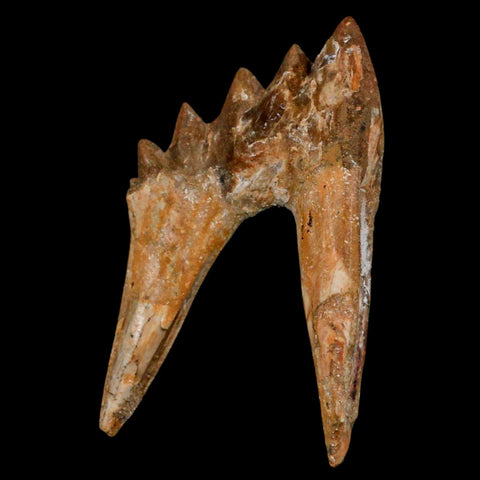
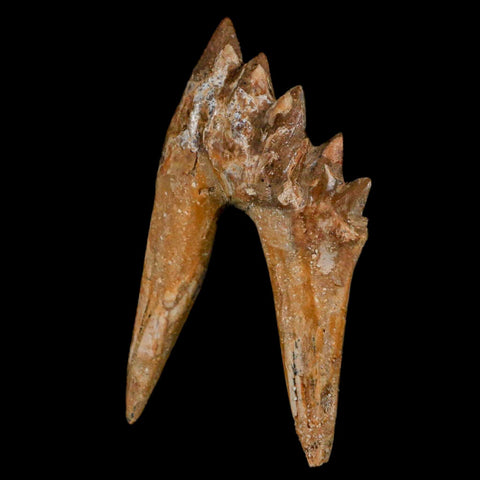
2.5" Basilosaurus Tooth Rooted Prehistoric Whale 34 Mil Yrs Old Late Eocene COA
Location: Dakhla, Western Sahara, South Morocco
Weight: 0.7 Ounces
Dimensions: 2.5 Inches Long, 1.6 Inches Wide, 0.4 Inches Thick (Matrix)
Comes with a Certificate of Authenticity.
This is a real fossil tooth.
The item picture is the one you will receive.
Name: Basilosaurus (King Lizard).
Diet: Piscivore/Carnivore.
Size: Estimated between 50 Feet to 70 feet
Known locations: North Africa
Time period: Late Eocene Period, 40 to 34 Million Years Ago
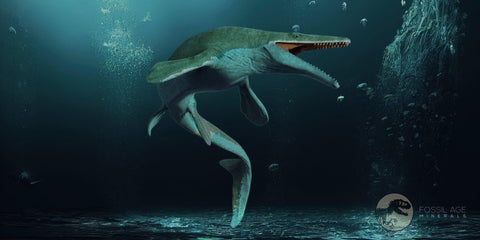
Basilosaurus was an ancient whale that thrived roughly 40 to 34 million years ago during the Late Eocene Epoch. Its fossils were first unearthed in the United States in the early 19th century, and because of its long, slender body, scientists at the time mistook it for a giant marine reptile. As a result, it was named Basilosaurus in 1834, meaning “king lizard.” Only later did researchers realize that this impressive creature was not a reptile at all, but one of the earliest fully aquatic whales.
Growing up to 70 feet in length and weighing around 15 tons, Basilosaurus was among the largest marine animals of its age. Its elongated body, lined with sharp, conical teeth, was built for swift and efficient hunting in the warm Eocene seas. Unlike modern whales, it had small hind limbs—vestiges of its land-dwelling ancestors—though they were too tiny to aid in swimming.
A powerful carnivore, Basilosaurus used its enormous jaws to capture and tear apart its prey. Studies of its skull and teeth reveal that it possessed a tremendous bite force of about 2,300 pounds, enabling it to crush bone and flesh alike. Paleontologists believe its diet included large fish, smaller whales, and other marine animals unlucky enough to cross its path.
Today, Basilosaurus stands as a key piece of evolutionary evidence, showing how early whales transitioned from land mammals to the ocean’s most dominant predators.


