


Description
Location: Kemmerer, Wyoming
Weight: 2.7 Ounces
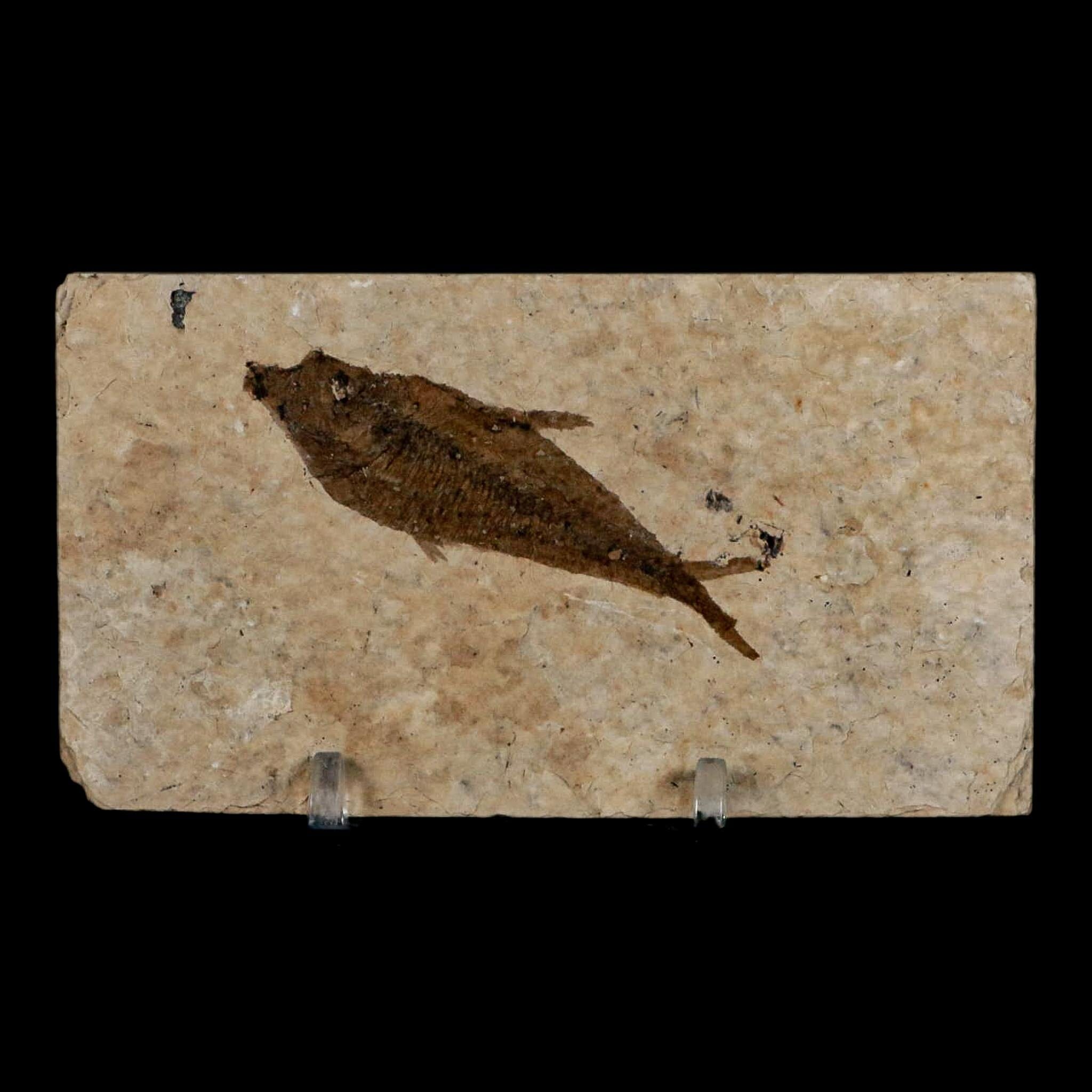
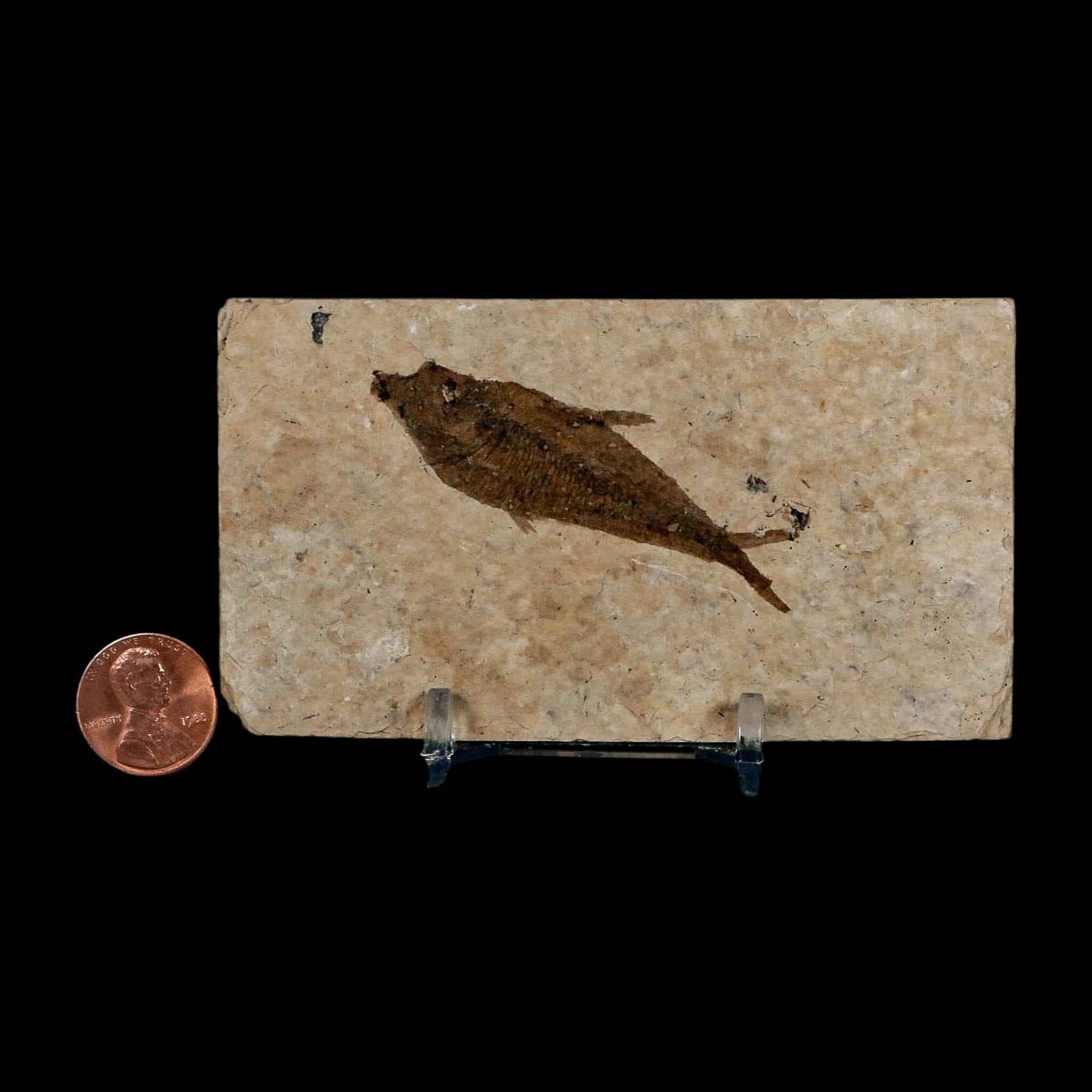
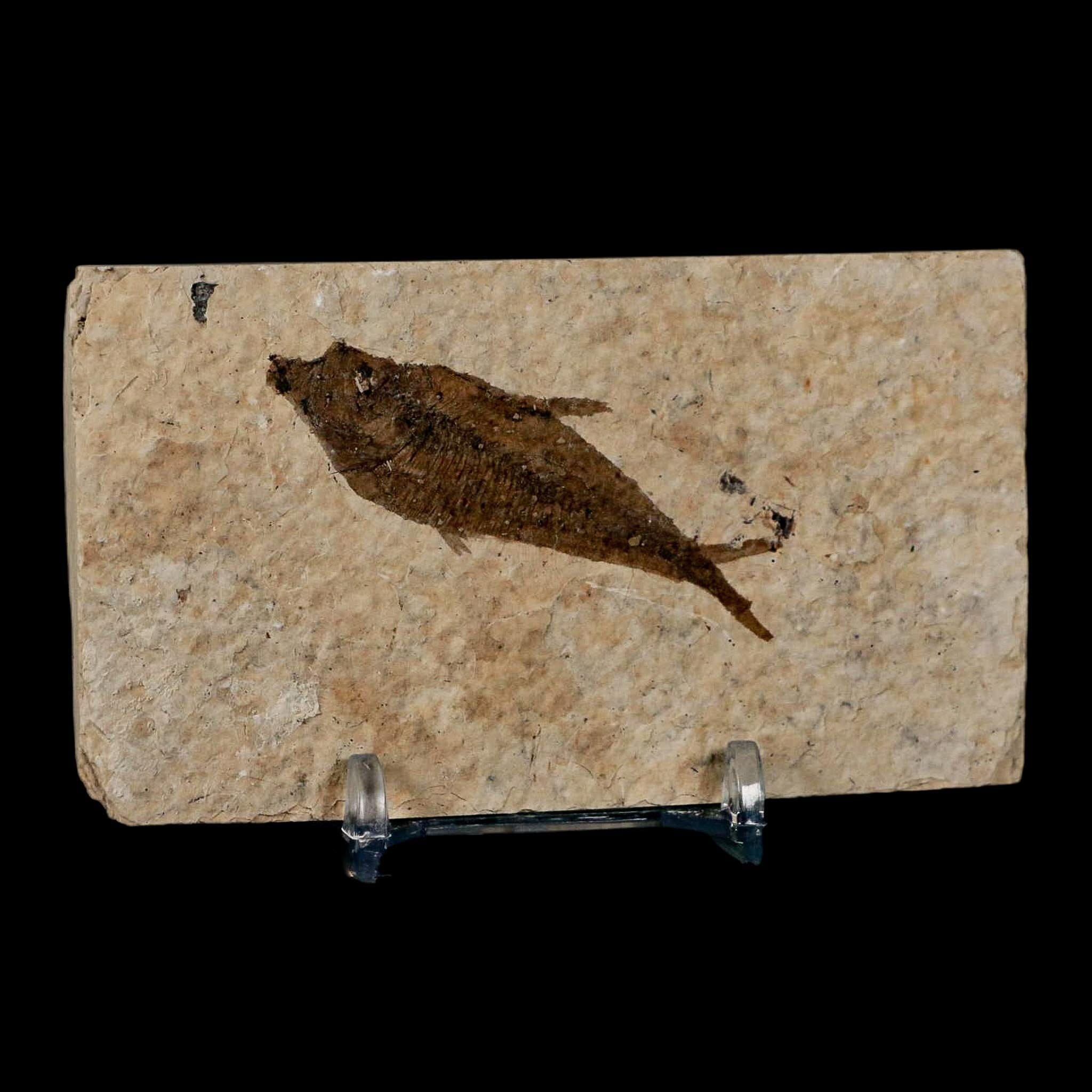
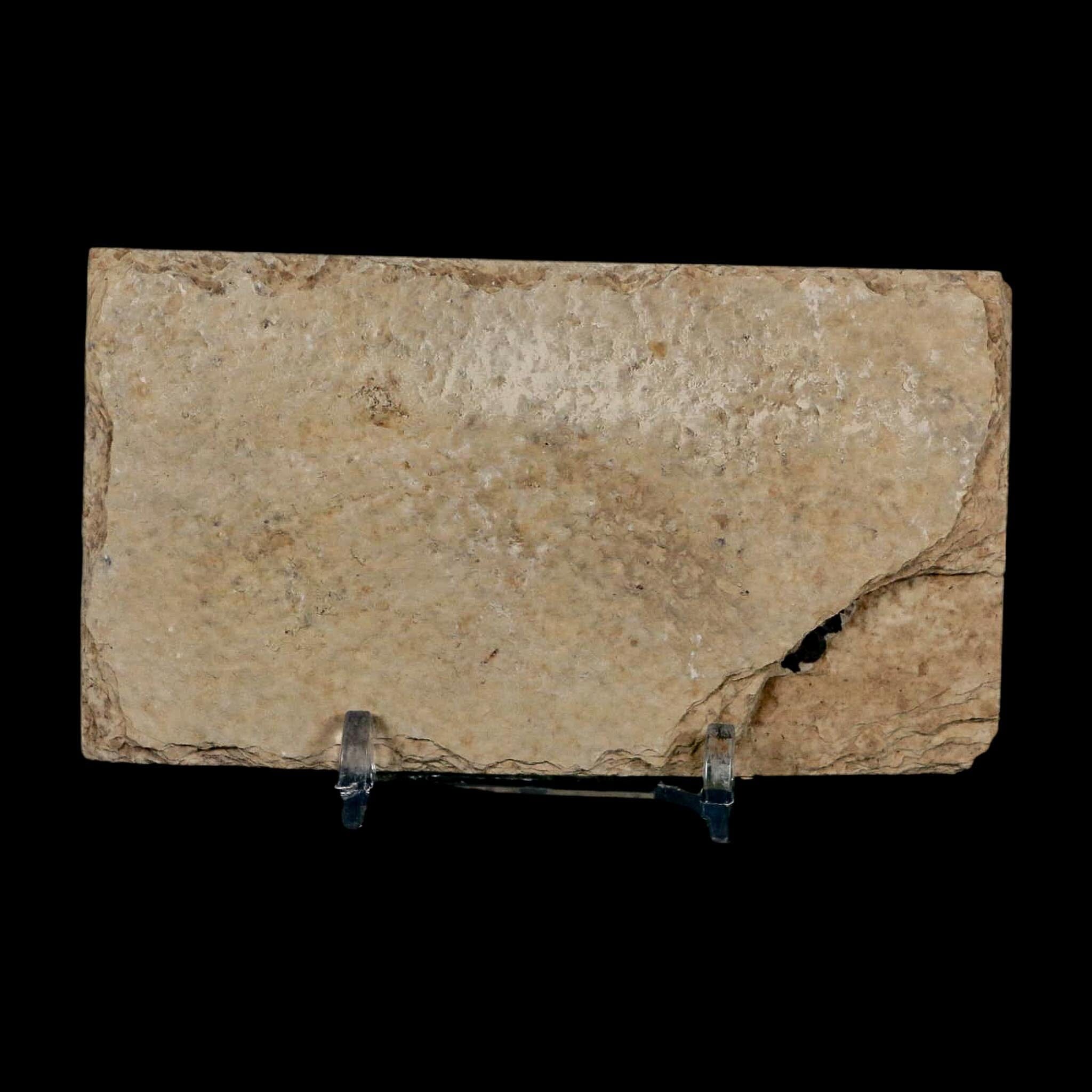
Dimensions: 4 Inches Long, 2.2 Inches Wide, 3 Inches Thick (Plate)
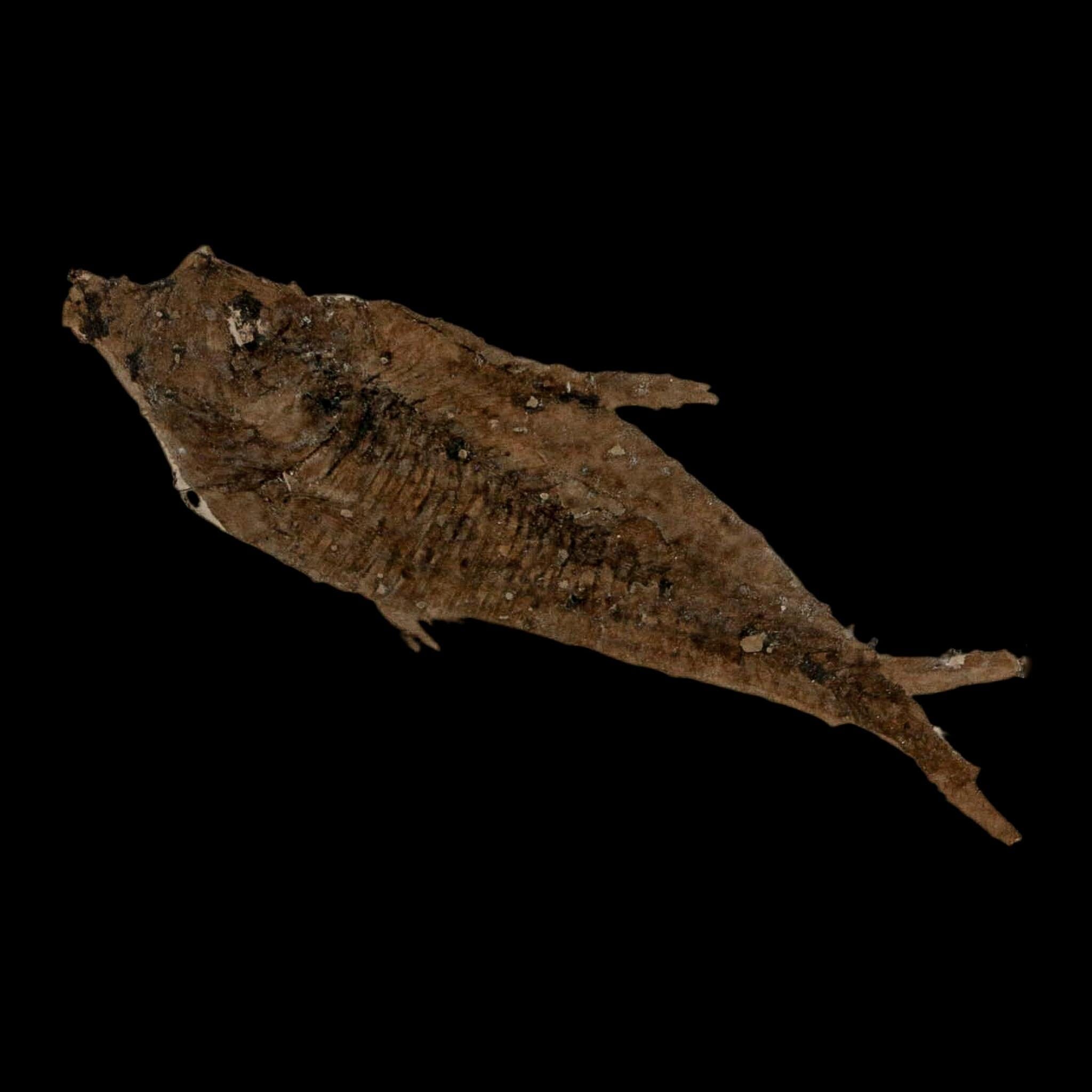
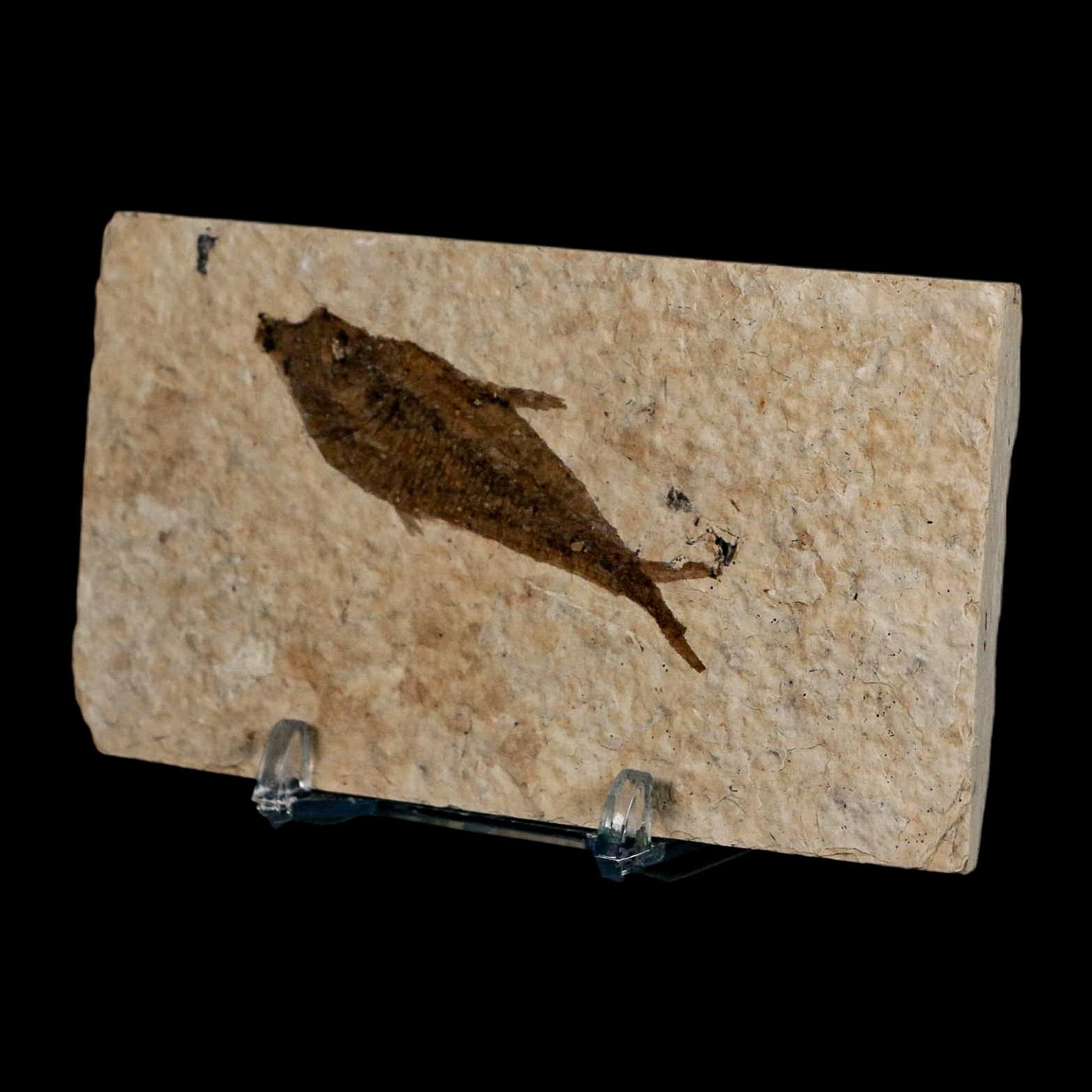
Fish Dimensions: 2.3 Inches Long, 0.8 Inches Wide
Comes with a Free Stand.
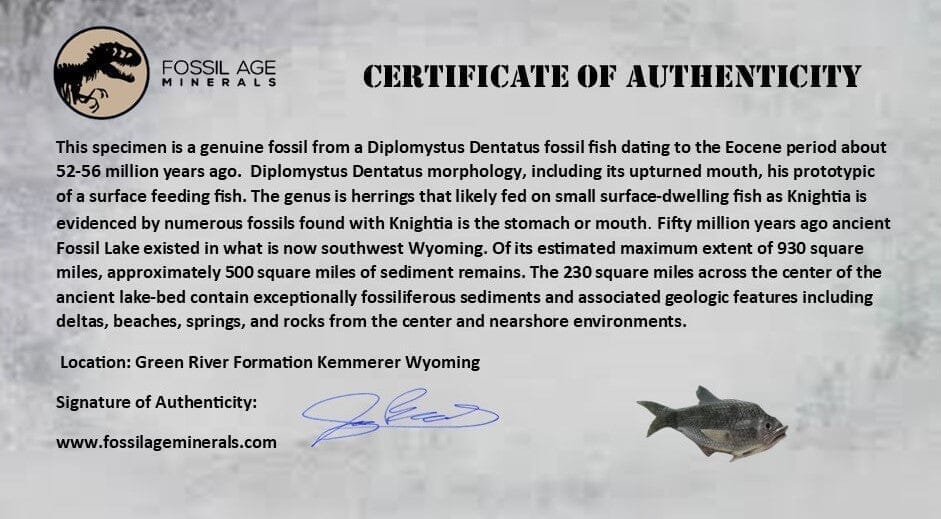
Comes with a Certificate of Authenticity.
The item pictured is the one you will receive.
56 million years old, Eocene age.
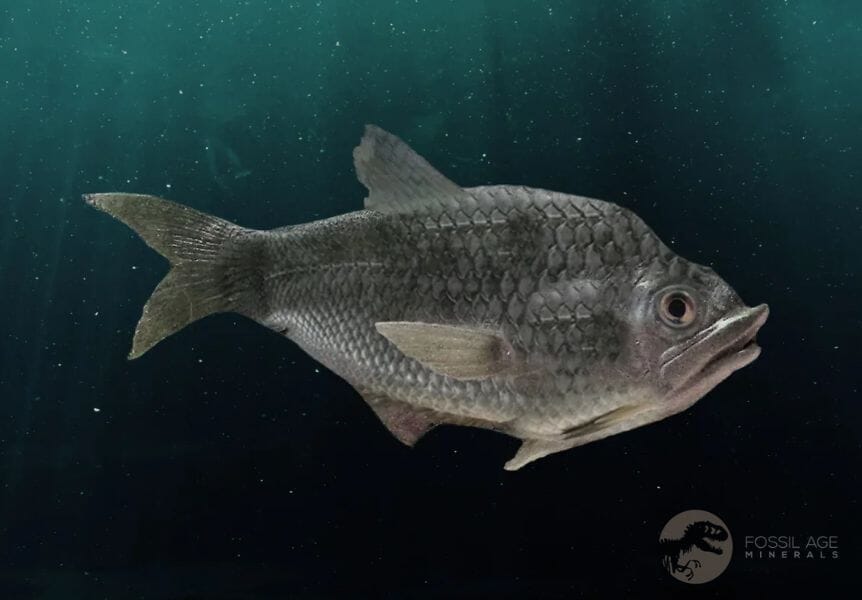
Diplomystus dentatus is an extinct genus of surface-feeding fish with a distinctive upturned mouth, perfectly adapted for preying on small surface-dwelling fish like Knightia, as evidenced by numerous fossils showing Knightia in their stomachs or mouths. This herring-like fish inhabited Fossil Lake, located in present-day southwest Wyoming, approximately 50 million years ago.
Fossil Lake once covered up to 930 square miles, with exceptionally fossil-rich sediments preserved across 500 square miles, including deltas, beaches, springs, and central lakebed deposits. Its unique chemical composition prevented decomposition and scavenging, allowing millimeter-thick laminated limestone layers to accumulate gradually. These sediments preserve the world’s highest concentration of fossil fish, alongside a complete freshwater ecosystem, including cyanobacteria, plants, insects, crustaceans, amphibians, turtles, alligators, birds, and mammals, notably the oldest pantolestid.
Since its discovery in the 1870s, Fossil Lake has provided unmatched insight into Paleogene freshwater ecosystems. Its subtropical surroundings are represented by rare terrestrial fossils, including horses, snakes, lizards, bats, arboreal insectivores, primitive carnivores, and over 325 types of plant remains, making it the most complete record of Eocene lake and terrestrial life worldwide.

Please be aware of the nature of fossils:
Being buried underground for millions of years under immense pressure can be quite harsh. Rarely is a fossil found completely intact and perfect. Many fossils require some form of restoration, and some are even modified by humans to improve their appearance. These features are part of the fossil's natural charm and are not seen as flaws.