


1.6" Plesiosaur Zarafasaura Tooth Fossil Cretaceous Dinosaur Era COA, Stand
Location: Khouribga, Morocco
Weight: 0.3 Ounces
Dimensions: 1.6 Inches Long, 0.4 Inches Thick
Comes with a Certificate of Authenticity.
Comes with a free Acrylic Base. (Stand) & Mineral Tack.
The item pictured is the one you will receive.
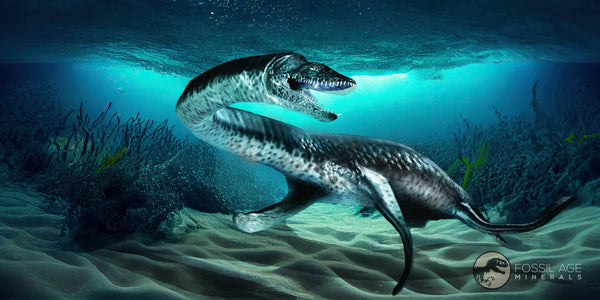
Plesiosaur Zarafasaura
Zarafasaura Oceanis belongs to the family Elasmosauridae. The generic name Zarafasaura derives from Zarafa, an Arabic word for ‘giraffe,’ and Saurus, Greek for ‘lizard.’ The specific name means ‘daughter of the sea’ in Latin.
Paleontologist Dr. Peggy Vincent from the National Museum of Natural History in Paris, France, and her colleagues first described the species in 2011 from incomplete skull remains found in Morocco.
Zarafasaura Oceanis was approximately 23 feet (7 meters) long and lived around 72 to 66 million years ago.
Plesiosaurus is just one genus of many that form the family Plesiosauriae. In artistic depictions, many artists do not draw a distinction between these types of Plesiosaur. Additionally, much of the art depicting the Plesiosaurus is heavily influenced by cryptozoid mythology surrounding the Loch Ness Monster and other similar creatures.
Existed from 228 million years ago to 61.6 million years ago
Lived in a marine environment
Was a carnivore
Paleontologists have discovered 938 different specimens.
Please be aware of the nature of fossils:
Being buried underground for millions of years under immense pressure can be harsh. No fossil emerges fully intact; most require some restoration, and some are even modified to improve their appearance. Moroccan workers excel at carefully excavating and preserving these natural treasures, though surface cracks are often visible. These cracks are natural features and are not viewed as flaws.


