


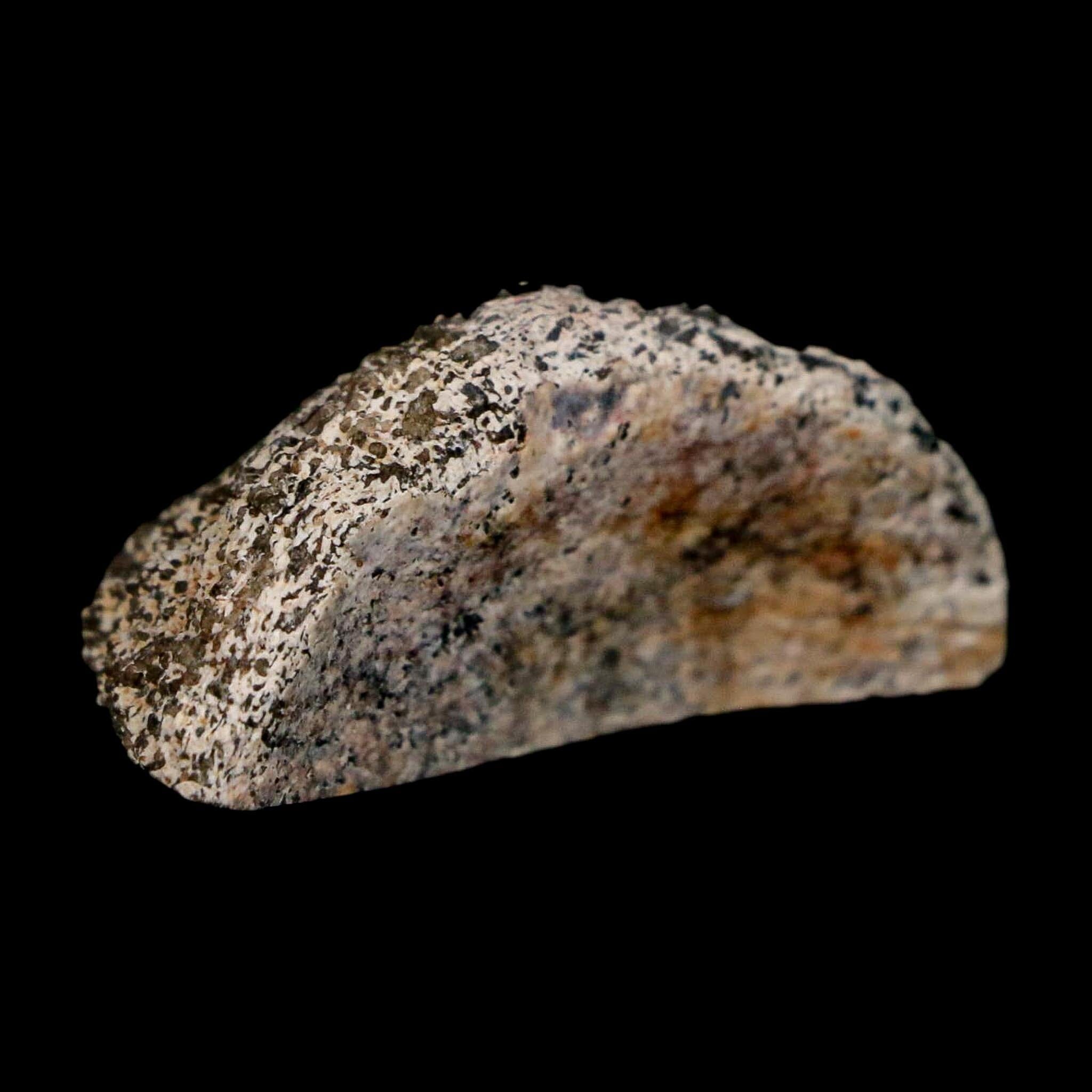


Description
Location: Redonda Formation, New Mexico (Private Land Origin)
Weight: 0.6 Ounces
Dimensions: 1.6 Inches Long, 0.8 Inches Wide, 0.7 Inches Thick
Comes with a Certificate of Authenticity.
The item pictured is the one you will receive.
Late Triassic 242 To 199 Million Years Old
Phytosaurs were dominant semi-aquatic predators that thrived during the Late Triassic period, inhabiting rivers and wetlands long before true crocodiles appeared. Although they closely resembled modern crocodilians in body shape and lifestyle, phytosaurs were not true crocodiles. Their similarity is considered a classic example of convergent evolution, where unrelated groups independently evolve comparable features to occupy similar ecological roles.
These reptiles belonged to a branch of early archosaurs known as crurotarsans, placing them evolutionarily closer to crocodiles than to dinosaurs while still outside the crocodilian lineage. A key anatomical distinction was the position of their nostrils, located near the eyes rather than at the tip of the snout, suggesting adaptations for ambush hunting in shallow water environments.
Despite the name “phytosaur,” meaning “plant reptile,” these animals were carnivorous hunters equipped with long jaws lined with sharp, conical teeth used for catching fish and small vertebrates. Some species reached enormous sizes, becoming apex predators in Triassic ecosystems. One well-known genus, Rutiodon, lived across eastern North America and could grow up to eight meters in length. Although phytosaurs went extinct by the end of the Triassic, their crocodile-like body plan reappeared later in true crocodilians, demonstrating their lasting evolutionary significance.
