
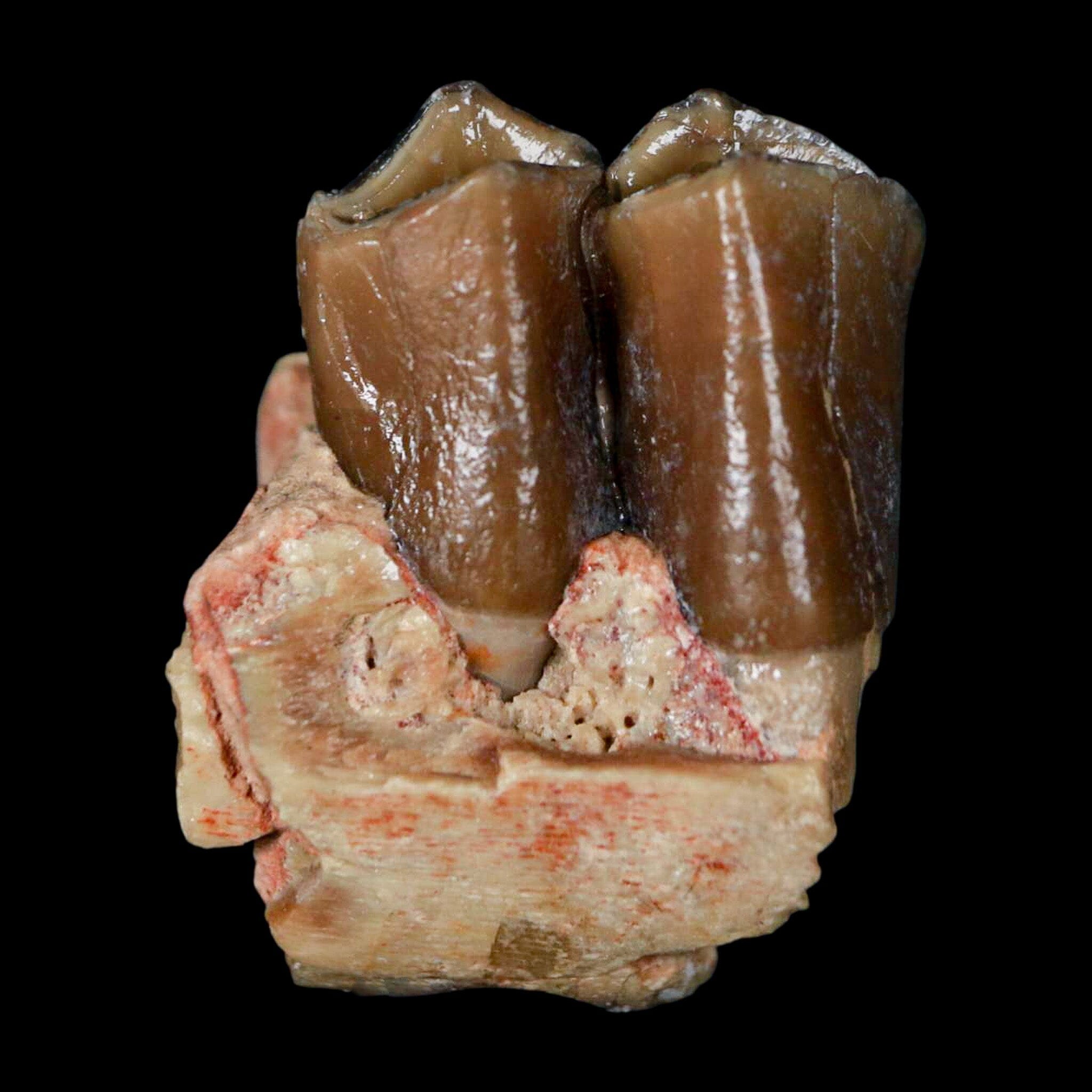
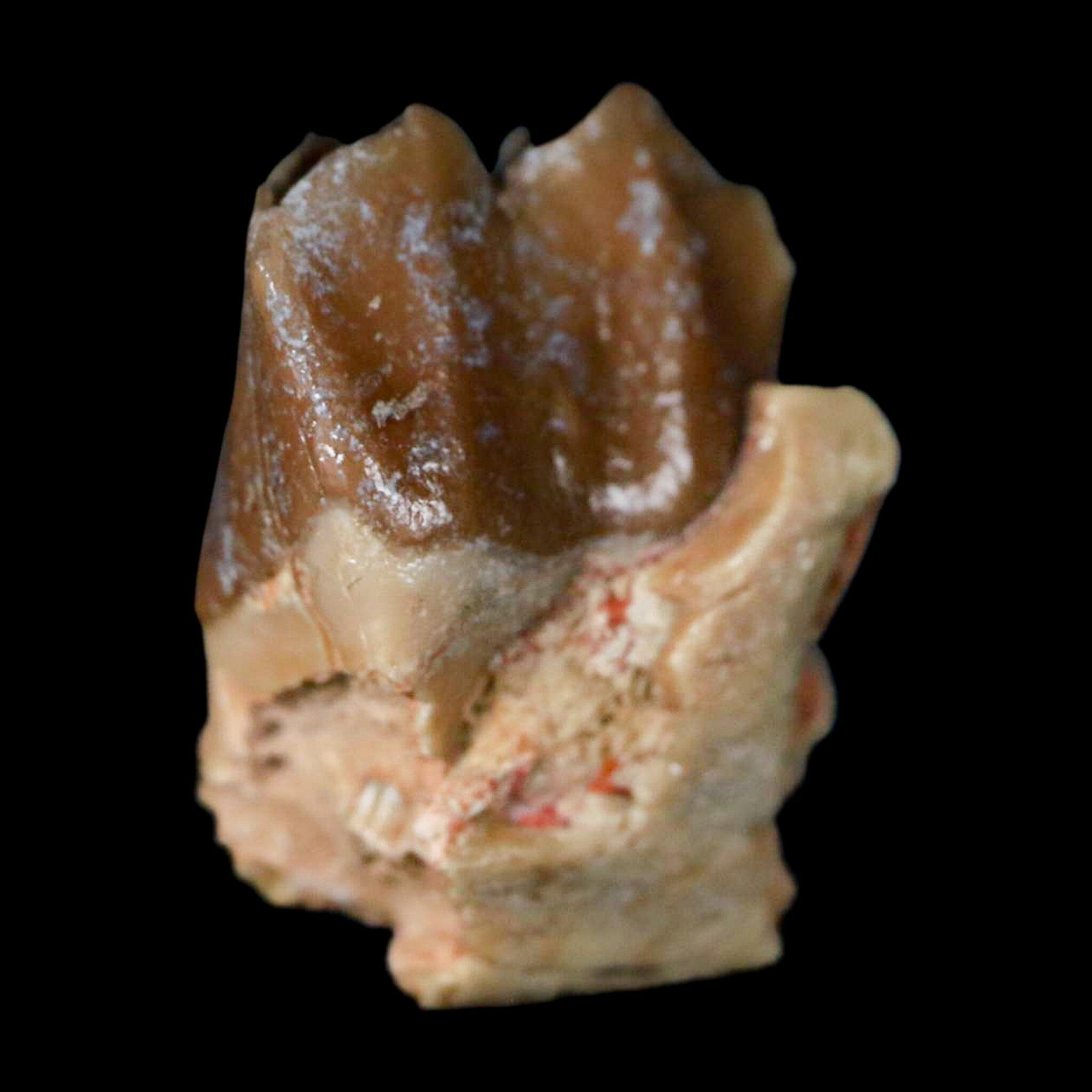
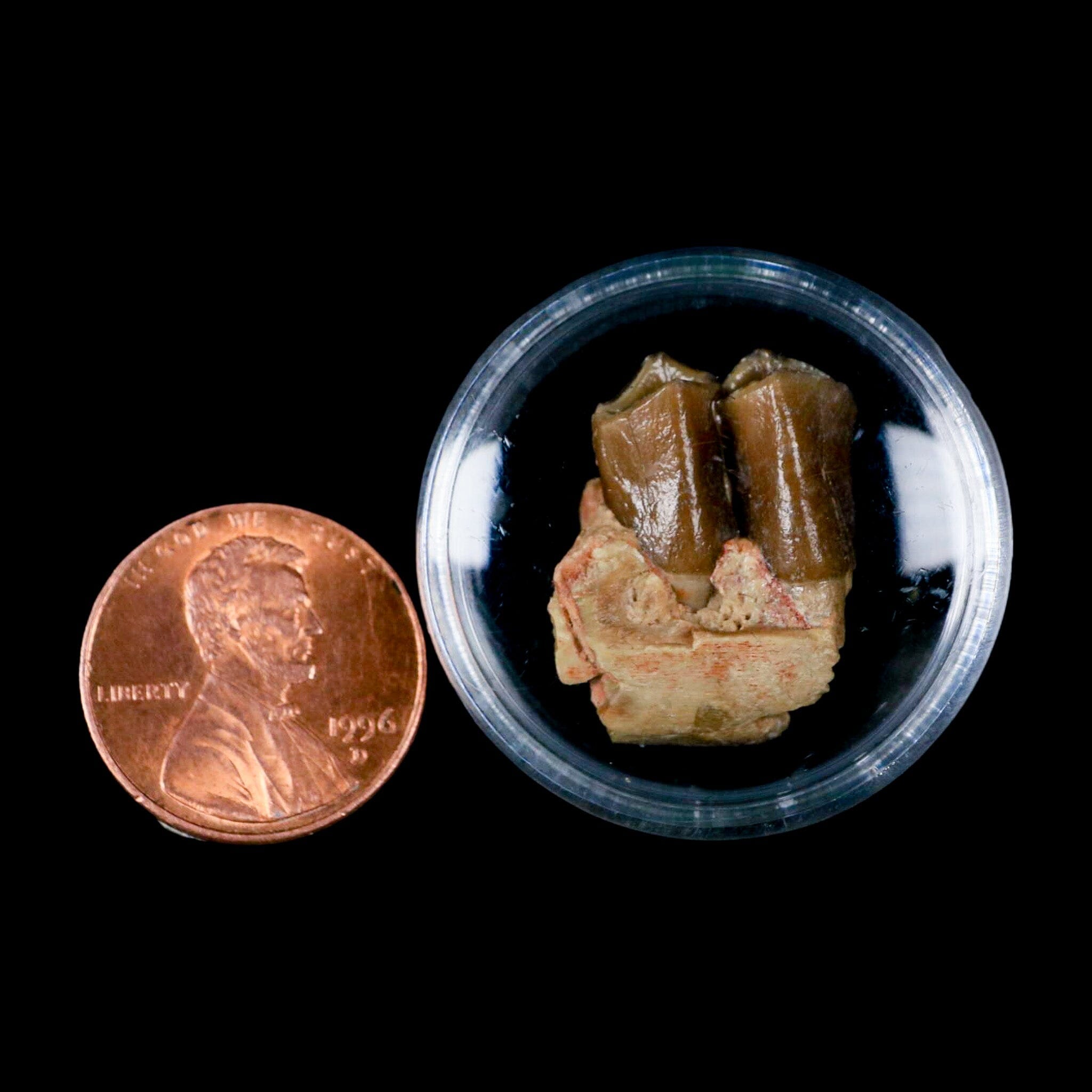
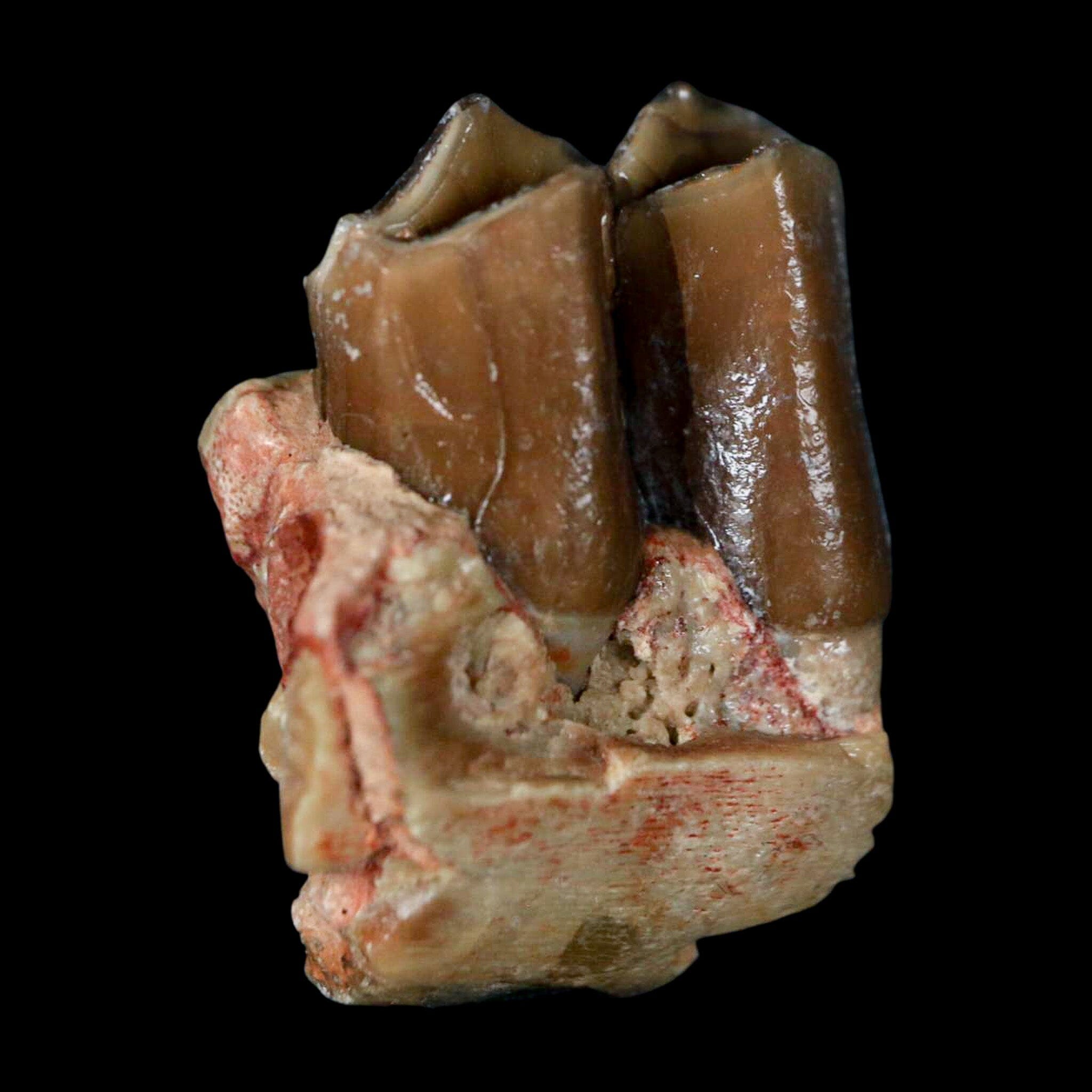
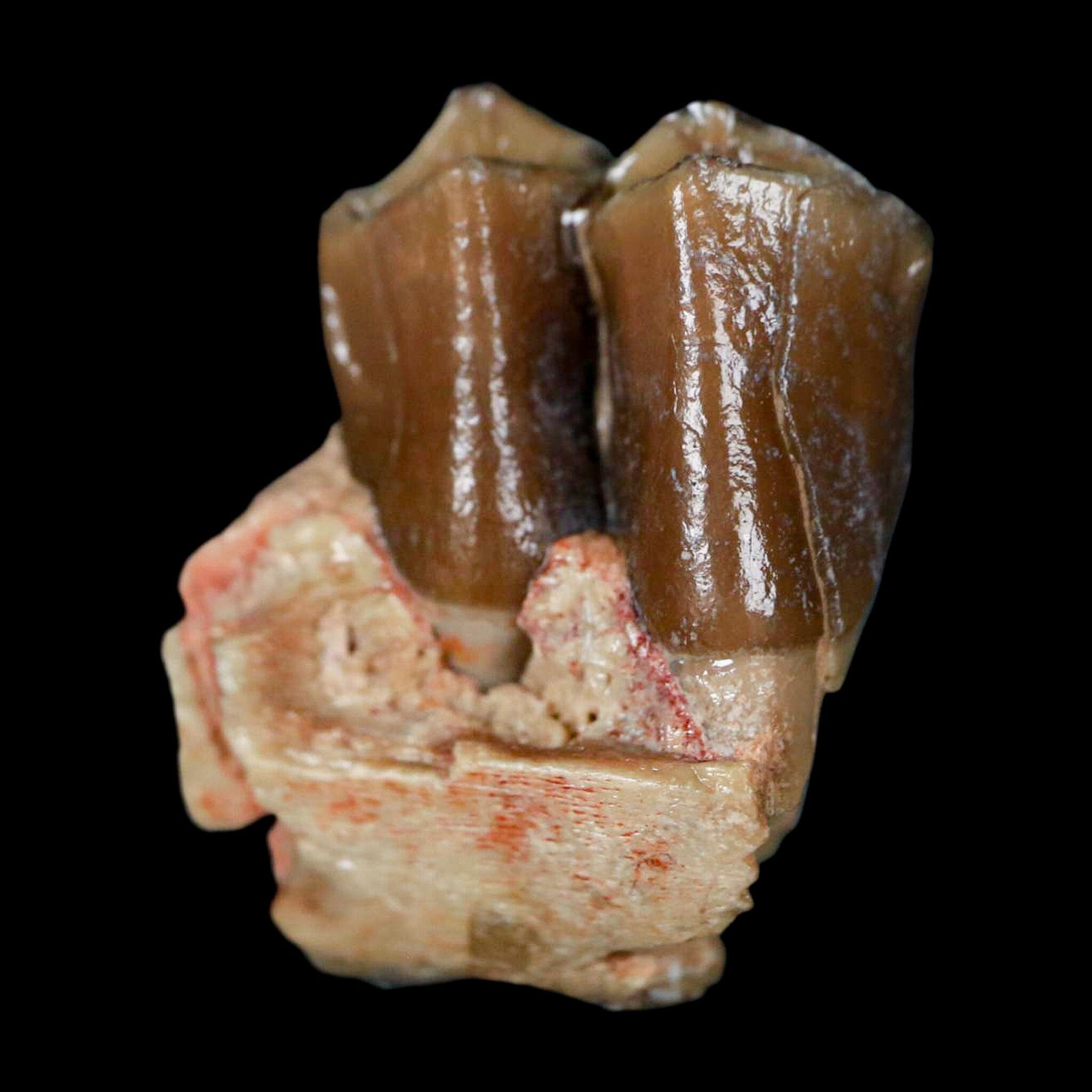
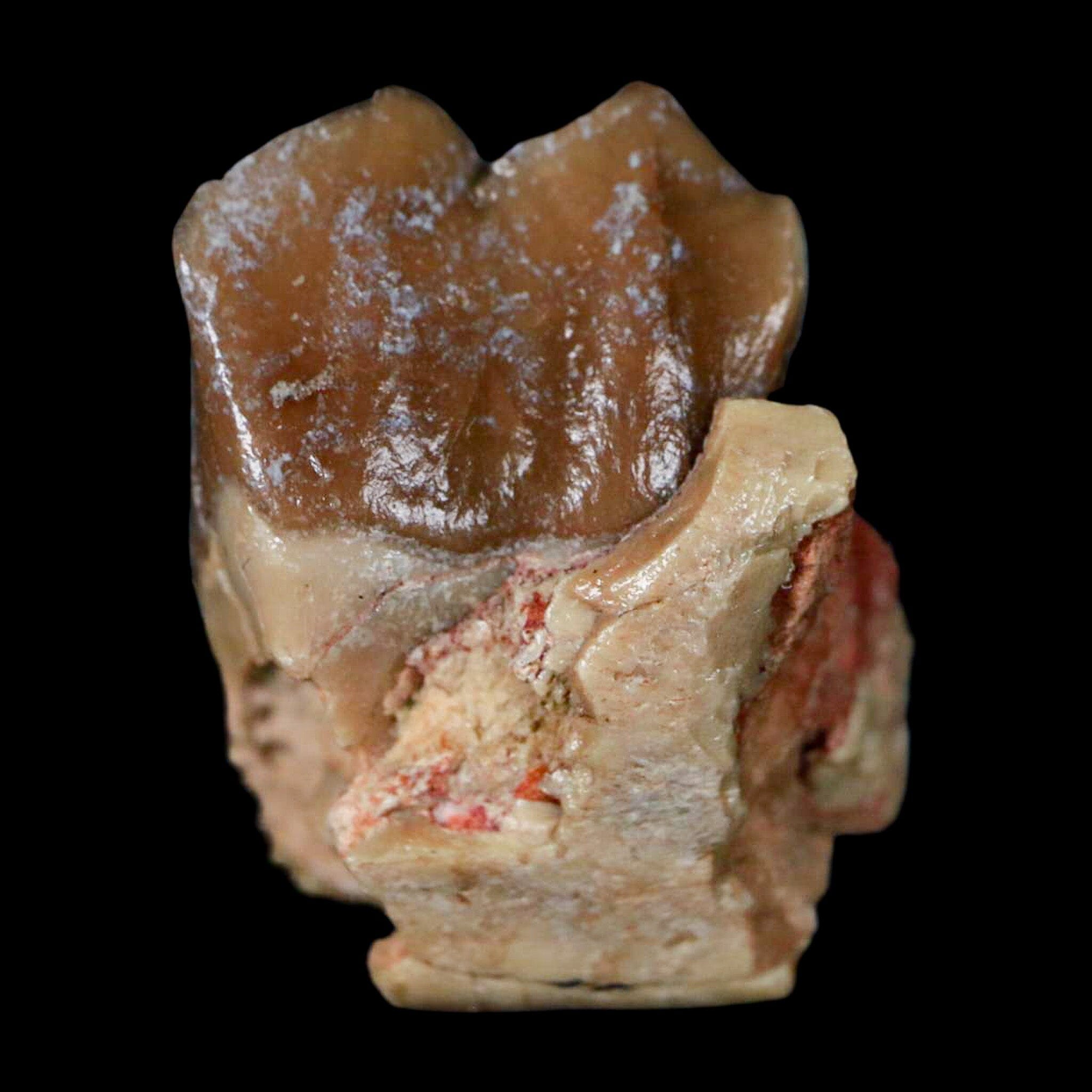
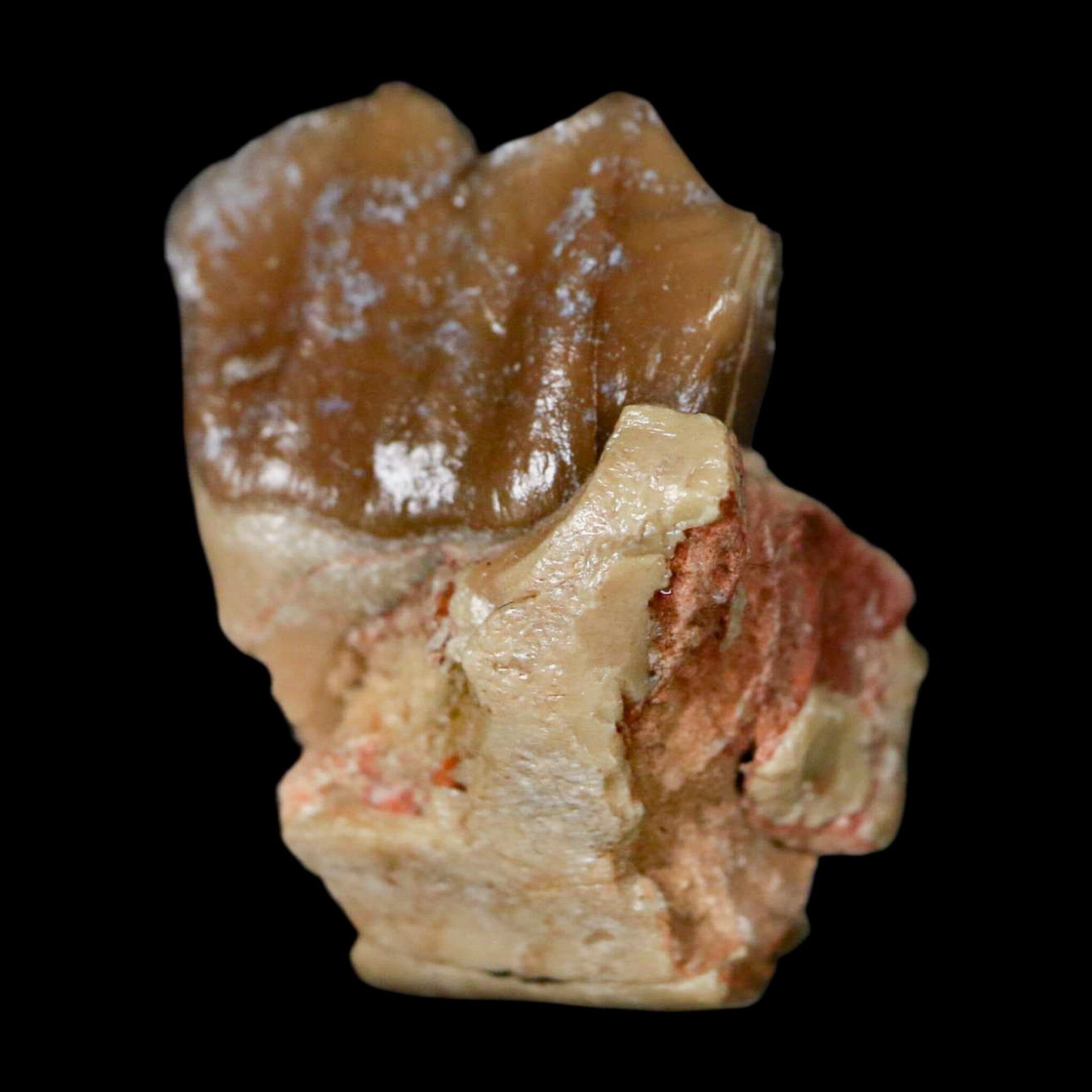
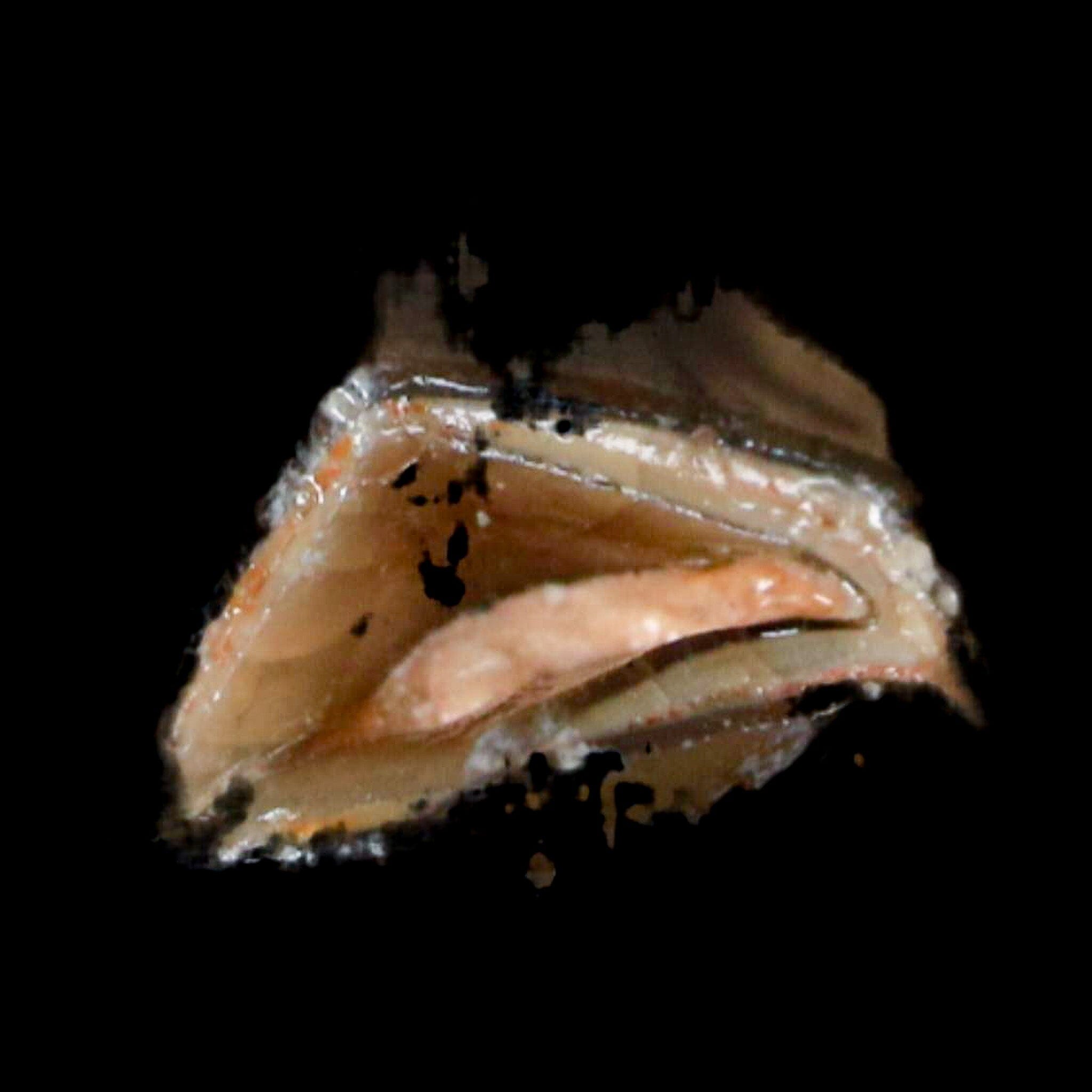


Description
Location: Brule Formation, South Dakota
Weight: 0.4 Ounces
Dimensions: 0.9 Inches Long, 0.7 Inches Wide, 0.4 Inches Thick
Comes with a Certificate of Authenticity.
Comes with a Free Display.
The item pictured is the one you will receive.
33.9 - 22 Million Years Old Oligocene Epoch
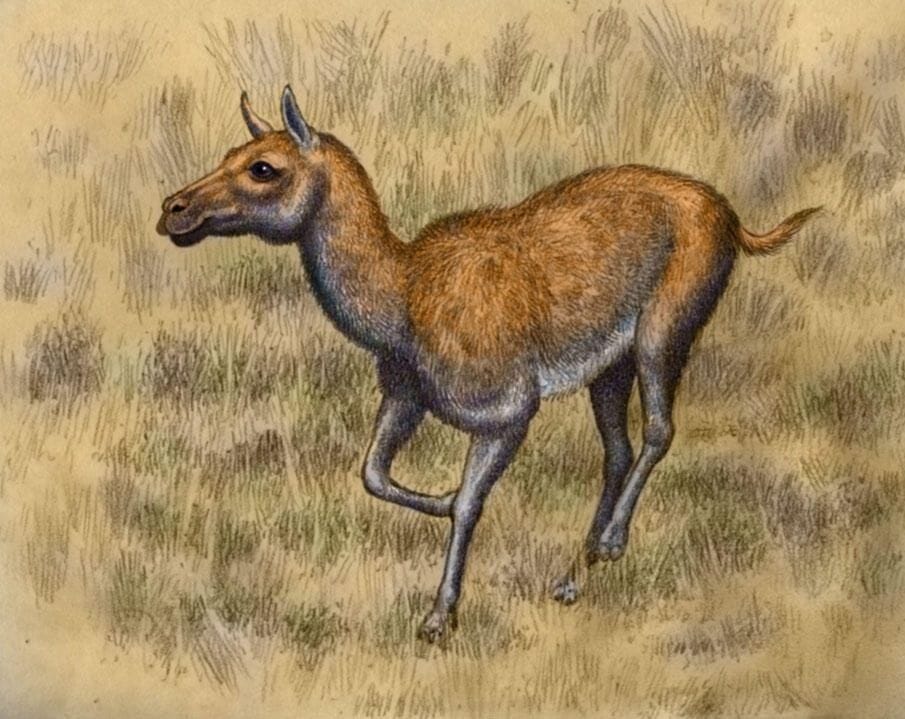
Poebrotherium is an extinct genus of camelid, endemic to North America. They lived from the Eocene to Miocene epochs, existing for approximately 32 million years.
Poebrotherium was first named by scientist Joseph Leidy in 1848, and its relationship to other White River fossils was later expanded by him in 1853. The portions that Leidy was able to examine helped him determine it was likely related to modern llamas, even though there was a paucity of new material available after his 1848 diagnosis. Between 1848 and 1853, cases of new material were shipped back to Leidy. Maddeningly, only three more Poebrotherium tooth samples were among the remains recovered.
Poebrotherium Wilsoni possessed a cranial structure comparable to modern llamas, yet its limbs terminated in hooved digits optimized for terrestrial locomotion rather than the primitive foot structure of Protylopus. Paleontological evidence reveals this genus inhabited diverse ecological niches—forests, grasslands, and fluvial systems—suggesting ecological flexibility rather than environmental specialization. The dentition of Poebrotherium exhibited generalized morphology distinct from extant camelids, indicating dietary versatility. Despite its etymological designation as "grass-eating beast," dental and wear pattern analyses suggest Poebrotherium functioned as a browser or omnivorous feeder, with graminivory likely representing a minor dietary component.
Poebrotherium Wilsoni occupied an ecological role fundamentally distinct from its modern camelid descendants, functioning as a small ungulate analogous to contemporary gazelles and cervids rather than as a desert or montane specialist. Taphonomic and zooarchaeological evidence documents this taxon as a primary prey species for the large omnivorous artiodactyl Archaeotherium. Fossilized partial skeletal remains exhibit characteristic feeding traces and bone modification patterns consistent with predation and carcass accumulation behavior, with Archaeotherium representing the sole White River fauna member capable of producing such distinctive taphonomic signatures on Poebrotherium remains.
