
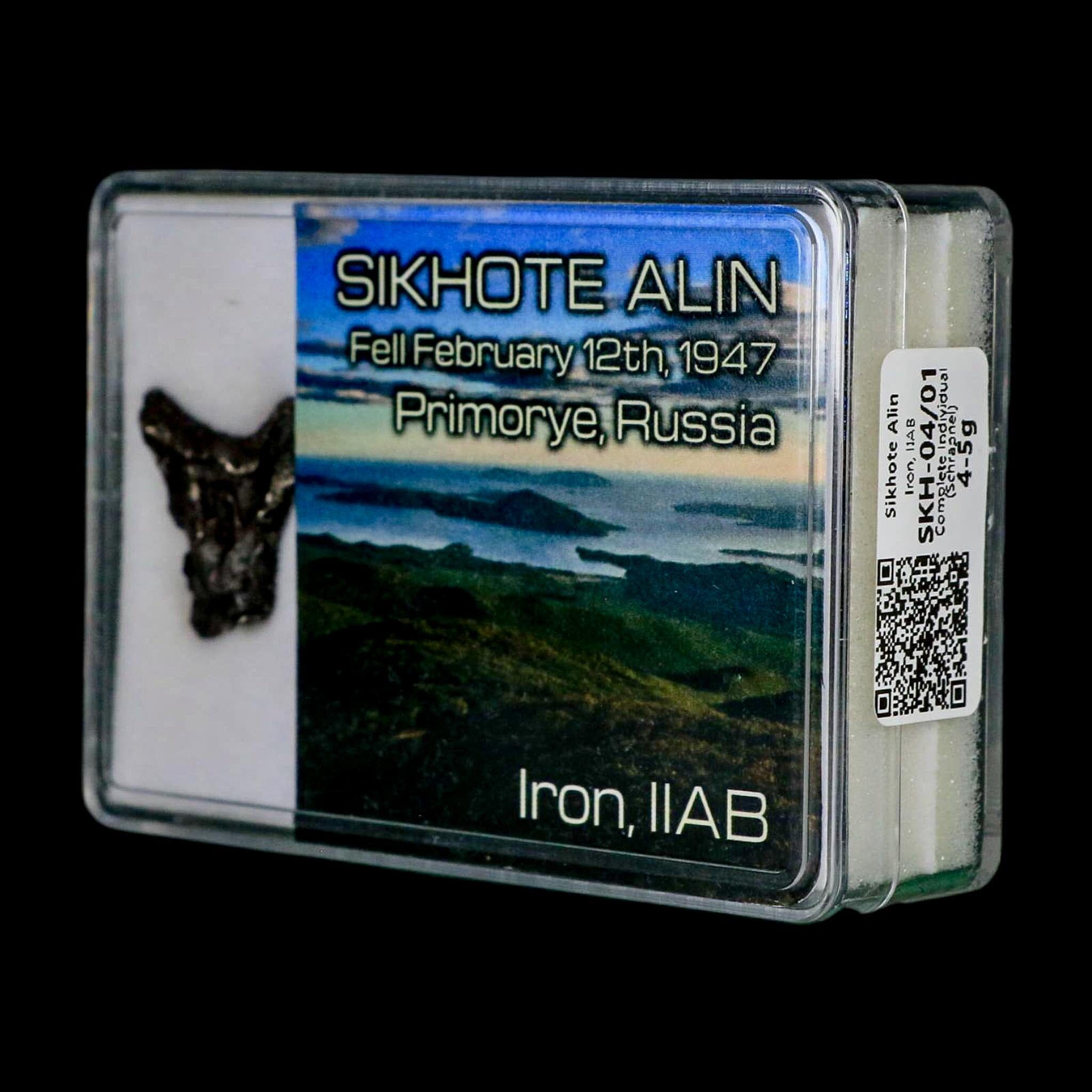


Description
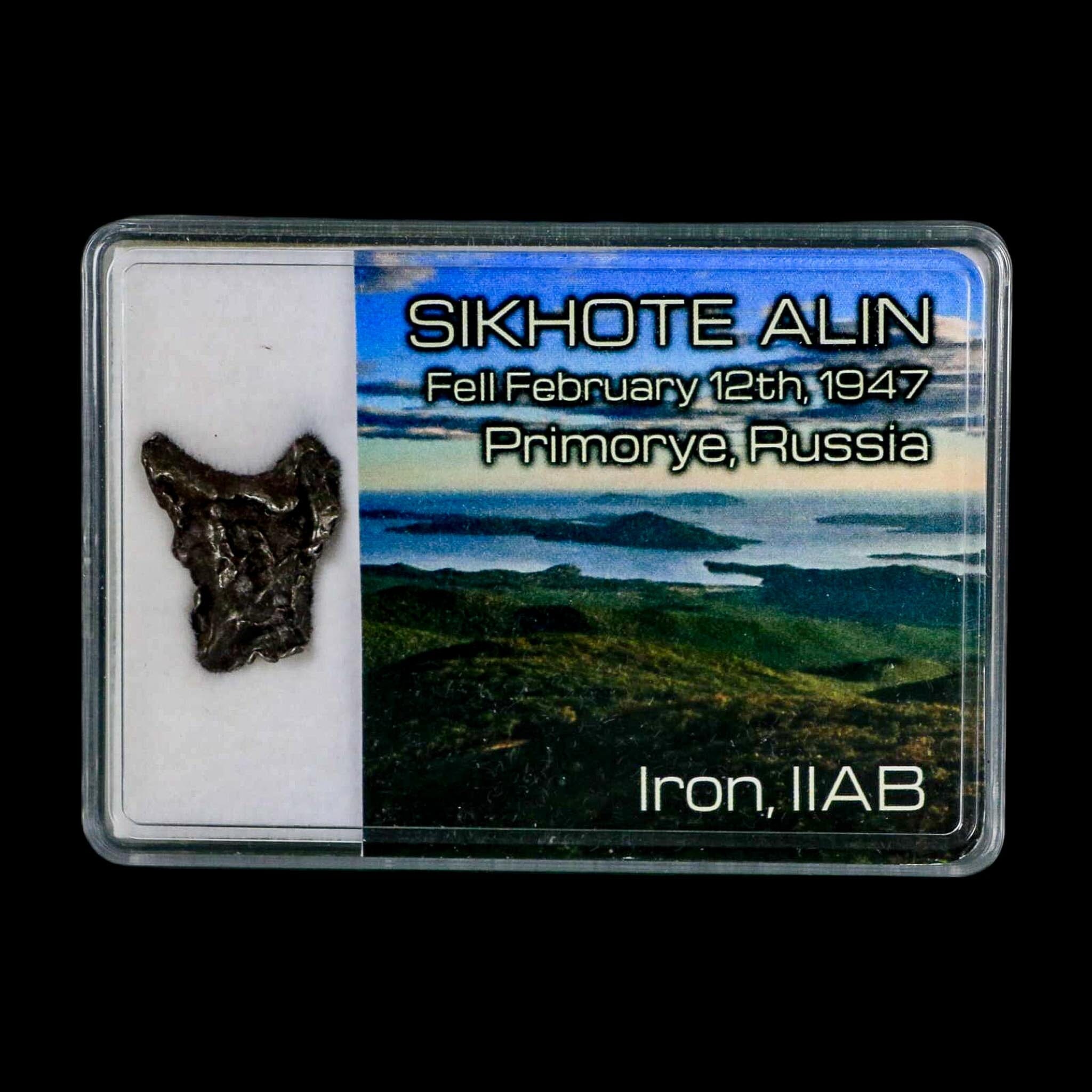
Location: Primorye Territory, Russia
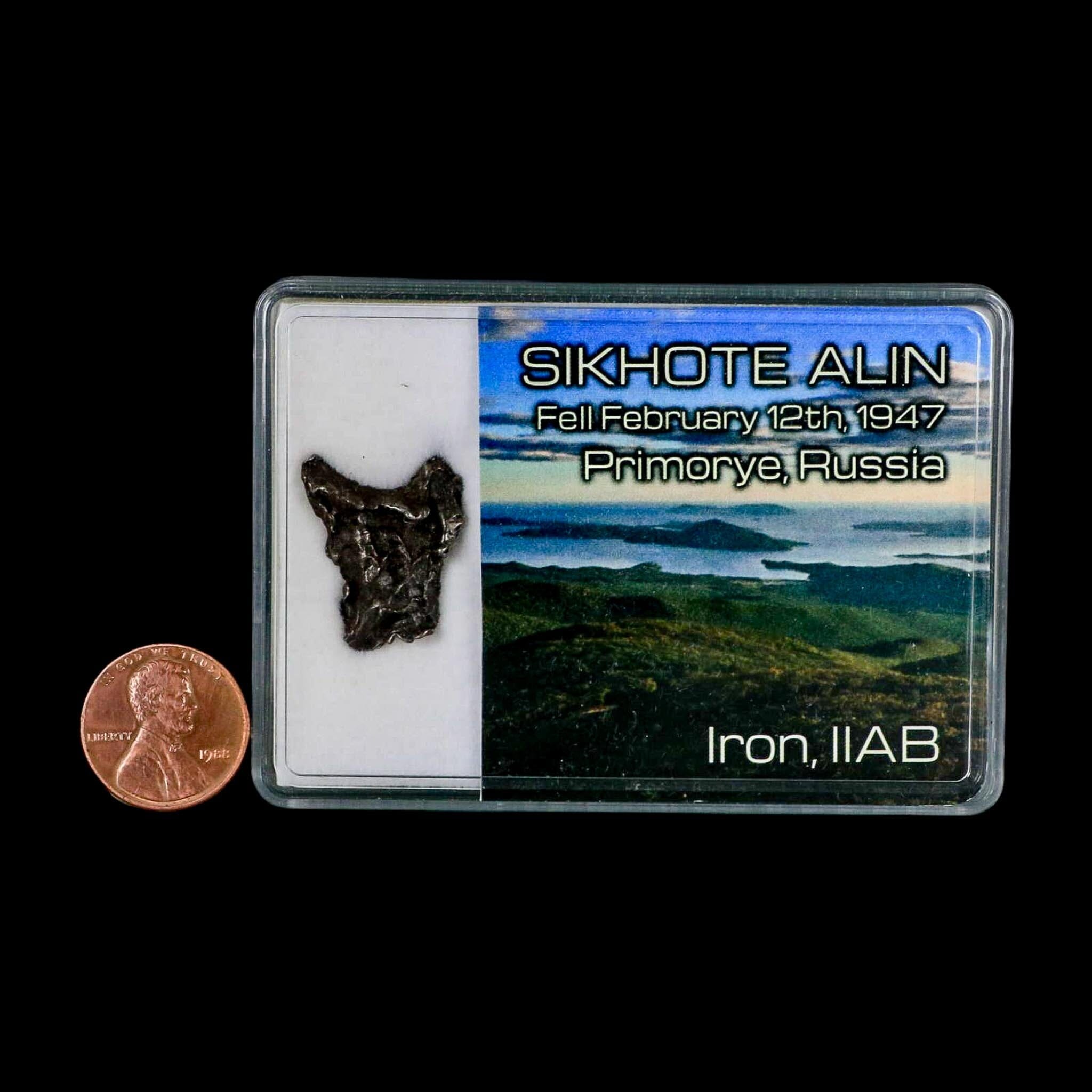
Weight: 1.3 Ounces (Display)
Meteorite Weight: 4.32 Grams
Dimensions: 3.3 Inches Long, 2.3 Inches Wide, 1 Inch Thick (Display)
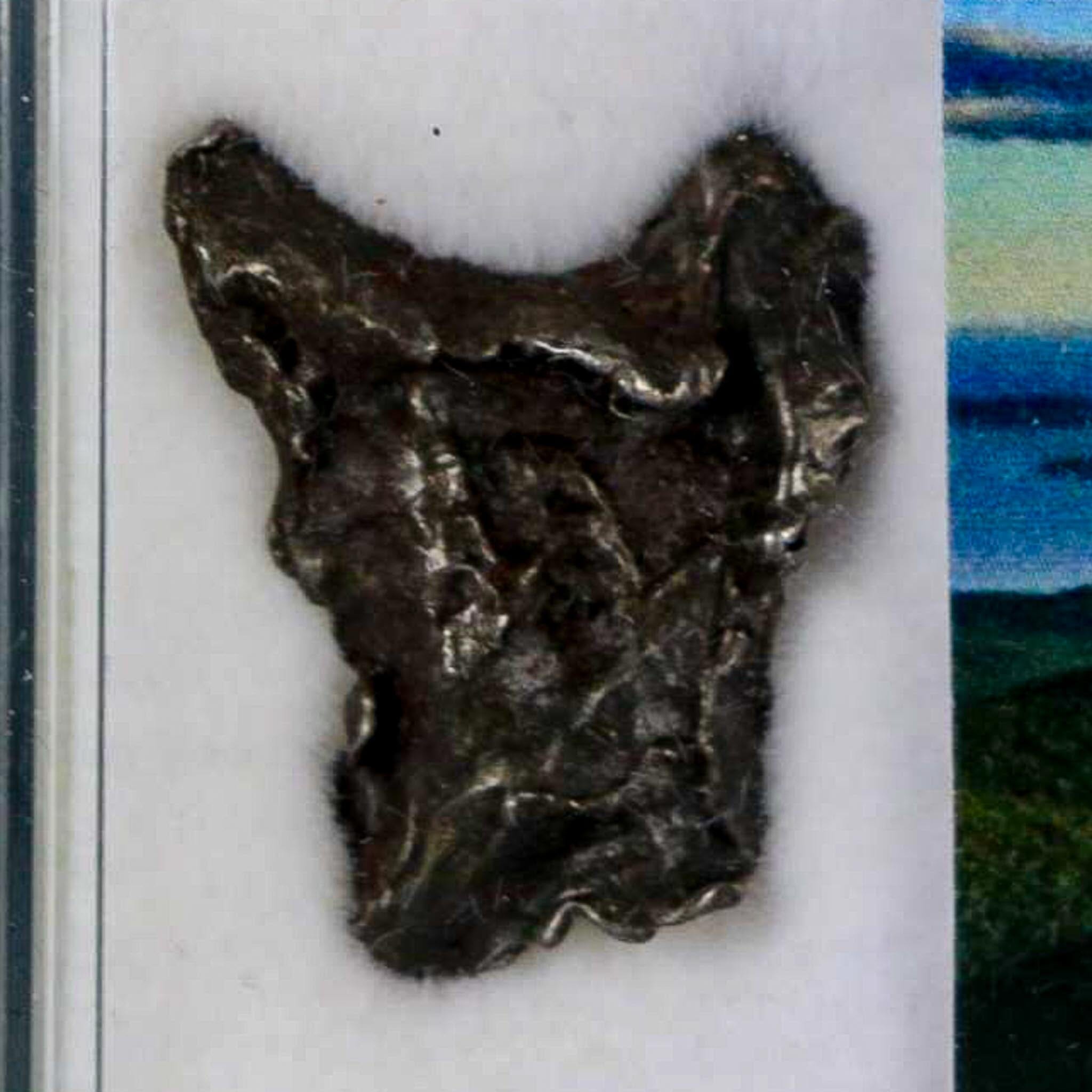
Meteorite Dimensions: 0.8 Inches Long, 0.7 Inches Wide, 0.2 Inches Thick
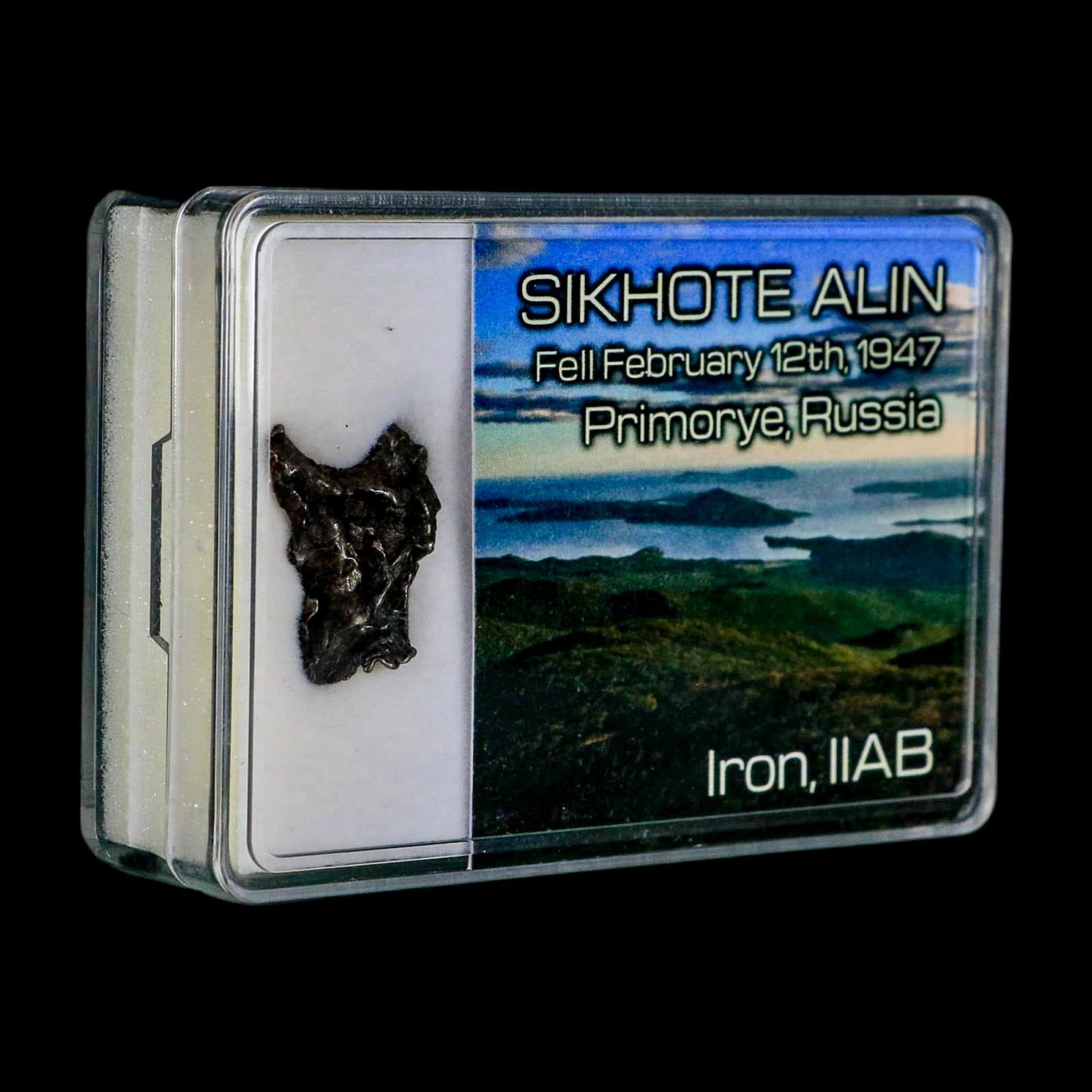
Comes with a Display Case.
The item pictured is the one you will receive.
The Sikhote-Alin meteorite fall is recognized as the largest observed iron meteorite shower in recorded history. On February 12, 1947, at around 10:38 a.m. local time, a massive bolide was seen over the Sikhote-Alin Mountains in southeastern Russia's Primorye Territory. Witnesses described a fireball brighter than the sun coming from the north at an angle. The object entered Earth's atmosphere at about 14 km/s (approximately 31,000 mph), breaking apart under intense atmospheric pressure. The explosions and final impact created a smoke trail nearly 32 kilometers long that lingered for hours, with sounds heard up to 300 kilometers away. The Sikhote-Alin meteoroid is classified as a Group IIAB iron meteorite with a coarse octahedrite structure. Chemical analysis shows it is roughly 93% iron, 5.9% nickel, 0.42% cobalt, 0.46% phosphorus, and 0.28% sulfur, with notable traces of germanium and iridium. Its minerals include kamacite, taenite, plessite, troilite, and schreibersite. Estimated pre-atmospheric mass ranges from 70 to 100 tonnes, though only about 23 tonnes arrived as fragments. The meteorite fragmented catastrophically at about 5.6 km (3.5 miles) altitude, scattering fragments over an elliptical strewn field of roughly 1.3 square kilometers. This impact created over 100 craters and pits, with the largest being 26 meters across and 6 meters deep. Many fragments were driven with such force they embedded in the trunks of nearby cedar and pine trees.