
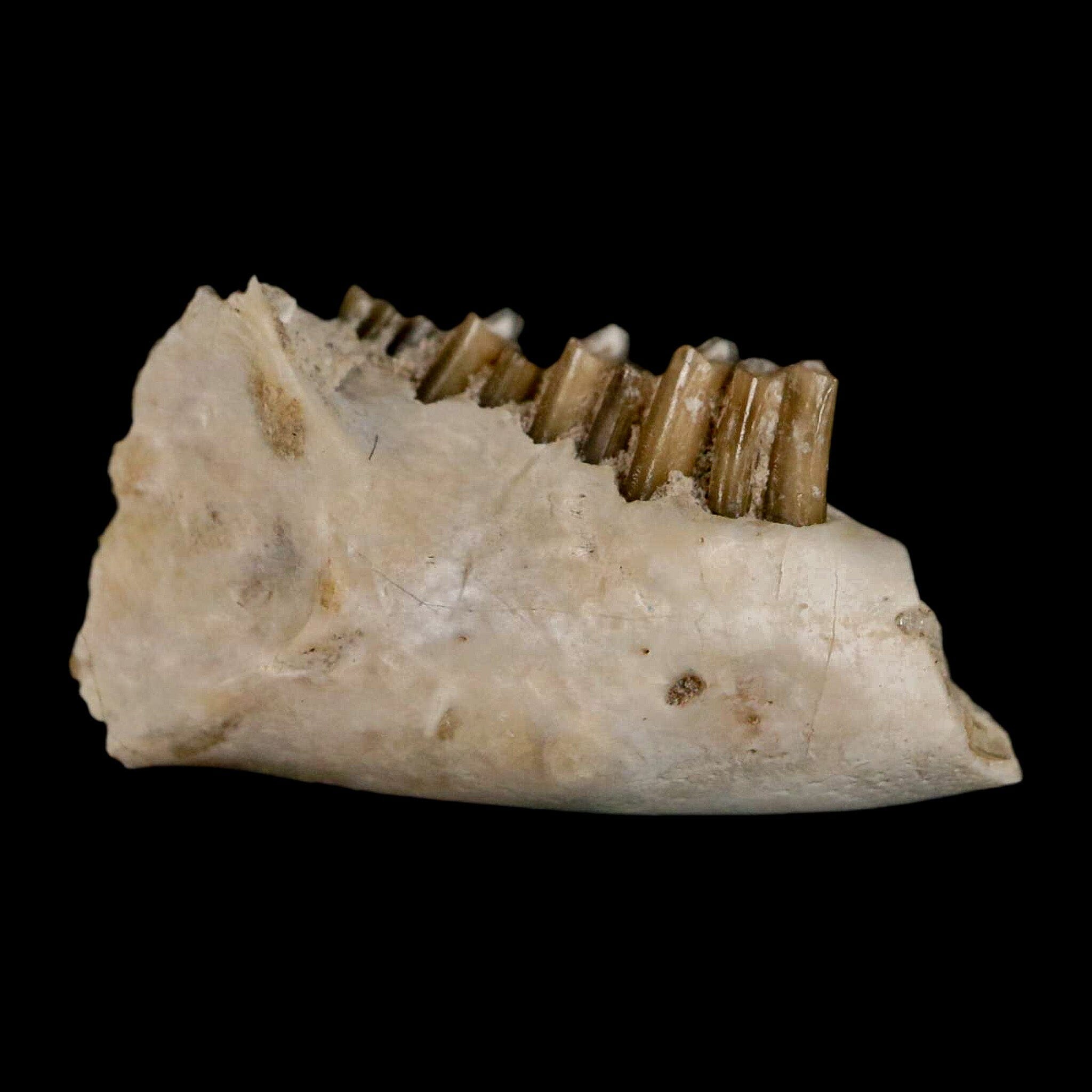
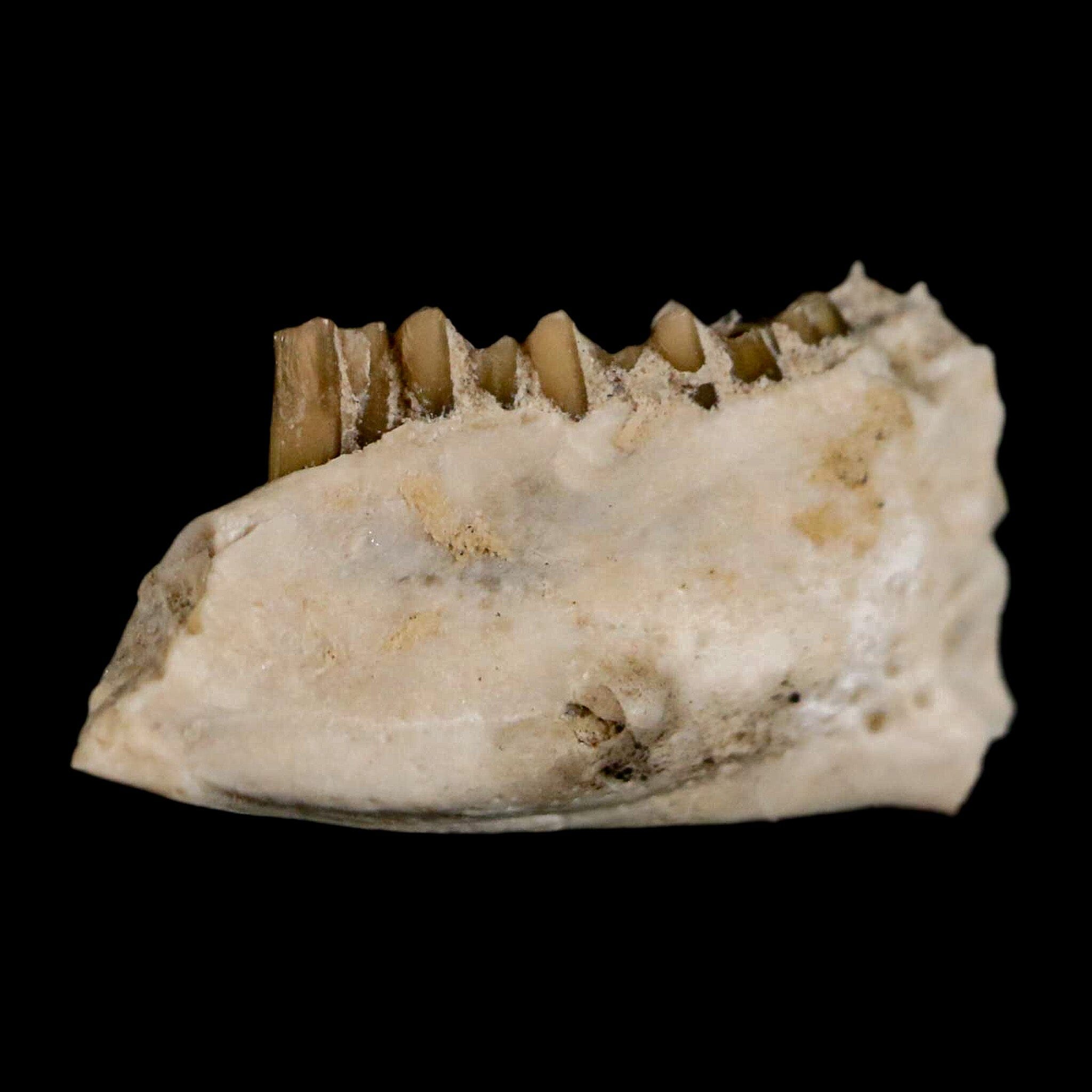
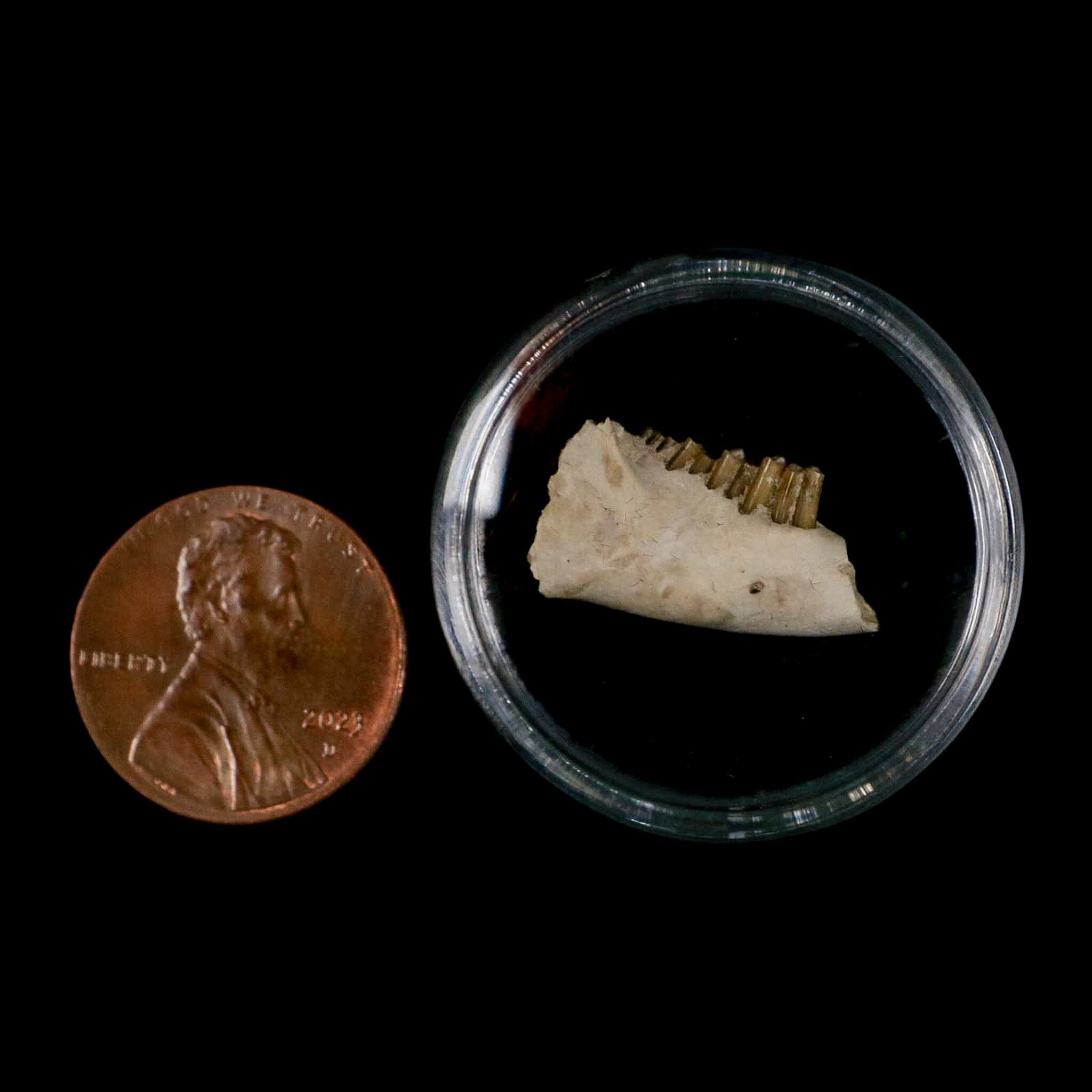
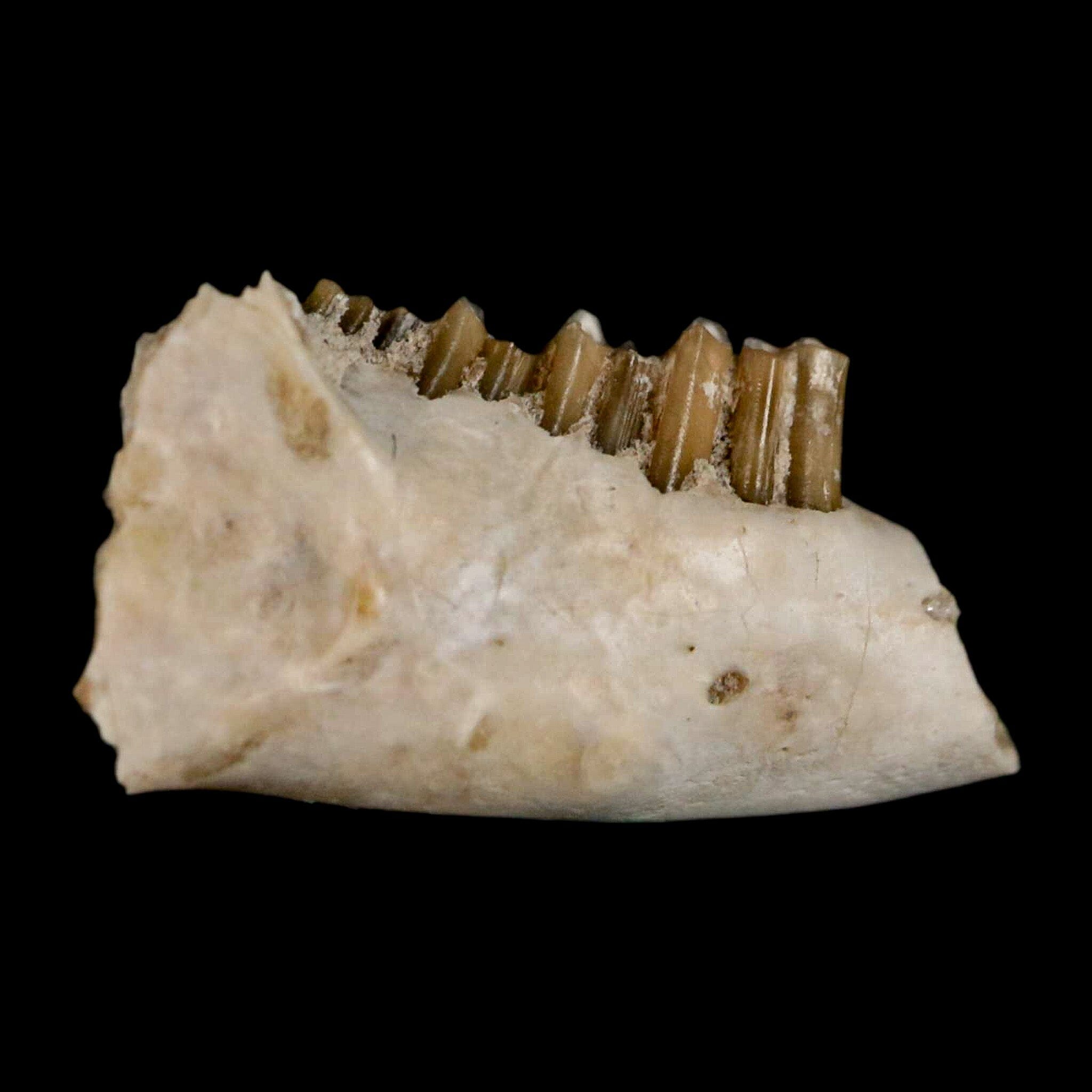
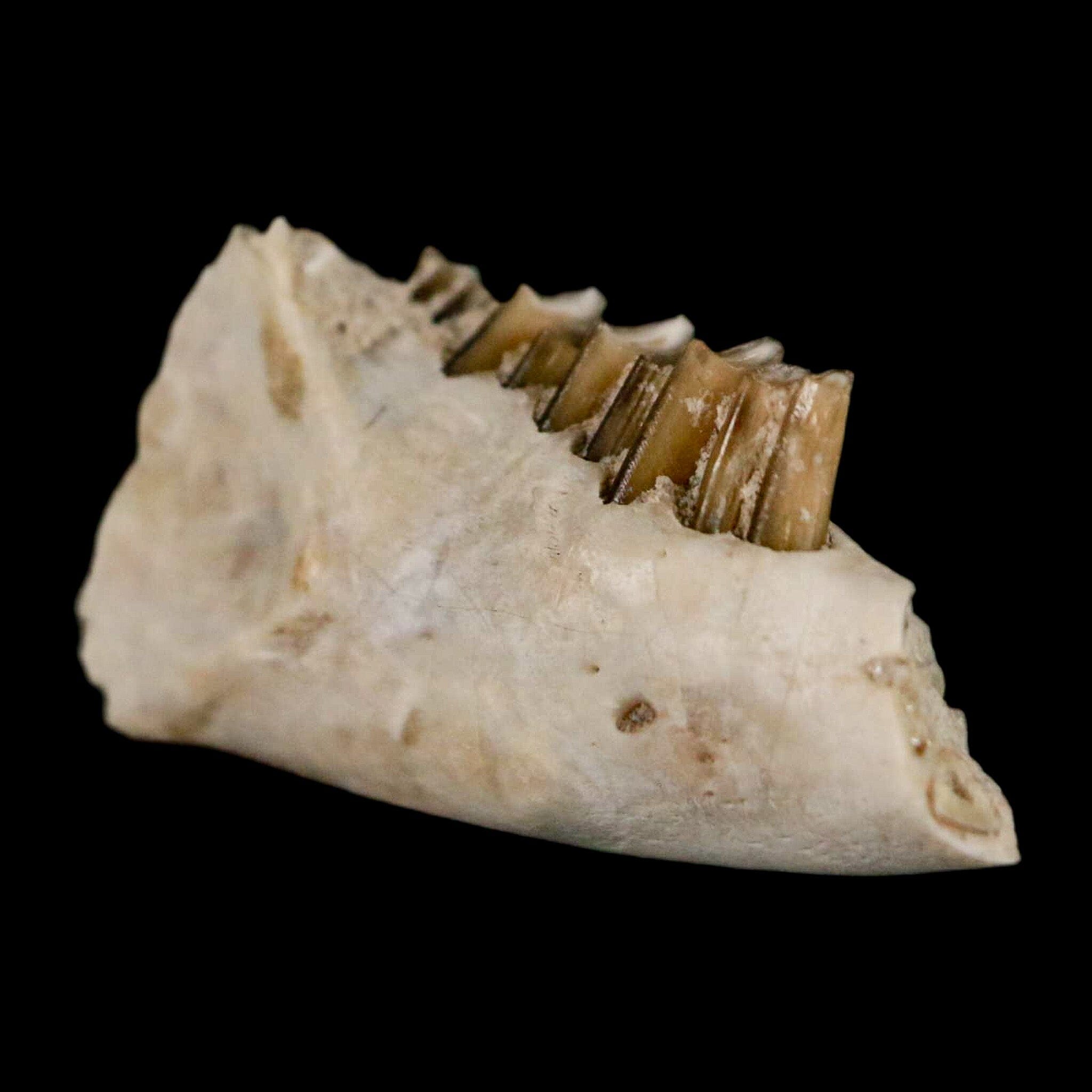
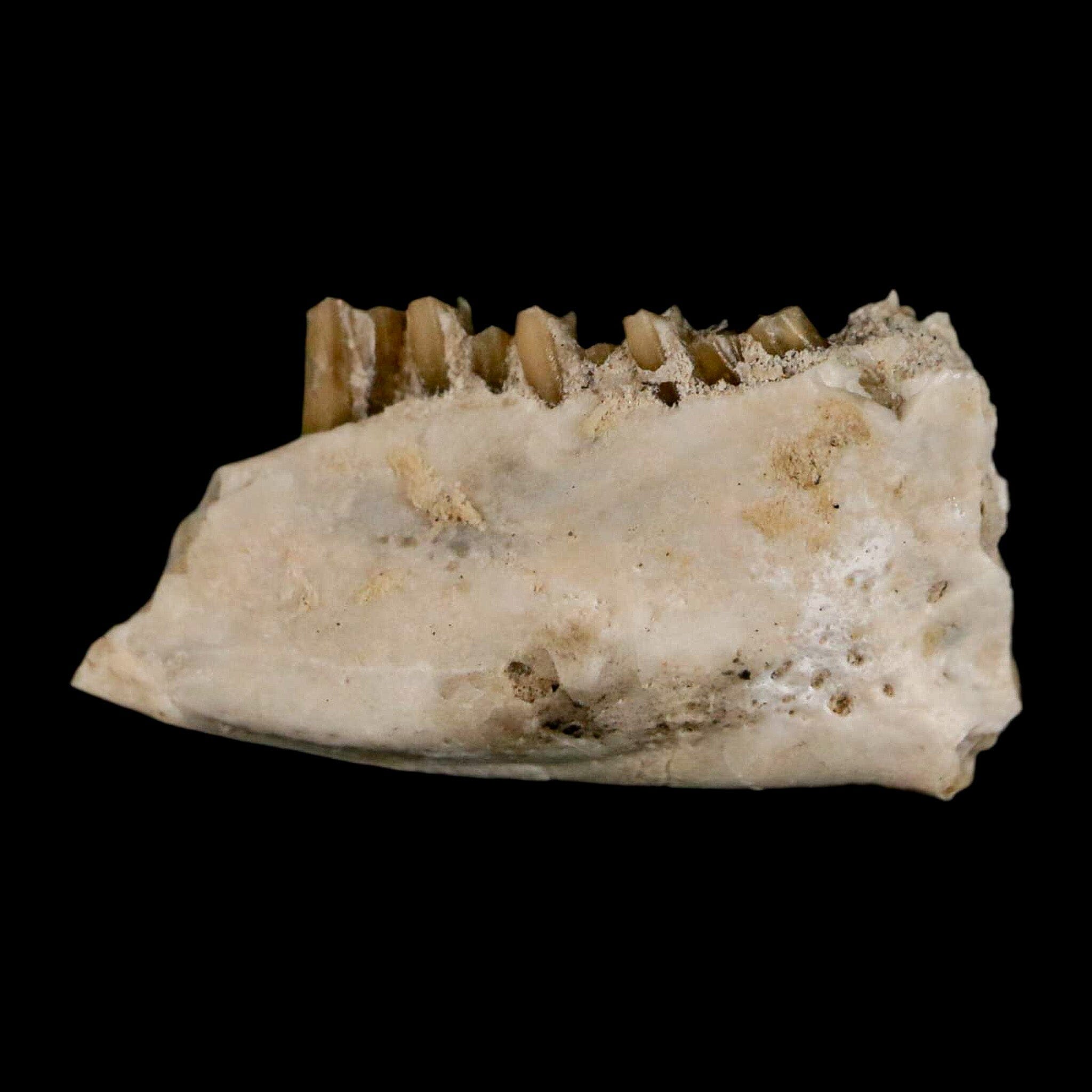
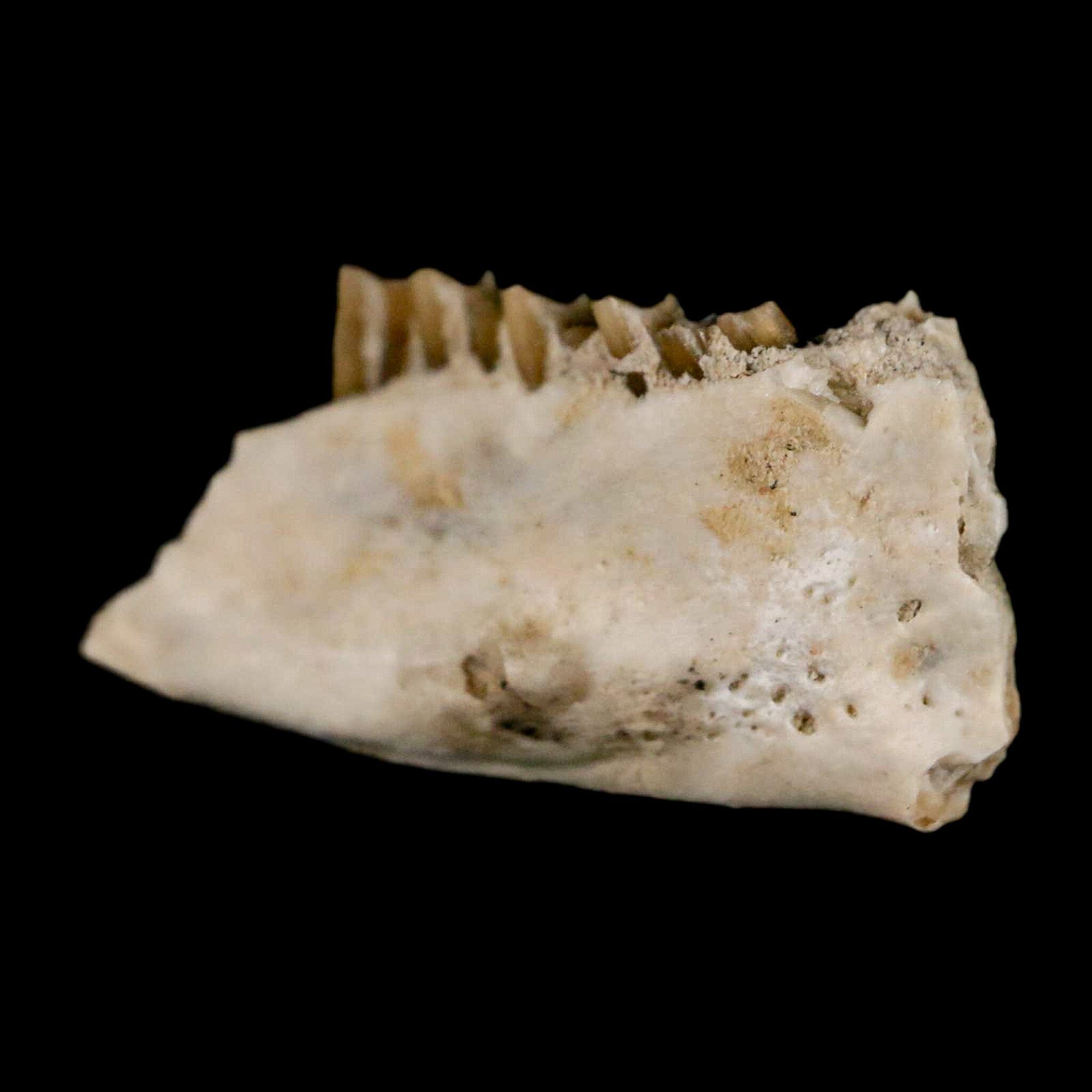


Description
Location: Brule Formation, Pennington County, South Dakota
Weight: 0.2 Ounces
Dimensions: 0.8 Inches Long, 0.4 Inches Wide, 0.2 Inches Thick
Comes with a free display.
The item pictured is the one you will receive.
Oligocene epoch, 33.9 to 23 million years ago
Palaeolagus hayeni is an extinct species of lagomorph, commonly described as an ancient rabbit, that lived in North America during the Oligocene epoch, approximately 33 to 23 million years ago. This species is part of the genus Palaeolagus, one of the earliest and most primitive groups of lagomorphs. Its anatomy and morphology provide important insights into the evolutionary transition from ancestral mammals to the modern rabbits and hares we know today.
Fossil evidence of Palaeolagus hayeni primarily includes cranial and dental remains, which reveal key characteristics such as continuously growing incisors and cheek teeth adapted for grinding fibrous plant material. These features indicate a herbivorous diet, likely consisting of leaves, fruits, and other soft vegetation found in its environment. Unlike modern rabbits, Palaeolagus hayeni had limbs suited for a more generalized cursorial or scampering movement rather than specialized hopping, suggesting it was capable of navigating diverse terrains, from open forests to mixed forest-savanna landscapes.
Small and slender, weighing only a few kilograms, Palaeolagus hayeni occupied an ecological niche as a nimble browser of low-growing vegetation. Its relatively simple digestive system, compared to modern lagomorphs, suggests it relied on easily digestible plant matter. Studying this species provides valuable insights into how early lagomorphs adapted to changing ecosystems during the Oligocene, helping scientists trace the lineage and evolutionary development of modern rabbits and hares.
Fossil evidence of Palaeolagus hayeni primarily consists of cranial and dental remains, which are crucial for its identification and classification. The dentition of Palaeolagus hayeni shows features typical of lagomorphs, such as continuously growing incisors and cheek teeth adapted for grinding fibrous plant material. However, its limb structure suggests a less specialized hopping locomotion compared to modern rabbits, indicating a more generalized cursorial or scampering gait. The study of Palaeolagus hayeni provides significant insights into the early evolutionary history and diversification of lagomorphs, helping to trace the lineage of modern rabbits and hares.