

Description
Location: Brule Formation, Pennington County, South Dakota
Weight: 0.2 Ounces
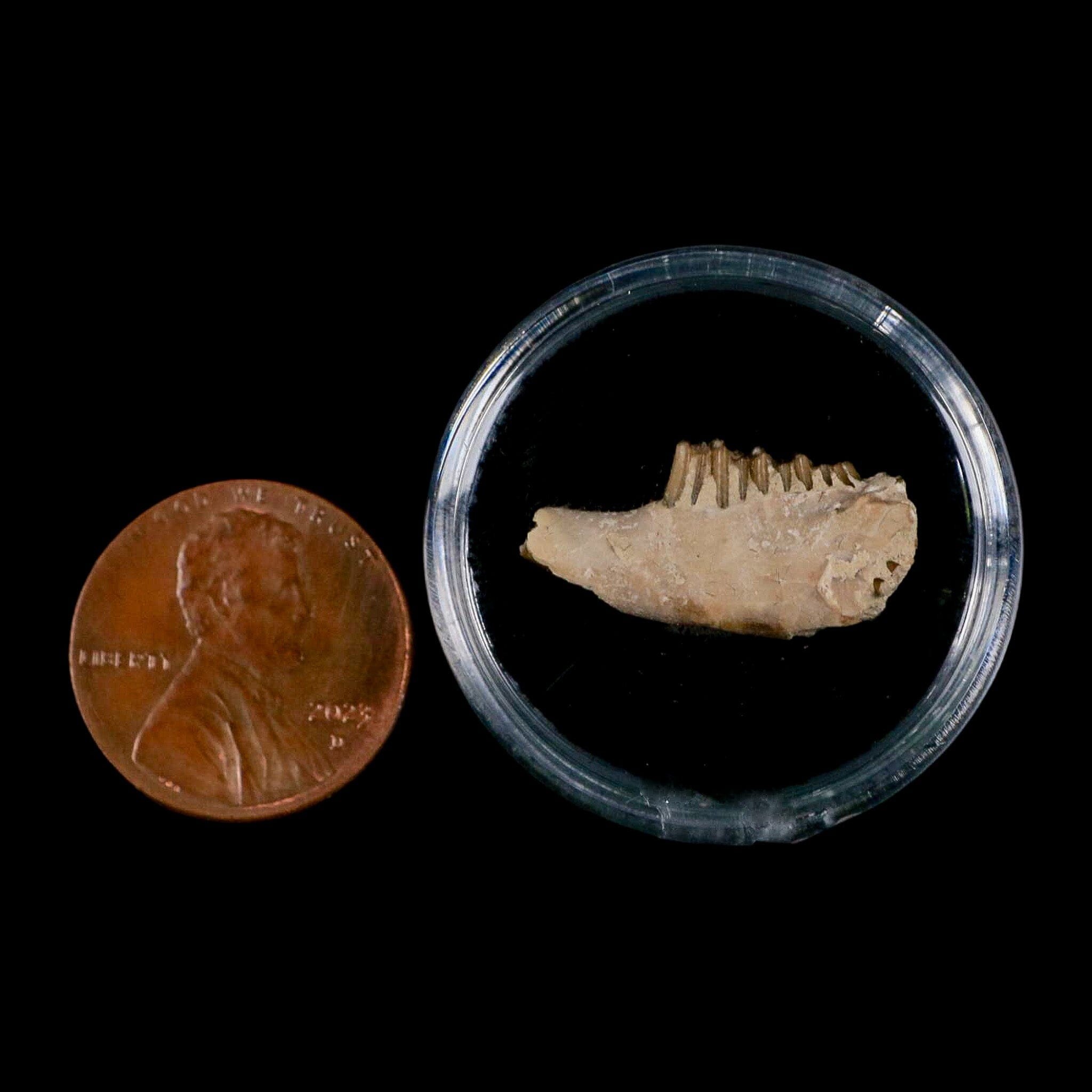
Dimensions: 0.8 Inches Long, 0.4 Inches Wide, 0.2 Inches Thick
Comes with a free display.
The item pictured is the one you will receive.
Oligocene epoch, 33.9 to 23 million years ago
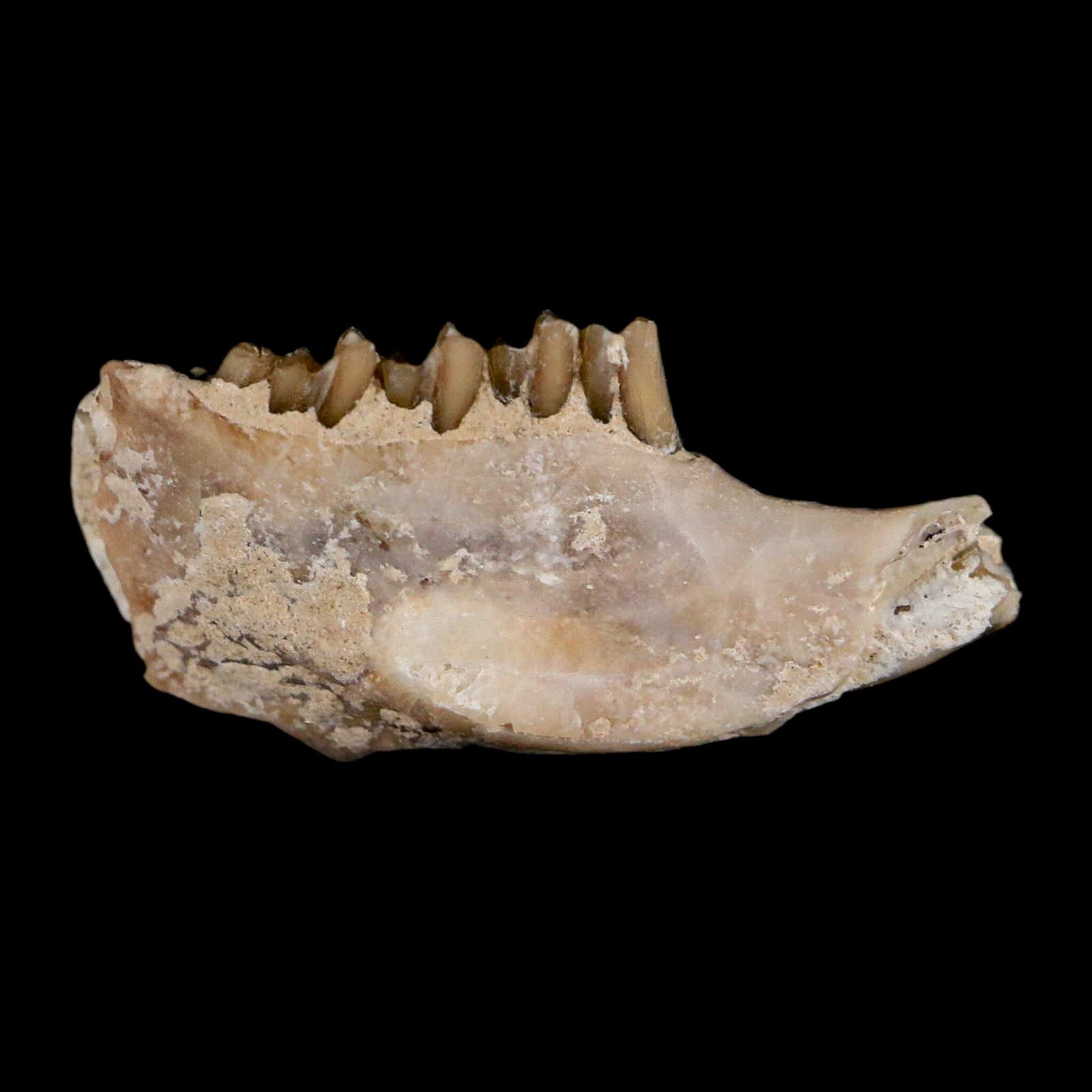
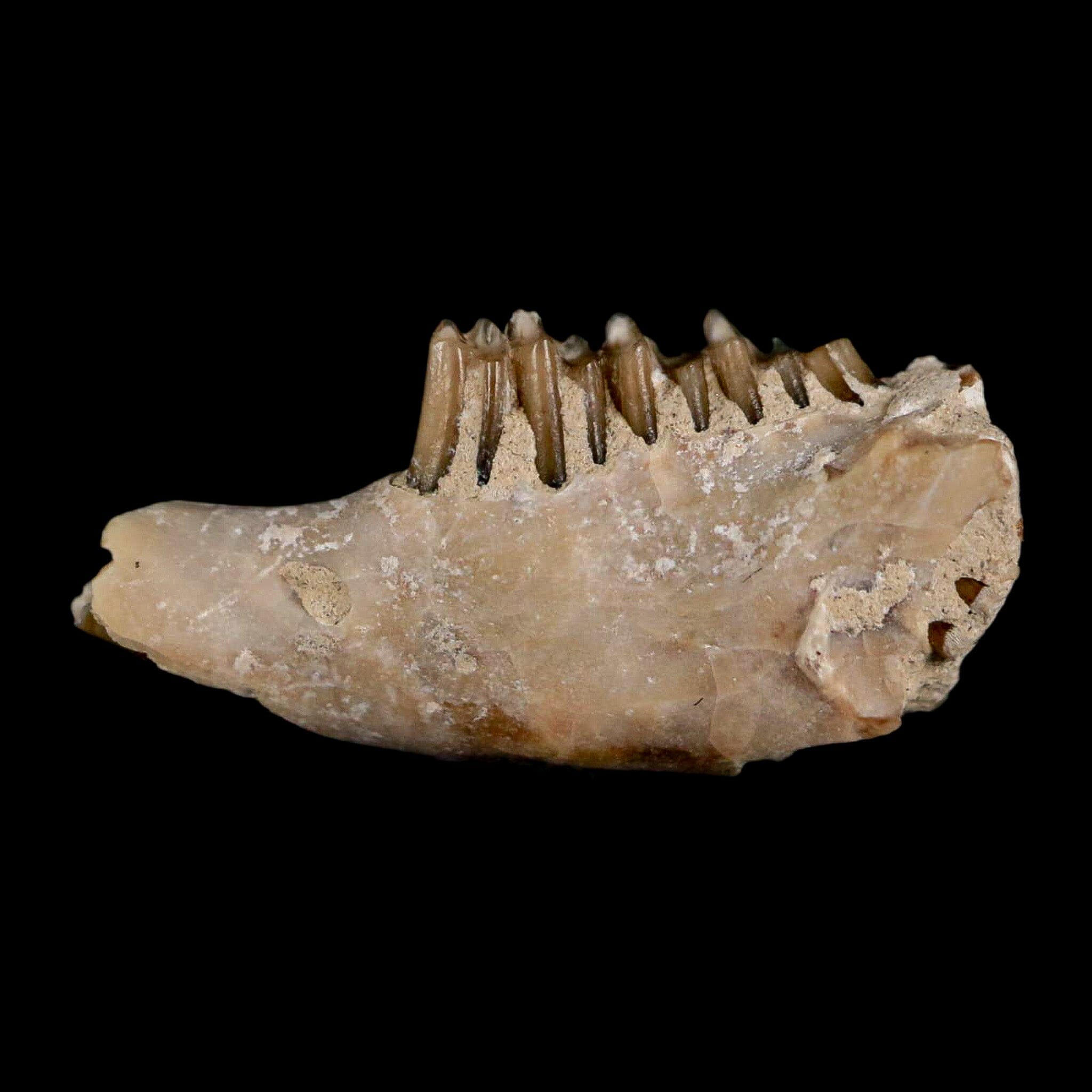
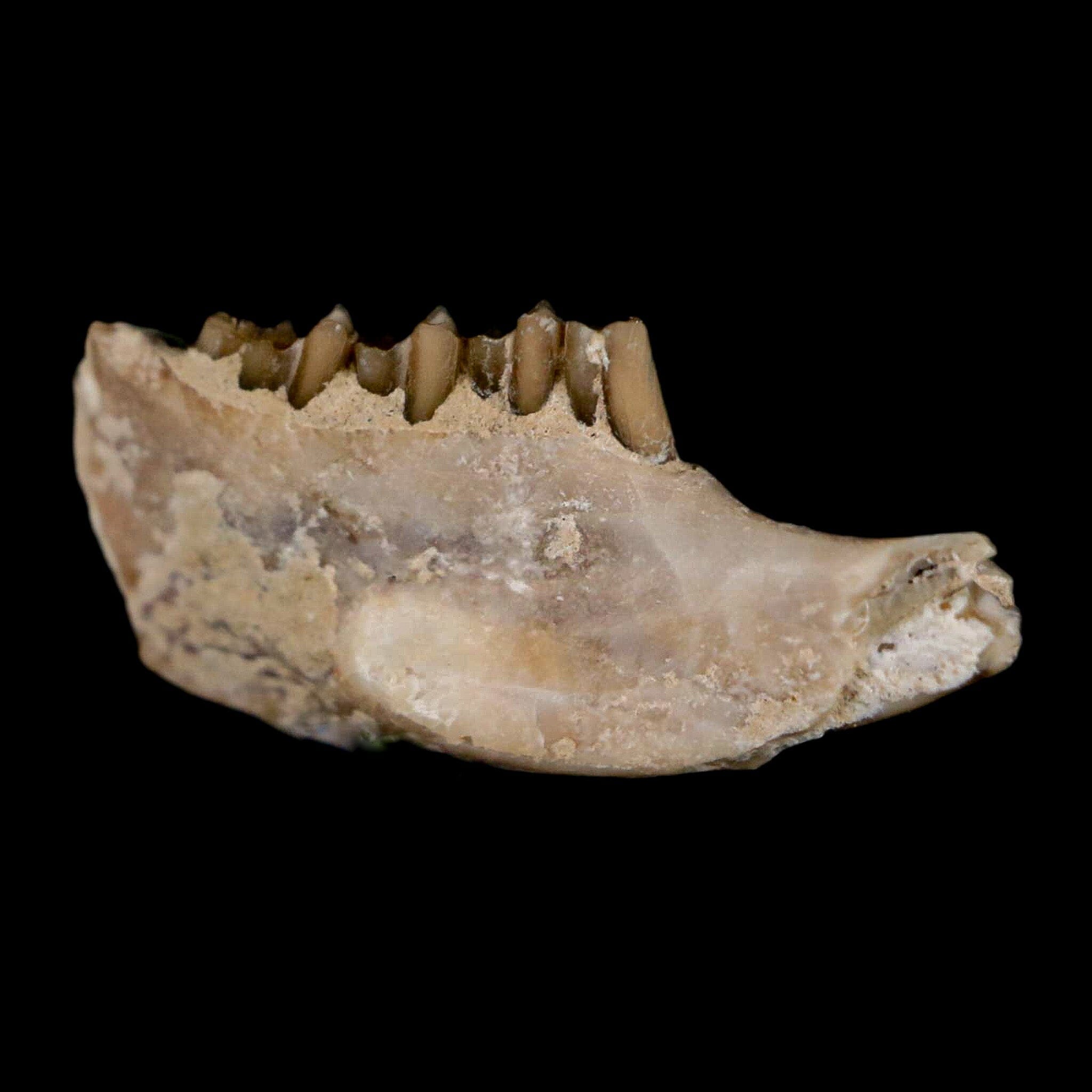
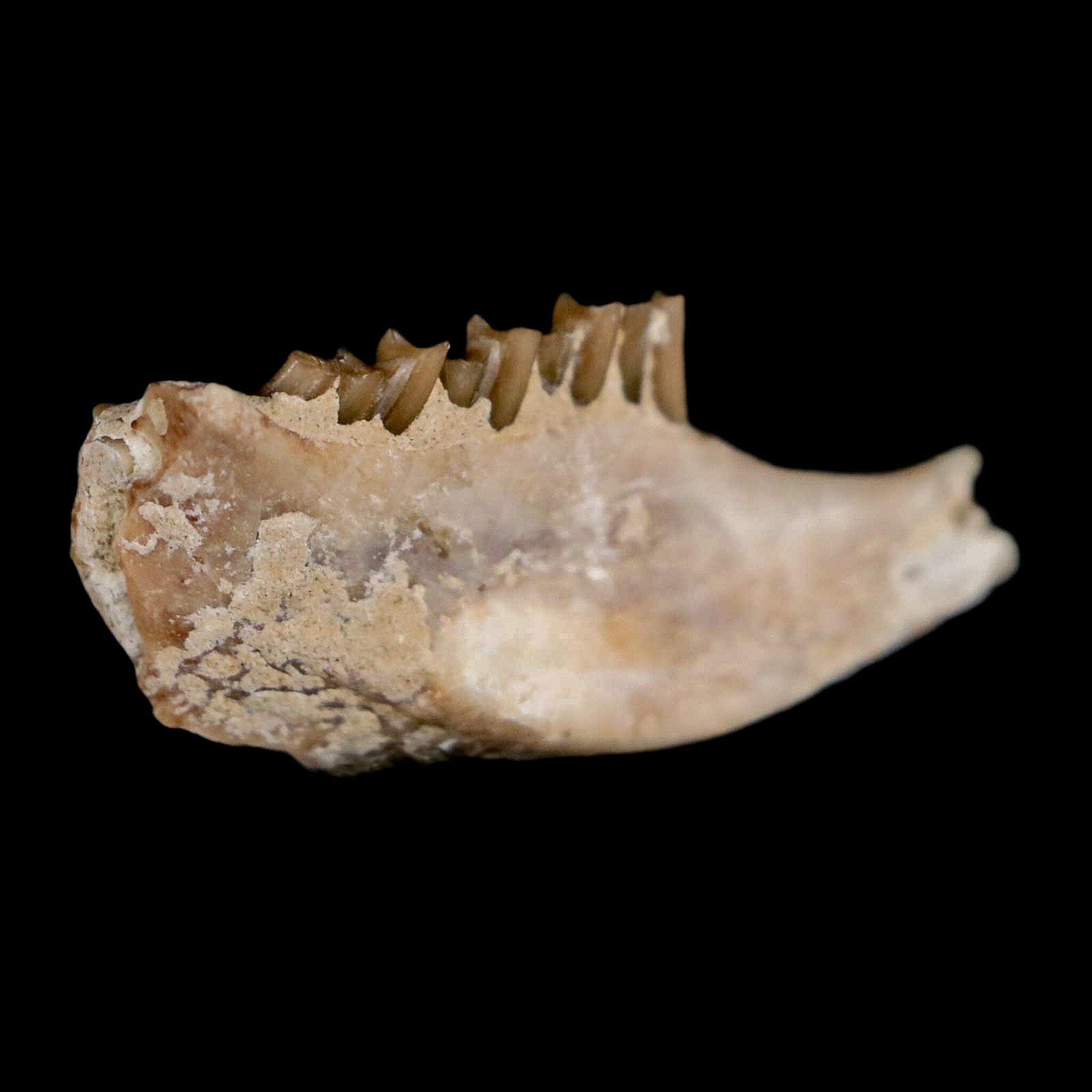
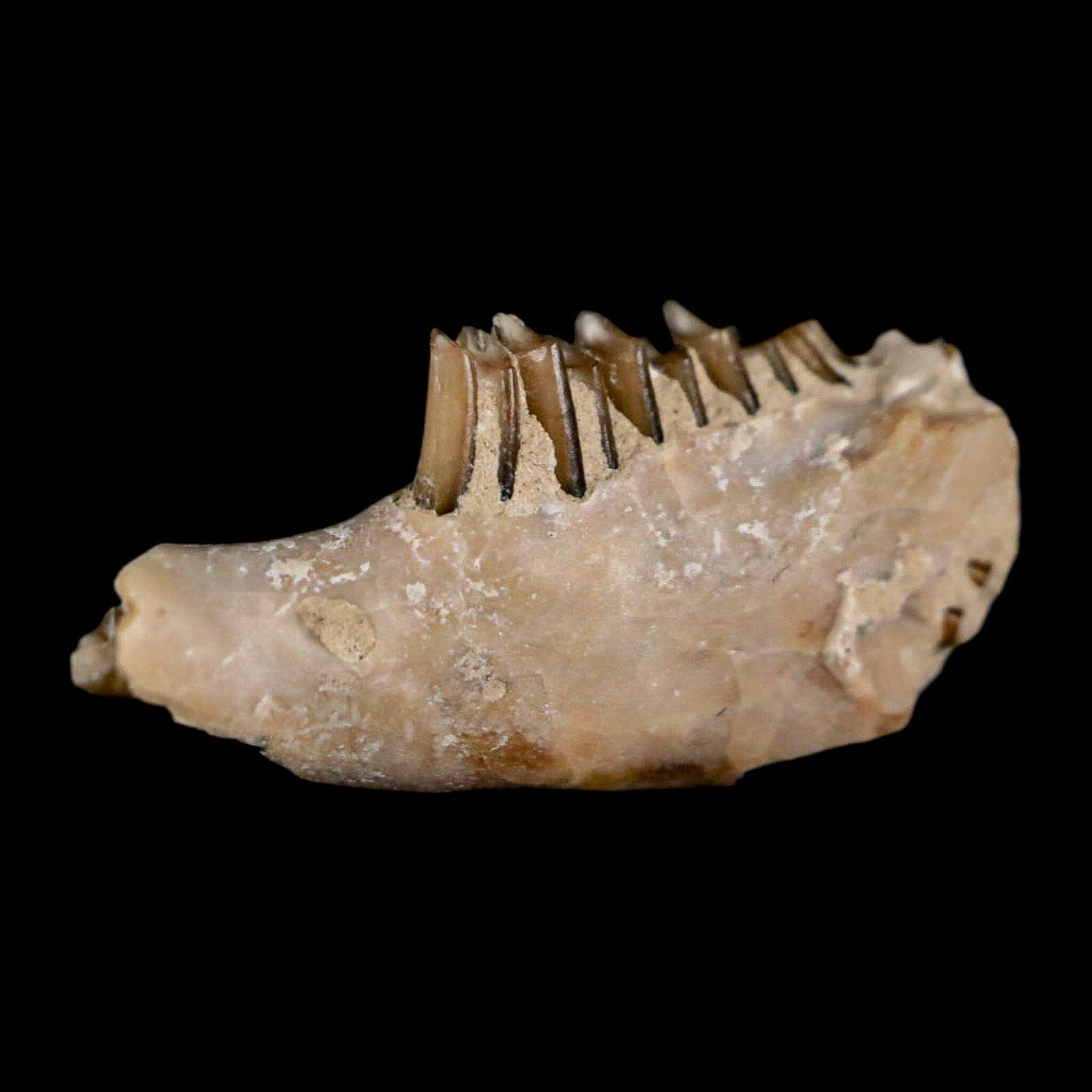
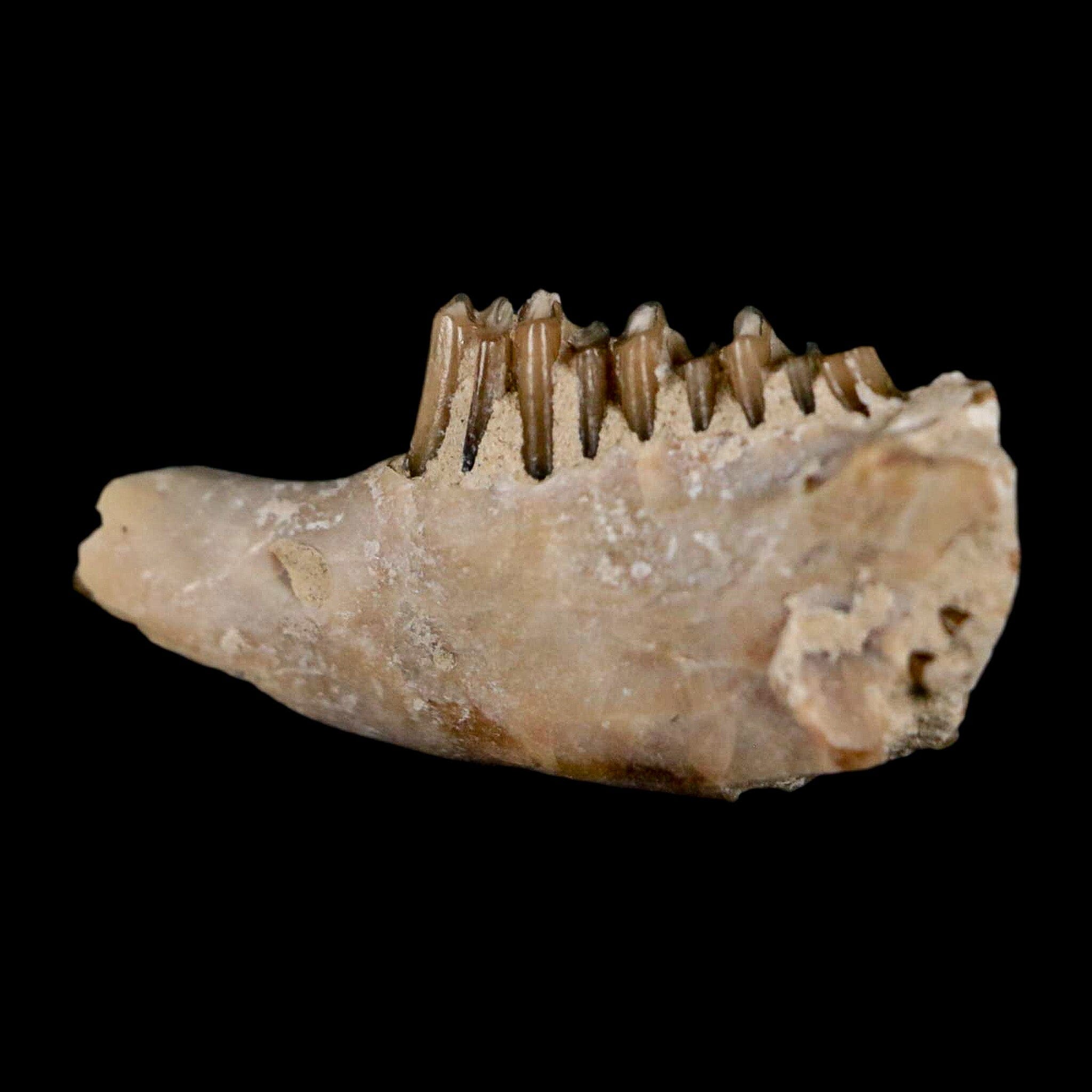
Palaeolagus hayeni is an extinct species of early rabbit that lived in North America during the Oligocene epoch, roughly 33 to 23 million years ago. As a member of the genus Palaeolagus, it represents one of the earliest and most primitive groups of lagomorphs, the order that includes modern rabbits and hares. This species provides important insight into the evolutionary history of lagomorphs, bridging the gap between ancestral mammals and the rabbits we are familiar with today.
Fossil evidence of Palaeolagus hayeni primarily consists of skulls, jaws, and teeth, which have been essential in identifying the species and understanding its place within the evolutionary tree. Its dentition shows the characteristic continuously growing incisors of lagomorphs, as well as cheek teeth adapted for grinding plant material. However, unlike modern rabbits, its limbs suggest a less specialized hopping motion, indicating it likely moved with a more generalized scampering or cursorial gait rather than the powerful leaping behavior seen in contemporary species.
This Oligocene-era specimen showcases the dental and cranial morphology of Palaeolagus hayeni, an ancestral lagomorph that bridges modern rabbits and their prehistoric relatives. The dentition exhibits characteristic features of the lagomorph lineage—perpetually erupting incisors and molars specialized for processing tough vegetation—yet the skeletal anatomy reveals a more generalized locomotor pattern than contemporary leporids, suggesting a scampering rather than specialized hopping behavior. Examination of such material illuminates the evolutionary trajectory and adaptive radiation of early lagomorphs, providing paleontological context for understanding how modern rabbits and hares diverged from their Paleogene ancestors. An exceptional window into mammalian dental evolution and locomotor specialization.