
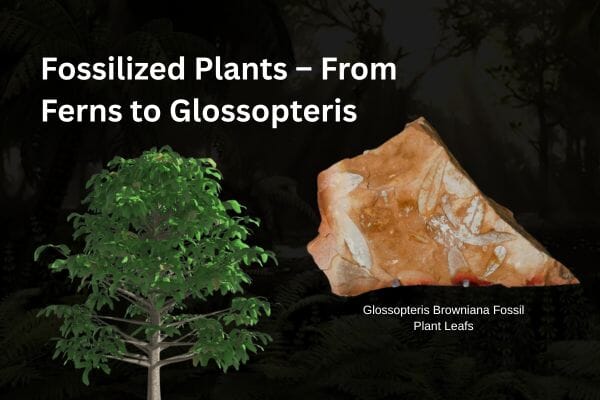
The history of life on Earth is clearly preserved in fossil plants. You can see some ferns with thin leaves and tough ones from Glossopteris. These old plant pieces help us see what the world was like long ago. People who study these fossils can examine old weather patterns, observe changes in how plants grew, and infer how these plants influenced their world.
By examining leaves, seeds, and stems that have turned to stone, we gain insight into how plants grew, produced new seeds, and managed to live for many years. Some of these plants are no longer around.
How Fern Fossils Reveal Ancient Forests
Ferns are among the first plants to be discovered, with numerous fossils. The shapes of their leaves are often saved as marks in rocks that form from mud over time. This helps plant scientists see what thick, green ancient forests looked like. Fossils show that ferns grew well in wet and dark areas. They often made thick plant life under big trees. These fossils help people who study plants in several ways:
-
Follow how the climate has changed over millions of years.
-
Learn about the diverse range of plants in the first ecosystems.
-
See how plants made new ones by looking at where their spores spread.
Ferns look good and are nice to learn about. They also play an important role in how people understand the way early plants helped shape life on land.
Glossopteris – The Signature of the Permian
During the middle of the Paleozoic Era, Glossopteris was a well-known seed fern. These plants had big, tongue-like leaves. They grew in vast forests across regions such as South America, Africa, India, and Antarctica. You can find fossils of Glossopteris in these areas. This helps us understand continental drift. Their presence indicates that these lands were once joined. When we look at Glossopteris, we learn:
-
Changes that helped them live in colder weather during the Permian.
-
Body parts that let big forests grow.
-
How they mixed with other plants and early plant-eating animals.
By looking at Glossopteris next to older ferns, scientists can see how plants changed over time. They notice how the size, leaf shape, and the way plants fit into nature are different now.
What Do Flower Fossils Tell Us About Plant Evolution?
Flower fossils reveal a significant shift in the way plants evolved. Angiosperms, or flowering plants, first came about in the Mesozoic Era. These plants introduced new methods for growing and producing. There is a wider range of plants now because of them. Old flowers, their seeds, and other remains help scientists:
-
Learn how seeds and pollen moved between old plants.
-
Look at how bugs and other animals have shaped plants, working together over time.
-
Observe when and where plants with flowers begin to appear.
These fossils can be delicate, but their preservation shows clear details of early flowers. You can see how these flowers were part of ecosystems back then.
How Do Fossils Preserve Plant Details?
Plant fossilization happens when the right things come together. This often requires the plant to be quickly covered with mud, sand, or other small particles from the ground. There must also be little oxygen around. Both of these help stop the plants from rotting. Here are some types you can find:
-
Compression fossils: Leaves and fronds are pressed flat into the sediment, preserving their surface marks.
-
Permineralization: Minerals replace cell parts, transforming stems and roots into stone.
-
Impressions: These are empty spaces within rocks that reveal the outlines of leaves or stems.
Each approach provides a different level of detail. It helps scientists examine aspects such as structure, growth, and the body's functioning.
Can Fossil Plants Help Reconstruct Ancient Climates?
Yes, fossil plants can show us the climate from long ago. For example:
-
Large leaves with smooth edges indicate that there may be warm and humid weather.
-
Small and thick leaves can be a sign of dry or cooler areas.
-
The spread of spores and pollen can help us know the season and how much plant life in the area.
By studying many fossil sites, researchers can make maps of old ecosystems. They can also see how the climate has changed over a long time.
Exploring the Diversity of Prehistoric Flora
Fossilized plants, such as the fern fossil Glossopteris and fragile flower fossils, reveal an ancient, evolving world. Every plant played its part in the area. They gave food, shelter, and oxygen to other living things. People who collect or study these fossils can use them to see how many kinds of plants lived before humans arrived. It helps us understand more about what life was like in the past and how it functioned a long time ago.
Connect with Fossil Age Minerals
Examining fossil plants provides us with more than just a glimpse into science. It helps people feel a real link to the old Earth. The company Fossil Age Minerals is great for people and teachers who want to see real fossil pieces. You can find fern fossils, Glossopteris leaves, and old flower fossils there. Every piece has good papers with it, so you can study and feel glad about all of these old things.
Discover the collection today to hold a genuine piece of prehistoric life in your hands and learn more about how plants have evolved. Fossil Age Minerals helps collectors, teachers, and people who study these things find these treasures in a good way. They help bring old ecosystems to life.


