


Description
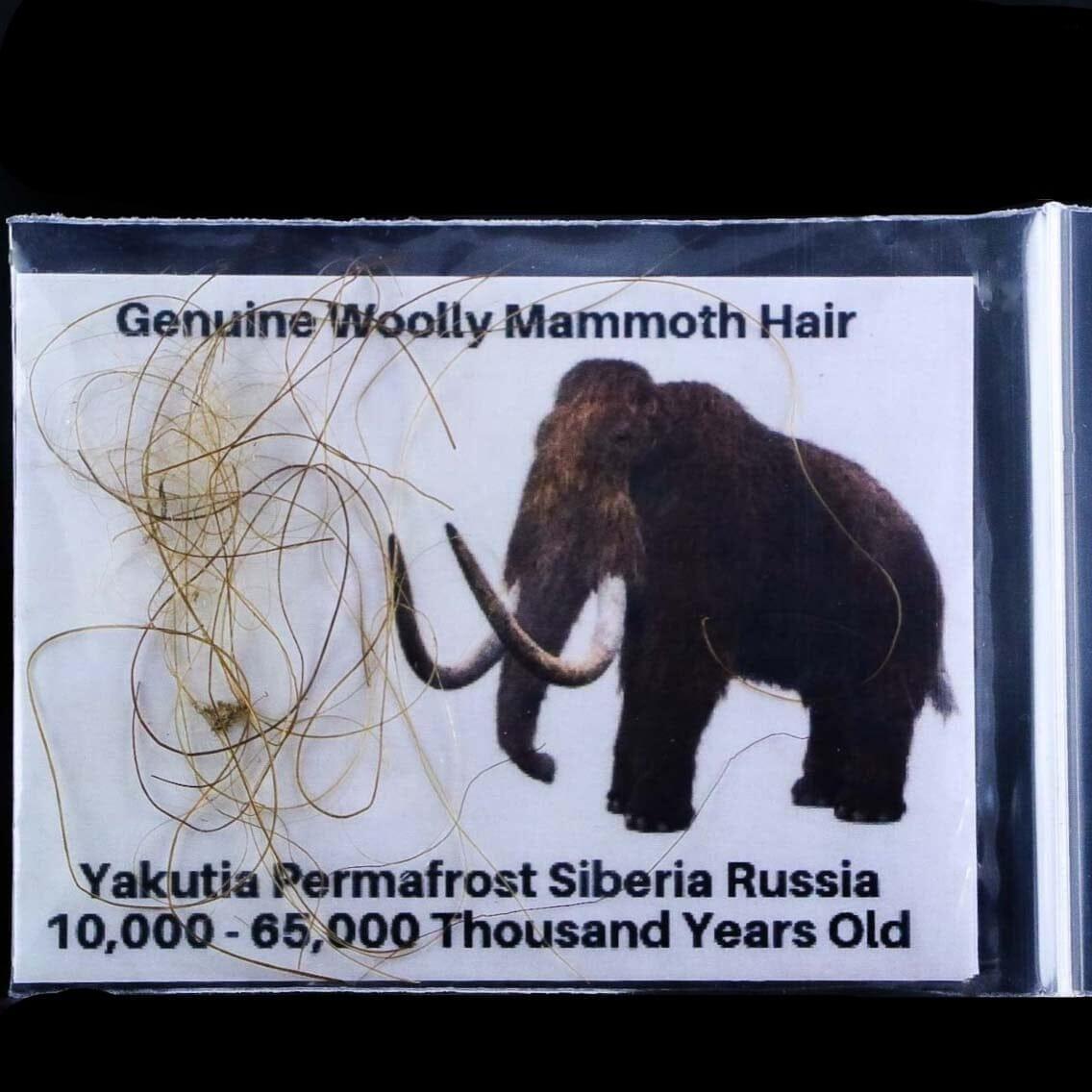
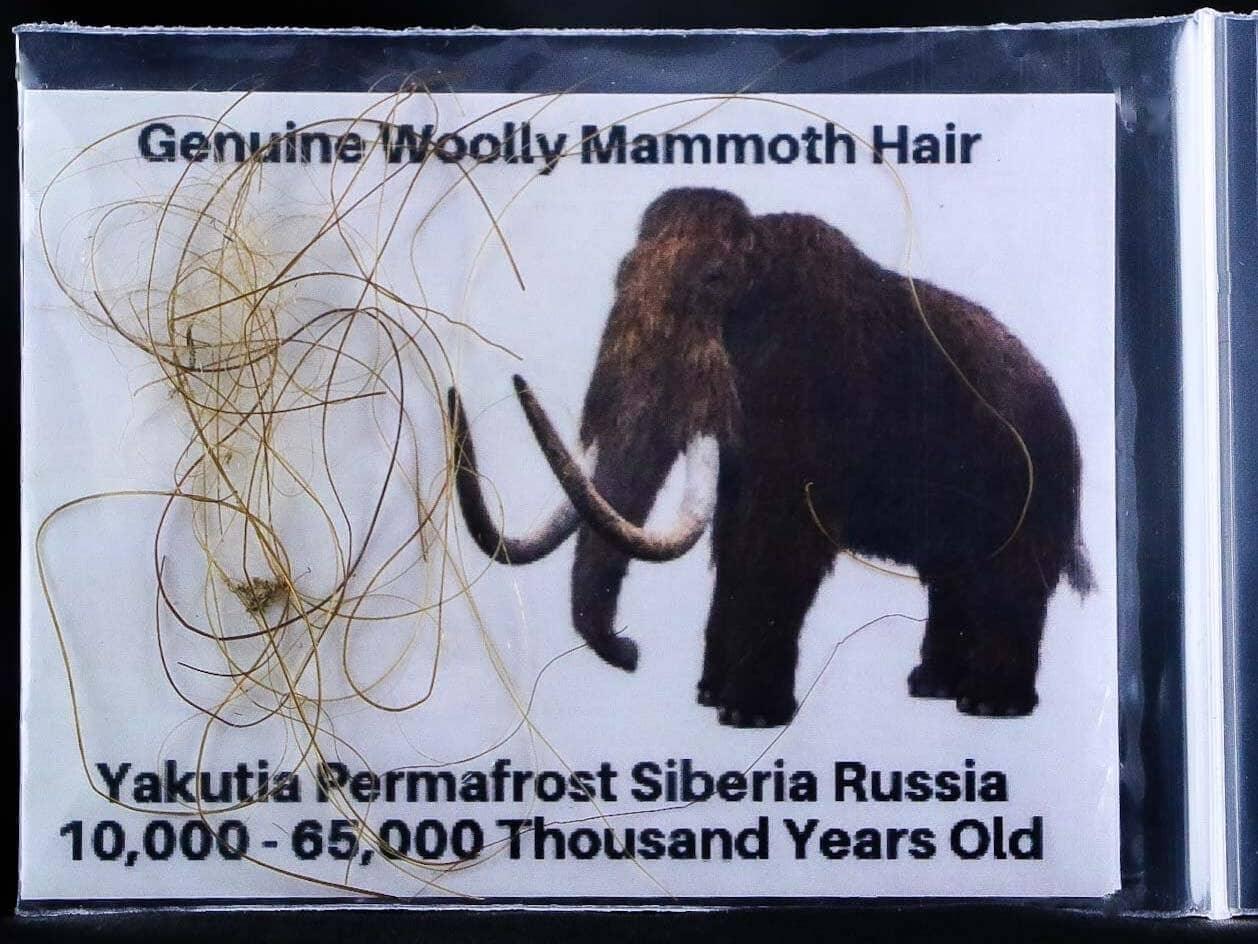
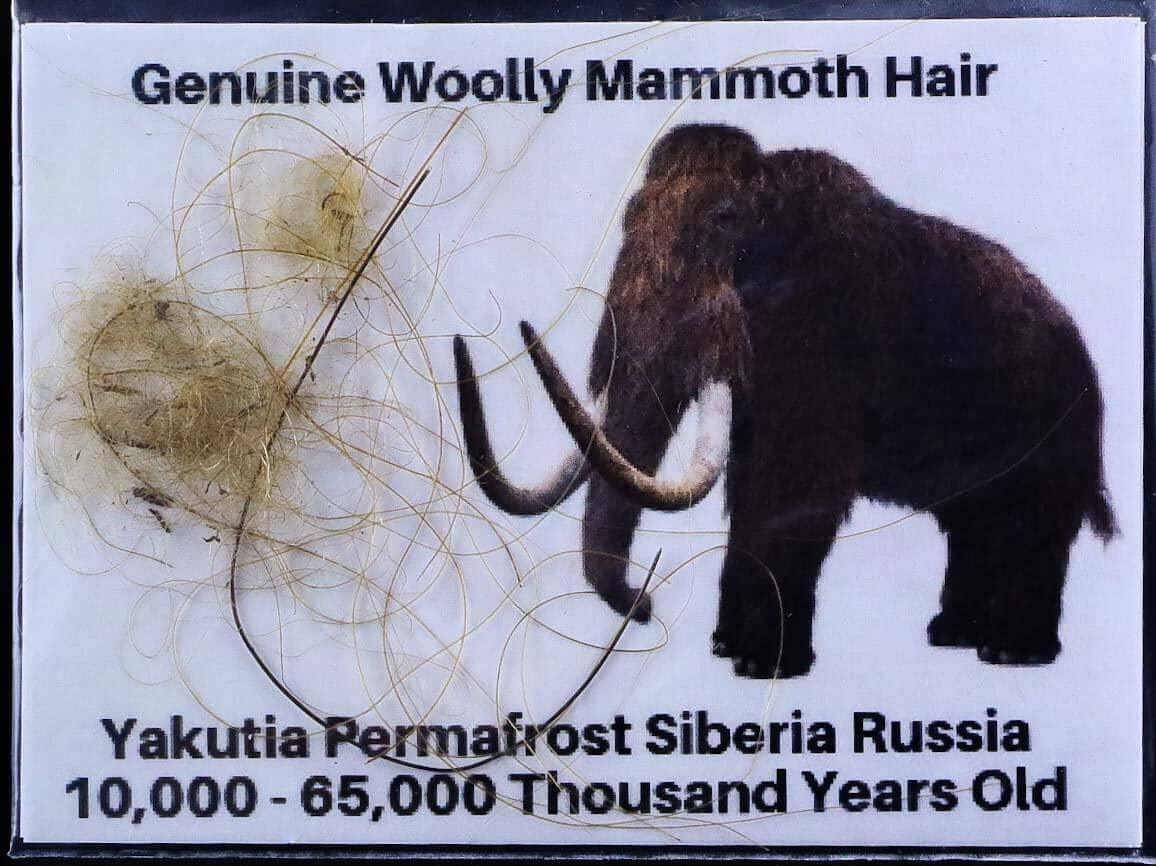
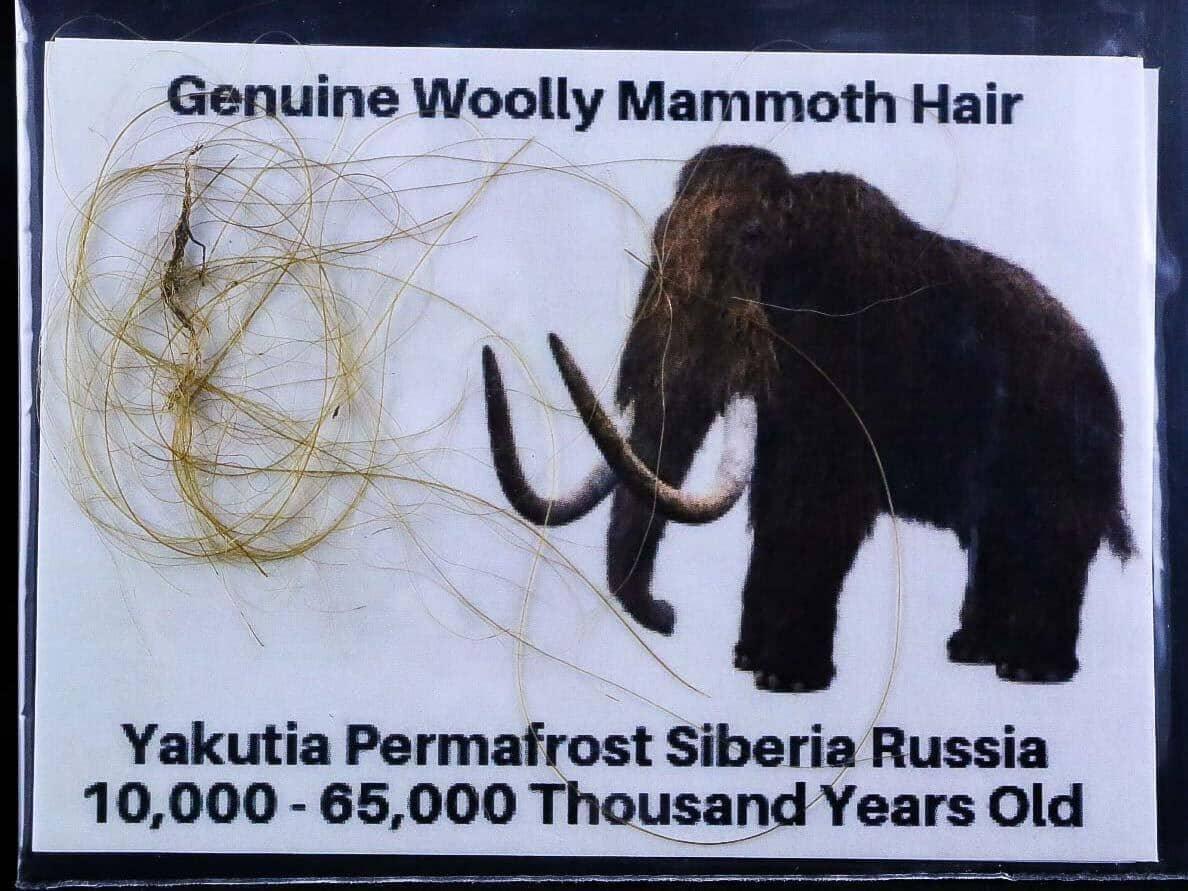
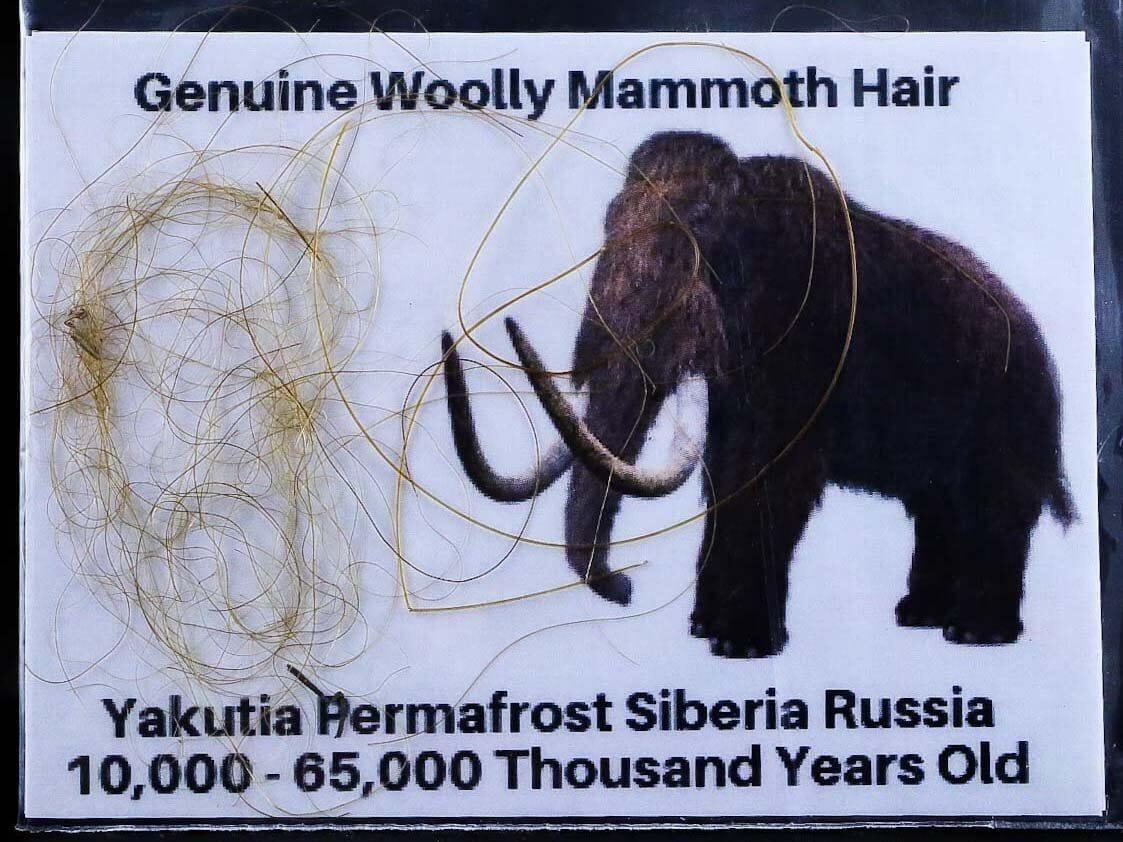
Location: Yakutia Permafrost Siberia, Russia
Weight: 0.2 Ounces
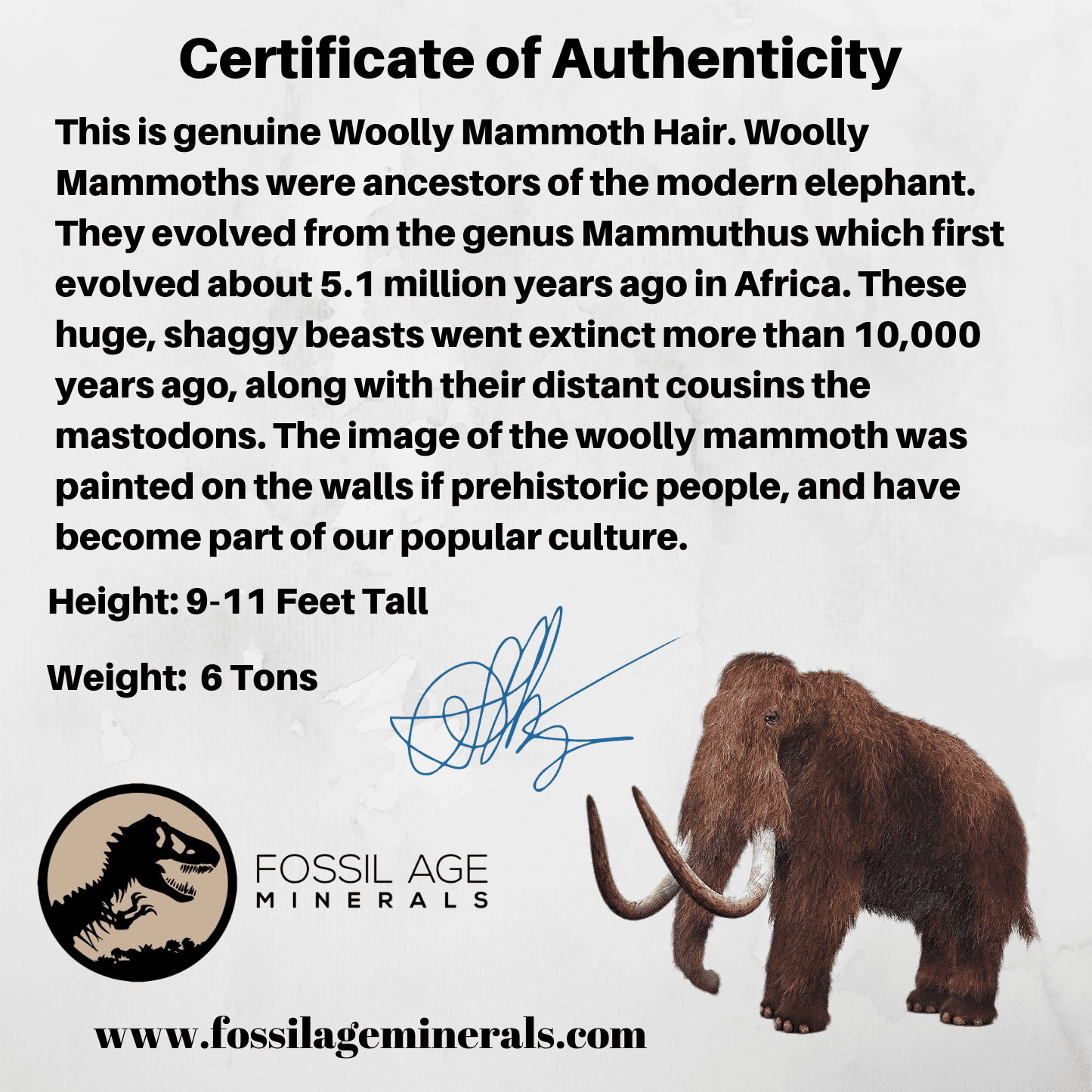
Comes with Certificate of Authenticity
The Item pictured is similar to the one you will receive.
Pleistocene Epoch 20 Million Years old.
The Woolly Mammoth was a species of mammoth that lived during the Pleistocene epoch and was among the last of its kind. It diverged from the steppe mammoth around 400,000 years ago in East Asia, and its closest living relative today is the Asian elephant. The Woolly Mammoth is one of the best-studied prehistoric animals, thanks to the remarkable discovery of frozen carcasses in Siberia and Alaska. Scientists have been able to study not only their skeletons and teeth but also preserved stomach contents, dung, and even depictions of mammoths in prehistoric cave art, providing insight into their appearance, behaviour, and environment.
Before European naturalists studied them, mammoth remains had long been known in Asia, though their origins were often mysterious and attributed to legendary creatures. It was not until 1796 that Georges Cuvier correctly identified the mammoth as an extinct species of elephant, resolving centuries of speculation and marking a pivotal moment in the study of prehistoric life.
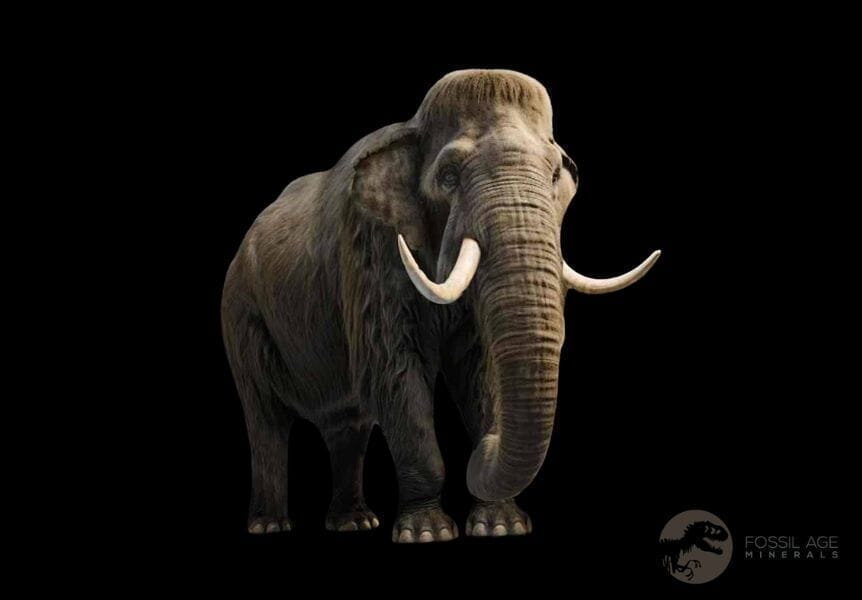
Woolly mammoths matched the stature of present-day African elephants, with adult males standing 8.9–11.2 feet tall and weighing approximately 6 metric tons, while females measured 8.5–9.5 feet and reached 4 metric tons. Newborns entered the world at roughly 200 pounds. These Pleistocene giants possessed sophisticated cold-climate specializations: a dual-layered pelage featuring protective outer guard hairs and insulating underfur in variable coloration, plus notably abbreviated ears and tail that reduced thermal exposure. Their dentition included elongated curved tusks and four molars that underwent six replacement cycles across their potential 60-year lifespan. Behaviorally analogous to modern elephants, woolly mammoths wielded their tusks and trunks for environmental manipulation, intraspecific competition, and subsistence foraging. Herbivorous by nature, they sustained themselves on grassland vegetation, including grasses and sedges, throughout the expansive mammoth steppe ecosystem spanning northern Eurasia and North America. This genuine Siberian permafrost specimen, verified with a certificate of authenticity, offers direct paleontological evidence of these superbly adapted Ice Age megafauna.
