



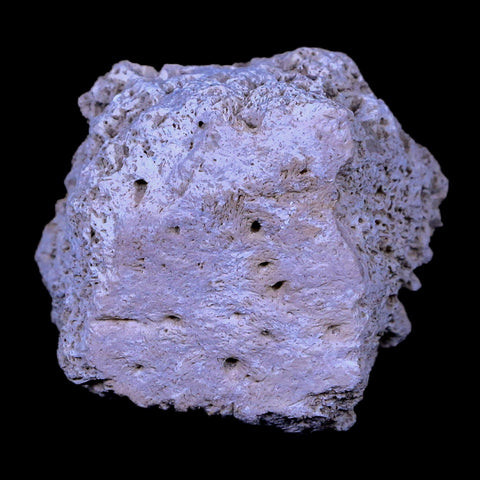
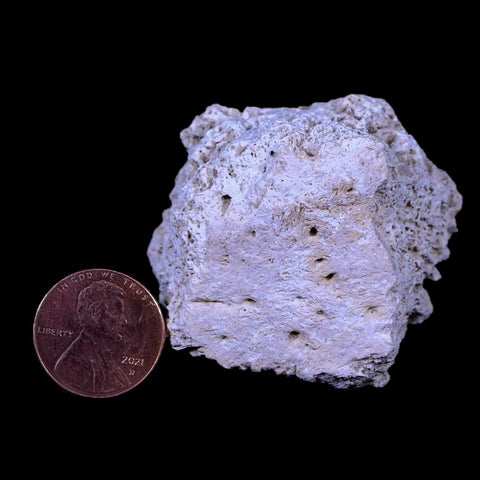






1.8" Glyptodon Fossil Osteoderm Scute Plate Bony Armor Pleistocene Age Uruguay COA
Location: Uruguay
Weight: 1.1 Ounces
Dimension: 1.8 Inches Long, 1.7 Inches Wide,1.2 Inches Thick
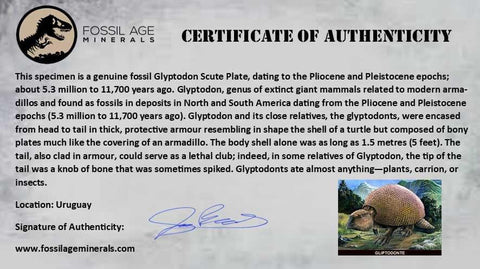
Comes with a Certificate of Authenticity.
The item pictured is the one you will receive.
This is a real Fossil.
Glyptodon was a giant, extinct mammal related to modern armadillos, known from fossil discoveries across North and South America dating back to the Pliocene and Pleistocene epochs (5.3 million to 11,700 years ago). This fascinating creature was covered in a heavy, dome-shaped shell made of bony plates, providing remarkable protection from predators. Its tail was similarly armored and, in some species, ended in a thickened knob or spike that could be used as a weapon. Glyptodonts, the group to which Glyptodon belonged, were primarily herbivores but may have eaten carrion or insects on occasion.
With a body length of around 10 feet and a weight approaching a ton, Glyptodon was roughly the size of a Volkswagen Beetle. Its short, sturdy legs supported the massive armored shell, making it highly resistant to attacks. Only a predator capable of flipping it onto its soft underbelly could bypass its natural defenses.
Despite its unusual appearance—sometimes likened to a hybrid of a turtle, beaver, and armadillo—Glyptodon was not related to turtles or beavers. Its closest living relatives are armadillos, sharing certain skeletal and dental traits. The combination of its immense size and protective armor made Glyptodon one of the most iconic members of the prehistoric South American megafauna.
Glyptodon went extinct on the precipice of the last Ice Age, or about 10,000 years ago. Paleontologists believe that climate change wasn’t the only event responsible for this animal’s demise, however. They also believe that this animal was hunted into extinction. Not only would the meat and fur of this animal be highly prized by early South American settlers, but some evidence also points to the fact that they used this animal’s shells as a way to shelter themselves from the cold.


